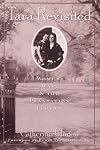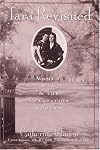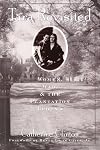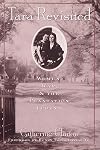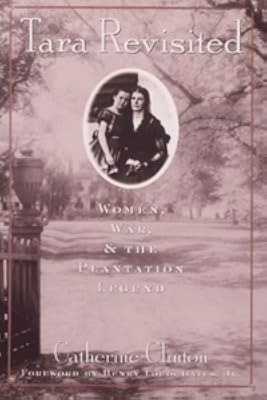
Tara Revisited: Women, War, and the Plantation Legend
by Catherine Clinton
On This Page
Description
Cutting through romantic myth, this captivating volume combines period photographs and illustrations with new documentary sources to tell the real story of southern women during the Civil War.Drawing from a wealth of poignant letters, diaries, slave narratives, and other accounts, Catherine Clinton provides a vivid social and cultural history of the diverse communities of Southern women during the Civil War: the heroic African-American women who struggled for freedom, the tireless nurses show more who faced gruesome duties, the intriguing handful who donned uniforms, and those brave women who spied and even died for the Confederacy.
Photographs, drawings, prints, and other period illustrations bring this buried chapter of Civil War history to life, taking the reader from the cotton fields to the hearthsides, from shrapnel-riddled mansions to slave cabins. Clinton places these women within the context of war, illuminating both legendary and anonymous women along the way.
Tracing oral traditions and Southern literature from Reconstruction through our era, the author demonstrates how a deadly mix of sentiment and fabrication perpetuates tales of idyllic plantations inhabited by benevolent masters and contented slaves. The book concludes with Clinton's perceptive and often witty discussion of how, over the years, we continue to embrace mythic figures like Scarlett and Mammy in aspects of popular culture ranging from Hollywood epics to pancake syrup.
. show less
Tags
Recommendations








Member Recommendations
Member Reviews
This book is honestly an insult.
While easy to read and interesting, this is just a fail on every other level. This is not a look at the civil war from the view of southern women both black and white.
Instead this book primarily focuses, at least 70-75%, on southern white women who held black people in bondage. There’s maybe 5-10% about middle class southern white women who became nurses or were the wives of overseers. Overseers wives, we know from The Slave Narratives, held a lot of power over the lives of enslaved peoples.
I’d say maybe 20% of the book deals with black women during the Civil War. Of that 20%, a minuscule amount of the narrative is actually from the pov of black enslaved women. A sizable portion is reflective of how show more southern white slave holding women were impacted by the actions and choices of black folks during this period. How these white women were frightened and inconvenienced by the growing freedoms of enslaved blacks. The author very much cherry picked the Slave Narratives as a source.
Even the language used in the black women sections was condescending and racialized. There’s a section on enslaved blacks being ‘self sufficient’ as in growing food and feeding themselves. White slave holders being self sufficient was the true surprise, as they had needed assistance to provide for themselves, hence the institution of chattel slavery. White slave holding women didn’t even feed their own infants, they had zero self sufficiency. Most enslaved people’s were responsible for growing their own food in addition to working sunrise to sunset, blacks were always self sufficient as in their labor more than provided for their consumption needs. West Africans were amazingly self sufficient and highly knowledgeable regardless of nation which is why they were attractive enough to Europeans to create the chattel slave trade in the first place. The author’s racism is cringe worthy.
White women on slave owning plantations: whether the wife or daughter of the owner or the overseer had a lot of control over the lives and punishment of the enslaved. Wives of slave holders hung children by their thumbs in closets, implored various other means of corporal punishment as well as deprivation and emotional punishment on enslaved peoples as young as infants. White women were often the instigator of sales and the break up of families. All of this is in the Slave Narratives. As well as various individually published slave narratives. Unfortunately the author did not choose to tell black enslaved women’s history where it incriminated white slave holding women or the confederacy.
Instead the sections on black enslaved women are told from primarily the pov of how white women are impacted by the enslaved. For example black men leaving and other enslaved families walking off after the war gets going which intensifies after the Emancipation Proclamation. How white women were impacted and felt about that as they were left in charge by their husbands.
At no point is it addressed that this is the best thing to happen to black people in the US since the first West African arrived here in what would become the US in chains. History tells us black folks left to seek out family members: lost parents, siblings, spouses and most especially children. Many left to take advantage of freedom or to go with their spouses and keep families together. Whole enslaved families but mostly individuals joined ‘contraband’ camps and later the Union Army, the men fought and the women cooked. No doubt this was a very exciting and anxiety provoking time for black women. There very world was being made anew. For black folks this is the war of independence.
I can not imagine the pride, joy, honor and happiness black enslaved women must’ve felt seeing black men in Union uniforms. This is not really discussed. Only from white women’s pov and as if black union soldiers existed solely to intimidate racist white southern women. Here’s the thing though, white women are responsible for their own racism and bigotry so if they felt fear at seeing armed black union soldiers, that should not be treated as a valid fear. Because it is not. Historically white women have always caused considerably more harm to black folks, than ever they have to them. If confused by this, Google Emmett Till and how his accuser lied and is still free to this day.
This book even backs up that more sexual assaults are reported against black enslaved women than white slave holding women by union soldiers. No mention made of southern white wen and women sexually assaulting black men, women and children for centuries, and how this must have continued amongst the confederacy during the war.
The author wants to paint southern white slave holding women as sympathetic and, well, they are not. White men weren’t the only ones who participated in the crimes against humanity that occurred during chattel slavery. White southern slave holding women are as complicit as their respective husbands, brothers, father’s, uncles, sons, etc. This text simply acknowledges that black enslaved women existed in the confederacy and stipulates, erroneously, that they were ‘managed’ not held by white women.
Sparingly is the term ‘white women’ used to designate white women in this text. Instead terms like ‘south carolina women on plantations’ which the reader is supposed to understand means white women. As if no black women existed on south carolina plantations or were they not women? In contrast black women are always identified, as African American, I prefer black. AA may have been more commonly used academically when this was published.
This book presents the confederacy: women and soldiers as heroes and brave souls. With the Union as tyrannical human rights violators who are prone to antagonistic violence.
The only problem is this books promises to give a ‘diverse’ view of the Civil War. This is a white southern slave holding view. That’s not at all diverse. What about poor white women who had husband’s that held no enslaved peoples? How did they feel watching rich slave holding white men buy their way out of serving in the Confederacy when their husbands had to fight? How did jewish southern women feel? Other woc living in the South? This book has an extremely narrow view.
White Confederates, women or not, were human rights violators and treasonous losers.
Every single white person who held enslaved peoples or participated in the chattel slave trade was a human rights violator and monster. As were blacks and other poc who profited off of the chattel slave trade.
That doesn’t mean those white slave holding women deserved to be assaulted by Union Soldiers, no one deserves that. However you can’t tell the story of enslaved black women without talking about how white women who held them in bondage used and abused them. I understand that makes it hard to make these white women sympathetic. That is as it should be. Southern white slave holding women are more than the crimes they participated in but they can’t be removed from their crimes wholesale. That would be a misrepresentation of actual history and disrespectful to their black enslaved victims.
To sum this up, white feminism writes a racist history of white slave holding women on plantations during the civil war. Tara is not revisited, this upholds much of the racist misconceptions that occur as a result of the ridiculous novel and movie, gone with the wind. show less
While easy to read and interesting, this is just a fail on every other level. This is not a look at the civil war from the view of southern women both black and white.
Instead this book primarily focuses, at least 70-75%, on southern white women who held black people in bondage. There’s maybe 5-10% about middle class southern white women who became nurses or were the wives of overseers. Overseers wives, we know from The Slave Narratives, held a lot of power over the lives of enslaved peoples.
I’d say maybe 20% of the book deals with black women during the Civil War. Of that 20%, a minuscule amount of the narrative is actually from the pov of black enslaved women. A sizable portion is reflective of how show more southern white slave holding women were impacted by the actions and choices of black folks during this period. How these white women were frightened and inconvenienced by the growing freedoms of enslaved blacks. The author very much cherry picked the Slave Narratives as a source.
Even the language used in the black women sections was condescending and racialized. There’s a section on enslaved blacks being ‘self sufficient’ as in growing food and feeding themselves. White slave holders being self sufficient was the true surprise, as they had needed assistance to provide for themselves, hence the institution of chattel slavery. White slave holding women didn’t even feed their own infants, they had zero self sufficiency. Most enslaved people’s were responsible for growing their own food in addition to working sunrise to sunset, blacks were always self sufficient as in their labor more than provided for their consumption needs. West Africans were amazingly self sufficient and highly knowledgeable regardless of nation which is why they were attractive enough to Europeans to create the chattel slave trade in the first place. The author’s racism is cringe worthy.
White women on slave owning plantations: whether the wife or daughter of the owner or the overseer had a lot of control over the lives and punishment of the enslaved. Wives of slave holders hung children by their thumbs in closets, implored various other means of corporal punishment as well as deprivation and emotional punishment on enslaved peoples as young as infants. White women were often the instigator of sales and the break up of families. All of this is in the Slave Narratives. As well as various individually published slave narratives. Unfortunately the author did not choose to tell black enslaved women’s history where it incriminated white slave holding women or the confederacy.
Instead the sections on black enslaved women are told from primarily the pov of how white women are impacted by the enslaved. For example black men leaving and other enslaved families walking off after the war gets going which intensifies after the Emancipation Proclamation. How white women were impacted and felt about that as they were left in charge by their husbands.
At no point is it addressed that this is the best thing to happen to black people in the US since the first West African arrived here in what would become the US in chains. History tells us black folks left to seek out family members: lost parents, siblings, spouses and most especially children. Many left to take advantage of freedom or to go with their spouses and keep families together. Whole enslaved families but mostly individuals joined ‘contraband’ camps and later the Union Army, the men fought and the women cooked. No doubt this was a very exciting and anxiety provoking time for black women. There very world was being made anew. For black folks this is the war of independence.
I can not imagine the pride, joy, honor and happiness black enslaved women must’ve felt seeing black men in Union uniforms. This is not really discussed. Only from white women’s pov and as if black union soldiers existed solely to intimidate racist white southern women. Here’s the thing though, white women are responsible for their own racism and bigotry so if they felt fear at seeing armed black union soldiers, that should not be treated as a valid fear. Because it is not. Historically white women have always caused considerably more harm to black folks, than ever they have to them. If confused by this, Google Emmett Till and how his accuser lied and is still free to this day.
This book even backs up that more sexual assaults are reported against black enslaved women than white slave holding women by union soldiers. No mention made of southern white wen and women sexually assaulting black men, women and children for centuries, and how this must have continued amongst the confederacy during the war.
The author wants to paint southern white slave holding women as sympathetic and, well, they are not. White men weren’t the only ones who participated in the crimes against humanity that occurred during chattel slavery. White southern slave holding women are as complicit as their respective husbands, brothers, father’s, uncles, sons, etc. This text simply acknowledges that black enslaved women existed in the confederacy and stipulates, erroneously, that they were ‘managed’ not held by white women.
Sparingly is the term ‘white women’ used to designate white women in this text. Instead terms like ‘south carolina women on plantations’ which the reader is supposed to understand means white women. As if no black women existed on south carolina plantations or were they not women? In contrast black women are always identified, as African American, I prefer black. AA may have been more commonly used academically when this was published.
This book presents the confederacy: women and soldiers as heroes and brave souls. With the Union as tyrannical human rights violators who are prone to antagonistic violence.
The only problem is this books promises to give a ‘diverse’ view of the Civil War. This is a white southern slave holding view. That’s not at all diverse. What about poor white women who had husband’s that held no enslaved peoples? How did they feel watching rich slave holding white men buy their way out of serving in the Confederacy when their husbands had to fight? How did jewish southern women feel? Other woc living in the South? This book has an extremely narrow view.
White Confederates, women or not, were human rights violators and treasonous losers.
Every single white person who held enslaved peoples or participated in the chattel slave trade was a human rights violator and monster. As were blacks and other poc who profited off of the chattel slave trade.
That doesn’t mean those white slave holding women deserved to be assaulted by Union Soldiers, no one deserves that. However you can’t tell the story of enslaved black women without talking about how white women who held them in bondage used and abused them. I understand that makes it hard to make these white women sympathetic. That is as it should be. Southern white slave holding women are more than the crimes they participated in but they can’t be removed from their crimes wholesale. That would be a misrepresentation of actual history and disrespectful to their black enslaved victims.
To sum this up, white feminism writes a racist history of white slave holding women on plantations during the civil war. Tara is not revisited, this upholds much of the racist misconceptions that occur as a result of the ridiculous novel and movie, gone with the wind. show less
Tara Revisited: Women, War and the Plantation Legend by Catherine Clinton was a non-fiction book that discussed the affect of the Civil War on white and black women of the American South. This book also explored the romanticized myths of white Southern women and slave/master relations during this time period.
For many, the Civil War holds an intriguing place in our American landscape. Southern belles, popularized by Scarlett O’Hara, emerged as the quintessential representation of all things “southern” – genteel and well mannered, tough and tenacious, and ardent supporters of the Southern cause during the Civil War. Called “The Lost Cause,” post-Civil War writers created this mystification of Southern women to perpetuate the show more “cause” long after the war ended.
Through her research, Clinton dispelled this myth. While many Southern women were active in the war effort, whether darning socks or assisting at military hospitals, they were impatient for the war to end. Home life without their men was hard, boring and frightening. Instead of yearning for what was, as contended by Clinton, Southern women were more interested in moving on.
The “Lost Cause” philosophy also advanced the untruth that blacks and whites lived harmoniously together with slaves emotionally attached and loyal to their owners. Again, Clinton ruled out this myth, based on interviews of former slaves conducted during the Great Depression. In reality, little love was lost between formers slaves and their white masters and mistresses.
Catherine Clinton, in my opinion, is one of the most approachable of historians. Her writing style was easy and interesting. She relied mostly on primary resources – memoirs, diaries, newspaper stories and interviews – to weave this historical account of an often-misunderstood period in American women’s history.
History is one big story, and Catherine Clinton is one of the best “storytellers” of this time period. I highly recommend this quick read to any reader interested in learning more about how the Civil War marked and impacted Southern women of both races during this era. show less
For many, the Civil War holds an intriguing place in our American landscape. Southern belles, popularized by Scarlett O’Hara, emerged as the quintessential representation of all things “southern” – genteel and well mannered, tough and tenacious, and ardent supporters of the Southern cause during the Civil War. Called “The Lost Cause,” post-Civil War writers created this mystification of Southern women to perpetuate the show more “cause” long after the war ended.
Through her research, Clinton dispelled this myth. While many Southern women were active in the war effort, whether darning socks or assisting at military hospitals, they were impatient for the war to end. Home life without their men was hard, boring and frightening. Instead of yearning for what was, as contended by Clinton, Southern women were more interested in moving on.
The “Lost Cause” philosophy also advanced the untruth that blacks and whites lived harmoniously together with slaves emotionally attached and loyal to their owners. Again, Clinton ruled out this myth, based on interviews of former slaves conducted during the Great Depression. In reality, little love was lost between formers slaves and their white masters and mistresses.
Catherine Clinton, in my opinion, is one of the most approachable of historians. Her writing style was easy and interesting. She relied mostly on primary resources – memoirs, diaries, newspaper stories and interviews – to weave this historical account of an often-misunderstood period in American women’s history.
History is one big story, and Catherine Clinton is one of the best “storytellers” of this time period. I highly recommend this quick read to any reader interested in learning more about how the Civil War marked and impacted Southern women of both races during this era. show less
Review of: Tara Revisited: Women, War & The Plantation Legend, by Catherine Clinton
by Stan Prager (8-4-16)
There was a land of Cavaliers and Cotton fields called the Old South … here in this pretty world Gallantry took its last bow. Here was the last ever to be seen of Knights and their Ladies Fair, of Master and of Slave . . . Look for it only in books for it is no more than a dream remembered . . . A Civilization gone with the wind . . .
The preceding is the title card screen prologue to a 1939 epic film that was so tightly woven into the fabric of popular culture that no American of my generation, or the two generations that preceded it, could be unfamiliar with it. Its musical score was as imprinted upon our DNA as were any number show more of snippets of dialog, such as the frightened slave Prissy screeching "De Yankees is comin!," the antihero Rhett Butler uttering the scornful retort, “Frankly, my dear, I don’t give a damn,” and the manipulative vixen Scarlett herself, in the final scene, voicing an irrepressible optimism with “Tara! Home. I'll go home . . . After all ... tomorrow is another day.” Tara. That was the storybook plantation home of Scarlett O’Hara, the locus for the romantic legend in the novel by Margaret Mitchell and its movie adaptation, that title card writ large in an imaginary dimension where gallant giants walked the earth and dutiful slaves like Mammy and Prissy lived in terror of invading Yankees instead of in gleeful anticipation of fleeing to freedom in their lines. And much more than a classic movie, Gone with the Wind served as the most successful paean to the myth of the “Lost Cause” since Birth of a Nation, with less malevolence and a much larger and more enduring audience.
In her highly original, thought-provocative study, Tara Revisited: Women, War & The Plantation Legend, Catherine Clinton walks back from the Tara of that iconic spectacle to its historical roots in an antebellum era erased by war that then spawned a revisionism that has not only stubbornly persisted but has seen a disturbing late renaissance as a similarly fanciful emergent heritage claimed by present-day right-wingers wrapped in Confederate flags. The current generation of the latter not only promote the justice of rebellion, but even imagine tens of thousands of African-Americans garbed in gray and willingly wielding carbines to defend the Confederacy!
The scholarly consensus is that a narrow slice of elite planters committed to an expansion of slavery brought on the secession crisis and subsequent Civil War that resulted in the deaths of more than six hundred thousand Americans. The north at first put men at arms only to preserve the union, although emancipation later became a war aim. The south lost the war but in some sense won the peace. As Reconstruction gave way to “Redemption,” former Confederates regained control of the south and the freed African-Americans – who had enjoyed a brief period of near equal protection under the law – were terrorized, murdered and reduced to a second class status that persisted into the 1960s and beyond. The defeated promulgated a myth of the “Lost Cause” that rewrote history to claim that the conflict was about states’ rights rather than slavery, focused upon the depredations of Northern carpetbaggers, and especially upon the imagined threats of black men preying upon helpless white women. The “Lost Cause” was the creation mythology of this post-war south, and its vast success can be measured by the fact that its tissue of lies managed to convert much of the north in the decades to come, as reconciliation turned into a universal goal and the institutionalized abuse of African-Americans was rarely even acknowledged.
In Tara Revisited, Clinton focuses upon the plantation legend that is integral to central elements of the “Lost Cause” myth and turns it on its head. While she acknowledges there were indeed women like Scarlett O’Hara from families of extreme wealth who lived on large plantations with many slaves and busied themselves with social dalliances, her cohort comprised the tiniest minority of antebellum southern women. In fact, plantation life typically meant hard work and much responsibility even for affluent women. More critically, three-quarters of southerners owned no slaves at all and nearly ninety per cent of the remainder owned twenty or fewer. Plantations like Tara probably accounted for less than ten percent of the total, which is why its persistence in Lost Cause plantation legend is so notable. As such, Clinton takes us on a tour of the real antebellum south and the real white women who inhabited it: typically wives and daughters with no slaves who had very modest means, deprived of husbands and fathers away at war while they struggled to survive. Some worked in manufacturing to support the war effort, some volunteered to care for the wounded, some served as spies – for both sides – but most focused simply on keeping themselves and their families alive in a time of little food and great deprivation. She also reveals those who are often invisible to history, enslaved African-American women who lived hand-to-mouth in lean and dangerous times, most of whom were unable to escape to Union lines yet eagerly anticipated a northern victory that would ensure their liberation. Masters tried to instill fear in their slaves about the coming blue marauders, but most blacks saw right through this; if there was a cry of "De Yankees is comin!” it was more likely to be in celebration than distress.
Clinton also traces the growth of the legend of “rose colored plantation life” from its roots in a kind of forbidden literary tradition dubbed “Confederate porn” (p203-04) that glorified whites while demeaning blacks, to its central public role within Lost Cause theology from Birth of a Nation to Gone with the Wind and beyond. The living breathing cheerleaders of this fantasy are the United Daughters of the Confederacy (UDC), an organization founded in 1894 to celebrate Confederate culture that continues to thrive today. It is no coincidence that there was both a rebirth of the Lost Cause and a resurgence of Confederate heritage during the Dixiecrat resistance to the Civil Rights movement in the 1960s. The controversial Stars & Bars that was recently removed from the South Carolina statehouse was only first raised in 1962 by the then governor to protest desegregation. Since 1965, the UDC has coordinated an annual “Massing of the Flag” ceremony in Richmond on Jefferson Davis’s birthday in which the participants pledge “I salute the Confederate flag, with affection, reverence and undying remembrance.” [p186] There is of course for us in 2016 something both disturbing and surreal about this event, which seems to lionize the forces of rebellion while dishonoring the sacrifice of hundreds of thousands of soldiers in blue who died to preserve the United States, not to mention the millions of African-Americans who were first enslaved beneath this flag and then terrorized and degraded by it for a century afterward.
Catherine Clinton, who is currently the Denman Professor of American History at the University of Texas at San Antonio, has a long resume as a historian that goes back to the PhD from Princeton that she earned with the completion of her dissertation under the direction of eminent Civil War scholar James M. McPherson. She wrote Tara Revisited in 1995, and I cannot help but wonder if she is at all surprised by yet another generational resurgence of the “Lost Cause” as an element of contemporary right-wing politics.
I recently screened Gone with the Wind on DVD. In retrospect, it is not really a very good film and it does not stand up well over time; the acting is often histrionic, the dialogue overwrought. It is dwarfed by other notable films of the same era. Unlike those of my generation, most millennials have probably never seen it. Yet, there remains a stubborn resilience in the notion of Tara, as underscored by the ongoing popularity of pilgrimage weeks in the south, “in which plantations recreate the Old South with costumes and other trappings,” and, as the author articulately observes, “in many ways embalm a departed south that perhaps never lived outside Confederate imaginations.” [p187] As such, the central theme of this well-written and eclectic work retains its relevance today. I highly recommend it.
My Review of: Tara Revisited: Women, War & The Plantation Legend, by Catherine Clinton, is live on my book blog:
https://regarp.com/2016/08/04/review-of-tara-revisited-women-war-the-plantation-... show less
by Stan Prager (8-4-16)
There was a land of Cavaliers and Cotton fields called the Old South … here in this pretty world Gallantry took its last bow. Here was the last ever to be seen of Knights and their Ladies Fair, of Master and of Slave . . . Look for it only in books for it is no more than a dream remembered . . . A Civilization gone with the wind . . .
The preceding is the title card screen prologue to a 1939 epic film that was so tightly woven into the fabric of popular culture that no American of my generation, or the two generations that preceded it, could be unfamiliar with it. Its musical score was as imprinted upon our DNA as were any number show more of snippets of dialog, such as the frightened slave Prissy screeching "De Yankees is comin!," the antihero Rhett Butler uttering the scornful retort, “Frankly, my dear, I don’t give a damn,” and the manipulative vixen Scarlett herself, in the final scene, voicing an irrepressible optimism with “Tara! Home. I'll go home . . . After all ... tomorrow is another day.” Tara. That was the storybook plantation home of Scarlett O’Hara, the locus for the romantic legend in the novel by Margaret Mitchell and its movie adaptation, that title card writ large in an imaginary dimension where gallant giants walked the earth and dutiful slaves like Mammy and Prissy lived in terror of invading Yankees instead of in gleeful anticipation of fleeing to freedom in their lines. And much more than a classic movie, Gone with the Wind served as the most successful paean to the myth of the “Lost Cause” since Birth of a Nation, with less malevolence and a much larger and more enduring audience.
In her highly original, thought-provocative study, Tara Revisited: Women, War & The Plantation Legend, Catherine Clinton walks back from the Tara of that iconic spectacle to its historical roots in an antebellum era erased by war that then spawned a revisionism that has not only stubbornly persisted but has seen a disturbing late renaissance as a similarly fanciful emergent heritage claimed by present-day right-wingers wrapped in Confederate flags. The current generation of the latter not only promote the justice of rebellion, but even imagine tens of thousands of African-Americans garbed in gray and willingly wielding carbines to defend the Confederacy!
The scholarly consensus is that a narrow slice of elite planters committed to an expansion of slavery brought on the secession crisis and subsequent Civil War that resulted in the deaths of more than six hundred thousand Americans. The north at first put men at arms only to preserve the union, although emancipation later became a war aim. The south lost the war but in some sense won the peace. As Reconstruction gave way to “Redemption,” former Confederates regained control of the south and the freed African-Americans – who had enjoyed a brief period of near equal protection under the law – were terrorized, murdered and reduced to a second class status that persisted into the 1960s and beyond. The defeated promulgated a myth of the “Lost Cause” that rewrote history to claim that the conflict was about states’ rights rather than slavery, focused upon the depredations of Northern carpetbaggers, and especially upon the imagined threats of black men preying upon helpless white women. The “Lost Cause” was the creation mythology of this post-war south, and its vast success can be measured by the fact that its tissue of lies managed to convert much of the north in the decades to come, as reconciliation turned into a universal goal and the institutionalized abuse of African-Americans was rarely even acknowledged.
In Tara Revisited, Clinton focuses upon the plantation legend that is integral to central elements of the “Lost Cause” myth and turns it on its head. While she acknowledges there were indeed women like Scarlett O’Hara from families of extreme wealth who lived on large plantations with many slaves and busied themselves with social dalliances, her cohort comprised the tiniest minority of antebellum southern women. In fact, plantation life typically meant hard work and much responsibility even for affluent women. More critically, three-quarters of southerners owned no slaves at all and nearly ninety per cent of the remainder owned twenty or fewer. Plantations like Tara probably accounted for less than ten percent of the total, which is why its persistence in Lost Cause plantation legend is so notable. As such, Clinton takes us on a tour of the real antebellum south and the real white women who inhabited it: typically wives and daughters with no slaves who had very modest means, deprived of husbands and fathers away at war while they struggled to survive. Some worked in manufacturing to support the war effort, some volunteered to care for the wounded, some served as spies – for both sides – but most focused simply on keeping themselves and their families alive in a time of little food and great deprivation. She also reveals those who are often invisible to history, enslaved African-American women who lived hand-to-mouth in lean and dangerous times, most of whom were unable to escape to Union lines yet eagerly anticipated a northern victory that would ensure their liberation. Masters tried to instill fear in their slaves about the coming blue marauders, but most blacks saw right through this; if there was a cry of "De Yankees is comin!” it was more likely to be in celebration than distress.
Clinton also traces the growth of the legend of “rose colored plantation life” from its roots in a kind of forbidden literary tradition dubbed “Confederate porn” (p203-04) that glorified whites while demeaning blacks, to its central public role within Lost Cause theology from Birth of a Nation to Gone with the Wind and beyond. The living breathing cheerleaders of this fantasy are the United Daughters of the Confederacy (UDC), an organization founded in 1894 to celebrate Confederate culture that continues to thrive today. It is no coincidence that there was both a rebirth of the Lost Cause and a resurgence of Confederate heritage during the Dixiecrat resistance to the Civil Rights movement in the 1960s. The controversial Stars & Bars that was recently removed from the South Carolina statehouse was only first raised in 1962 by the then governor to protest desegregation. Since 1965, the UDC has coordinated an annual “Massing of the Flag” ceremony in Richmond on Jefferson Davis’s birthday in which the participants pledge “I salute the Confederate flag, with affection, reverence and undying remembrance.” [p186] There is of course for us in 2016 something both disturbing and surreal about this event, which seems to lionize the forces of rebellion while dishonoring the sacrifice of hundreds of thousands of soldiers in blue who died to preserve the United States, not to mention the millions of African-Americans who were first enslaved beneath this flag and then terrorized and degraded by it for a century afterward.
Catherine Clinton, who is currently the Denman Professor of American History at the University of Texas at San Antonio, has a long resume as a historian that goes back to the PhD from Princeton that she earned with the completion of her dissertation under the direction of eminent Civil War scholar James M. McPherson. She wrote Tara Revisited in 1995, and I cannot help but wonder if she is at all surprised by yet another generational resurgence of the “Lost Cause” as an element of contemporary right-wing politics.
I recently screened Gone with the Wind on DVD. In retrospect, it is not really a very good film and it does not stand up well over time; the acting is often histrionic, the dialogue overwrought. It is dwarfed by other notable films of the same era. Unlike those of my generation, most millennials have probably never seen it. Yet, there remains a stubborn resilience in the notion of Tara, as underscored by the ongoing popularity of pilgrimage weeks in the south, “in which plantations recreate the Old South with costumes and other trappings,” and, as the author articulately observes, “in many ways embalm a departed south that perhaps never lived outside Confederate imaginations.” [p187] As such, the central theme of this well-written and eclectic work retains its relevance today. I highly recommend it.
My Review of: Tara Revisited: Women, War & The Plantation Legend, by Catherine Clinton, is live on my book blog:
https://regarp.com/2016/08/04/review-of-tara-revisited-women-war-the-plantation-... show less
When thinking of the South before the Civil War, the images that immediately come to mind are those of Scarlett O’Hara, Rhett Butler, and Mammy from the book but most especially from the very popular movie, Gone With The Wind. Clinton calls it the “myth of Tara”, claiming that the Hollywood images are not only misleading but represent revisionist history, rewritten to serve the interests of the defeated Southern population.
Clinton looks at the beginning of the myth of indolent whites and happy, clapping blacks, which predates the Civil War. Southern culture exaggerated the status of Southern white women to an impossibly elevated status, of purity, genteel behavior and dependency. The reality? Such women were almost nonexistent in show more the antebellum South; only a very few had such privileged status. Reality for Southern women,both black and white, was hard work, even for women who were wives of plantation owners.
Clinton shows how the needs of he Confederacy to keep the plantations going for the war effort emphasized this stereotype, giving women a heroic status. With the defeat of the South and the advent of the hated Reconstruction, Southern writers immediately began romanticizing the plantation and slave experiences; some of the most outrageous are slave memoirs that were written by whites!
The genre culminated in Margaret Mitchell’s racist book, Gone With The Wind. Turned into a movie by David Selznick (who did consult with the NAACP on the script) and brilliantly acted by Hattie McDanile, who won an Academy Award for her portrayal as Mammy and Vivian Leigh as Scarlett O’Hara, Tara seized hold of both the Southern and Northern imagination (for different reasons) and became an icon of a South that never was, and remains so to this day; visitors to Georgia still ask for the location of Tara.
Clinton spends her last chapter excoriating the resurgence of these false images of happy slaves and benevolent masters; photos of ceramic figures and other “collectibles” sold in the South in current times are reproduced to reinforce her point.
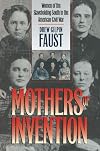
While a somewhat superficial study of Southern women during the Civil War (read Mothers of Invention by Drew Gilpin Faust for a fascinating, in-depth study of the same subject), Clinton’s thesis is interesting and she argues it well. Highly recommended show less
Clinton looks at the beginning of the myth of indolent whites and happy, clapping blacks, which predates the Civil War. Southern culture exaggerated the status of Southern white women to an impossibly elevated status, of purity, genteel behavior and dependency. The reality? Such women were almost nonexistent in show more the antebellum South; only a very few had such privileged status. Reality for Southern women,both black and white, was hard work, even for women who were wives of plantation owners.
Clinton shows how the needs of he Confederacy to keep the plantations going for the war effort emphasized this stereotype, giving women a heroic status. With the defeat of the South and the advent of the hated Reconstruction, Southern writers immediately began romanticizing the plantation and slave experiences; some of the most outrageous are slave memoirs that were written by whites!
The genre culminated in Margaret Mitchell’s racist book, Gone With The Wind. Turned into a movie by David Selznick (who did consult with the NAACP on the script) and brilliantly acted by Hattie McDanile, who won an Academy Award for her portrayal as Mammy and Vivian Leigh as Scarlett O’Hara, Tara seized hold of both the Southern and Northern imagination (for different reasons) and became an icon of a South that never was, and remains so to this day; visitors to Georgia still ask for the location of Tara.
Clinton spends her last chapter excoriating the resurgence of these false images of happy slaves and benevolent masters; photos of ceramic figures and other “collectibles” sold in the South in current times are reproduced to reinforce her point.
While a somewhat superficial study of Southern women during the Civil War (read Mothers of Invention by Drew Gilpin Faust for a fascinating, in-depth study of the same subject), Clinton’s thesis is interesting and she argues it well. Highly recommended show less
Accolades go to Ms. Catherine Clinton for her incredible history of Southern women of all colors, their men, and the serious toll the Civil War absolutely took on each and every one. Northerners, back in time, may only have heard about the federal troops and how hard it was to keep them supplied with uniforms, boots, and blankets. This is a rare account of most if not all of the sacrifices not only made on the battlefield, but to the families left to fend for themselves back home in the South. They lost nearly everything. Starvation was a part of daily life after a while. Families had to flee to safety, leaving all the possessions they could not pack in wagons and head off to who knows where.
As a historian, I have learned about this show more traumatic lifestyle in college. My professor went into great depth to inform us how cruel and degrading federal troops "had to be" to win the country back as a whole. However, from a northern Great Plains perspective, we really did not "pick a side". Everyone affected by the "war of Northern Aggression", as the South views it, was affected. But none as much as Southern women and children, both white and black. I love that Ms. Clinton is able to write from a completely unbiased perspective. This is one extremely important piece of history that needed to be told. I am so glad that it is told effectively by Ms. Clinton. My review cannot do her book the justice it deserves.
Thank you to Me. Clinton, Abbeville Press and Netgalley for giving me a free copy of this book to read and give my honest review. show less
As a historian, I have learned about this show more traumatic lifestyle in college. My professor went into great depth to inform us how cruel and degrading federal troops "had to be" to win the country back as a whole. However, from a northern Great Plains perspective, we really did not "pick a side". Everyone affected by the "war of Northern Aggression", as the South views it, was affected. But none as much as Southern women and children, both white and black. I love that Ms. Clinton is able to write from a completely unbiased perspective. This is one extremely important piece of history that needed to be told. I am so glad that it is told effectively by Ms. Clinton. My review cannot do her book the justice it deserves.
Thank you to Me. Clinton, Abbeville Press and Netgalley for giving me a free copy of this book to read and give my honest review. show less
This look at the south during the America Civil War with rose colored glasses removed was fascinating to read and at the same time slightly uncomfortable. It trains a great deal of its focus on the women of the plantations and what it was like for them throughout the many years of hardship during and after the war. The issue of slavery in this country is such a a huge and complex subject that it is impossible for any one book to cover everything, but I think this one did a wonderful job of looking at things from a slightly different angle, and educating the reader on information they may or may not know about those years.
I knew quite a bit about the plantation system and it's history, but I learned plenty in this book too. Like many of us their was always something of the romantic tone when one thought of the old South. Even with Gone with the Wind, the picnics, large parties, huge houses, hoop dresses and corsets, made it seem like everything was rosy until the Civil War. Even slavery was given short shift, as Mmamie was treated as one of the family, there was no cruelty going on in Tara. Well most of us know now that much of the old South was not all beauty and light.
What was different about this book, was that much of it focused on the roles of women, black and white. I never knew that plantation wives had it so hard, they too were slaves though in a show more more luxurious setting, but trapped all the same. Of course, there were some who were fortunate enough to not live on the plantation but instead live in a house in town. The black women I think I knew more about, but it was interesting to see the many different ways the white women lived, and their feeling toward this.
Loved the pictures, still love the idea of Ol' South, even with all its blemishes and faults, Made for many great movies and books. Wish the reality had been fact instead of illusion. Interesting read. show less
What was different about this book, was that much of it focused on the roles of women, black and white. I never knew that plantation wives had it so hard, they too were slaves though in a show more more luxurious setting, but trapped all the same. Of course, there were some who were fortunate enough to not live on the plantation but instead live in a house in town. The black women I think I knew more about, but it was interesting to see the many different ways the white women lived, and their feeling toward this.
Loved the pictures, still love the idea of Ol' South, even with all its blemishes and faults, Made for many great movies and books. Wish the reality had been fact instead of illusion. Interesting read. show less
Members
- Recently Added By
Author Information

33+ Works 3,030 Members
Catherine Clinton is the author of Harriet Tubman: The Road to Freedom and Fanny Kemble's Civil Wars. Educated at Harvard, Sussex, and Princeton, She is a member of the advisory committee to the Abraham Lincoln Bicentennial Commission, and holds a chair in U.S. history at Queen's University Belfast.
Common Knowledge
- Canonical title
- Tara Revisited: Women, War, and the Plantation Legend
- Important places
- USA
- Important events
- American Civil War (1861 | 1865)
- Dedication
- Dedicated to Aida and David Donald with affection for our afternoons in Lincoln past and future
- First words
- The most famous plantation in the American South never existed.
- Last words
- (Click to show. Warning: May contain spoilers.)And its distinctive, compelling image prods us to re-examine a fascinating crossroads of history and memory, beckoning us to revisit, yet again, another day.
Classifications
Statistics
- Members
- 108
- Popularity
- 301,158
- Reviews
- 9
- Rating
- (3.59)
- Languages
- English
- Media
- Paper, Ebook
- ISBNs
- 4
- ASINs
- 2