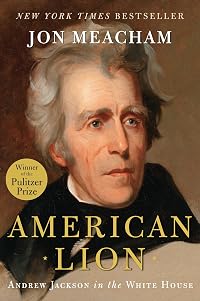
American Lion: Andrew Jackson in the White House
by Jon Meacham
On This Page
Description
A thought-provoking study of Andrew Jackson chronicles the life and career of a self-made man who went on to become a military hero and seventh president of the United States, critically analyzing Jackson's seminal role during a turbulent era in history, the political crises and personal upheaval that surrounded him, and his legacy for the modern presidency.Tags
Recommendations







Member Reviews
American Lion
Jon Meacham
April 30, 2009
512 pp.
Random House Trade Paperbacks
ISBN-10: 0812973461
ISBN-13: 978-0812973464
The challenge was going to be reading the biography, American Lion about Andrew Jackson, a President for whom I had little respect. My main concern was to remain unbiased and open-minded.
Would it be possible to look beyond his Indian Removal policies and stand on slavery? Or, the fact that he owned many slaves at his home in Tennessee, Hermitage. Owning slaves and being President of the United States was not unusual at this time as history has shown. My ignorance was to judge this man by these two evils when in fact, after reading American Lion I have come to revere him as one of the greatest presidents this country has show more ever had.
So, how can a man, this President have such diverse inconsistent beliefs when it comes to the liberty of his people. He was according to Meacham, a Jeffersonian who believed in the Constitution and believed that blacks, indians were not equal and that America was the protector of these people. He considered himself the Father of America, and everything he did, every policy he made, every speech he delivered, every breath he took was for welfare and future preservation of the Union.
He was responsible for keeping the Union together close to three decades prior to the Civil War. He fought the battle against South Carolina when they wanted to eliminate what they considered to be an unfair tariff. This tariff in their opinion penalized the South and promoted the Northern economy. Calhoun, the legendary orator, opposed Jackson on everything. He promoted states rights where Jackson believed the federal government needed more power. Jackson feared if the states were able to settle issues independently, there would eventually be no Union, and the American republic would fail. He believed the Union was a collective of all states.
Calhoun was the first to threatened the possibility of South Carolina succeeding from the Union. Jackson countered this with threats of military force and strong will. Eventually, he won. He extended the power of the presidency to include the power to veto. He was able to muster support and the eventual power to act as Commander in Chief without Congress. These were major changes in our government that are still in place today.
Meacham won a Pulitzer Prize for this book, without a doubt well deserved. He has presented a fascinating account of the 7th President from a human element. In his prologue he talks about the many contradictions of Jackson. He could be tender and aggressive, visionary and blind. He was censured by the Senate, but later he would not let this remain on his record and he fought to expunge the ruling. He succeeded. In his farewell address Meacham uses a quote of Jackson’s that reflects on his legacy:
“My public life has been a long one, and I cannot hope that it has at all times been free from errors;but I have the consolation of knowing that if mistakes have been committed they have not seriously injured the country I so anxiously endeavored to serve, and at the moment when I surrender my last public trust I leave this great people prosperous and happy, in the full enjoyment of liberty and peace, and honored and respected by every nation of the world.”(338)
Meacham has done extensive research with copious primary sources and endnotes. His writing is a delight on every page, sentimental and highly engaging. The book was well organized with short precise chapters, details are balanced with narrative. Visual support is gained with pages of pictures, although more would be preferred. My opinion of Jackson has changed forever. Whatever your opinion may be, this is a superb biography that I vigorously recommend.
Wisteria Leigh show less
Jon Meacham
April 30, 2009
512 pp.
Random House Trade Paperbacks
ISBN-10: 0812973461
ISBN-13: 978-0812973464
The challenge was going to be reading the biography, American Lion about Andrew Jackson, a President for whom I had little respect. My main concern was to remain unbiased and open-minded.
Would it be possible to look beyond his Indian Removal policies and stand on slavery? Or, the fact that he owned many slaves at his home in Tennessee, Hermitage. Owning slaves and being President of the United States was not unusual at this time as history has shown. My ignorance was to judge this man by these two evils when in fact, after reading American Lion I have come to revere him as one of the greatest presidents this country has show more ever had.
So, how can a man, this President have such diverse inconsistent beliefs when it comes to the liberty of his people. He was according to Meacham, a Jeffersonian who believed in the Constitution and believed that blacks, indians were not equal and that America was the protector of these people. He considered himself the Father of America, and everything he did, every policy he made, every speech he delivered, every breath he took was for welfare and future preservation of the Union.
He was responsible for keeping the Union together close to three decades prior to the Civil War. He fought the battle against South Carolina when they wanted to eliminate what they considered to be an unfair tariff. This tariff in their opinion penalized the South and promoted the Northern economy. Calhoun, the legendary orator, opposed Jackson on everything. He promoted states rights where Jackson believed the federal government needed more power. Jackson feared if the states were able to settle issues independently, there would eventually be no Union, and the American republic would fail. He believed the Union was a collective of all states.
Calhoun was the first to threatened the possibility of South Carolina succeeding from the Union. Jackson countered this with threats of military force and strong will. Eventually, he won. He extended the power of the presidency to include the power to veto. He was able to muster support and the eventual power to act as Commander in Chief without Congress. These were major changes in our government that are still in place today.
Meacham won a Pulitzer Prize for this book, without a doubt well deserved. He has presented a fascinating account of the 7th President from a human element. In his prologue he talks about the many contradictions of Jackson. He could be tender and aggressive, visionary and blind. He was censured by the Senate, but later he would not let this remain on his record and he fought to expunge the ruling. He succeeded. In his farewell address Meacham uses a quote of Jackson’s that reflects on his legacy:
“My public life has been a long one, and I cannot hope that it has at all times been free from errors;but I have the consolation of knowing that if mistakes have been committed they have not seriously injured the country I so anxiously endeavored to serve, and at the moment when I surrender my last public trust I leave this great people prosperous and happy, in the full enjoyment of liberty and peace, and honored and respected by every nation of the world.”(338)
Meacham has done extensive research with copious primary sources and endnotes. His writing is a delight on every page, sentimental and highly engaging. The book was well organized with short precise chapters, details are balanced with narrative. Visual support is gained with pages of pictures, although more would be preferred. My opinion of Jackson has changed forever. Whatever your opinion may be, this is a superb biography that I vigorously recommend.
Wisteria Leigh show less
 This review was written for LibraryThing Early Reviewers.
Ralph Wright, Speaker of the Vermont House of Representatives from 1985 to 1995, entitled his memoir “All Politics is Personal.” Based solely on that title, I’ll put my money on this relatively minor American state politician over world-historical Russian novelist Leo Tolstoy.
What I mean is that Tolstoy promoted the view that history is governed by vast historical tides, and that so-called great men are nothing but the foam that got lucky enough to ride the crest of the wave. Tolstoy, writing of Napoleon's failed invasion from the safe distance of fifty years, could afford in “War and Peace” to write off the Corsican as a ripple in time’s ocean.
My point is that I think Tolstoy suffered from a common error of historians, show more lovers of history, and pundits who love to use history. The godlike process of creating or consuming historical narrative can suffuse the unwary with the shekinah of inevitability. So neatly do the gears interlock, so predictably does cause lead to effect, that the personal reduces to a variable in a predestined cosmic equation.
Jon Meacham neatly sidesteps this heresy in his book on the two-term administration of Andrew Jackson, the Tennessean general and grieving widower turned president whom some feared would become an American Napoleon. For Jackson, the first president to conceive of the office as an enforcer of the people’s will rather than a mere executor of legislation, politics was personality writ large.
Meacham demonstrates this in the huge amount of space he gives to the Petticoat War, a scandal that consumed over half of Jackson’s first term and destroyed his first cabinet. Lascivious rumors swirled around the marriage of his Secretary of War, and the president’s determination to force the couple on Washington society was a warning that his would be a presidency like none before it.
Indeed, it’s difficult to imagine the scale of Jackson’s achievements without Jackson. Whether staring down the nullifiers of South Carolina, zeroing out the national debt, or killing the Bank of the United States, he stands alone in his time as a man willing to go as far as necessary to do what he believed the people wanted done. And, more often than not, he read the people correctly: to the endlessly renewed horror of political elites, Jackson’s popularity on the ground never wavered.
Meacham’s account of Jackson’s service as the seventh President of the United States is well worth your time. Meacham is even-handed, giving the president deserved credit for preserving the Union through the Nullification Crisis without attempting to justify or excuse his culpability for the ghoulish removal of southern tribes down the Trail of Tears. A dominant personality can catalyze great good or commit great evil, and Jackson did both.
Andrew Jackson was a watershed in American history, reshaping the presidency forever. Events of his administration foreshadowed the coming civil war, and Abraham Lincoln would draw on Jacksonian precedent to take federal action against rebellious states. Jackson’s administration was in many ways the end of the beginning for the Early Republic as the drift toward disunion accelerated and his theories of executive power took root. Contra Tolstoy, the “American Napoleon” mattered, and such personalities will always matter, both for good and for ill. show less
What I mean is that Tolstoy promoted the view that history is governed by vast historical tides, and that so-called great men are nothing but the foam that got lucky enough to ride the crest of the wave. Tolstoy, writing of Napoleon's failed invasion from the safe distance of fifty years, could afford in “War and Peace” to write off the Corsican as a ripple in time’s ocean.
My point is that I think Tolstoy suffered from a common error of historians, show more lovers of history, and pundits who love to use history. The godlike process of creating or consuming historical narrative can suffuse the unwary with the shekinah of inevitability. So neatly do the gears interlock, so predictably does cause lead to effect, that the personal reduces to a variable in a predestined cosmic equation.
Jon Meacham neatly sidesteps this heresy in his book on the two-term administration of Andrew Jackson, the Tennessean general and grieving widower turned president whom some feared would become an American Napoleon. For Jackson, the first president to conceive of the office as an enforcer of the people’s will rather than a mere executor of legislation, politics was personality writ large.
Meacham demonstrates this in the huge amount of space he gives to the Petticoat War, a scandal that consumed over half of Jackson’s first term and destroyed his first cabinet. Lascivious rumors swirled around the marriage of his Secretary of War, and the president’s determination to force the couple on Washington society was a warning that his would be a presidency like none before it.
Indeed, it’s difficult to imagine the scale of Jackson’s achievements without Jackson. Whether staring down the nullifiers of South Carolina, zeroing out the national debt, or killing the Bank of the United States, he stands alone in his time as a man willing to go as far as necessary to do what he believed the people wanted done. And, more often than not, he read the people correctly: to the endlessly renewed horror of political elites, Jackson’s popularity on the ground never wavered.
Meacham’s account of Jackson’s service as the seventh President of the United States is well worth your time. Meacham is even-handed, giving the president deserved credit for preserving the Union through the Nullification Crisis without attempting to justify or excuse his culpability for the ghoulish removal of southern tribes down the Trail of Tears. A dominant personality can catalyze great good or commit great evil, and Jackson did both.
Andrew Jackson was a watershed in American history, reshaping the presidency forever. Events of his administration foreshadowed the coming civil war, and Abraham Lincoln would draw on Jacksonian precedent to take federal action against rebellious states. Jackson’s administration was in many ways the end of the beginning for the Early Republic as the drift toward disunion accelerated and his theories of executive power took root. Contra Tolstoy, the “American Napoleon” mattered, and such personalities will always matter, both for good and for ill. show less
In recent years I’ve learned that I love a good biography. Presidential bios are particularly interesting because I think it takes a specific kind of person to want to be in such a lauded and attacked position of power. American Lion has been on my radar for a while and it didn’t disappoint.
Jackson broke the mold of presidents at that time. He was a fighter, a pioneer, a country boy, the opposite of the elite group of founding fathers in New England. I think he rivals Teddy Roosevelt for the title of most badass president of all time. At one point he was shot in the chest during a duel and he kept fighting!
He was more astute than most people gave him credit for. His critics often focused on his temper and stubborn nature, but he show more seemed to know when to back down or be cordial if he would benefit from it. He was fiercely loyal to his family and friends, at times to a fault. I thought it was interesting that even hundreds of years ago, the presidential office was filled with scandal and petty fights, etc. That was nothing new in the 20th century.
Jackson had his own moral code and he stuck by it. There are certainly some dark spots during his tenure as president, especially the trail of tears, which was created by his policy even if it was enacted in another president's term. Just like any other president, there were both good decisions and bad, and I’m sure that it’s much easier for us to judge them with hindsight.
BOTTOM LINE: Jackson was such an interesting president! Also, I’ll keep reading whatever Meacham chooses to write. He’s up there on my list of must read nonfiction authors with Erik Larson, Mary Roach, Bill Bryson, and a few others. I didn’t love this one as much as the author’s biography of Thomas Jefferson, but I think that has more to do with my fascinating with Jefferson.
“I was born for a storm and a calm does not suit me.” show less
Jackson broke the mold of presidents at that time. He was a fighter, a pioneer, a country boy, the opposite of the elite group of founding fathers in New England. I think he rivals Teddy Roosevelt for the title of most badass president of all time. At one point he was shot in the chest during a duel and he kept fighting!
He was more astute than most people gave him credit for. His critics often focused on his temper and stubborn nature, but he show more seemed to know when to back down or be cordial if he would benefit from it. He was fiercely loyal to his family and friends, at times to a fault. I thought it was interesting that even hundreds of years ago, the presidential office was filled with scandal and petty fights, etc. That was nothing new in the 20th century.
Jackson had his own moral code and he stuck by it. There are certainly some dark spots during his tenure as president, especially the trail of tears, which was created by his policy even if it was enacted in another president's term. Just like any other president, there were both good decisions and bad, and I’m sure that it’s much easier for us to judge them with hindsight.
BOTTOM LINE: Jackson was such an interesting president! Also, I’ll keep reading whatever Meacham chooses to write. He’s up there on my list of must read nonfiction authors with Erik Larson, Mary Roach, Bill Bryson, and a few others. I didn’t love this one as much as the author’s biography of Thomas Jefferson, but I think that has more to do with my fascinating with Jefferson.
“I was born for a storm and a calm does not suit me.” show less
Imagine John Facenda, the iconic voice of NFL Films, telling a story about a man who is complex, evil, loving, tenacious, brilliant, a mass of contradiction who heroically saves the union by in part protecting its greatest failure and sin, and you will have an understanding of American Lion: Andrew Jackson in the White House by Jon Meacham.
As with any family, it’s OK if criticism comes from inside the family, but woe to those outside its circle who dare utter a word against a member. A native of Chattanooga, Mr. Meacham is certainly a member of the Volunteer State family, and his portrayal of Tennessee’s favorite and most famous son is brilliant, fair and captivating.
Andrew Jackson, the first self-made man to become President, is a show more difficult man to figure out. Jackson, just a boy of 13, fought for his infant country’s freedom in the Revolutionary War. Standing up to a British officer earned him a scar from the sword of the man whose boots Jackson refused to shine. The legend of “Old Hickory” begins here, and grows out of Jackson’s success as a soldier, and leader of men.
As President Jackson consolidates the power of the office, and defines it as being a direct representative of the people. This and so many other concepts about the job and its role in our government that we now accept and take for granted where given to us by our seventh President. Jackson remains the last President to leave office with the United States being completely debt free. He stood up to the “nullifiers” of the south who felt that states should be able to nullify laws they did not agree with, and by reaching a compromise delayed the Civil War already brewing, especially in the slave states. This also made visible aspects of Jackson’s character that are frightening and troubling to those of us who admire him.
Jackson was an unashamed slave owner, and his treatment of his slaves is no less barbaric than any other master of his day. Likewise, Jackson’s willingness to flat out lie to Native Americans, violate every treaty past and present, and ultimately create the genocide that was the “trail of tears” places him among history’s most brutal and callus leaders.
Here is my one criticism of Mr. Meacham’s work. While he certainly did not look away from these dark, dark moments of Jackson’s life, I think Mr. Meacham could have allowed a more honest and stark view of Jackson’s crimes. Committing the folly of judging historical figures not by the mores of their day, but rather today’s accepted attitudes is something I usually find to be unfair. However, the raw, naked lack of compassion Jackson had for slaves and Native Americans demands a strong condemnation, even nearly 200 years later. History is written by its winners, and if the United States is to continue the painfully slow process of healing from slavery and the treatment of Indians, we must unflinchingly embrace our responsibility for those horrors.
American Lion is now one of my favorite Presidential biographies. Meacham is able to capture President Jackson’s force of personality and determination, while at the same time letting us see his frailty and shortcomings. It is this combination that makes the book so powerful, and allows the appreciation of our seventh President. show less
As with any family, it’s OK if criticism comes from inside the family, but woe to those outside its circle who dare utter a word against a member. A native of Chattanooga, Mr. Meacham is certainly a member of the Volunteer State family, and his portrayal of Tennessee’s favorite and most famous son is brilliant, fair and captivating.
Andrew Jackson, the first self-made man to become President, is a show more difficult man to figure out. Jackson, just a boy of 13, fought for his infant country’s freedom in the Revolutionary War. Standing up to a British officer earned him a scar from the sword of the man whose boots Jackson refused to shine. The legend of “Old Hickory” begins here, and grows out of Jackson’s success as a soldier, and leader of men.
As President Jackson consolidates the power of the office, and defines it as being a direct representative of the people. This and so many other concepts about the job and its role in our government that we now accept and take for granted where given to us by our seventh President. Jackson remains the last President to leave office with the United States being completely debt free. He stood up to the “nullifiers” of the south who felt that states should be able to nullify laws they did not agree with, and by reaching a compromise delayed the Civil War already brewing, especially in the slave states. This also made visible aspects of Jackson’s character that are frightening and troubling to those of us who admire him.
Jackson was an unashamed slave owner, and his treatment of his slaves is no less barbaric than any other master of his day. Likewise, Jackson’s willingness to flat out lie to Native Americans, violate every treaty past and present, and ultimately create the genocide that was the “trail of tears” places him among history’s most brutal and callus leaders.
Here is my one criticism of Mr. Meacham’s work. While he certainly did not look away from these dark, dark moments of Jackson’s life, I think Mr. Meacham could have allowed a more honest and stark view of Jackson’s crimes. Committing the folly of judging historical figures not by the mores of their day, but rather today’s accepted attitudes is something I usually find to be unfair. However, the raw, naked lack of compassion Jackson had for slaves and Native Americans demands a strong condemnation, even nearly 200 years later. History is written by its winners, and if the United States is to continue the painfully slow process of healing from slavery and the treatment of Indians, we must unflinchingly embrace our responsibility for those horrors.
American Lion is now one of my favorite Presidential biographies. Meacham is able to capture President Jackson’s force of personality and determination, while at the same time letting us see his frailty and shortcomings. It is this combination that makes the book so powerful, and allows the appreciation of our seventh President. show less
Rather than read another Trump tell-all book, I turned to another populist, Andrew Jackson. In Jon Meacham's telling he's more patrician than vulgarian. There's behind-the-curtain fluff driving the action here too, though, including his loyalty to John Eaton, his secretary of war, and Eaton's wife, who was a bit too frank and flirtatious for Washington in 1829. Jackson's distrust of central power seems equal parts conviction and political grudge, which makes his efforts to drain the swamp appear only somewhat more admirable than Trump's. And his convictions aren't always admirable; Old Hickory battled Native Americans in the War of 1812 and as president wanted them removed as a security threat. Yet he turned back Southern secession, show more earning the admiration of Lincoln and many presidents that followed. History, like its actors, is complicated. show less
Reading about the electoral college made me want to revisit Andrew Jackson, our 7th President. I actually read this book back in 2010, close to when it came out, but I had just had my first son and was getting no sleep with a newborn. So though this is technically a reread, I remembered almost none of it.
Jackson is a controversial president. He greatly expanded presidential power and viewed himself as a direct representative of the people. He believed this was in contrast to Congress, which until then was viewed as having the most power of the three branches. He used his veto power in a much more expansive way, vetoing bills he didn't agree with whether because of a firm-held belief or simply for a political statement. While in some show more ways, Jackson felt that because he was the direct representative of the people he should have expanded power as President, in other instances he believed in States' rights. These inconsistencies are a bit hard to understand from a modern point of view.
Three major issues are explored in this book: South Carolina's desire to nullify a federal tariff (a state's rights issue) that could have led to greater state power (and the ability to keep slavery), the removal of the Native Americans from huge swaths of land previously granted to them in treaties, and the break up of the federal bank which dispersed federal money to state banks instead of the centralized federal bank. Jackson is credited with preserving the Union by compromising the tariff in a way that allowed SC to accept it. On the Native American issue, posterity has judged him more and more harshly - rightly so in my mind. And on the bank issue? Well, I'm still a bit confused. He was supposedly combatting corruption and did balance the budget, but the country also entered a depression shortly after this move. I'd need to read more.
Jackson was a President who spoke to the average American and viewed himself as their voice in a Capitol filled with wealthy, out of touch, elitist congressmen. I'm still not sure what I think of him. This biography admits to being less of a scholarly work, and more of a look at broad topics and Jackson's relationships during his Presidency. In this way, I really liked this as an introduction to Jackson. Some day I'll tackle a more scholarly biography that gets into more detail. show less
Jackson is a controversial president. He greatly expanded presidential power and viewed himself as a direct representative of the people. He believed this was in contrast to Congress, which until then was viewed as having the most power of the three branches. He used his veto power in a much more expansive way, vetoing bills he didn't agree with whether because of a firm-held belief or simply for a political statement. While in some show more ways, Jackson felt that because he was the direct representative of the people he should have expanded power as President, in other instances he believed in States' rights. These inconsistencies are a bit hard to understand from a modern point of view.
Three major issues are explored in this book: South Carolina's desire to nullify a federal tariff (a state's rights issue) that could have led to greater state power (and the ability to keep slavery), the removal of the Native Americans from huge swaths of land previously granted to them in treaties, and the break up of the federal bank which dispersed federal money to state banks instead of the centralized federal bank. Jackson is credited with preserving the Union by compromising the tariff in a way that allowed SC to accept it. On the Native American issue, posterity has judged him more and more harshly - rightly so in my mind. And on the bank issue? Well, I'm still a bit confused. He was supposedly combatting corruption and did balance the budget, but the country also entered a depression shortly after this move. I'd need to read more.
Jackson was a President who spoke to the average American and viewed himself as their voice in a Capitol filled with wealthy, out of touch, elitist congressmen. I'm still not sure what I think of him. This biography admits to being less of a scholarly work, and more of a look at broad topics and Jackson's relationships during his Presidency. In this way, I really liked this as an introduction to Jackson. Some day I'll tackle a more scholarly biography that gets into more detail. show less
3.0-4.0 stars I debated how to rate this book. I picked this in my quest to learn more about each of the U.S. Presidents. The book is not solely based on the White House years. There is discussion of Jackson's childhood and time before his Presidency. There is a chapter or two at the end of the book about Jackson's years after his Presidency.
I learned quite a bit about Andrew Jackson that I didn't know before which was my goal so that would put this higher than 3 stars but maybe not all the way to 4 stars.
I liked Jackson's idea that he (as President) needed to represent the people who elected him (of course, there were fewer people to do so back then). He was also a trailblazer since he was the first President who was not and did not show more have direct ties to the Founding Fathers. show less
I learned quite a bit about Andrew Jackson that I didn't know before which was my goal so that would put this higher than 3 stars but maybe not all the way to 4 stars.
I liked Jackson's idea that he (as President) needed to represent the people who elected him (of course, there were fewer people to do so back then). He was also a trailblazer since he was the first President who was not and did not show more have direct ties to the Founding Fathers. show less
Members
- Recently Added By
Published Reviews
ThingScore 75
“American Lion” is enormously entertaining, especially in the deft descriptions of Jackson’s personality and domestic life in his White House. But Meacham has missed an opportunity to reflect on the nature of American populism as personified by Jackson.
added by Shortride
Mr. Meacham, the editor of Newsweek, dispenses with the usual view of Jackson as a Tennessee hothead and instead sees a cannily ambitious figure determined to reshape the power of the presidency during his time in office (1829 to 1837). Case by case, Mr. Meacham dissects Jackson’s battles and reinterprets them in a revealing new light.
added by Shortride
Lists

100 Biographies & Memoirs to Read in a Lifetime
42 works; 18 members

Best Biographies
216 works; 26 members

Presidential Books
15 works; 2 members
The Presidents
42 works; 2 members

Tennessee Writings
5 works; 1 member

100 Biographies and Memoirs to Read in a (Single) Lifetime
98 works; 12 members

al.vick-parents books
301 works; 1 member
Biographies of American Presidents
39 works; 4 members
Author Information

35+ Works 15,292 Members
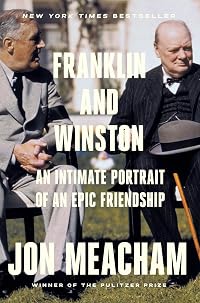
Jon Meacham was born in Chattanooga, Tennessee on May 20, 1969. He received a degree in English literature at the University of the South. He joined Newsweek as a writer in 1995. Three years later, at the age of 29, he was promoted to managing editor, supervising coverage of politics, international affairs, and breaking news. In 2006, he was show more promoted to editor at Newsweek. He is currently an executive editor at Random House. He won the Pulitzer Prize for American Lion: Andrew Jackson in the White House in 2009. His other works include Franklin and Winston: An Intimate Portrait of an Epic Friendship, American Gospel: God, the Founding Fathers, and the Making of a Nation. In 2001, he edited Voices in Our Blood: America's Best on the Civil Rights Movement. In 2013 his title Thomas Jefferson: The Art of Power made The New York Times Best Seller List. In 2015 Meacham's title Destiny and Power: The American Odyssey of George Herbert Walker Bush made The New York Times Best Seller List. His most recent book is entitled The Soul of America: The Battle for our Better Angels (2018). show less
Awards and Honors
Awards
Common Knowledge
- Canonical title
- American Lion: Andrew Jackson in the White House
- Original title
- American Lion: Andrew Jackson in the White House
- Original publication date
- 2008-11
- People/Characters
- Andrew Jackson; John Quincy Adams; Thomas Hart Benton; Nicholas Biddle; Francis Preston Blair; John C. Calhoun (show all 11); Henry Clay; John Coffee; Andrew Jackson Donelson; Emily Tennessee Donelson; John Henry Eaton
- Important places
- Washington, D.C., USA; The Hermitage, Nashville, Tennessee, USA; Nashville, Tennessee, USA
- Important events
- Jacksonian Era
- Epigraph
- The darker the night the bolder the sun.
- Theodore Roosevelt,
Life Histories of African Game Animals
I was born for a storm and a calm does not suit me.
- Andrew Jackson - Dedication
- To Mary, Maggie, and Sam
- First words
- It looked like war.
- Last words
- (Click to show. Warning: May contain spoilers.)He still lives -- and we live in the country he made, children of a distant and commanding father, a father long dead yet ever with us.
- Blurbers
- Isaacson, Walter; Goodwin, Doris Kearns; Beschloss, Michael; Wilentz, Sean; Remini, Robert V.; Brown, Tina (show all 7); Howe, Daniel Walker
- Original language
- English US
Classifications
- Genres
- Biography & Memoir, History, General Nonfiction, Nonfiction
- DDC/MDS
- 973.56092 — History & geography History of North America United States Jacksonian Era (1809-1837) Tariff of 1828 bet. the North and South, Panama Congress
- LCC
- E382 .M43 — History of the United States United States Revolution to the Civil War, 1775/1783-1861 By period Early nineteenth century, 1801/1809-1845 Jackson's administrations, 1829-1837
- BISAC
Statistics
- Members
- 3,757
- Popularity
- 4,258
- Reviews
- 70
- Rating
- (3.72)
- Languages
- English
- Media
- Paper, Audiobook, Ebook
- ISBNs
- 10
- ASINs
- 16
