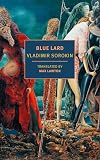
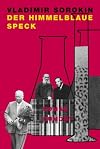
Blue Lard
by Vladimir Sorokin
On This Page
Description
"ABOUT BLUE LARD The Russian master's most infamous novel, a dystopian fever dream about cloning, alternative histories, and world domination. Vladimir Sorokin's Blue Lard is the most iconic and iconoclastic Russian novel of the last forty years. Thanks in part to its depiction of Stalin and Khrushchev having sex, which inspired a Putinist youth group to throw shredded copies of the author's books into an enormous toilet erected in front of Moscow's Bolshoi Theater, Blue Lard is the novel show more that tore Sorokin out of the Moscow Conceptualist underground and into the headlines. The book begins in a futuristic laboratory where genetic scientists speak in a Joycean dialect of Russian mixed with Chinese-peppered with ample neologisms-and work to clone famous Russian writers, who are then made to produce texts in the style of their forebears. The goal of this "script-process" is not the texts themselves, but the blue lard that collects in the small of their backs as they write. This substance is to be used to power reactors on the moon-that is, until a sect of devout nationalists breaks in to steal the blue lard, planning to send it back in time to an alternate version of the Soviet Union, one that exists on the margins of a Europe conquered by a long-haired Hitler with the ability to shoot electricity from his hands. What will come of this blue lard? Who will finally make use of its mysterious powers? Blue Lard is a stylistically acrobatic book, translated by Max Lawton into an English idiom just as bizarre as the Russian original. Evoking both Pulp Fiction and the masterpieces of Marquis de Sade, Sorokin's novel is a brutal, heady trip that annihilates all of its twentieth- (and twenty-first-) century competition in the Russian canon-and that annihilates Russia itself in a resounding act of heavy-metal dissidence"-- show lessTags
Recommendations
















Member Reviews
Rating: 4.5* of five
The Publisher Says: The Russian master's most infamous novel, a dystopian fever dream about cloning, alternative histories, and world domination.
Vladimir Sorokin’s Blue Lard is the most iconic and iconoclastic Russian novel of the last forty years. Thanks in part to its depiction of Stalin and Khrushchev having sex, which inspired a Putinist youth group to throw shredded copies of the author’s books into an enormous toilet erected in front of Moscow’s Bolshoi Theater, Blue Lard is the novel that tore Sorokin out of the Moscow Conceptualist underground and into the headlines.
The book begins in a futuristic laboratory where genetic scientists speak in a Joycean dialect of Russian mixed with Chinese—peppered show more with ample neologisms—and work to clone famous Russian writers, who are then made to produce texts in the style of their forebears. The goal of this “script-process” is not the texts themselves, but the blue lard that collects in the small of their backs as they write.
This substance is to be used to power reactors on the moon—that is, until a sect of devout nationalists breaks in to steal the blue lard, planning to send it back in time to an alternate version of the Soviet Union, one that exists on the margins of a Europe conquered by a long-haired Hitler with the ability to shoot electricity from his hands. What will come of this blue lard? Who will finally make use of its mysterious powers?
Blue Lard is a stylistically acrobatic book, translated by Max Lawton into an English idiom just as bizarre as the Russian original. Evoking both Pulp Fiction and the masterpieces of Marquis de Sade, Sorokin’s novel is a brutal, heady trip that annihilates all of its twentieth- (and twenty-first-) century competition in the Russian canon—and that annihilates Russia itself in a resounding act of heavy-metal dissidence.
I RECEIVED A DRC FROM THE PUBLISHER VIA EDELWEISS+. THANK YOU.
My Review: Unquestionably the weirdest NYRB book I have yet read...and the second-weirdest alternate history book I have read this century.
It requires serious effort to engage with the first third or so of the book, as you are in medias res without even the usual linguistic snowpoles showing you where the obstacles are. You are, as is so often the case in Life, in a strange place with strange people you do not know or even understand as they have conversations around you.
After that point, there is a shift in the linguistic register that brings us closer to normal conversational tones. Not normal-normal, mind you, though closer. (There is a partial Glossary at the end for the desperately confused.) Claude Simon’s nouveau roman novels, there is a difficult beginning that requires you to make an investment of concentration. We have left the normie-world of relatable plots, ordinary characters you could meet at the supermarket, sentences that start and finish in the same paragraph, and other such bourgeois fripperies. This is not a read that rewards being treated as a novel. This is writing that needs to be experienced and absorbed for itself not its meanings.
Sorokin, like so many truly inventive folk, is a natural iconoclast. At twenty-five, in 1980, he was baptized into the Russian Orthodox Church, at that time still under Communist-Party suspicion. The nature of iconoclasm is always to resist, so in this era of Church/state rapprochement, he opposes Putin’s war against Ukraine. It is not as though his work work was ever popular with the regime, what with Hitler raping Stalin’s daughter, Stalin and Khruschev sexing it up (ewww!), and a variety of body-horror tropes, that Little Vladdy Pu-Pu just could not ever be on board with. This, among other not-socialist-realist flourishes, will mean no invite-to-dinner from the Kremlin. Now, being good little bourgeois decoders, we too like our novels to Mean Something, like socialist realist work...but that is not on offer here.
Sorokin does not Make Sense, he makes you think about how a story is more than just the beginning-middle-end structure we are ingrained to expect. He offers not one kind of Sense, but multiple ways to experience words and ideas forming into stories. This, and the transgressive nature of the words and ideas he does present us, makes a lot...A LOT...of people really, really angry. This being a feature of the Sorokin brand. I do not get the point of their outrage and negativity being performed. Giving the man the thing he tried to get from you? The point of that is...?
A read that demands effort, does it an awful lot of the time, and allows you to decide for yourself if it means anything at all.
Like Life itself, it makes you the Author’s apprentice. You can decide if that is your jam, but I am here to say that it is a read very much worth my time and effort and could be for you as well. Remember how mad it made the Russian overlord. Buy it to be ornery, to oppose the banning/forbidding/controlling ethos that increasingly envelops the information-delivery world.
I bet lots of y’all end up liking it. show less
The Publisher Says: The Russian master's most infamous novel, a dystopian fever dream about cloning, alternative histories, and world domination.
Vladimir Sorokin’s Blue Lard is the most iconic and iconoclastic Russian novel of the last forty years. Thanks in part to its depiction of Stalin and Khrushchev having sex, which inspired a Putinist youth group to throw shredded copies of the author’s books into an enormous toilet erected in front of Moscow’s Bolshoi Theater, Blue Lard is the novel that tore Sorokin out of the Moscow Conceptualist underground and into the headlines.
The book begins in a futuristic laboratory where genetic scientists speak in a Joycean dialect of Russian mixed with Chinese—peppered show more with ample neologisms—and work to clone famous Russian writers, who are then made to produce texts in the style of their forebears. The goal of this “script-process” is not the texts themselves, but the blue lard that collects in the small of their backs as they write.
This substance is to be used to power reactors on the moon—that is, until a sect of devout nationalists breaks in to steal the blue lard, planning to send it back in time to an alternate version of the Soviet Union, one that exists on the margins of a Europe conquered by a long-haired Hitler with the ability to shoot electricity from his hands. What will come of this blue lard? Who will finally make use of its mysterious powers?
Blue Lard is a stylistically acrobatic book, translated by Max Lawton into an English idiom just as bizarre as the Russian original. Evoking both Pulp Fiction and the masterpieces of Marquis de Sade, Sorokin’s novel is a brutal, heady trip that annihilates all of its twentieth- (and twenty-first-) century competition in the Russian canon—and that annihilates Russia itself in a resounding act of heavy-metal dissidence.
I RECEIVED A DRC FROM THE PUBLISHER VIA EDELWEISS+. THANK YOU.
My Review: Unquestionably the weirdest NYRB book I have yet read...and the second-weirdest alternate history book I have read this century.
It requires serious effort to engage with the first third or so of the book, as you are in medias res without even the usual linguistic snowpoles showing you where the obstacles are. You are, as is so often the case in Life, in a strange place with strange people you do not know or even understand as they have conversations around you.
After that point, there is a shift in the linguistic register that brings us closer to normal conversational tones. Not normal-normal, mind you, though closer. (There is a partial Glossary at the end for the desperately confused.) Claude Simon’s nouveau roman novels, there is a difficult beginning that requires you to make an investment of concentration. We have left the normie-world of relatable plots, ordinary characters you could meet at the supermarket, sentences that start and finish in the same paragraph, and other such bourgeois fripperies. This is not a read that rewards being treated as a novel. This is writing that needs to be experienced and absorbed for itself not its meanings.
Sorokin, like so many truly inventive folk, is a natural iconoclast. At twenty-five, in 1980, he was baptized into the Russian Orthodox Church, at that time still under Communist-Party suspicion. The nature of iconoclasm is always to resist, so in this era of Church/state rapprochement, he opposes Putin’s war against Ukraine. It is not as though his work work was ever popular with the regime, what with Hitler raping Stalin’s daughter, Stalin and Khruschev sexing it up (ewww!), and a variety of body-horror tropes, that Little Vladdy Pu-Pu just could not ever be on board with. This, among other not-socialist-realist flourishes, will mean no invite-to-dinner from the Kremlin. Now, being good little bourgeois decoders, we too like our novels to Mean Something, like socialist realist work...but that is not on offer here.
Sorokin does not Make Sense, he makes you think about how a story is more than just the beginning-middle-end structure we are ingrained to expect. He offers not one kind of Sense, but multiple ways to experience words and ideas forming into stories. This, and the transgressive nature of the words and ideas he does present us, makes a lot...A LOT...of people really, really angry. This being a feature of the Sorokin brand. I do not get the point of their outrage and negativity being performed. Giving the man the thing he tried to get from you? The point of that is...?
A read that demands effort, does it an awful lot of the time, and allows you to decide for yourself if it means anything at all.
Like Life itself, it makes you the Author’s apprentice. You can decide if that is your jam, but I am here to say that it is a read very much worth my time and effort and could be for you as well. Remember how mad it made the Russian overlord. Buy it to be ornery, to oppose the banning/forbidding/controlling ethos that increasingly envelops the information-delivery world.
I bet lots of y’all end up liking it. show less
First, you absolutely must read this as an ebook, so you can easily look up the avalanche of Chinese, Russian, German, French and other untranslated speech and terms in this undefinable book. As the afterword tells us, it's probably not reasonable to expect to make complete sense of the story, but along the way you will be treated to science fiction, wall-to-wall political satire, creative celebrity pornography, pastiches of famous Russian authors' writing styles, and so much else. Such as alternative history, which becomes the driving force of the last half of the book. In that respect, it most resembles the work of Lavie Tidhar--but Tidhar is a bit more coherent and far less extreme, but in much of his work, also far less fun. In show more fact, I don't remember laughing while reading Tidhar. But there are passages here which are so insanely ridiculous, you can't help but laugh. Definitely not for everyone, but if you can get through the story's first episode - through when the commandos arrive, it is smoother sailing from that point on. Unique. Really! (But it's my first Sorokin...) show less
Finally, the comic payoff of my adolescent obsession with 19th century russian novels.
Jag förstod inte den här boken och klarade inte av att läsa vidare. Det var för många små historier som blandades, för många personer och för mycket kinesiska. Historien lät intressant men det hände aldrig något spännande. Jag gav upp efter 250 sidor.
Dec 1, 2006Swedish
Ratings
Members
- Recently Added By
Author Information

67+ Works 3,019 Members
Some Editions
Awards and Honors
Distinctions
Notable Lists
Series
Belongs to Publisher Series
Work Relationships
Is contained in
Common Knowledge
- Canonical title*
- 青い脂
- Original title
- Голубое сало
- Epigraph
- "Wait, wait!" said Pantagruel. "See? There are more that still haven't thawed out."
Then he threw on the deck in front of us handfuls of frozen words, which might have been sugared almonds, like so many pearls of different... (show all) colors. We saw bright red words, green words, blue words, golden words. And after they had been warmed a bit, between our hands, they melted like snow and we actually heard them, but without understanding a word, for they were in a barbarous language...
I wanted to save some bright red words by putting them in oil, as you preserve snow and ice, storing them under good clean straw. -Francois Rabelais, Gargantua and PantagruelBook 4, Chapter 56 (trans. Burton Raffel)
There are more idols than realities in the world: that is my "evil eye" upon this world; that is also my "evil ear." -Friedrich Nietzsche, Twilight of the Idols (trans. Walter Kaufman and R.J. Hollingale) - First words
- 2 JANUARY
Hello, mon petit.
My heavy little boy, my tender bastard, my divine and vile top-direct. Remembering you - such infernal business, rips loawai - is heavy in the strictest sense of the term. - Blurbers
- 佐知子, 岸本; 塔, 円城
- Original language
- Russian
- Canonical DDC/MDS
- 891.73
- Canonical LCC
- PG3488.O66
*Some information comes from Common Knowledge in other languages. Click "Edit" for more information.
Classifications
- Genres
- Fiction and Literature, General Fiction, Science Fiction
- DDC/MDS
- 891.73 — Literature & rhetoric Literatures of other languages East Indo-European and Celtic literatures Russian and East Slavic languages Russian fiction
- LCC
- PG3488 .O66 — Language and Literature Slavic languages and literatures. Baltic languages. Albanian language Slavic. Baltic. Albanian Russian literature Individual authors and works 1961-2000
- BISAC
Statistics
- Members
- 243
- Popularity
- 134,313
- Reviews
- 6
- Rating
- (3.43)
- Languages
- 9 — English, Estonian, Finnish, French, German, Hungarian, Japanese, Russian, Swedish
- Media
- Paper, Ebook
- ISBNs
- 17
- ASINs
- 2