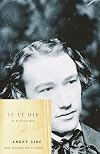
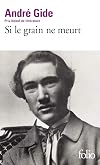
If It Die
by André Gide
On This Page
Description
This is the major autobiographical statement from Nobel laureate André Gide. In the events and musings recorded here we find the seeds of those themes that obsessed him throughout his career and imbued his classic novels The Immoralist and The Counterfeiters. Gide led a life of uncompromising self-scrutiny, and his literary works resembled moments of that life. With If It Die, Gide determined to relay without sentiment or embellishment the circumstances of his childhood and the birth of show more his philosophic wanderings, and in doing so to bring it all to light. Gide’s unapologetic account of his awakening homosexual desire and his portrait of Oscar Wilde and Lord Alfred Douglas as they indulged in debauchery in North Africa are thrilling in their frankness and alone make If It Die an essential companion to the work of a twentieth-century literary master. show lessTags
Recommendations




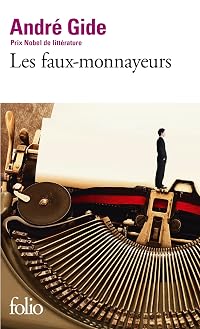














Member Recommendations

Member Reviews
This is Nobel Laureate André Gide's major autobiographical statement. We may see the seeds of the themes that preoccupied him throughout his career in the incidents and musings documented here. Gide lived a life of unflinching self-examination, and his literary creations were snapshots of that existence. With If It Die, Gide set out to recount the events of his youth and the birth of his philosophical wanderings without sentiment or exaggeration, and in doing so, to bring it all to light. If It Die is a significant book of twentieth-century literature because of Gide's unashamed depiction of his awakening homosexual yearning and his portrait of Oscar Wilde and Lord Alfred Douglas as they indulged in decadence in North Africa.
Published in France in 1902 as Si le grain ne meurt.
Ratings
Members
- Recently Added By
Author Information

Gide, the reflective rebel against bourgeois morality and one of the most important and controversial figures in modern European literature, published his first book anonymously at the age of 18. Gide was born in Paris, the only child of a law professor and a strict Calvinist mother. As a young man, he was an ardent member of the symbolist group, show more but the style of his later work is more in the tradition of classicism. Much of his work is autobiographical, and the story of his youth and early adult years and the discovery of his own sexual tendencies is related in Si le grain ne meurt (If it die . . .) (1926). Corydon (1923) deals with the question of homosexuality openly. Gide's reflections on life and literature are contained in his Journals (1954), which span the years 1889--1949. He was a founder of the influential Nouvelle Revue Francaise, in which the works of many prominent modern European authors appeared, and he remained a director until 1941. He resigned when the journal passed into the hands of the collaborationists. Gide's sympathies with communism prompted him to travel to Russia, where he found the realities of Soviet life less attractive than he had imagined. His accounts of his disillusionment were published as Return from the U.S.S.R. (1937) and Afterthoughts from the U.S.S.R. (1938). Always preoccupied with freedom, a champion of the oppressed and a skeptic, he remained an incredibly youthful spirit. Gide himself classified his fiction into three categories: satirical tales with elements of farce like Les Caves du Vatican (Lafcadio's Adventures) (1914), which he termed soties; ironic stories narrated in the first person like The Immoralist (1902) and Strait Is the Gate (1909), which he called recits; and a more complex narrative related from a multifaceted point of view, which he called a roman (novel). The only example of the last category that he published was The Counterfeiters (1926). Throughout his career, Gide maintained an extensive correspondence with such noted figures as Valery, Claudel, Rilke, and others. In 1947, he received the Nobel Prize for Literature. (Bowker Author Biography) show less
Some Editions
Awards and Honors
Series
Belongs to Publisher Series
Work Relationships
Is contained in
Common Knowledge
- Canonical title
- If It Die
- Original title
- Si le grain ne meurt
- Original publication date
- 1920
- People/Characters*
- Andrè; Madeleine
- Important places*
- Paris, Île-de-France, France; Uzès, Gard, Occitanie, France; La Roque-Baignard, Calvados, Normandie, France; Montpellier, Hérault, Occitanie, France; Alger, Algérie
- Epigraph
- Except a corn of wheat fall into the ground and die, it abideth alone: but if it die, it bringeth forth much fruit. John XII, 24.
- First words
- I was born on November 22, 1869.
- Quotations
- -The secret motive of our acts - I mean of the most decisive ones - escapes us; and not in memory but at the very moment of their occurrence.
-At last I realized how much pride lay concealed in this resistance of mine to w... (show all)hat I had once called temptation, but which I called so no longer, now that I had ceased to fight against it. - Last words
- (Click to show. Warning: May contain spoilers.)Shortly after this, we became engaged.
- Original language*
- Français
*Some information comes from Common Knowledge in other languages. Click "Edit" for more information.
Classifications
- Genres
- Biography & Memoir, LGBTQ+
- DDC/MDS
- 848.91209 — Literature & rhetoric French Literature French miscellaneous writings 1900- 1900-1999 1900-1945 Individual authors
- LCC
- PQ2613 .I2 — Language and Literature French, Italian, Spanish and Portuguese literatures French literature Modern literature 1900-1960
- BISAC
Statistics
- Members
- 572
- Popularity
- 51,360
- Reviews
- 2
- Rating
- (3.52)
- Languages
- 11 — Dutch, English, Finnish, French, German, Italian, Japanese, Portuguese, Spanish, Swedish, Turkish
- Media
- Paper, Ebook
- ISBNs
- 26
- ASINs
- 33