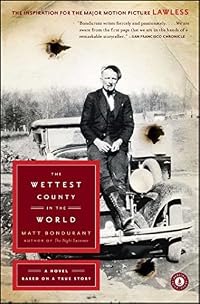
The Wettest County in the World
by Matt Bondurant
On This Page
Description
Fiction. Literature. Based on the true story of his grandfather and two granduncles, Matt Bondurant's novel is a gripping tale of brotherhood, greed, and murder. The Bondurant boys were a notorious gang of roughnecks and moonshiners who ran liquor through Franklin County during Prohibition and after. The brothers played a central role in a major conspiracy trial and its violent end. In 1935, Sherwood Anderson, working on a magazine story, finds himself driving along the dusty red roads show more trying to find the brothers and break the silence that shrouds Franklin County. In vivid, muscular prose, Matt Bondurant brings these men—their dark deeds, their long silences, their deep desires—to life. His understanding of the passion, violence, and desperation at the center of this world is both heartbreaking and magnificent. show lessTags
Recommendations







Member Recommendations
Member Reviews
This novel about three brothers who made and sold moonshine during the Prohibition era, may be set in the hills of southwestern Virginia, but it is very much a gangster story. It has as much in common with the great mobster tales as it does with any typical Southern literature. There are the family connections. The code of silence. The shady law enforcement officials. The strong, stoic women.
Early in the book, the youngest brother, Jack, is taken with the excitement of the moonshining life, but as he gets drawn in, he starts to see the dark side of running liquor. His brothers are the more jaded old hands, each with his own demons. The sections focusing on the emotional journeys of the brothers are the most compelling parts of the show more book. The trouble is that it took too long to get into their respective stories.
Instead of telling the story straightforwardly, the author’s frames the story with incidents from Sherwood Anderson’s trip to Franklin County. This seems like a brilliant stroke that shows that this industry was a big deal in its day and also demonstrates just how closed the community is to outsiders. But as it turns out, Anderson’s story is just one story too many. Whenever the book returns to Anderson, the core of the story, the three brothers, disappears from view. If Bondurant had dropped some of Anderson's literary musings and confined Anderson’s investigations to the start of each of the novel’s three sections, he might have gotten the benefits of using Anderson as an outside witness without making him a drag on the story.
As a Franklin County native, I took a particular pleasure in seeing many places I know mentioned and in recognizing many of the family names. There are a couple of geographic gaffes that probably only locals would notice or care about. I thought Bondurant did an excellent job overall with the diction, every now and then bringing in a phonetic spelling that isn’t exactly common but that gets the accent of the region just right. He also doesn’t overwhelm the reader with regional dialect.
I wish I could say I loved the book and could recommend it without reservations, but I can’t quite do that. The Anderson subplot is a serious problem, and the book only hits it stride when Anderson disappears for long stretches. I do love what Bondurant was trying to do, and I loved the parts where he succeeded. If rural Southern gangsters have any sort of appeal to you, this may just be worth checking out.
See my complete review at Shelf Love. show less
Early in the book, the youngest brother, Jack, is taken with the excitement of the moonshining life, but as he gets drawn in, he starts to see the dark side of running liquor. His brothers are the more jaded old hands, each with his own demons. The sections focusing on the emotional journeys of the brothers are the most compelling parts of the show more book. The trouble is that it took too long to get into their respective stories.
Instead of telling the story straightforwardly, the author’s frames the story with incidents from Sherwood Anderson’s trip to Franklin County. This seems like a brilliant stroke that shows that this industry was a big deal in its day and also demonstrates just how closed the community is to outsiders. But as it turns out, Anderson’s story is just one story too many. Whenever the book returns to Anderson, the core of the story, the three brothers, disappears from view. If Bondurant had dropped some of Anderson's literary musings and confined Anderson’s investigations to the start of each of the novel’s three sections, he might have gotten the benefits of using Anderson as an outside witness without making him a drag on the story.
As a Franklin County native, I took a particular pleasure in seeing many places I know mentioned and in recognizing many of the family names. There are a couple of geographic gaffes that probably only locals would notice or care about. I thought Bondurant did an excellent job overall with the diction, every now and then bringing in a phonetic spelling that isn’t exactly common but that gets the accent of the region just right. He also doesn’t overwhelm the reader with regional dialect.
I wish I could say I loved the book and could recommend it without reservations, but I can’t quite do that. The Anderson subplot is a serious problem, and the book only hits it stride when Anderson disappears for long stretches. I do love what Bondurant was trying to do, and I loved the parts where he succeeded. If rural Southern gangsters have any sort of appeal to you, this may just be worth checking out.
See my complete review at Shelf Love. show less
I'm not rating this 1 star because Matt Bondurant is a bad writer. He's not. And I like that he wrote a novel based on the lives of his grandfather, two great-uncles and the family stories about them, as well as the local legends about their indestructibility, especially that of Forrest Bondurant. I picked this up on audio because I knew this was based on a true story that I found intriguing.
The reason I'm giving it 1 star is because I hated pretty much every minute of my work commute while I listened to this. It's sheer misery from start to finish, with no real bright points in the mundane, depressing, violent lives of the protagonists.
The focus is mostly on Jack Bondurant, the author's grandfather in real life, and as portrayed in show more the novel, the least interesting of the brothers. For a portrayal of his grandfather, it was decidedly unsentimental, even negative. I certainly didn't like him. I wish there had been more focus on Forrest. I suppose the author wanted to keep him mysterious, as maybe he was in life. I don't know, but his portions of the story were more interesting to me than any others. Keeping the focus on Jack was unconventional, which was maybe what the author was going for, but it didn't make for enjoyable reading (or listening, in my case).
I know a lot of people hated the jumps forward in time, where Sherwood Anderson was trying to track down a story on a famous female moonshiner and stumbled on the Bondurant story. I actually didn't mind these breaks. The author seems to be fascinated by Sherwood Anderson, and I wonder if I would understand why he wrote the book the way he did if I were well-versed in the writing of Sherwood Anderson. I suspect I would.
In the end, there was no romance, heroism or adventure in this story about a legendary trio of brothers who were moonshiners during Prohibition. I'm sure that was intentional, but darn it, it wasn't very fun. show less
The reason I'm giving it 1 star is because I hated pretty much every minute of my work commute while I listened to this. It's sheer misery from start to finish, with no real bright points in the mundane, depressing, violent lives of the protagonists.
The focus is mostly on Jack Bondurant, the author's grandfather in real life, and as portrayed in show more the novel, the least interesting of the brothers. For a portrayal of his grandfather, it was decidedly unsentimental, even negative. I certainly didn't like him. I wish there had been more focus on Forrest. I suppose the author wanted to keep him mysterious, as maybe he was in life. I don't know, but his portions of the story were more interesting to me than any others. Keeping the focus on Jack was unconventional, which was maybe what the author was going for, but it didn't make for enjoyable reading (or listening, in my case).
I know a lot of people hated the jumps forward in time, where Sherwood Anderson was trying to track down a story on a famous female moonshiner and stumbled on the Bondurant story. I actually didn't mind these breaks. The author seems to be fascinated by Sherwood Anderson, and I wonder if I would understand why he wrote the book the way he did if I were well-versed in the writing of Sherwood Anderson. I suspect I would.
In the end, there was no romance, heroism or adventure in this story about a legendary trio of brothers who were moonshiners during Prohibition. I'm sure that was intentional, but darn it, it wasn't very fun. show less
I was drawn to this book by the movie, which I liked very much. Inevitably, I compare the two. The book flashes back and forth between and early and mid-30s. I am glad they didn't do that in the movie and confused why this Boudrant scion chose to do it in his admittedly imagined history. The author romanticized for him this family history over the impossible to find The Great Moonshine Conspiracy Trial Of 1935 and other obscure histories. Some of the drama I am surprised did not make it to the film: like the bone-crunching long-rolling contest. The humanizing, figural whittling of Forrest Bondurant seems like another missed opprtunity. I liked discovering from the book the investigatory Sherwood Anderson raised to the level of a main show more character. I found many of his short story collections are available at the moment for free for the Kindle, so I look forward to reading those, now. show less
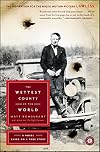
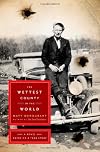
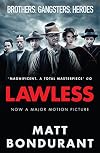
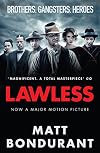
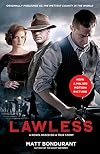
You would think that a prohibition era tale of bootleggers vs. corrupt law officers with a cover photo that will remind you of the classic Bonnie & Clyde poses in front of period automobiles would make for a compelling read, but I didn't find that to be the case with this book. I found this to be a very slow-going read due to a lack of momentum caused by the jumps in the time-line structure. This also resulted in a lack of suspense as a lot of the plot resolutions were also known ahead of time.
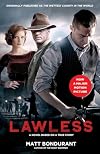
Matt Bondurant's "The Wettest County in the World" (aka "Lawless" in the July 2012 movie tie-in reprint edition) is a history-based fictional novel about the lives of the author's own grandfather Jack and his great-uncles Howard and Forrest show more Bondurant. It relates how the Bondurant brothers ran a bootleg liquor operation (which is called 'blockading' in the local vernacular of the book) in Jackson County, Virginia in the late 1920's/early 1930's. The book's title is based on a quote from writer Sherwood Anderson which is one of the novel's epigraphs: "... the wettest section in the U.S.A. …the spot that fairly dripped illicit liquor, and kept right on dripping it after prohibition ended…is Franklin County, Virginia."
This huge amount of illegal liquor production required a network of corrupt law officials and officers to keep it protected and some of that came to light in an eventual trial which was documented by T. Keister Greer in "The Great Moonshine Conspiracy Trial of 1935". Greer's book became a major source for author Bondurant's fictional tale along with his family's personal stories. Bondurant's book in turn became the source for Nick Cave's screenplay for the film "Lawless" directed by John Hillcoat which premiered at the Cannes Film Festival in May 2012 and is scheduled for a general theatrical release in late August 2012.
The story is told in flashbacks from the time of the 1935 trial with writer Sherwood Anderson reporting on the scene on behalf of his own newspapers and also doing research for his later novel "Kit Brandon" which was built around the local myths of female blockader Willie Carter Sharpe (who was also perhaps the inventor of the American muscle car, due to her souped-up Fords used to outrun law officers). Anderson's history is portrayed reasonably accurately except for an error in his publisher's name (Liverright used instead Boni & Liveright) and Ernest Hemingway's 1926 "The Torrents of Spring" parody of Anderson's 1925 "Dark Laughter" mis-dated as if it was from 1934. The constant jumps back and forth between 1929-30 and 1935 took a lot of suspense and momentum out of the book though and made for difficult reading although each of the chapters by themselves were quite evocative in portraying the atmosphere of the Virginia Appalachian settings. show less
Matt Bondurant's "The Wettest County in the World" (aka "Lawless" in the July 2012 movie tie-in reprint edition) is a history-based fictional novel about the lives of the author's own grandfather Jack and his great-uncles Howard and Forrest show more Bondurant. It relates how the Bondurant brothers ran a bootleg liquor operation (which is called 'blockading' in the local vernacular of the book) in Jackson County, Virginia in the late 1920's/early 1930's. The book's title is based on a quote from writer Sherwood Anderson which is one of the novel's epigraphs: "... the wettest section in the U.S.A. …the spot that fairly dripped illicit liquor, and kept right on dripping it after prohibition ended…is Franklin County, Virginia."
This huge amount of illegal liquor production required a network of corrupt law officials and officers to keep it protected and some of that came to light in an eventual trial which was documented by T. Keister Greer in "The Great Moonshine Conspiracy Trial of 1935". Greer's book became a major source for author Bondurant's fictional tale along with his family's personal stories. Bondurant's book in turn became the source for Nick Cave's screenplay for the film "Lawless" directed by John Hillcoat which premiered at the Cannes Film Festival in May 2012 and is scheduled for a general theatrical release in late August 2012.
The story is told in flashbacks from the time of the 1935 trial with writer Sherwood Anderson reporting on the scene on behalf of his own newspapers and also doing research for his later novel "Kit Brandon" which was built around the local myths of female blockader Willie Carter Sharpe (who was also perhaps the inventor of the American muscle car, due to her souped-up Fords used to outrun law officers). Anderson's history is portrayed reasonably accurately except for an error in his publisher's name (Liverright used instead Boni & Liveright) and Ernest Hemingway's 1926 "The Torrents of Spring" parody of Anderson's 1925 "Dark Laughter" mis-dated as if it was from 1934. The constant jumps back and forth between 1929-30 and 1935 took a lot of suspense and momentum out of the book though and made for difficult reading although each of the chapters by themselves were quite evocative in portraying the atmosphere of the Virginia Appalachian settings. show less
This is a slice of American history brought on by the depression, lack of education and alcoholism. Violence is a given. It follows the American tradition of making outlaws into folk heroes. It is a good story but I had a problem with the sequence of chapters. The numbers were in sequence but not the content. It kept jumping back and forth between the years making it hard to follow. If you like this era of history, you will enjoy the book.
Excellent book , colourful characters from virginia Appalachians, bootleggers, embryonic NASCAR drivers skeedattling from the police.. heroes and antihero.
I agree with other readers who felt that there is a great story here, but it was slowed by the author's use of a writer trying to research the tale. The time-jumping did not add to or enhance the story, and was rather annoying. I wish the author had just told the story in a more straight-forward manner.
That said, Rick Bragg told a similar tale when he wrote about his bootlegging grandfather in "Ava's Man", a more gripping tale, told by a far better writer about a much more intriguing man.
N.B. - 2015 - Just watched the movie on netflicks, starring Tom Hardy and Shia Leboeuf. It was done in a linear fashion, and although crazy violent, it was so much better! I know it didn't do well in theaters, but I did like it a lot as a movie!
That said, Rick Bragg told a similar tale when he wrote about his bootlegging grandfather in "Ava's Man", a more gripping tale, told by a far better writer about a much more intriguing man.
N.B. - 2015 - Just watched the movie on netflicks, starring Tom Hardy and Shia Leboeuf. It was done in a linear fashion, and although crazy violent, it was so much better! I know it didn't do well in theaters, but I did like it a lot as a movie!
Members
- Recently Added By
Published Reviews
ThingScore 75
Bondurant is a nimble writer, especially when it comes to depicting gore and guts. His descriptions of the warped and wounded can leave a reader queasy, but the liveliness of his writing makes it hard for even the most lily-livered to look away.
added by Shortride
Author Information

12+ Works 991 Members
Matt Bondurant was born and raised in Alexandria, Virginia, and attended James Madison University where he received a B.A. and M.A., and received his PhD from Florida State University, where he was a Kingsbury Fellow. Aside from Writing, Matt worked for the Associated Press National Broadcast Office in Washington DC, an NPR station in Virginia as show more an on-air announcer and producer, and as a Steward at the British Museum in London, England. He currently teaches literature and writing at University of Texas at Dallas and lives in Dallas. (Bowker Author Biography) show less
Awards and Honors
Distinctions
Work Relationships
Has the adaptation
Common Knowledge
- Canonical title
- The Wettest County in the World
- Original title
- The Wettest County in the World
- Alternate titles
- Lawless
- Original publication date
- 2008-10-14
- People/Characters
- Jack Bondurant; Forrest Bondurant; Howard Bondurant; Sherwood Anderson
- Important places
- Appalachia, USA
- Related movies
- Lawless (2012 | IMDb)
- Epigraph
- In one county (Franklin) it is claimed 99 people out of 100 are making, or have some connection with liquor. - Official Records of the National Commission on Law Observance and Enforcement 1935, VOl 4, p. 1075
What is... (show all) the wettest section in the U.S.A., the place where during the prohibition and since, the most illicit liquor has been made? The extreme wet spot, per number of people, isn't NY or Chicago...the spot that fairly dripped illicit liquor, and kept right on dripping it after prohibition ended...is Franklin County, Virginia. Sherwood Anderson, Liberty magazine, 1935
Cruelty, like breadfruit and pineapples, is a product, I beliieve, of the South. Sherwood ANderson, A Story Teller's Story - Dedication
- For my parents
- First words
- The brindled sow stood in the corner, glowering at the boy.
- Last words
- (Click to show. Warning: May contain spoilers.)Everything else, as Sherwood Anderson would say, is "transmuted by fancy."
- Blurbers
- Martin, Lee; Livesey, Margot; Avery, Ellis; Cheuse, Alan
- Original language
- English
Classifications
Statistics
- Members
- 480
- Popularity
- 62,974
- Reviews
- 13
- Rating
- (3.42)
- Languages
- English, French, Italian
- Media
- Paper, Audiobook, Ebook
- ISBNs
- 19
- ASINs
- 9