On This Page
Description
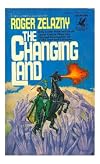
The Changing Land picks up shortly after the events chronicled in Dilvish, the Damned. Dilvish must gain entry to Castle Timeless if he is to destroy his nemeses Jelerak. Unbenounced to Dilvish, Jelerak is also seeking to gain entrance to his own castle as his apprentice has blocked him out while attempting to lean the castles secrets so that he may become lord of Castle Timeless. The castle is protected by a lethal, chaotic, ever-changing land. In a race against time and reality itself both show more Dilvish and Jelerak must survive the maze-like changing lands and then somehow survive whatever traps await them and perhaps even the elder gods themselves may intervene if the whim strikes them. A breathtaking grand adventure!. show lessTags
Recommendations

















Member Reviews
Zelazny's tale "The Bells of Shoredan" (included in "Dilvish the Damned") snared my pre-adolescent love of unnatural wonder, and although the remaining short stories and this single Dilvish novel did not rise to the emotions raised by that first introduction to Dilvish and his world (one purportedly inspired by, yet in my humble opinion did not achieve the majesty of, "The Dying Earth" works of Jack Vance, there is a charm to them still. "The Changing Land" perhaps is the most like Vance and, despite the rare anachronism (e.g "St. Vitus Dance," and the rare use of the modern vernacular), I found I enjoyed the novel better upon second reading since the first nearly four decades past. I especially enjoyed the nods to Lovecraft - Frank show more Belknap Long (The Hounds of Thandolos/Tindalos) and particualrly William Hope Hodgson ("Hodgson" appears as a likeable white sorcerer in the novel; Castle Timeless and its pig-men resonate with Hodgson's novel's "The House on the Borderland," and the trip to the end of the world resonates with "The Night Land"). Zelazy's sprinkling of marvelous uncanny imagery created by the emanations from a god going mad are delightful.
[WARNING: SPOILER BELOW]
.
.
.
For me, there were two disappointments at story's end:
--First, the reapperance of Black, Dilvish's companion who Dilvish last saw turned to a glass staure, at the tale's climax I feel should have, but did not, evoke any emotion (surprise or "where've you been?") from Dilvish;
--Second, that the long-sought battle anticipated through all the stories and this novel between Dilvish and his sorcerer nemesis Jelerak never occurs, Jelerak literally being lifted from the scene by, in essence, a deus ex machina.
I wonder if the latter was, perhaps, by design. That is, did Zelazny envison possible additional tales of Dilvish? Dilvish returning to an, as yet, unexplored Elfland with a potentail sorceress love interest, and his companion Black who has been revealed to not be the demon of Hell believed but, the reader has been told, is a "little brother" to the gods. I would be delighted to see how these new threads could have been woven into a new Dilvish adventure. show less
[WARNING: SPOILER BELOW]
.
.
.
For me, there were two disappointments at story's end:
--First, the reapperance of Black, Dilvish's companion who Dilvish last saw turned to a glass staure, at the tale's climax I feel should have, but did not, evoke any emotion (surprise or "where've you been?") from Dilvish;
--Second, that the long-sought battle anticipated through all the stories and this novel between Dilvish and his sorcerer nemesis Jelerak never occurs, Jelerak literally being lifted from the scene by, in essence, a deus ex machina.
I wonder if the latter was, perhaps, by design. That is, did Zelazny envison possible additional tales of Dilvish? Dilvish returning to an, as yet, unexplored Elfland with a potentail sorceress love interest, and his companion Black who has been revealed to not be the demon of Hell believed but, the reader has been told, is a "little brother" to the gods. I would be delighted to see how these new threads could have been woven into a new Dilvish adventure. show less
This is the 2nd of the Dilvish novels. It is really the first, as the first is a collection of short stories in very loose order. In this book, Dilvish continues his vendetta against his enemy Jelerak, but it is much more difficult this time, and involves several other people who are affected by his deeds. Fun and interesting to read. For fans of the Dungeons and Dragons game, there are some obvious things here that contributed to the early form of the game.
Dilvish, an elf-human hybrid, travels through the dangerous and chaotic Changing Land to reach Castle Timeless. This land is constantly being altered by waves of wild, metamorphic magic unleashed by Tualua, a trapped and mad demigod inside the castle.
Dilvish seeks revenge on the wizard Jelerak, who previously consigned him to Hell and is currently trying to regain control of his own castle from a rebellious apprentice.
Inside the castle, various factions of wizards and a resurrected elf queen are all trying to seize Tualua's power. Dilvish, with his intelligent mechanical horse Black and other allies, navigates the shifting allegiances and cosmic events involving Elder Gods to achieve his vengeance and escape the fortress.
Dilvish seeks revenge on the wizard Jelerak, who previously consigned him to Hell and is currently trying to regain control of his own castle from a rebellious apprentice.
Inside the castle, various factions of wizards and a resurrected elf queen are all trying to seize Tualua's power. Dilvish, with his intelligent mechanical horse Black and other allies, navigates the shifting allegiances and cosmic events involving Elder Gods to achieve his vengeance and escape the fortress.
Entertaining story with the usual fantastic elements such as large hands springing forth out of the ground to snare and destroy the unwary traveler. While I enjoyed this book, there were a few plot points that never were addressed or or in a vague manner. Still an interesting read.
Dilvish the Damned is an interesting character. While basically a good guy, he has spent serious time in Hell & consorts with demons, Black, his metal steed, in particular. He's on a quest to find the man who put him in Hell with the express purpose of killing him, no matter what. Dilvish's quest is complicated by his previous efforts which weakened his tormentor, the most powerful sorcerer of the day. Others are eager to gain the power they think may be abandoned & the location itself is hampering everyone's efforts. It's not an original plot, but the dressings are typically Zelazny. He has a skewed view of such things & it's a joy to have him share his vision, which he does very well. Fast paced with lots of action, bewildering twists show more & a surprise ending. The impression of a large, complicated world & hints at a long history all give a lot more depth to this than is at first apparent. show less
Zelazny's novel featuring Dilvish the Damned, following a collection of stories.
The early Dilvish stories start out as a Conan pastiche. Zelazny took a break for several years, and then returned to writing about Dilvish, but the style had changed - the ornate, archaic language was gone.
This novel continues the change. It's a mess of ideas - Castle Timeless, a brotherhood of magicians, an Elder God (who sounds vaguely like something out of Lovecraft) suffering bouts of madness. It does tie up Dilvish's quest, but I can't help but wonder if Zelazny had plans to return to the character and world.
What I found odd is that the style of the writing didn't really fit the subject matter. Much of the dialogue felt like something out of a show more contemporary novel, shoehorned in to fantasy. It works in the Amber novels, but not so much here. show less
The early Dilvish stories start out as a Conan pastiche. Zelazny took a break for several years, and then returned to writing about Dilvish, but the style had changed - the ornate, archaic language was gone.
This novel continues the change. It's a mess of ideas - Castle Timeless, a brotherhood of magicians, an Elder God (who sounds vaguely like something out of Lovecraft) suffering bouts of madness. It does tie up Dilvish's quest, but I can't help but wonder if Zelazny had plans to return to the character and world.
What I found odd is that the style of the writing didn't really fit the subject matter. Much of the dialogue felt like something out of a show more contemporary novel, shoehorned in to fantasy. It works in the Amber novels, but not so much here. show less
The plot is best summarized by the log line on the cover: "Only a man from hell could reach Castle Timeless through the maelstrom of a mad god's dreams" (!!!!). A bit incoherent. Pretty short but still a slog.
Members
- Recently Added By
Lists

Nonhuman Protagonists
245 works; 35 members

Books Read in 2024
4,727 works; 128 members
Author Information

338+ Works 72,983 Members
Roger Zelazny was born in Euclid, Ohio on May 13, 1937. After receiving a B.A. from Case Western Reserve University and a M.A. from Columbia University, he began publishing science fiction stories in 1962. He received six Hugo awards, three Nebula awards including one in 1966 for And Call Me Conrad and 2 Locus awards. He died of kidney failure show more secondary to colorectal cancer on June 14, 1995. (Bowker Author Biography) show less
Some Editions
Awards and Honors
Awards
Series

Belongs to Publisher Series
Common Knowledge
- Canonical title
- The Changing Land
- Original title
- The Changing Land
- Original publication date
- 1981
- People/Characters
- Dilvish, the Damned; Arlata; Tualua; Jelerak; Weleand
- Important places
- Castle Timeless
- Dedication
- To Stephen Gregg, Stuart David Schiff, and Lin Carter, who, in that order, called Dilvish back from the smoky lands; and to the shade of William Hope Hodgson, who came along for the ride, bringing friends.
- First words
- The seven men wore wrist manacles to which chains were attached.
- Last words
- (Click to show. Warning: May contain spoilers.)Somewhere in the world the black doves were singing as they headed for their landing and their rest.
- Original language
- English
Classifications
Statistics
- Members
- 826
- Popularity
- 33,502
- Reviews
- 12
- Rating
- (3.60)
- Languages
- 6 — Czech, English, French, German, Portuguese, Spanish
- Media
- Paper, Audiobook, Ebook
- ISBNs
- 16
- ASINs
- 8