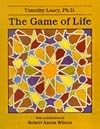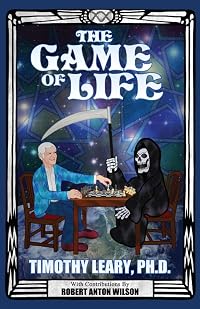
Game of Life
by Timothy Francis Leary
On This Page
Description
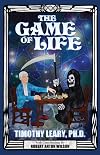
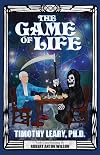
Written in 70s with all the influence of the wild and counterculture rebelliousness of the 60s, The Game of Life reflects the depth of mind of one of the unique human beings of the 20th century. From famed psychologist and Harvard professor to LSD Guru, to stage and film star, computer junky, and more. Tim leaves no stone, or for that matter, person unturned. As an unrepentant advocate of personal freedom and development, he was on a mission to wake humanity up, to encourage us to use our show more brains and open our minds up to different ways of thinking. One of his favourite mottoes was "Think for yourself and question authority". The Game of Life is an organic computer, (although when Leary wrote it he wasn't yet into hyper-interactive computer intelligence.) In this book he updated the meaning of Medieval Tarot Cards and Chinese I-Ching Triagrams and used the symbology to express his fascinating theories within a multi-dimensional structure. With a unique intelligent wit, he expresses his perceptions, wisdom and ideas that evolution is proceeding into pre-programmed post-human stages which will carry us off the planet, but also that some human beings are (have always been) literally ahead of their times in having activated what Dr Leary calls "circuits" of their nervous systems years or even centuries ahead of general human development. The Game of Life is not simply a book: it is an experience. show lessTags
Recommendations

















Member Reviews
A subjective exposure of the science of exopsychology --an examination of human affairs from an extra-terrestial viewpoint.
We migrated out of Africa. Leary interprets this nomadic drive -- for the thousand reasons we do it, it is done -- better than most academics. We have this "living" we did not earn and we cling to it as long as possible. And the great vector, the direction, and the Truth of our lives is the ideation/idea processing of the brain, or 2 "intelligence". Leary's triple pun is SMI LE , or permutations, in reverse order, of "tune in, turn on, drop out" -- life in the prepositional lane, in/ on/ out. Space Migration, Intelligence squared, Life Extension.
An editorial intro by Arel Lucas reiterates two basic principles of show more exopsychology:
(1) RECAPITULATION - ontogeny repeats phylogeny. The idea here is that evolution is proceeding to the post-human, as we process the futique with the antique forms.
(2) IMPRINTING. Organisms are preprogrammed to fixate on certain behaviors.
I love how Leary proclaimed that the flowering of beauty and self-actualization is not decadence or the end of human evolution. There are places/stages in California for example which are clearly on the path toward "escape velocity". We can use this guide to locate/identify the communities of tolerance and knowledge.
The author was described by President Nixon as "the most dangerous man in America". Gordon Liddy used to search his Estate routinely, never finding contraband, but harassing him out of town. Questions about the entheogenic experience (cf. Huston) and the impact of one with so much hilaritose (Robert Anton Wilson's word for the quality by which we recognise divity). show less
We migrated out of Africa. Leary interprets this nomadic drive -- for the thousand reasons we do it, it is done -- better than most academics. We have this "living" we did not earn and we cling to it as long as possible. And the great vector, the direction, and the Truth of our lives is the ideation/idea processing of the brain, or 2 "intelligence". Leary's triple pun is SMI LE , or permutations, in reverse order, of "tune in, turn on, drop out" -- life in the prepositional lane, in/ on/ out. Space Migration, Intelligence squared, Life Extension.
An editorial intro by Arel Lucas reiterates two basic principles of show more exopsychology:
(1) RECAPITULATION - ontogeny repeats phylogeny. The idea here is that evolution is proceeding to the post-human, as we process the futique with the antique forms.
(2) IMPRINTING. Organisms are preprogrammed to fixate on certain behaviors.
I love how Leary proclaimed that the flowering of beauty and self-actualization is not decadence or the end of human evolution. There are places/stages in California for example which are clearly on the path toward "escape velocity". We can use this guide to locate/identify the communities of tolerance and knowledge.
The author was described by President Nixon as "the most dangerous man in America". Gordon Liddy used to search his Estate routinely, never finding contraband, but harassing him out of town. Questions about the entheogenic experience (cf. Huston) and the impact of one with so much hilaritose (Robert Anton Wilson's word for the quality by which we recognise divity). show less
Ratings
Members
- Recently Added By
Lists

Books
85 works; 1 member
Author Information

123+ Works 3,119 Members
Classifications
Statistics
- Members
- 79
- Popularity
- 402,443
- Reviews
- 1
- Rating
- (4.31)
- Languages
- Czech, English
- Media
- Paper, Ebook
- ISBNs
- 4
- ASINs
- 3