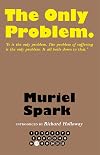
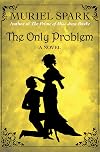
The Only Problem
by Muriel Spark
On This Page
Description
A wealthy academic's life shatters when his estranged wife becomes the suspected leader of a terrorist organization Having led a successful, comfortable life, Harvey Gotham retires to the French countryside to pursue bookish obsessions--namely, a long monograph on the Book of Job, the biblical narrative of faith in the face of extraordinary suffering. But Gotham's intellectual interests soon bleed into his daily life when a series of misfortunes, from a destructive affair to his wife's show more involvement with an extremist group, threaten to destroy everything he holds dear. Hailed by the New York Times as "an extremely sophisticated account of the perils that surround our unsuspecting lives in the world today,"The Only Problem balances Spark's unique blend of razor-sharp satire and moral introspection in one fast-paced, absorbing novel. This ebook features an illustrated biography of Muriel Spark including rare photos and never-before-seen documents from the author's archive at the National Library of Scotland. show lessTags
Recommendations






























Member Reviews
There was something niggling away at me when I read The comforters and I realised afterwards what it was - I'd got it in the back of my mind that there was a Muriel Spark novel about the Book of Job, and I was expecting it to be that one. With hindsight, the title probably does imply a reference to Job, only in some convoluted symbolic way that I was too sleepy to work out at the time...
Anyway, it turns out that The only problem is the one that is about an amateur scholar writing a monograph about Job and finding himself afflicted with his own share of arbitrary suffering in the process. No boils or dung-heaps, but a lot of journalists and police interrogators who descend on him in his lonely chateau in the Vosges when it appears that show more his estranged wife may be involved with a Baader-Meinhof-style terrorist organisation.
Quirky and unpredictable as always, and full of witty, penetrating lines, although not quite as experimental in form as some of the others. The narrative is fairly linear, and most of the oddity is expressed through the wilful mixing-up of theological debate with a very secular story of crime, infidelity and divorce. It looks as though Spark was really looking for an excuse to have a bit of a dust-up with God about the way he treated Job - not quite the all-out rage of a Joseph Roth, but a firm rapping of the divine fingers about his failure to respect due academic process: Job’s problem was partly a lack of knowledge. He was without access to any system of study which would point to the reason for his afflictions. He said specifically, “I desire to reason with God,” and expected God to come out like a man and state his case. - a comment which is delivered not in the framework of a seminar but during a wonderful comic set-piece press-conference where the Job-figure, Harvey, is fielding questions from crime-reporters about his wife's sensational activities. show less
Anyway, it turns out that The only problem is the one that is about an amateur scholar writing a monograph about Job and finding himself afflicted with his own share of arbitrary suffering in the process. No boils or dung-heaps, but a lot of journalists and police interrogators who descend on him in his lonely chateau in the Vosges when it appears that show more his estranged wife may be involved with a Baader-Meinhof-style terrorist organisation.
Quirky and unpredictable as always, and full of witty, penetrating lines, although not quite as experimental in form as some of the others. The narrative is fairly linear, and most of the oddity is expressed through the wilful mixing-up of theological debate with a very secular story of crime, infidelity and divorce. It looks as though Spark was really looking for an excuse to have a bit of a dust-up with God about the way he treated Job - not quite the all-out rage of a Joseph Roth, but a firm rapping of the divine fingers about his failure to respect due academic process: Job’s problem was partly a lack of knowledge. He was without access to any system of study which would point to the reason for his afflictions. He said specifically, “I desire to reason with God,” and expected God to come out like a man and state his case. - a comment which is delivered not in the framework of a seminar but during a wonderful comic set-piece press-conference where the Job-figure, Harvey, is fielding questions from crime-reporters about his wife's sensational activities. show less
I always find Muriel Spark’s writing somehow cheering and this novella was no exception, despite the ostensible topic of human suffering. Spark is such a polished, witty writer that every sentence is a joy to read. In 'The Only Problem', the protagonist, Harvey Gotham, is absorbed in studying the Book of Job to understand why God allows suffering. The narrative plays in a delicately ironic fashion with Harvey as a Job-like figure, wealthy and privileged but plagued by distractions. Although, as is repeatedly pointed out, Harvey is not cursed with boils. He is something of a stolid figure, but his seeming passivity is punctuated by the occasional proactive decision. Notably leaving his wife Effie at the start of the book. The motives show more of other characters who come to his rural retreat wanting things tend to be obscure, or at least more complex than they first appear. Harvey’s calm self-absorption is oddly fascinating, as well as deeply frustrating for others to deal with. The mysterious Effie is only present in the first scene, then hangs over the rest of the book like a spectre. Her behaviour and motives are discussed by all characters, without shedding much light on either. She seems to be placed in the role of God and/or Satan in the allegory of Harvey as Job. Meanwhile her sister Ruth oscillates between several different men who Effie has married, run off with, or fascinated.
I generally prefer Spark’s fiction when the focus is on a female main character, yet the witty weirdness of ‘The Only Problem’ makes it an exception. Harvey isn’t the one driving the narrative, Effie is. Ruth and the incredible Aunt Pet take the initiative and descend upon Harvey for more interesting reasons than his male visitors. Nathan reads as a subversion of a female stereotype: he is pretty to look at and good at domestic tasks, unable to find a career therefore follows around the opposite sex. Spark’s usual wit is very much present. The farcical scenes of Harvey’s interrogation and press conference were especially good, as was the running joke about baby clothes. Spark is far too subtle a writer to conclude neatly with an answer to the problem of suffering. Harvey’s suffering is of a frankly trivial sort, more at the level of mild inconvenience. One gets the impression that Effie would have a very different and probably more interesting perspective on the problem. show less
I generally prefer Spark’s fiction when the focus is on a female main character, yet the witty weirdness of ‘The Only Problem’ makes it an exception. Harvey isn’t the one driving the narrative, Effie is. Ruth and the incredible Aunt Pet take the initiative and descend upon Harvey for more interesting reasons than his male visitors. Nathan reads as a subversion of a female stereotype: he is pretty to look at and good at domestic tasks, unable to find a career therefore follows around the opposite sex. Spark’s usual wit is very much present. The farcical scenes of Harvey’s interrogation and press conference were especially good, as was the running joke about baby clothes. Spark is far too subtle a writer to conclude neatly with an answer to the problem of suffering. Harvey’s suffering is of a frankly trivial sort, more at the level of mild inconvenience. One gets the impression that Effie would have a very different and probably more interesting perspective on the problem. show less
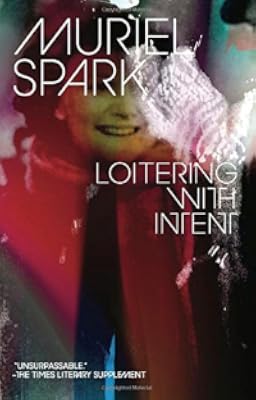
The eighties are turning out to be a favourite period in Muriel Spark’s writing for me. A Far Cry from Kensington (1988) that I read last year was one of my books of the year, and Loitering with Intent (1981) that I read last month was fabulously entertaining. My second read for phase 5 of #readingMuriel2018 was The Only Problem, it’s so brilliantly quirky that it could easily become one of my favourites overall.
An academic writing a book on the Book of Job while his estranged wife runs around with French terrorists and a policewoman masquerades as a housekeeper – could any of this come from anyone other than Muriel Spark?
“Harvey was a rich man; he was in his mid-thirties. He had started writing a monograph about the Book of Job show more and the problem it deals with. For he could not face that a benevolent Creator, one whose charming and delicious light descended and spread over the world, and being powerful everywhere, could condone the unspeakable sufferings of the world; that God did permit all suffering and was therefore, by logic of his omnipotence the actual author of it, he was at a loss how to square with the existence of God, given the premise that God is good.”
This religious theme is certainly a familiar one for Muriel Spark, but don’t worry you don’t need to be religious or have a theology degree to get on board with this one.
Canadian scholar Harvey Gotham is living in a small remote cottage in France, in the grounds of an empty château. He spends most of his time thinking, writing and talking about the Book of Job. Harvey is obsessed with the question of suffering, and why God would allow it. Two years earlier, Harvey had separated from his wife Effie when they had been travelling with friends in Italy and Effie stole some chocolate as a protest against capitalism. Harvey walked away from the car that day in disgust and hasn’t seen Effie since.
Now, Harvey’s friend and brother-in-law Edward arrives at Harvey’s cottage – at the request of his wife; Ruth – Effie’s sister – to talk to Harvey about Effie and to persuade him to give her a divorce. Edward is puzzled at the sight of baby clothes hanging on the washing line outside the cottage, and Harvey explains he uses them to deter the local women from calling on him with offers of help, which they will if they know he is a man alone. Little does Harvey know what trouble this habit with the washing line will bring him. Things in Effie’s life have certainly moved on, she has a new man in her life and is expecting his baby.
Months later and Ruth has moved in with Harvey bringing Effie’s baby with her. She seems she has left Edward and Effie is not all that interested in the baby Clara. I found this interesting considering Spark’s difficult relationship with her son, though perhaps I was reading too much into it. Harvey doesn’t get much say in any of this, and he has bought the Château at Ruth’s suggestion, although he sometimes still works in the cottage. Harvey is more concerned with Job than his own domestic arrangements.
“It is the only problem. The problem of suffering is the only problem. It all boils down to that.”
So, Harvey is more than a little surprised, to see a photo-fit of a woman looking remarkably like Effie in a French newspaper report about a terrorist group. The FLE have been carrying out armed robbery and planting bombs in supermarkets. Effie is said to be associated with them, and she has previously been arrested for shoplifting in Trieste. Unable to lay their hands on Effie herself, the French police turn their attentions to her estranged husband. Part of Harvey really still loves Effie – and he refuses to believe that she is the woman in the paper.
The Only Problem is a wonderfully thought provoking, entertaining novel I found it compulsively readable, darkly humorous and surprising. Really excellent stuff. show less
An academic writing a book on the Book of Job while his estranged wife runs around with French terrorists and a policewoman masquerades as a housekeeper – could any of this come from anyone other than Muriel Spark?
“Harvey was a rich man; he was in his mid-thirties. He had started writing a monograph about the Book of Job show more and the problem it deals with. For he could not face that a benevolent Creator, one whose charming and delicious light descended and spread over the world, and being powerful everywhere, could condone the unspeakable sufferings of the world; that God did permit all suffering and was therefore, by logic of his omnipotence the actual author of it, he was at a loss how to square with the existence of God, given the premise that God is good.”
This religious theme is certainly a familiar one for Muriel Spark, but don’t worry you don’t need to be religious or have a theology degree to get on board with this one.
Canadian scholar Harvey Gotham is living in a small remote cottage in France, in the grounds of an empty château. He spends most of his time thinking, writing and talking about the Book of Job. Harvey is obsessed with the question of suffering, and why God would allow it. Two years earlier, Harvey had separated from his wife Effie when they had been travelling with friends in Italy and Effie stole some chocolate as a protest against capitalism. Harvey walked away from the car that day in disgust and hasn’t seen Effie since.
Now, Harvey’s friend and brother-in-law Edward arrives at Harvey’s cottage – at the request of his wife; Ruth – Effie’s sister – to talk to Harvey about Effie and to persuade him to give her a divorce. Edward is puzzled at the sight of baby clothes hanging on the washing line outside the cottage, and Harvey explains he uses them to deter the local women from calling on him with offers of help, which they will if they know he is a man alone. Little does Harvey know what trouble this habit with the washing line will bring him. Things in Effie’s life have certainly moved on, she has a new man in her life and is expecting his baby.
Months later and Ruth has moved in with Harvey bringing Effie’s baby with her. She seems she has left Edward and Effie is not all that interested in the baby Clara. I found this interesting considering Spark’s difficult relationship with her son, though perhaps I was reading too much into it. Harvey doesn’t get much say in any of this, and he has bought the Château at Ruth’s suggestion, although he sometimes still works in the cottage. Harvey is more concerned with Job than his own domestic arrangements.
“It is the only problem. The problem of suffering is the only problem. It all boils down to that.”
So, Harvey is more than a little surprised, to see a photo-fit of a woman looking remarkably like Effie in a French newspaper report about a terrorist group. The FLE have been carrying out armed robbery and planting bombs in supermarkets. Effie is said to be associated with them, and she has previously been arrested for shoplifting in Trieste. Unable to lay their hands on Effie herself, the French police turn their attentions to her estranged husband. Part of Harvey really still loves Effie – and he refuses to believe that she is the woman in the paper.
The Only Problem is a wonderfully thought provoking, entertaining novel I found it compulsively readable, darkly humorous and surprising. Really excellent stuff. show less
Two things of note here: first, it turns out that this isn't even in print, except for omnibus editions of Spark's works. This is a horrible travesty. Second, I spoke about it with my wife. She's a fan of Spark's better known books (Brodie, Girls of Slender Means), but even then, she says she's never sure what Spark is trying to *do*. Is it *good* that her student turns on Miss Jean, or bad? Is she good, or bad? And so on.
This, combined with a few of my other current preoccupations, meant that I was in a *perfect* frame of mind to read this book. Just to get it out of the way: there's no character development, barely any characters as such at all, nobody with whom to sympathize, and an outlandish conceit that will be all but show more incomprehensible to those who don't have some knowledge of the Book of Job.
What the book does, though, is remarkable. What starts out as a kind of romantic comedy slowly turns into an extraordinary meditation on what it means to be Job-like in the present and, even more ballsily, what it would mean to *tell* the story of Job in the present. It turns out--and this is a bit of a stretch, I admit--that the author of Job is somewhat like Satan, able to do whatever she will with the characters before her, while also being a bit like God, inasmuch as she can, when and if she chooses, make the ending happy by seemingly ending the suffering. But that won't necessarily make the character of Job himself happy, and certainly won't make the reader happy either, because other sufferings are coming and we know it. And despite all that, it's a tale worth telling and pondering, simply because our other options are being the annoying aunt, being the irritating policemen (the police-woman is the one non-Job like, attractive option left to us), being the blockheaded terrorist, being the, erm, flighty woman, or being the asshole. These 'comforters' (note to self: re-read Spark's first novel with this in mind), like the comforters in Job, are unbearable and misleading. The only thing that matters is the book, and our relationship to it.
So, as in her The Comforters, Spark marshals all the hyper-textual trickery and self-reflexivity you could wish for, but instead of concluding that everything is uncertain and we can never say what we want to and vanity vanity vanity, you're left wit the idea that literature, ideas and morality really do matter. Revolutionary. show less
This, combined with a few of my other current preoccupations, meant that I was in a *perfect* frame of mind to read this book. Just to get it out of the way: there's no character development, barely any characters as such at all, nobody with whom to sympathize, and an outlandish conceit that will be all but show more incomprehensible to those who don't have some knowledge of the Book of Job.
What the book does, though, is remarkable. What starts out as a kind of romantic comedy slowly turns into an extraordinary meditation on what it means to be Job-like in the present and, even more ballsily, what it would mean to *tell* the story of Job in the present. It turns out--and this is a bit of a stretch, I admit--that the author of Job is somewhat like Satan, able to do whatever she will with the characters before her, while also being a bit like God, inasmuch as she can, when and if she chooses, make the ending happy by seemingly ending the suffering. But that won't necessarily make the character of Job himself happy, and certainly won't make the reader happy either, because other sufferings are coming and we know it. And despite all that, it's a tale worth telling and pondering, simply because our other options are being the annoying aunt, being the irritating policemen (the police-woman is the one non-Job like, attractive option left to us), being the blockheaded terrorist, being the, erm, flighty woman, or being the asshole. These 'comforters' (note to self: re-read Spark's first novel with this in mind), like the comforters in Job, are unbearable and misleading. The only thing that matters is the book, and our relationship to it.
So, as in her The Comforters, Spark marshals all the hyper-textual trickery and self-reflexivity you could wish for, but instead of concluding that everything is uncertain and we can never say what we want to and vanity vanity vanity, you're left wit the idea that literature, ideas and morality really do matter. Revolutionary. show less
The eponymous "Only Problem" is that of how a benevolent omnipotent God allows suffering in the world, as epitomised in the Book Of Job, which is the obsession of the central character, Harvey. There is some interesting discussion of The Problem, but the story is more about Harvey's more modern-day (and somewhat self-inflicted) sufferings. These are almost insignificant by most definitions of suffering, which gives the book a satiric edge, although the humour is bone dry.
Spark doesn't tend to describe transitions - rather she narrates vignettes from different points in the plot. (I also noticed this in The Prime Of Miss Jean Brodie). It's an interesting and distinctive approach, and one that perhaps mirrors life.
An enjoyable and show more idiosyncratic book, though a little unsatisfying. show less
Spark doesn't tend to describe transitions - rather she narrates vignettes from different points in the plot. (I also noticed this in The Prime Of Miss Jean Brodie). It's an interesting and distinctive approach, and one that perhaps mirrors life.
An enjoyable and show more idiosyncratic book, though a little unsatisfying. show less
I usually love Muriel Spark, but this one didn't work for me. It's an odd story about clueless adults mixed up in politics and casually switching around how they partner up. And in the background, the main character studies the Book of Job from the Bible.
The only problem is how a bounteous God can permit suffering in this world. Spark uses a rich young man who is completing a treatise on the Book of Job to examine the role of the sufferer who is at the perils of the behaviour of others; especially others who might normally be "comforters"; friends, family, the law in this case. The outcome to the story brings the suffering for Harvey Gotham to an end but only in a random fashion.
Members
- Recently Added By
Author Information

101+ Works 22,691 Members
Muriel Spark has been called "our most chillingly comic writer since Evelyn Waugh" by the London Spectator, and the New Yorker praised her novel Memento Mori ri (1959) as "flawless." Her fiction is marked by its remarkable diversity, wit, and craftsmanship. "She happens to be, by some rare concatenation of grace and talent, an artist, a show more serious---and most accomplished---writer, a moralist engaged with the human predicament, wildly entertaining, and a joy to read" (SRSR). She became widely known in the United States when the New Yorker devoted almost an entire issue to The Prime of Miss Jean Brodie (1961). Set in Edinburgh in the 1930s, this is the story of a schoolteacher, her unorthodox approach to life, and its effect on her select group of adolescent girls. Though their idol turns out to have feet of clay, she leaves an indelible mark on their lives. The Girls of Slender Means (1963), also warmly praised, is a sardonic look at the vivacity of youth and the anxieties of young womanhood. Reviewing The Mandelbaum Gate (1965) for the New Republic, Honor Tracy wrote: "There is an abundance here of invention, humor, poetry, wit, perception, that all but takes the breath away. . . . The story, in fact, is pure adventure, with the suspense as artfully maintained as anywhere by Graham Greene, but this is only one ingredient. There are memorable descriptions of the Holy Land, fascinating insights into the jumble of intrigue and piety surrounding the Holy Places, and penetrating studies of Arabs. . . . In each of [Spark's] novels heretofore one of her qualities has tended to predominate over the others. Here for the first time they are all impressively marshaled side by side, resulting in her best work so far." The daughter of an Englishwoman and a Scottish-Jewish father, Spark was born and educated in Edinburgh. After her marriage in 1938, she lived for some years in Central Africa, a period rarely reflected in her work. During World War II, she returned to Britain, where she worked in the Political Intelligence Department of the Foreign Office after the breakup of her marriage. She has been a magazine editor and written poetry and literary criticism. Spark has lived in London's Camberwell section, the setting of The Ballad of Peckham Rye (1960), but now makes her home in New York. Her novels reflect her conversion to Roman Catholicism. (Bowker Author Biography) Writer Muriel Spark was born in Edinburgh on February 1, 1918. In 1934-1935 she took a course in commercial correspondence and précis writing at Heriot-Watt College. After her marriage in 1937, she lived for some years in Central Africa. During World War II, she returned to Britain, where she worked in the Political Intelligence Department of the Foreign Office after the breakup of her marriage. After the war, she began her literary career. She became General Secretary of the Poetry Society, worked as an editor and wrote studies of Mary Shelley, John Masefield and the Brontë sisters. Her first book of poetry, The Fanfarlo and Other Verse, was published in 1952 and her first novel, The Comforters, was published in 1957. She wrote over twenty books including The Prime of Miss Jean Brodie and The Finishing School. She won numerous awards and honors including the 1965 James Tait Black Memorial Prize for The Mandelbaum Gate, the 1992 U. S. Ingersoll Foundation T. S. Eliot Award, the 1997 David Cohen British Literature Prize for Lifetime Achievement, and in 1993 she became Dame Commander of the Order of the British Empire in recognition of her services to literature. The Scottish Arts Council created the Muriel Spark International Fellowship in 2004. She died on April 13, 2006. (Bowker Author Biography) show less
Some Editions
Series
Belongs to Publisher Series
Work Relationships
Common Knowledge
- Canonical title
- The Only Problem
- Original title
- The Only Problem
- Original publication date
- 1984
- Epigraph
- Surely I would speak to the Almighty, and I desire to reason with God.
The Book of Job - First words
- He was driving along the road in France from St. Die to Nancy in the district of Meurthe; it was straight and almost white through thick woods of fir and birch.
- Last words
- (Click to show. Warning: May contain spoilers.)I'll have three daughters, Clara, Jemima, and Eye-Paint.
- Original language*
- Inglés
*Some information comes from Common Knowledge in other languages. Click "Edit" for more information.
Classifications
Statistics
- Members
- 334
- Popularity
- 94,986
- Reviews
- 7
- Rating
- (3.75)
- Languages
- English, French, German, Spanish
- Media
- Paper, Ebook
- ISBNs
- 18
- ASINs
- 9