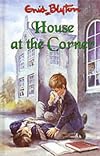
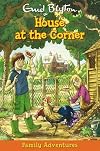
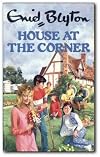
House at the Corner
by Enid Blyton
On This Page
Description
John, Marjory and Annette decide to have nothing to do with the Taggertys when they move in next door, as they're such rough, unruly children, and so badly behaved. But when father discovers that he was at school with Mr Taggerty, the two families are forced to spend time together.Tags
Recommendations

















Member Reviews
A quick skim of a read reminded me of this very traditional Enid Blyton. In a family of five children, the spoiled older children with the talents learn it is not enough to be lucky, but hard work is needed too, while the often overlooked younger children learn that they are Good Eggs to the core. Heartwarming, although there are some very traditional gender roles, if speeches like 'oh, it's much more rewarding and important to be able to make a family happy than be in a dull office all day' are going to put your back up you may not want this book!
This was a fascinating find. In some ways it follows the formula set by another Blyton novel I read - The family at Red Roofs. However, what I find interesting about this book is that it includes the perspective of the adults as much as it does of the children, and the adults are portrayed as (mostly) being just as fallible and imperfect as the children. My favourite "problem" with the adults is their complete lack of recognition of Lizzie's domestic talents. Her parents (or at least her mother) value prettiness and cleverness over anything else. Lizzie's loving willingness to help around the home all the time is pretty much taken for granted and is even part of the reason she is treated as "just Lizzie."
The position of the narrator and show more a couple of key characters contradicts this blindness and talks about the wonderful role of being "at the centre of a home". This is quite amusing, given that it seems unlikely that Blyton herself was ever at the centre of her own home. However, despite the narrational sympathy for Lizzie's position, there is a seeming contradiction. If Lizzie wishes to become Elizabeth, she must grow into her name. A choice of name is not her right but a privilege to be earned. She must earn her name by increased self confidence - self confidence which must manifest itself in improved looks and in finding the courage to develop her talents. Talents which do not include being at the centre of the home.
There is also an interesting link to the Naughtiest girl series which I didn't expect. By the end of term, the twins are gearing up to head off to Whyteleafe School and their best friend Michael is clearly related to one of the headmistresses, Miss Best. The only other time I've seen any kind of crossover in Enid Blyton is when the Secret seven refer to the Famous five stories - and the stories are definitely referred to as fictional. In the world of House at the corner, Whyteleafe School is real.
This book makes me realise what a small percentage of Blyton's books I have actually read - I wonder if there are any more surprises out there, waiting for me... show less
The position of the narrator and show more a couple of key characters contradicts this blindness and talks about the wonderful role of being "at the centre of a home". This is quite amusing, given that it seems unlikely that Blyton herself was ever at the centre of her own home. However, despite the narrational sympathy for Lizzie's position, there is a seeming contradiction. If Lizzie wishes to become Elizabeth, she must grow into her name. A choice of name is not her right but a privilege to be earned. She must earn her name by increased self confidence - self confidence which must manifest itself in improved looks and in finding the courage to develop her talents. Talents which do not include being at the centre of the home.
There is also an interesting link to the Naughtiest girl series which I didn't expect. By the end of term, the twins are gearing up to head off to Whyteleafe School and their best friend Michael is clearly related to one of the headmistresses, Miss Best. The only other time I've seen any kind of crossover in Enid Blyton is when the Secret seven refer to the Famous five stories - and the stories are definitely referred to as fictional. In the world of House at the corner, Whyteleafe School is real.
This book makes me realise what a small percentage of Blyton's books I have actually read - I wonder if there are any more surprises out there, waiting for me... show less
Novels/novelettes
Ratings
Members
- Recently Added By
Author Information

2,528+ Works 111,094 Members
Enid Blyton, 1897 - November 28, 1968 Enid Blyton was born in London in 1897. She was educated in a private school and thought that she would become a musician until she realized that writing was her passion. She attended Ipswich High School where she trained to become a kindergarten teacher and eventually opened her own school for infants. show more Blyton's first poem was published in 1917, entitled "Have You-" which appeared in Nash's Magazine. In 1922, her first book of verses was published, entitled "Child Whispers." In 1926 she accepted a position editing the children's magazine "Sunny Stories" as well as writing the column "Teachers World." Blyton's first full length children's book was published din 1938 and was titled "The Secret Island." After working on the column for years, Blyton quit "Teachers World" in 1945 and also ended her stint as editor of "Sunny Stories" seven years later. In 1953 she started her own children's magazine called "The Edith Blyton Magazine" which featured stories about her characters and news on the clubs formed around them. Her most famous stories were those of the "Famous Five" The Magazine closed in 1959. In the 50's and 60's Blyton was criticized for the language in her book, for being to simple, but some 300 are still in print today. Blyton has published over 600 books in the course of her career. Enid Blyton died in her sleep on November 28, 1968. She was 71 years old. show less
Series
Belongs to Publisher Series
Boje-Buch (4911)
Enid Blyton's Family Stories (Book 4)
Work Relationships
Is contained in
Common Knowledge
- Original title
- House at the Corner
- Original publication date
- 1947
Classifications
Statistics
- Members
- 108
- Popularity
- 299,393
- Reviews
- 3
- Rating
- (3.71)
- Languages
- Dutch, English, German, Portuguese
- Media
- Paper
- ISBNs
- 8
- ASINs
- 9