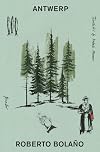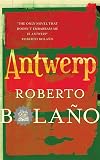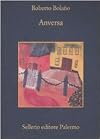
Antwerp
by Roberto Bolaño
On This Page
Description
A police sergeant searches for someone (perhaps a hunchback) and a nameless young woman (red-haired, a drug addict, a witness) sodomized by a cop--or is it the narrator? A collation of 56 "scenes" set in 1980 Barcelona.Tags
Recommendations








Member Reviews
'Antwerp' is the oddest of Bolano's books, and that's saying something. It consists of a series of short fragments the chop and change from viewpoint to viewpoint, like a modern take on Burroughs's cut up technique. Reading these strange vignettes was disorienting and the story difficult to find; the story was what you could make of it, as if you were trying to find meaning while flicking between a hundred channels on cable TV. Mysterious, then, but still worth a look - if you're that devoted to Bolano, which I certainly am.
Play the flute, O dear death,
Frantic solitude engraves,
In your mellow embrace,
Letters of a fleeting breath.
Sometimes, I just lay on the floor fearing of being drowned in the emotional mayhem conferred by a book for being loyal to its words. And, then at times when I have no answers to the myriad questionnaires I seek refuge in these written words as a lost soul finding its home. The desire for a transparent ceiling seems surreal like a fish praying for wings. The fatalities of trust, love, sex, respect, ethics, sovereignty muddied in doubt are far from being a pompous cavalcade of death or life; a grotesque portrait of ceremonial inscrutability. “Words are empty” branded over their breasts, the mouth-less women lead a comatose show more march down the street bowing to the old man comforting a frightened bleeding vagina. ”Don’t be afraid”, screamed the anarchic breeze thrusting the penis through obedient surrender. A violence of an unapologetic penis behind the flowery enchanted mirage. “Destroy your stray phrases”, resonate through the ears of the nameless girl as courage is more terrifying than pleasure. The youth at the newspaper stand stood aghast at the sight of six mutilated corpses strewn on the pages. Six campers dead. Kids blown up. Power is the heroin of vengeance. Doubt its coke. Death squads parading in patriotic veils; a tribute to the “dirty war”. Anonymous lives constricted to the page of a newspaper archive. A man carrying a tin of sardines asking for a match. People stare at his hunchback while he lights his half cigarette. Robert Bolano was his name; the man who offered hunchback a cigarette light. Mexico is his mind; Spain his heart. A blonde comes running into his arms singing her love; a fleeting happy memory for she would eventually break his heart. Police sprint like a wild stampede scouting pretty faces for the night as the hunchback runs through the woods. An Englishman strapping a white sheet onto the burly tree at the end of the bicycle road. The stomping of angry feet, the feeble breathe of a vagrant pollute the sanity of the trees; the Englishman trying to pen words, the hunchback running through the bicycle path ; a deafening explosion; a crimson sardine graffiti. The cold steel burns in the wrath of a running train; the monotonous perversion of an obstinate contraption. A sorrowful cry of anguish from a nameless girl, “Will death be peaceful than life?” someone drags her to an isolated building; a tranquil hospice. Papers or sex? Drugs or sex? Torture or a smoky barrel? Rational or Irrational. Traitors!! Drive all the hunchbacks to the sea. We do not want our children with humps. Let them be washed like footsteps on the sand. My land! Our Land! No muddied blood, purity; the rebellion of selfish mouths. A camouflaging devil ironically promises paradise. The ghosts of past are dismissed on hallucinatory grounds. A curly haired writer walks in a bar; bartender pours him a drink. A deadly bomb. Somewhere a cat loses its whiskers. The record playing an old song, but the dancing stops. Faces on the wall. Photos in case files. Reminiscences in an album lingering in grieving hands. Grenades are the new voices and gangsters their mothers. The girl who wrote dragons succumbed to the cannibal figs. The cops are tired now and all they need is a fuck. Burn those files! Damn those fuckers! Another immigrant dissolved in acidic wrath. The unemployed youth rests reading the crime story of an amateur writer, gazing at the drug laden whore. "Memory slowly dictated soundless sentences". Beware of Colan Yar! Flee you silly birds before the wolf and its warriors gulp you down. The mouth-less women reappear cleaning the blood stained road to Antwerp; pigs chewing on an pale arm.
I yearn for the cerulean heavens but the wretched vertical opaqueness blurs my sight. I still lay on the hard floor. Then I think of Bolano and his psyche of writing this poetic chronicle. His words sprinting on the paper, amid the rapes and murders committed behind meticulously festooned habitats. I think about Sara Bendeman , Lola Muriel and several women ; an innocence lost in swirling vortex of torment. All those hunchbacks, who could never build a home away from home. In an interview, Bolano had declared his children to be his true motherland. It is to them that he found a true sense of belonging. His was a nomad all through his life; through his travels and his wandering mind. “Reality is a drag”. Hallucination ; the festering mental façade. But isn’t life an ornate façade after all. Everyone wants to wear their rose-tinted blinders and sweep the pragmatic debris in their basement. Genuine voices are muted by vacant pride and rage and violence become mutinous gold. Faces and names walk into nothingness with time, gladly literature brings them alive. Bolano awakens the dead and give them their voices once again. He brings Sophie Podolski back into my room. This 55-piece fragmented articulation is a lyrical ode to asphyxiated bureaucracy and to countless who rebel with transparent dragons.
Play the flute, O dear death,
Wild figs eat themselves,
From their rancid flesh,
Humble ghosts ascends.
show less
Frantic solitude engraves,
In your mellow embrace,
Letters of a fleeting breath.
Sometimes, I just lay on the floor fearing of being drowned in the emotional mayhem conferred by a book for being loyal to its words. And, then at times when I have no answers to the myriad questionnaires I seek refuge in these written words as a lost soul finding its home. The desire for a transparent ceiling seems surreal like a fish praying for wings. The fatalities of trust, love, sex, respect, ethics, sovereignty muddied in doubt are far from being a pompous cavalcade of death or life; a grotesque portrait of ceremonial inscrutability. “Words are empty” branded over their breasts, the mouth-less women lead a comatose show more march down the street bowing to the old man comforting a frightened bleeding vagina. ”Don’t be afraid”, screamed the anarchic breeze thrusting the penis through obedient surrender. A violence of an unapologetic penis behind the flowery enchanted mirage. “Destroy your stray phrases”, resonate through the ears of the nameless girl as courage is more terrifying than pleasure. The youth at the newspaper stand stood aghast at the sight of six mutilated corpses strewn on the pages. Six campers dead. Kids blown up. Power is the heroin of vengeance. Doubt its coke. Death squads parading in patriotic veils; a tribute to the “dirty war”. Anonymous lives constricted to the page of a newspaper archive. A man carrying a tin of sardines asking for a match. People stare at his hunchback while he lights his half cigarette. Robert Bolano was his name; the man who offered hunchback a cigarette light. Mexico is his mind; Spain his heart. A blonde comes running into his arms singing her love; a fleeting happy memory for she would eventually break his heart. Police sprint like a wild stampede scouting pretty faces for the night as the hunchback runs through the woods. An Englishman strapping a white sheet onto the burly tree at the end of the bicycle road. The stomping of angry feet, the feeble breathe of a vagrant pollute the sanity of the trees; the Englishman trying to pen words, the hunchback running through the bicycle path ; a deafening explosion; a crimson sardine graffiti. The cold steel burns in the wrath of a running train; the monotonous perversion of an obstinate contraption. A sorrowful cry of anguish from a nameless girl, “Will death be peaceful than life?” someone drags her to an isolated building; a tranquil hospice. Papers or sex? Drugs or sex? Torture or a smoky barrel? Rational or Irrational. Traitors!! Drive all the hunchbacks to the sea. We do not want our children with humps. Let them be washed like footsteps on the sand. My land! Our Land! No muddied blood, purity; the rebellion of selfish mouths. A camouflaging devil ironically promises paradise. The ghosts of past are dismissed on hallucinatory grounds. A curly haired writer walks in a bar; bartender pours him a drink. A deadly bomb. Somewhere a cat loses its whiskers. The record playing an old song, but the dancing stops. Faces on the wall. Photos in case files. Reminiscences in an album lingering in grieving hands. Grenades are the new voices and gangsters their mothers. The girl who wrote dragons succumbed to the cannibal figs. The cops are tired now and all they need is a fuck. Burn those files! Damn those fuckers! Another immigrant dissolved in acidic wrath. The unemployed youth rests reading the crime story of an amateur writer, gazing at the drug laden whore. "Memory slowly dictated soundless sentences". Beware of Colan Yar! Flee you silly birds before the wolf and its warriors gulp you down. The mouth-less women reappear cleaning the blood stained road to Antwerp; pigs chewing on an pale arm.
I yearn for the cerulean heavens but the wretched vertical opaqueness blurs my sight. I still lay on the hard floor. Then I think of Bolano and his psyche of writing this poetic chronicle. His words sprinting on the paper, amid the rapes and murders committed behind meticulously festooned habitats. I think about Sara Bendeman , Lola Muriel and several women ; an innocence lost in swirling vortex of torment. All those hunchbacks, who could never build a home away from home. In an interview, Bolano had declared his children to be his true motherland. It is to them that he found a true sense of belonging. His was a nomad all through his life; through his travels and his wandering mind. “Reality is a drag”. Hallucination ; the festering mental façade. But isn’t life an ornate façade after all. Everyone wants to wear their rose-tinted blinders and sweep the pragmatic debris in their basement. Genuine voices are muted by vacant pride and rage and violence become mutinous gold. Faces and names walk into nothingness with time, gladly literature brings them alive. Bolano awakens the dead and give them their voices once again. He brings Sophie Podolski back into my room. This 55-piece fragmented articulation is a lyrical ode to asphyxiated bureaucracy and to countless who rebel with transparent dragons.
Play the flute, O dear death,
Wild figs eat themselves,
From their rancid flesh,
Humble ghosts ascends.
show less
"….reality seems to me like a swarm of stray sentences”
At 76 pocket-sized pages and retailing at £11.43 on Amazon I feel a bit of A(n)twerp for buying it but it’s by Roberto Bolano so it was, for me, an unavoidable purchase. Bolano’s statement “It’s the only novel that doesn’t embarrass me” has, I think, more to do with the form than the content - Antwerp initially reads more like a highly fragmentary prose poem than a novel. Given it’s length it’s incredibly spacious – corpses, dwarves, detectives, prostitutes, poets and Bolano jockey for position in 56 loosely connected pieces. Gradually, however, a semi-coherent narrative unfolds - It’s a piece of DIY detective fiction where the sleuthing is about stitching show more together rather than unravelling plot lines.
Whether you’ll warm to Antwerp will probably depend on what you believe fiction to be. Saul Bellow, for whom Finnegan’s Wake was the indecipherable chatter of voices in a distant room, thought that fiction should be a conversation with the reader. Martin Amis finessed this. Fine writers like Bellow, he said, would also invite you into their home and give you the most comfortable chair by the fire. On the strength of Antwerp Bolano would leave you outside in the biting cold with nose pressed against the window straining to read his lips. show less
At 76 pocket-sized pages and retailing at £11.43 on Amazon I feel a bit of A(n)twerp for buying it but it’s by Roberto Bolano so it was, for me, an unavoidable purchase. Bolano’s statement “It’s the only novel that doesn’t embarrass me” has, I think, more to do with the form than the content - Antwerp initially reads more like a highly fragmentary prose poem than a novel. Given it’s length it’s incredibly spacious – corpses, dwarves, detectives, prostitutes, poets and Bolano jockey for position in 56 loosely connected pieces. Gradually, however, a semi-coherent narrative unfolds - It’s a piece of DIY detective fiction where the sleuthing is about stitching show more together rather than unravelling plot lines.
Whether you’ll warm to Antwerp will probably depend on what you believe fiction to be. Saul Bellow, for whom Finnegan’s Wake was the indecipherable chatter of voices in a distant room, thought that fiction should be a conversation with the reader. Martin Amis finessed this. Fine writers like Bellow, he said, would also invite you into their home and give you the most comfortable chair by the fire. On the strength of Antwerp Bolano would leave you outside in the biting cold with nose pressed against the window straining to read his lips. show less
Originally written in 1980 when Bolano was 27 years old, not published in Spanish until 2002 and translated into English in 2011, Antwerp is the genesis of his fictional voice. The fractured narration, self-as-character, conversational snippets - it's all here in a much more raw form than his later works. Again, the book ostensibly deals with a murder and its investigation, but is not a mystery. Plot is not the point - atmosphere and language reign supreme. As unstructured and formless as it is, Antwerp is probably only for completists, scholars and the most hardcore of fans.
Bolano's first 'novel', Antwerp is an intriguing and condensed rehersal of motifs that he goes on to develop with great verve in his later works - dreams and reality, the foreigner, the struggling poet...Antwerp however feels much more experimental and hallucinatory and is less accessible than something like 'The Savage Detectives' although it is very slim 78 pages in my edition.
'rules about plot only apply to novels that are copies of other novels' - quite!
'rules about plot only apply to novels that are copies of other novels' - quite!
First, some fun facts:
1) This was the first novel written by Bolaño, but the last to be published during his lifetime (he didn't try to get it published when he wrote it because "they would have slammed the door in my face").
2) This particular (Italian) translation was done by a Masters class in Spanish translation, so it's a "group effort".
And now to the text itself:
It reads like a description of a David Lynch film. But it's not that.
It reads like a collage of hallucinatory snippets of thought. But it's not that.
Or maybe it is.
As always, the first lines tell us how to read this book:
"The boy nears the house. Avenue of larch. The Fronde. Necklace of tears. Love is a mixture of sentimentalism and sex (Burroughs)." [my translation from show more the Italian]
That's it right there: think of Burroughs.
So there's no plot really, just 56 chapters of poetic prose and snippets of dialog swirling around mysterious deaths, sadistic sex, a movie projected in a forest, and a disappearance (among other things). But it's strangely hypnotic. You kind of get pulled into that swirling, even if you don't know where it's going, or what's even going... because you know what? it doesn't matter. Just dig it man, run that dangerous razor's edge of not knowing... show less
1) This was the first novel written by Bolaño, but the last to be published during his lifetime (he didn't try to get it published when he wrote it because "they would have slammed the door in my face").
2) This particular (Italian) translation was done by a Masters class in Spanish translation, so it's a "group effort".
And now to the text itself:
It reads like a description of a David Lynch film. But it's not that.
It reads like a collage of hallucinatory snippets of thought. But it's not that.
Or maybe it is.
As always, the first lines tell us how to read this book:
"The boy nears the house. Avenue of larch. The Fronde. Necklace of tears. Love is a mixture of sentimentalism and sex (Burroughs)." [my translation from show more the Italian]
That's it right there: think of Burroughs.
So there's no plot really, just 56 chapters of poetic prose and snippets of dialog swirling around mysterious deaths, sadistic sex, a movie projected in a forest, and a disappearance (among other things). But it's strangely hypnotic. You kind of get pulled into that swirling, even if you don't know where it's going, or what's even going... because you know what? it doesn't matter. Just dig it man, run that dangerous razor's edge of not knowing... show less
Antwerp is depressing in several ways. Primarily it comes from an evidently tremendous effort to be cool, elliptical, laid-back, and fearless in subject matter. I am inordinately fond of Bolaño's work, so I'd like to think this is all intentional and directed toward an end, but if so, it escaped me, and I didn't even want to browse back and see if I'd missed anything.
It is an early work, which lay unpublished for three decades before it was sent to the publisher with a sort of Slow Learner introductory section, and it is a perilously thin volume, with lots of white space on the few pages, so to make something significant happen in this little space appears to have been beyond Bolaño's power.
Brutal demeaning behavior toward women is show more another depressing feature: he has written very similar scenes far more sensitively elsewhere.
So this belongs very low on the list of Bolaño books, and god knows there are lots of others that give more pleasure in the handling of similar, as well as different, material. And I'll continue reading; a lot of his titles are waiting in the wings. show less
It is an early work, which lay unpublished for three decades before it was sent to the publisher with a sort of Slow Learner introductory section, and it is a perilously thin volume, with lots of white space on the few pages, so to make something significant happen in this little space appears to have been beyond Bolaño's power.
Brutal demeaning behavior toward women is show more another depressing feature: he has written very similar scenes far more sensitively elsewhere.
So this belongs very low on the list of Bolaño books, and god knows there are lots of others that give more pleasure in the handling of similar, as well as different, material. And I'll continue reading; a lot of his titles are waiting in the wings. show less
Members
- Recently Added By
Lists

Short and Sweet
246 works; 24 members

Authors from Chile
5 works; 1 member

Books With Place Names in the Title
257 works; 11 members
Author Information

96+ Works 28,118 Members
Some Editions
Series
Belongs to Publisher Series
Common Knowledge
- Original title
- Amberes
- Original publication date
- 2002 (original Spanish) (original Spanish); ; 2010 (English: Wimmer) (English: Wimmer)
- People/Characters
- Roberto Bolano; The Hunchback
- Important places
- Barcelona, Catalonia, Spain
- Epigraph
- When I consider the brief span of my life absorbed into the eternity which comes before and after - memoria hospitis unius diei praetereuntis - the small space I occupy and which I see swallowed up in the infinite immensity o... (show all)f spaces of which I know nothing and which know nothing of me, I take fright and am amazed to see myself here rather than there: there is no reason for me to be here rather than there, now rather than then. Who put me here? By whose command and act were this place and time allotted to me? - Pascal
- Dedication
- for Alexandra Bolaño and Lautaro Bolaño
- First words
- The kid heads toward the house.
- Quotations
- In Antwerp a man was killed when his car was run over by a truck full of pigs. Lots of pigs died too when the truck overturned, others had to be out of their misery by the side of the road, and others took off as fast as they... (show all) could...
Of what is lost, irretrievably lost, all I wish to recover is the daily availability of my writing, lines capable of grasping me by the hair and lifting me up when I'm at the end of my strength. - Last words
- (Click to show. Warning: May contain spoilers.)Let my writing be like the verses by Leopardi that Daniel Biga recited on a Nordic bridge to gird himself with courage.
(Click to show. Warning: May contain spoilers.) - Blurbers
- Krauss, Nicole
- Original language
- Spanish
Classifications
Statistics
- Members
- 593
- Popularity
- 49,538
- Reviews
- 16
- Rating
- (3.46)
- Languages
- 6 — Dutch, English, French, Italian, Romanian, Spanish
- Media
- Paper, Audiobook, Ebook
- ISBNs
- 17
- ASINs
- 11