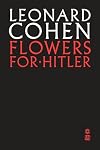
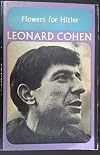
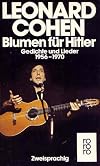
Flowers for Hitler
by Leonard Cohen
On This Page
Description
To mark the publication of Leonard Cohen's final book, The Flame, McClelland & Stewart is proud to reissue six beautiful editions of Cohen's cherished early works of poetry, many of which are back in print for the first time in decades. A freshly packaged new series for devoted Leonard Cohen fans and those who wish to discover one of the world's most adored and celebrated writers. Originally published by McClelland & Stewart in 1964, Flowers for Hitler is Leonard Cohen's third collection of show more poetry, in which he first experiments with his self-consciously "anti-art" gestures: an attempt, in his own words, to move "from the world of the golden-boy poet into the dung pile of the front-line writer." Haunted by the image of the Nazi concentration camps, the poems are deliberately ugly, tasteless, and confrontational, setting out to destroy the image of Cohen as a sweet romantic poet. Its author was confident in his new direction, telling his publisher at the time that the collection was a masterpiece, and "there had] never been a book like this, prose or poetry, written in Canada." show lessTags
Recommendations

























Member Reviews
Flowers for Hitler is not one of Leonard Cohen's strongest poetry collections. An early attempt to develop a thematic through-line of irreverence towards historical horrors such as the Holocaust and Hiroshima seems to be abandoned, and when it is it can be hard to jump from one loose, experimental poem to the next. The book has some good lines in isolation and a few strong poems, but these are the ones regularly plucked for Cohen's later 'greatest hits' selections such as Stranger Music. There's little left behind to make Flowers for Hitler an appealing prospect for anyone other than a Cohen completist.
The poems are a mainstay of Cohen's reputation. These with his other three collections are the canon, ecept for the later song lyrics. The general themes of these are the innate failures of human character, vengeance and intolerance, as well as several on the banality of evil.
Pues bien en “Flores para Hitler” se pueden encontrar pequeñas delicias de todos los temas. A diferencia de grandes poetas que se dedican a publicar monográficos de amor, monográficos políticos o monotemas varios, este libro es capaz de tocar un poco de cada con una ironía desgarradora y mordaz.
Aquí os transcribo uno de ellos para abrir el apetito, probablemente no el mejor, pero si el que más me hizo sonreír.
Finalmente llamé
Finalmente llamé a las personas de las que no quería saber nada
después de la tercera señal me dije
lo dejaré sonar otras cinco veces, entonces qué haré
El teléfono es un magnífico instrumento
pero yo jamás aprendí a utilizarlo demasiado bien
cinco llamadas más y colgaré
sé donde hay que poner show more el aparato, eso por lo menos lo sé.
El teléfono era negro rebordeado de plata
la cabina era más acogedora que el drugstore
había un montón de cremas y tijeras y tubos
que necesitaba para mi cuerpo
estaba interesado en muchas gotas para la tos
me parece que el encargado odiaba
su teléfono y a la gente como yo
que pide cambio tan educadamente
decidí seguir por la misma calle
y entrar en el cuarto drugstore
y llamarles de nuevo.
[Font: http://clowndestina.blogspot.com/2007/08/flores-para-hitler.html] show less
Aquí os transcribo uno de ellos para abrir el apetito, probablemente no el mejor, pero si el que más me hizo sonreír.
Finalmente llamé
Finalmente llamé a las personas de las que no quería saber nada
después de la tercera señal me dije
lo dejaré sonar otras cinco veces, entonces qué haré
El teléfono es un magnífico instrumento
pero yo jamás aprendí a utilizarlo demasiado bien
cinco llamadas más y colgaré
sé donde hay que poner show more el aparato, eso por lo menos lo sé.
El teléfono era negro rebordeado de plata
la cabina era más acogedora que el drugstore
había un montón de cremas y tijeras y tubos
que necesitaba para mi cuerpo
estaba interesado en muchas gotas para la tos
me parece que el encargado odiaba
su teléfono y a la gente como yo
que pide cambio tan educadamente
decidí seguir por la misma calle
y entrar en el cuarto drugstore
y llamarles de nuevo.
[Font: http://clowndestina.blogspot.com/2007/08/flores-para-hitler.html] show less
Aug 2, 2011Catalan
El autor hizo el siguiente comentario acerca de esta obra: Hace algún tiempo este libro se habría llamado "Sol para Napoleón", y antes aún hubiera sido llamado "Murallas para Genghis Khan. ¿Hace falta acaso añadir algo más?.
Oct 21, 2011Spanish
Ratings
Members
- Recently Added By
Author Information

191+ Works 10,726 Members
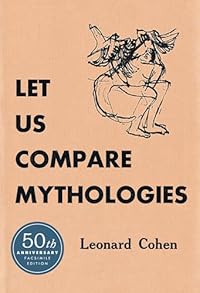
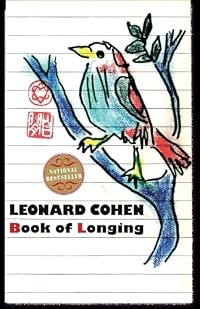
Leonard Norman Cohen was born in Montreal, Canada on September 21, 1934. He received a degree in English from McGill University and studied literature at Columbia University for a year. His first collection of poetry, Let Us Compare Mythologies, was published in 1956. His other collections of poetry include The Spice-Box of Earth, Flowers for show more Hitler, Death of a Lady's Man, Poems and Songs, and Book of Longing. He also wrote two novels entitled The Favorite Game and Beautiful Losers. He was a musician and songwriter for almost five decades. He recorded 14 studio albums including Songs of Leonard Cohen, Songs from a Room, Songs of Love and Hate, Ten New Songs, Dear Heather, Popular Problems, and You Want It Darker. He wrote numerous songs including Hallelujah, Suzanne, Dress Rehearsal Rag, Bird on a Wire, The Story of Isaac, Famous Blue Raincoat, Dance Me to the End of Love, First We Take Manhattan, Everybody Knows, and Tower of Song. In 2008, he was inducted into the Rock and Roll Hall of Fame. In 2010, he received a lifetime achievement award from the National Academy of Recording Arts and Sciences. He died on November 7, 2016 at the age of 82. (Bowker Author Biography) show less
Classifications
Statistics
- Members
- 153
- Popularity
- 213,080
- Reviews
- 4
- Rating
- (3.69)
- Languages
- English, German, Japanese, Spanish
- Media
- Paper, Ebook
- ISBNs
- 8
- ASINs
- 3