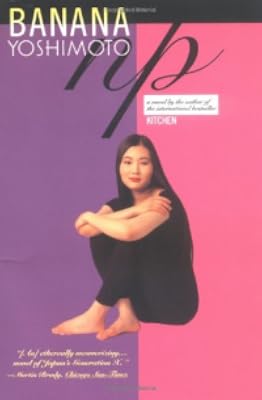
NP
by Banana Yoshimoto
On This Page
Description
In N.P., Banana Yoshimoto's enchanting novel of uncanny subtlety, style, magic, and mystery, a celebrated Japanese writer has committed suicide, leaving behind a collection of stories written in English. But the book, itself titled N.P., may never be published in his native Japan: each translator who takes up the ninety-eighth story chooses death too-including Kazami Kano's boyfriend, Shoji. Haunted by Shoji's death, Kazami is inexorably drawn to three young people whose lives are intimately show more bound to the late writer and his work. Over the course of an astonishing summer, she will discover the truth behind the ninety-eighth story-and she will come to believe that "everything that had happened was shockingly beautiful, enough to make you crazy." show lessTags
Recommendations







Member Reviews
This book had been on my shelves for decades, and I was pretty sure I had never read it. #januaryinjapan (a bookstagram challenge) provided a perfect excuse to take it down and find out. (I hadn't.)
This was a very interesting read, especially for a challenge like this — as the book deals so directly with translation, with English vs. Japanese, America vs. Japan. In the book, a number of translators, including Kazami's boyfriend, have committed suicide while trying to translate an unpublished short story from English to Japanese. The author himself (a Japanese man who has lived for many years in America) committed suicide shortly after writing it. Years later, Kazami is drawn back into that story and everything swirling around it when show more she becomes enmeshed with three other people whose lives were also shaped by it.
There were some moments that strained credulity for me (particularly the ways Kazami tolerates the erratic and sometimes violent behavior of the damaged Sui), and also incest is a theme that is given a strangely light touch here. But I couldn't help be drawn forward by the story, wondering if the characters would forgive themselves and find ways to move forward from the holding patterns they were stuck in.
Has that same quiet, deeply observant melancholy tone common to other Yoshimoto books I've read. I enjoyed it, but if you are new to the author I would recommend starting with Kitchen or The Lake. show less
This was a very interesting read, especially for a challenge like this — as the book deals so directly with translation, with English vs. Japanese, America vs. Japan. In the book, a number of translators, including Kazami's boyfriend, have committed suicide while trying to translate an unpublished short story from English to Japanese. The author himself (a Japanese man who has lived for many years in America) committed suicide shortly after writing it. Years later, Kazami is drawn back into that story and everything swirling around it when show more she becomes enmeshed with three other people whose lives were also shaped by it.
There were some moments that strained credulity for me (particularly the ways Kazami tolerates the erratic and sometimes violent behavior of the damaged Sui), and also incest is a theme that is given a strangely light touch here. But I couldn't help be drawn forward by the story, wondering if the characters would forgive themselves and find ways to move forward from the holding patterns they were stuck in.
Has that same quiet, deeply observant melancholy tone common to other Yoshimoto books I've read. I enjoyed it, but if you are new to the author I would recommend starting with Kitchen or The Lake. show less
"Have you ever been to North Point
To spend your time and pray
The prison walls are dark and cold and grey"
Đó là đoạn mở đầu của North Point, cảm hứng cho N.P, mà theo như Banana diễn tả là "một bản nhạc xưa thật buồn bã"
Buồn bã, u uất, ảm đạm.
Những nhà tù tinh thần.
Ở điểm cực Bắc, N.P của Banana, tồn tại những nhà tù tinh thần như vậy.
Điểm mà mình yêu nhất trong văn phong của Banana đó là khả năng viết về những chuyện kỳ cục, bất bình thường với một giọng điệu thản nhiên, bình tĩnh. Như thể tất cả đều thật bình thường và chẳng có gì phải ngạc nhiên cả. Không lên gân, không chút show more cường điệu, không phán xét, đó là cách bà tạo nên một N.P dữ dội và ám ảnh nhưng không hề thiếu vắng sự chân thành và điềm tĩnh, như thể đọc thư tay từ người bạn thân thiết, rất dịu dàng.
Có thể có những người đọc và thấy ghê tởm cách sống đó. Cũng có người thấy đồng cảm với số phận đứng bên lề của nhân vật. Hoặc chỉ đơn giản là xót thương. Bản thân mình cũng không rõ tình cảm với N.P chính xác là gì, chỉ biết sự tồn tại của câu chuyện ấy trong mình là một mùa hè nóng với ánh nắng vàng chói chang lúc chính ngọ. Mùa hè của câu chuyện và mùa hè lần đầu đọc N.P hòa quyện vào nhau trong sự mơ hồ của không gian và thời gian, đã chẳng còn có thể phân định rạch ròi. Mùa hè năm đó đã phải lòng câu chuyện nhỏ này, đọc đi đọc lại và gần như thuộc lòng một số đoạn đặc biệt yêu thích. Đến bây giờ, mỗi khi nghĩ về N.P lại cảm thấy toàn thân chìm trong một màn sương bàng bạc mơ hồ, rõ ràng trên đầu là nắng ấm đến vậy mà xung quanh lại lạnh vô cùng.
Bạn đã bao giờ đến Cực Bắc chưa? show less
To spend your time and pray
The prison walls are dark and cold and grey"
Đó là đoạn mở đầu của North Point, cảm hứng cho N.P, mà theo như Banana diễn tả là "một bản nhạc xưa thật buồn bã"
Buồn bã, u uất, ảm đạm.
Những nhà tù tinh thần.
Ở điểm cực Bắc, N.P của Banana, tồn tại những nhà tù tinh thần như vậy.
Điểm mà mình yêu nhất trong văn phong của Banana đó là khả năng viết về những chuyện kỳ cục, bất bình thường với một giọng điệu thản nhiên, bình tĩnh. Như thể tất cả đều thật bình thường và chẳng có gì phải ngạc nhiên cả. Không lên gân, không chút show more cường điệu, không phán xét, đó là cách bà tạo nên một N.P dữ dội và ám ảnh nhưng không hề thiếu vắng sự chân thành và điềm tĩnh, như thể đọc thư tay từ người bạn thân thiết, rất dịu dàng.
Có thể có những người đọc và thấy ghê tởm cách sống đó. Cũng có người thấy đồng cảm với số phận đứng bên lề của nhân vật. Hoặc chỉ đơn giản là xót thương. Bản thân mình cũng không rõ tình cảm với N.P chính xác là gì, chỉ biết sự tồn tại của câu chuyện ấy trong mình là một mùa hè nóng với ánh nắng vàng chói chang lúc chính ngọ. Mùa hè của câu chuyện và mùa hè lần đầu đọc N.P hòa quyện vào nhau trong sự mơ hồ của không gian và thời gian, đã chẳng còn có thể phân định rạch ròi. Mùa hè năm đó đã phải lòng câu chuyện nhỏ này, đọc đi đọc lại và gần như thuộc lòng một số đoạn đặc biệt yêu thích. Đến bây giờ, mỗi khi nghĩ về N.P lại cảm thấy toàn thân chìm trong một màn sương bàng bạc mơ hồ, rõ ràng trên đầu là nắng ấm đến vậy mà xung quanh lại lạnh vô cùng.
Bạn đã bao giờ đến Cực Bắc chưa? show less
Darker and more aimless than Kitchen; more exquisite, less melodramatic, more teenagery. The heady experience of oneself as the object of vision, the object of desire of another.Like that Belle and Sebastian song "A Summer Wasting", except that everyone spends a summer drinking wine and sleeping with their sister and violating the corpse of their suicidal ex-lover and thinking about following him down. And someone gets poisoned at the end. But there's still time to make the beachfire at North Point.
This book is for those precious moments of newness where we have "the eyes of a newborn on the face on an adult", made to be carried around in a pocket by kids who are perhaps neither "raging beauties" nor even "cute", but are nevertheless show more the most beautiful and undamaged and solipsistic they will ever be. It's for falling in love with a smile. It's for not even laughing about how a Boston preppy who sails off Nantucket can become this Ancient Mariner seeing mermaids in the deep, because how irreparably exotic a gap exists between the Tokyo teen and sailing off Nantucket? It's youth as the opening of a flower. show less
This book is for those precious moments of newness where we have "the eyes of a newborn on the face on an adult", made to be carried around in a pocket by kids who are perhaps neither "raging beauties" nor even "cute", but are nevertheless show more the most beautiful and undamaged and solipsistic they will ever be. It's for falling in love with a smile. It's for not even laughing about how a Boston preppy who sails off Nantucket can become this Ancient Mariner seeing mermaids in the deep, because how irreparably exotic a gap exists between the Tokyo teen and sailing off Nantucket? It's youth as the opening of a flower. show less
Of the few novels I've read by this author, this one just became my favorite. The story is of a young woman whose life becomes entwined with the children of a recently deceased novelist. We learn that this woman was the girlfriend of the novel's translator, a relationship which unfortunately ended with the latter's suicide.
What I liked most about this novel was that I wasn't certain where the story was taking me or whether I should feel frightened by it. Yoshimoto often uses death as a theme, with this book being no different in that respect. The story also has an undertone of deep sadness, again a feeling which pervades much of Yoshimoto's writing. The narrative is sparse, a common trait of translated Japanese literature.
I felt the show more book's strongest theme had to do with the uncertainties of friendship. One can sometimes be unsure of what motivates a friendship. Since I wasn't certain of this with the story's characters, that was one of the reasons I felt on edge throughout the book. In the end, though, I was satisfied with both the surrealistic way in which the story was told as well as its its final outcome. The story is definitely worth a read, and, if you've never read anything else by Banana Yoshimoto before, this novel would be a fine place to begin. show less
What I liked most about this novel was that I wasn't certain where the story was taking me or whether I should feel frightened by it. Yoshimoto often uses death as a theme, with this book being no different in that respect. The story also has an undertone of deep sadness, again a feeling which pervades much of Yoshimoto's writing. The narrative is sparse, a common trait of translated Japanese literature.
I felt the show more book's strongest theme had to do with the uncertainties of friendship. One can sometimes be unsure of what motivates a friendship. Since I wasn't certain of this with the story's characters, that was one of the reasons I felt on edge throughout the book. In the end, though, I was satisfied with both the surrealistic way in which the story was told as well as its its final outcome. The story is definitely worth a read, and, if you've never read anything else by Banana Yoshimoto before, this novel would be a fine place to begin. show less
One thing I love about Yoshimoto's writing is her ability to capture reality while at the same time transporting the reader into another world. The world of Yoshimoto's stories have all the necessary elements of our reality while at the same time infused with a feeling of magical surrealism. Reading her stories I feel as though they are projected on a large movie screen and I am sitting so close I feel as though I can reach out my hand and almost touch the action playing out before me. Yoshimoto admits in the afterword that she tried to touch on as many themes of interest to her as possible, so the story is a blending of lesbianism, incestuous relationships (what she refers to as "love within the family), telepathy, empathy, religion, show more occult, and so on. A lot to cram into a mere 194 page book! A lot to examine/analyze or if you are like me, to just enjoy how Yoshimoto makes it all work as a cohesive story. The story also touches on a topic that fascinates me as a reader: the role of a translator and written works. The following quote struck me as being particularly apt:
"You become so involved with the writer's style that it starts to feel like your own. You spend hours every day with it, and then you end up feeling that you alone had created it in the first place, and then your thoughts fall into sync with the author's, and that's very peculiar. Why, sometimes I get so far into an author's thought processes that I feel no resistance at all. I become unable to distinguish my thoughts from hers, and sometimes I find myself thinking the way she would, not just about the book, but about my own life, even when I am not translating. Particularly if the author has a very strong personality, a translator gets drawn in so tightly, much more so than an ordinary reader would."Another fascinating read by an author I find isn't afraid to push some boundaries with her writing. show less
A bit unsettling and sparsely written to great effect. In general, a bystanding narrator with an untraditional life who somehow gets pulled into a complicated web of relationships, that's always going to pull me in. But even at the end of the story, did I enjoy the story? I did finish reading it which is a feat in itself since I'm happy to abandon a book whenever. Everything was done just enough to keep me going, the plot, the writing, the length of the book. It was an immersive experience to be in the world but one I'm happy to leave behind. It has kept the door open for me to more Yoshimotos, but perhaps I'll go for a better-loved one.
A short but complex and lyrical story of translation, love, death and alienation. Kazami is a translator, and she has a collection of stories called "N.P.". Written in English by a Japanese writer who committed suicide, the collection of 97 short stories seems cursed. Everyone who has tried to translate them into Japanese has died, including Kazami's tutor/lover Shoji.
But it's no ghost story; rather it's about the family relations and the meaning of the unpublished extra stories. Kazami meets the author's children, young adults who share her own fatherless upbringing. They become friends, antagonists, lovers... and somehow resolution of the past is possible.
But it's no ghost story; rather it's about the family relations and the meaning of the unpublished extra stories. Kazami meets the author's children, young adults who share her own fatherless upbringing. They become friends, antagonists, lovers... and somehow resolution of the past is possible.
Members
- Recently Added By
Author Information

98+ Works 16,026 Members
Banana Yoshimoto, 1964 - Novelist Banana Yoshimoto was born Mahoko Yoshimoto on July 24, 1964 in Tokyo, Japan. She is the daughter of poet and commentator Yoshimoto Ryumei, who had an impact on the radical student movement of the late 1960's. She attended Tokyo's Nihon University, where she studied creative writing and won a faculty award for her show more 1987 graduation novel "Moonlight Shadow." While working as a waitress, she took moments out of her day to write a novel and, at the age of 24, the result was "Kitchen" (1988), which is the story of a lonely woman who moves her bed into the kitchen, finding comfort in the humming of the refrigerator. She also wrote "Pineapple Pudding" and "Fruit Basket," which were both bestsellers. Her novel "Lizard" was dedicated to the memory of the late rocker Kurt Cobain and the novel "Long Night of Marika/Bali Dream Diary" (1996) was considered a flop. (Bowker Author Biography) show less
Some Editions
Awards and Honors
Awards
Series
Belongs to Publisher Series
Common Knowledge
- Canonical title*
- N. P.
- Original title
- N.P.
- Original publication date
- 1990 (original Japanese) (original Japanese); 1994 (English) (English)
- Important places
- Japan
- First words
- 私の知っていたのは、その高瀬皿男という冴えない作家がアメリカに暮らし、冴えない生活のあいまい小説を書きためていたこと。
- Last words
- (Click to show. Warning: May contain spoilers.)またしてもかぜひき。美しい秋のある日。
- Original language
- Japanese
*Some information comes from Common Knowledge in other languages. Click "Edit" for more information.
Classifications
- Genres
- Fiction and Literature, General Fiction
- DDC/MDS
- 895.635 — Literature & rhetoric Literatures of other languages Literatures of East and Southeast Asia Japanese Japanese fiction 1945–2000
- LCC
- PL865 .O7138 .N713 — Language and Literature Languages and literatures of Eastern Asia, Africa, Oceania Languages of Eastern Asia, Africa, Oceania Japanese language and literature Japanese literature Individual authors and works
- BISAC
Statistics
- Members
- 1,478
- Popularity
- 15,822
- Reviews
- 32
- Rating
- (3.46)
- Languages
- 16 — Chinese, Dutch, English, Finnish, French, German, Greek, Hebrew, Icelandic, Italian, Japanese, Korean, Polish, Romanian, Russian, Spanish
- Media
- Paper, Ebook
- ISBNs
- 37
- ASINs
- 8