On This Page
Description
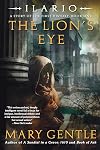
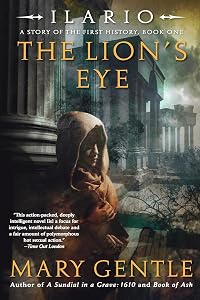
Abandoned and alone, the fosterling Ilario grows up as the King's Freak, surrounded by all the pomp, intrigue, and danger of the Iberian court. Fleeing a failed treacherous attack, Ilario crosses the sea to Carthage, where the mysterious Penitence shrouds the sky in darkness. There, a strange and awful destiny awaits the would-be painter, one that spans continents and kingdoms. Filled with intrigue, sex, and mystery, Ilario: The Lion's Eye is a stunning tale of secret histories and show more self-discovery. The adventure continues in Book Two: The Stone Golem. show lessTags
Recommendations



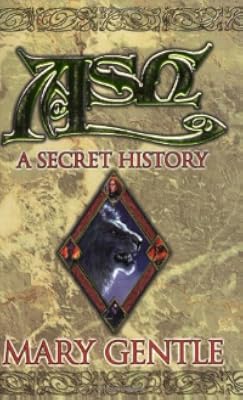






Member Reviews
Set in the same world as Ash, some time before the events of that mighty tome. Where Ash looks at (among many other things!) the varied roles of women in the medieval European military, Ilario looks at varied non-gender binary roles. The title character is intersex (calling himself/herself 'hermaphrodite' and using pronouns according to however he/she is currently presenting in societies that are all too binary); he falls in with a eunuch, whose sister is trans and whose cousin is the ceremonial-beard-wearing Pharoah Queen; and they meet up with a lost Chinese ship with yet another perspective of the role of eunuchs in society.
There's a parallel theme of slavery vs freedom; and there's also a whole lot about the development of show more perspective in Western art. The plot meanwhile centres around Ilario being the unwitting centre of a political scandal that looks likely to end up either with her being murdered or with his home country being invaded by Carthage. The Penitence that was so important in Ash plays its own role here; we also encounter a golem, and a goat-footed girl who I was sorry we never came back to (though she may not be): Ilario's jerkhood towards her was related to how he perceives himself and I was expecting there to be some resolution of that. show less
There's a parallel theme of slavery vs freedom; and there's also a whole lot about the development of show more perspective in Western art. The plot meanwhile centres around Ilario being the unwitting centre of a political scandal that looks likely to end up either with her being murdered or with his home country being invaded by Carthage. The Penitence that was so important in Ash plays its own role here; we also encounter a golem, and a goat-footed girl who I was sorry we never came back to (though she may not be): Ilario's jerkhood towards her was related to how he perceives himself and I was expecting there to be some resolution of that. show less
For pure storytelling, don’t-want-to-stop-reading-it fun, these two books were among the best I’ve read this year. I lived in Mary Gentle’s world even when I wasn’t actively reading the books. I dreamt of her Mediterranean Renaissance. I fretted about Ilario. I couldn’t wait to get back to the books when I’d set them down. Gentle’s worldbuilding is extraordinary, her characters are complete individuals, and her plot compelling. This is fantasy with a heart and a mind. I’m thoroughly perplexed as to why the books have not received a great deal more attention among fantasy readers, and strongly encourage those interested in intelligent, intriguing fantasy to give them a try.
Ilario is a hermaphrodite in every possible sense show more of the word. He (I shall refer to him as “he” for the sake of convenience only; I could just as easily use “she”) not only has the sexual organs of both a man and a woman, but also has sexual desire for both men and women. He has no sense that he is primarily one sex or the other, no feeling that his “ka” or “soul” is one gender or the other: he is both.
That, standing alone, is a strong premise for a book, but Mary Gentle isn’t content with merely exploring one man/woman’s sexual identity. She sets her book in a world that never was, at a time that appears to approximate our Renaissance. Carthage was never conquered, and remains a powerful city-state. But it is a city forever shrouded in darkness, called the Penitence, and no one knows why. Under darkness, it cannot grow crops, and therefore has ambitions of conquest. Rome has been a backwater ever since Gundobad’s curse left Peter’s Chair (that is, the office of Pope) vacant. Taraconensis is another great power, from which Ilario hails. Turkey, too, is powerful, but it owes its position in the world to New Alexandria – formerly known as Constantinople – the center of Egypt in exile The Alexandrian Library is the most reknowned collection of writings of all sorts in the world, many, if not most, one of a kind. Politically and militarily, however, Alexandria is barely holding on.
When the first book opens, Ilario is fleeing Taraconensis, where his birth mother, Rosamunda, has just tried to kill him. He has been freed by King Rodrigo from his position as King’s Freak, a slave mocked for his sexual identity. Rosamunda’s second attempt on his life is no more successful than her first, but it wounds him more – psychically, for he loves her, though not physically. But she is married to Videric, the king’s First Minister, and he has ordered her to kill her only child. And she has her own reasons for obeying.
Ilario is an artist, and he chooses Carthage in order to paint under the Penitence, trying to get the colors of eternal darkness correctly. He seeks to apprentice himself to an artist who can teach him the New Art, an art that we, and Ilario, learn is based upon the study of perspective and proportion. He meets with misfortune almost immediately in Carthage, however, and the misfortune never lets up: he is bilked as a newcomer and made a slave again to an Egyptian, Rekhmire’. Worse yet, Rosamunda follows him and again attempts to kill him. There is more at work politically here than he knows, and more to come when Rekhmire’ denounces his mother to the powers that be in Carthage, causing an international incident.
All of this happens within the first one hundred pages or so of the first book, and I haven’t even mentioned Ilario’s night of passion with Marcomir, his discovery of his true father or Rekhmire’’s status as a eunuch. The books take Ilario and Rekhmire to Rome, Venice, New Alexandria, and elsewhere about the Mediterranean, introducing all manner of what we know as artifacts of the Renaissance. Political intrigue is abundant, as Videric continues his quest to end Ilario’s life. Ilario’s own body betrays him, or blesses him, or both, as the reader struggles to bend his or her mind around the notion of a human who is both male and female. There is much to consider here about the nature of love as well as of sex, and the relationship of love to the configuration of one’s genitals.
Gentle’s writing is largely transparent, with rare moments of a keen turn of phrase. It is this transparency that allows the reader to become so thoroughly lost in these books that all else disappears so that you can smell the cheese in the artist’s glue, hear the thunder of the sea and feel the heat of the midday sun in New Alexandria. Tension builds as the politics grow more complicated, the assassins more numerous and the stakes higher.
Occasionally it is apparent that Gentle would have benefited from an editor, as when, for instance, she draws the same word picture several times within pages. In addition, the short epilogue should have been cut altogether; it adds nothing we need to know to the story.
And there is no reason whatsoever why this story should have been two books instead of one. The first book’s cliffhanger is an insult to readers, because it is not a true cliffhanger; its resolution is apparent by the fact that there is a second book at all. This is plainly a single book cut in two for profit’s sake, a fault to be laid squarely at the feet of the publisher. This recent regrettable trend is extremely annoying and makes books so expensive as to take them out of the reach of many. I would gladly have paid $35 for a single hardcover volume of nearly 700 pages rather than $30 for two trade paperbacks; the former would have been a fine addition to my permanent library. As it is, much as I loved these books, they are merely fine additions to my local public library.
I understand that Ilario’s story is a sort of prequel to Mary Gentle’s Ash: A Secret History. I look forward to seeking out that quartet or duology of books (depending on the publisher) and reading them soon. If these two books are any indication of what I can expect from this world of Gentle’s, then I have many fine hours of reading ahead of me. show less
Ilario is a hermaphrodite in every possible sense show more of the word. He (I shall refer to him as “he” for the sake of convenience only; I could just as easily use “she”) not only has the sexual organs of both a man and a woman, but also has sexual desire for both men and women. He has no sense that he is primarily one sex or the other, no feeling that his “ka” or “soul” is one gender or the other: he is both.
That, standing alone, is a strong premise for a book, but Mary Gentle isn’t content with merely exploring one man/woman’s sexual identity. She sets her book in a world that never was, at a time that appears to approximate our Renaissance. Carthage was never conquered, and remains a powerful city-state. But it is a city forever shrouded in darkness, called the Penitence, and no one knows why. Under darkness, it cannot grow crops, and therefore has ambitions of conquest. Rome has been a backwater ever since Gundobad’s curse left Peter’s Chair (that is, the office of Pope) vacant. Taraconensis is another great power, from which Ilario hails. Turkey, too, is powerful, but it owes its position in the world to New Alexandria – formerly known as Constantinople – the center of Egypt in exile The Alexandrian Library is the most reknowned collection of writings of all sorts in the world, many, if not most, one of a kind. Politically and militarily, however, Alexandria is barely holding on.
When the first book opens, Ilario is fleeing Taraconensis, where his birth mother, Rosamunda, has just tried to kill him. He has been freed by King Rodrigo from his position as King’s Freak, a slave mocked for his sexual identity. Rosamunda’s second attempt on his life is no more successful than her first, but it wounds him more – psychically, for he loves her, though not physically. But she is married to Videric, the king’s First Minister, and he has ordered her to kill her only child. And she has her own reasons for obeying.
Ilario is an artist, and he chooses Carthage in order to paint under the Penitence, trying to get the colors of eternal darkness correctly. He seeks to apprentice himself to an artist who can teach him the New Art, an art that we, and Ilario, learn is based upon the study of perspective and proportion. He meets with misfortune almost immediately in Carthage, however, and the misfortune never lets up: he is bilked as a newcomer and made a slave again to an Egyptian, Rekhmire’. Worse yet, Rosamunda follows him and again attempts to kill him. There is more at work politically here than he knows, and more to come when Rekhmire’ denounces his mother to the powers that be in Carthage, causing an international incident.
All of this happens within the first one hundred pages or so of the first book, and I haven’t even mentioned Ilario’s night of passion with Marcomir, his discovery of his true father or Rekhmire’’s status as a eunuch. The books take Ilario and Rekhmire to Rome, Venice, New Alexandria, and elsewhere about the Mediterranean, introducing all manner of what we know as artifacts of the Renaissance. Political intrigue is abundant, as Videric continues his quest to end Ilario’s life. Ilario’s own body betrays him, or blesses him, or both, as the reader struggles to bend his or her mind around the notion of a human who is both male and female. There is much to consider here about the nature of love as well as of sex, and the relationship of love to the configuration of one’s genitals.
Gentle’s writing is largely transparent, with rare moments of a keen turn of phrase. It is this transparency that allows the reader to become so thoroughly lost in these books that all else disappears so that you can smell the cheese in the artist’s glue, hear the thunder of the sea and feel the heat of the midday sun in New Alexandria. Tension builds as the politics grow more complicated, the assassins more numerous and the stakes higher.
Occasionally it is apparent that Gentle would have benefited from an editor, as when, for instance, she draws the same word picture several times within pages. In addition, the short epilogue should have been cut altogether; it adds nothing we need to know to the story.
And there is no reason whatsoever why this story should have been two books instead of one. The first book’s cliffhanger is an insult to readers, because it is not a true cliffhanger; its resolution is apparent by the fact that there is a second book at all. This is plainly a single book cut in two for profit’s sake, a fault to be laid squarely at the feet of the publisher. This recent regrettable trend is extremely annoying and makes books so expensive as to take them out of the reach of many. I would gladly have paid $35 for a single hardcover volume of nearly 700 pages rather than $30 for two trade paperbacks; the former would have been a fine addition to my permanent library. As it is, much as I loved these books, they are merely fine additions to my local public library.
I understand that Ilario’s story is a sort of prequel to Mary Gentle’s Ash: A Secret History. I look forward to seeking out that quartet or duology of books (depending on the publisher) and reading them soon. If these two books are any indication of what I can expect from this world of Gentle’s, then I have many fine hours of reading ahead of me. show less
A complex prequel set in the World created for "Ash", but set considerably earlier. Attila is the Roman emperor, there are very strange happenings around Tunis/Carthage, and an hermaphrodite painter, survives political intrigues to bear a child and become an important person in Visigothic Spain. We are a long way from Tolkien in this one.
More of a 1.5 of 5.0.
Completely a case of me missing the quote on the cover that mentions "[the] fair amount of polymorphous hot sexual action." Whoops. Not what I was expecting when I grabbed this at the library.
I think that I was supposed to empathize with Ilario's crappy situation/lot in life, but mostly I was annoyed with him. He's selfish, pouty, and irritatingly precocious. (I could have done without the first-person narrative, too. Whatever happened to good ol' fashioned third-person limited?)
However, I finished this. I've found that I have no patience for books I really, really dislike as of late. As such, I have to give Mary Gentle credit for writing an intriguing story.
Completely a case of me missing the quote on the cover that mentions "[the] fair amount of polymorphous hot sexual action." Whoops. Not what I was expecting when I grabbed this at the library.
I think that I was supposed to empathize with Ilario's crappy situation/lot in life, but mostly I was annoyed with him. He's selfish, pouty, and irritatingly precocious. (I could have done without the first-person narrative, too. Whatever happened to good ol' fashioned third-person limited?)
However, I finished this. I've found that I have no patience for books I really, really dislike as of late. As such, I have to give Mary Gentle credit for writing an intriguing story.
Ratings
Members
- Recently Added By
Lists

Books Read in 2023
5,638 works; 147 members
Author Information

61+ Works 7,586 Members
Some Editions
Awards and Honors
Distinctions
Series


Work Relationships
Is contained in
Common Knowledge
- Canonical title
- The Lion's Eye
- Original publication date
- 2006
- People/Characters
- Ilario; Leon Battista Alberti
- Important places
- Carthage, Africa; Rome, Italy; Venice, Veneto, Italy; Cairo, Egypt
- Disambiguation notice
- Please be careful when combining. This is the US edition of Ilario - the first of two volumes. It is not the same as the UK edition which was published in one edition.
Classifications
Statistics
- Members
- 134
- Popularity
- 244,856
- Reviews
- 4
- Rating
- (3.42)
- Languages
- English
- Media
- Paper, Ebook
- ISBNs
- 4
- ASINs
- 1