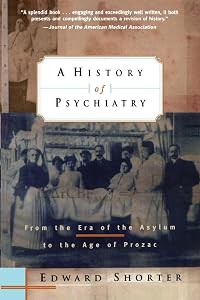
A History of Psychiatry: From the Era of the Asylum to the Age of Prozac
by Edward Shorter
On This Page
Description
"With cinematic scope and precision, Shorter shows us the harsh, farcical, and inspiring realities of society's changing attitudes toward its mentally ill and the efforts of generations of scientists and physicians to ease their suffering. He takes us inside the eighteenth-century asylums, with their restraints and beatings, and guides us through the landscaped boulevards of the spas and rest homes where the "nervous disorders" of the Victorian elite were treated with bromides, buttermilk, show more and kind words. He leads us through the teeming "snake pits" of early twentieth-century public mental hospitals and the gleaming laboratories of today's pharmaceutical cartels." "Writing in the tradition of the best social history, Shorter delineates the major scientific and cultural forces that shaped the development of psychiatry. Along the way, he paints vivid portraits of the leading figures - names such as Esquirol and Pinel, Krafft-Ebing and Kraepelin, Freud and Horney - who peopled the history of psychiatry. He pulls no punches in assessing the roles these men and women played in advancing our understanding of the biological origins of mental illness, or sidetracking psychiatry into pseudoscience, metaphysics, and fanaticism."--Jacket. show lessTags
Recommendations



























Member Reviews
In a way similar to his "From Paralysis to Fatigue" Shorter writes of the evolution of psychiatry from its biological origins in asylums and degenerative brain disorders, to a 50 year "detour" into psychoanalysis, then back to biological origins in psychopharmacology. I found some interesting insights. Neurology in the turn of the century was really the place where mildly neurotic outpatients turned for officebased psychotherapy, and the development of psychoanalysis was critical for breaking the psychiatrist out of the mental hospital into a potentially lucrative practice. The psychoanalysts in this century resisted attempts to diagnose and classify disease, feeling the identification of the psychodynamic was more important. It was show more interesting to read of events in the 1970's and 1980's, for which I have a real memory, and some participation in the intellectual currents of the time, as history. It makes one question the underpinnings of one's learning to read its discrediting in the history of psychiatry I remember reading Thomas Szasz of the antipsychiatry movement with some approval during medical school, for instance.
Shorter also declares the deinstitutionalization of psychotics as an unmitigated disaster, a sentiment I agree with, and traces its origin to the therapeutic community concept in the military service hospitals in Britain during the second world war. show less
Shorter also declares the deinstitutionalization of psychotics as an unmitigated disaster, a sentiment I agree with, and traces its origin to the therapeutic community concept in the military service hospitals in Britain during the second world war. show less
Excellently researched, compassionate without the melodrama of cries of abuse - (though there was abuse, but sometimes you just want the history)
150 SCH 1
In "Een geschiedenis van de psychiatrie" gaat de Canadese hoogleraar Edward Shorter in 8 hoofdstukken door de geschiedenis van de psychiatrie heen.
1): De geboorte van de psychiatrie aan het eind van de 18e eeuw, waarbij gestichten voor het eerst een therapeutische functie kregen.
2): Het tijdperk van het gesticht met toenemende aantallen patiënten.
3): De eerste biologische psychiatrie: een tijdperk dat tot ongeveer 1900 duurt. Gedurende deze periode beschouwt men geestesziekten als ontstaan door afwijkingen in de hersenen en doet men veel onderzoek naar de hersenen.
4): Zenuwen. Over de neiging geesteszieken te behandelen door middel van (rust)kuren.
5): Het psychoanalytisch hiaat: De periode waarin het gedachtegoed van Freud overheerst, show more in de VS tussen pakweg 1930 en 1970. Men denkt dat geesteszieken veroorzaakt worden door omgevingsfactoren waarbij men langdurige psychoanalyses toepast om inzicht te krijgen in de problemen. Deze aanpak blijkt voor de zwaardere patiënten in het geheel niet te werken.
6): Alternatieven: Van koortskuur bij neurosyfilis tot slaaptherapie, electroshock en lobotomie.
7): De tweede biologische psychiatrie: Men ontdekt in de jaren 50 de antipsychotica waarbij het voor het eerst mogelijk wordt om de zwaardere patiënten echt te helpen.
8): Van Freud tot Prozac: De psychiaters proberen om hun marktaandeel te behouden, nadruk op diagnostiek en de ontdekking van medicijnen tegen depressie zoals Prozac.
Eindconclusie luidt dat de combinatie van pillen plus praten het beste werkt.
Het is een interessant boek, maar het bevat in mijn ogen veel onnodige details en is daardoor voor de geïnteresseerde patiënt waarschijnlijk te moeilijk om te lezen. De vertaling is zoals we van Tinke Davids gewend zijn goed. show less
1): De geboorte van de psychiatrie aan het eind van de 18e eeuw, waarbij gestichten voor het eerst een therapeutische functie kregen.
2): Het tijdperk van het gesticht met toenemende aantallen patiënten.
3): De eerste biologische psychiatrie: een tijdperk dat tot ongeveer 1900 duurt. Gedurende deze periode beschouwt men geestesziekten als ontstaan door afwijkingen in de hersenen en doet men veel onderzoek naar de hersenen.
4): Zenuwen. Over de neiging geesteszieken te behandelen door middel van (rust)kuren.
5): Het psychoanalytisch hiaat: De periode waarin het gedachtegoed van Freud overheerst, show more in de VS tussen pakweg 1930 en 1970. Men denkt dat geesteszieken veroorzaakt worden door omgevingsfactoren waarbij men langdurige psychoanalyses toepast om inzicht te krijgen in de problemen. Deze aanpak blijkt voor de zwaardere patiënten in het geheel niet te werken.
6): Alternatieven: Van koortskuur bij neurosyfilis tot slaaptherapie, electroshock en lobotomie.
7): De tweede biologische psychiatrie: Men ontdekt in de jaren 50 de antipsychotica waarbij het voor het eerst mogelijk wordt om de zwaardere patiënten echt te helpen.
8): Van Freud tot Prozac: De psychiaters proberen om hun marktaandeel te behouden, nadruk op diagnostiek en de ontdekking van medicijnen tegen depressie zoals Prozac.
Eindconclusie luidt dat de combinatie van pillen plus praten het beste werkt.
Het is een interessant boek, maar het bevat in mijn ogen veel onnodige details en is daardoor voor de geïnteresseerde patiënt waarschijnlijk te moeilijk om te lezen. De vertaling is zoals we van Tinke Davids gewend zijn goed. show less
Jan 23, 2011Dutch
Ratings
Members
- Recently Added By
Lists

Therapeutic Society
61 works; 1 member
Author Information

24+ Works 710 Members
Edward Shorter is the Jason A. Hannah Chair in the History of Medicine at the University of Toronto.
Awards and Honors
Awards
Series
Belongs to Publisher Series
rowohlts enzyklopädie (659)
Common Knowledge
- Original title
- A history of psychiatry
- Original publication date
- 1997
- First words
- Before the end of the eighteenth century, there was no such thing as psychiatry.
- Blurbers
- Porter, Roy
Classifications
- Genres
- Nonfiction, History, General Nonfiction
- DDC/MDS
- 616.89 — Applied science & technology Medicine & health Diseases, Allergies, Skin Conditions Nervous Disorders: Autism, Anorexia, OCD Mental disorders: bi-polar/schizophrenia
- LCC
- RC438 .S54 — Medicine Internal medicine Internal medicine Neurosciences. Biological psychiatry. Neuropsychiatry Psychiatry
- BISAC
Statistics
- Members
- 170
- Popularity
- 192,594
- Reviews
- 4
- Rating
- (4.20)
- Languages
- 6 — Danish, Dutch, English, Finnish, German, Italian
- Media
- Paper, Ebook
- ISBNs
- 11
- UPCs
- 1
- ASINs
- 1