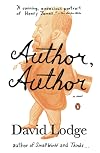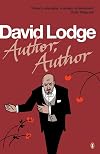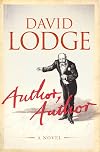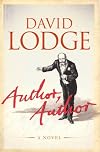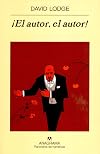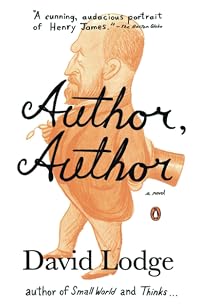
Author, Author
by David Lodge
On This Page
Description
Framed by a dramatic and moving account of Henry James's last illness, Author, Authorbegins in the early 1880s, describing James's friendship with the genial Punch artist, George Du Maurier, and his intimate but problematic relationship with fellow American novelist Constance Fenimore Woolson. At the end of the decade Henry, worried by the failure of his books to sell, resolves to achieve fame and fortune as a playwright while Du Maurier diversifies into writing novels. The consequences that show more ensue mingle comedy, irony, pathos, and suspense. As Du Maurier's novel Trilbybecomes the bestseller of the century, Henry anxiously awaits the opening night of his make-or-break play, Guy Domville. This event, on January 5, 1895, and its complex sequel form the climax to Lodge's absorbing novel. Thronged with vividly drawn characters, some of them with famous names, Author, Authorpresents a fascinating panorama of literary and theatrical life in late Victorian England. show lessTags
Recommendations














Member Recommendations
Member Reviews
Dans son dernier roman, Pensées secrètes, l’écrivain Henry James apparaissait en filigrane. Dans celui-ci, il se tient au centre de la scène. L’histoire commence en décembre 1915, alors que Henry James meurt entouré de ses proches et de ses domestiques - puis recule pour lever le rideau sur les années 1880. Apparaissent alors George du Maurier, l’ami cher, artiste et illustrateur de métier et Constance Fenimore Woolson, écrivain américain avec qui James entretient des relations aussi étroites que platoniques. C’est à cette époque que Henry James décide, pour contrer le faible succès public de ses livres, de chercher la fortune et la renommée au théâtre. Il se lance dans l’écriture de pièces tandis que son show more ami George, dont la vue s’affaiblit, se met, lui, à écrire des romans. Les conséquences pour les deux hommes vont être tout à la fois comiques, tragiques, surprenantes et ironiques : tandis que Trilby , le roman de Georges, devient le best-seller du siècle au grand étonnement de l’auteur lui-même, Henry se voit hué le soir de la première de sa pièce Guy Domville. Grouillant de personnages campés d’un trait vif - certains d’entre eux célèbres, d’autres obscurs - L’auteur ! l’auteur ! offre le fascinant panorama d’une vie littéraire et théâtrale qui présage en bien des points l’actuelle confusion des genres entre l’art, le commerce et la publicité. Avec ce mélange d’humour britannique et de mélancolie douce qui est sa marque de fabrique, David Lodge dépeint surtout, à travers la figure captivante et mystérieuse de Henry James pour qui il éprouve une immense empathie, les obsessions, les espoirs, les rêves, les déceptions et les triomphes de ceux que l’on appelle les gens de plume. L’épigraphe du livre le résume à la perfection : « We work in the dark – we do what we can- we give what we have. Our doubt is our passion and our passion is our task. The rest is the madness of art. » show less
A book that really demonstrates to me how great an author Lodge is. I was not expecting to enjoy this at all, since the subject matter (Henry James) didn't interest me and the genre (historical novelised biography) was similarly unattractive. But all my preconceptions were overturned. This was gripping, moving, entertaining and informative. Lodge's respect for James shines through, yet he is also clearly conscious of his failings and does an excellent job of letting us be aware of these even when his character is not. If I read him correctly (and I know nothing of James' work) he has, once again, adopted the style of his subject whilst writing about it. This is a psychological novel, short on dialogue. Only at the very end does Lodge show more allow his authorial voice to intrude. I'm very glad I've read this book, and it makes me want to know more about Henry James. In fact, I had to resist the temptation to find out all I could about him whilst reading the book; I was sure it would spoil my enjoyment of it. It was far more rewarding to discover Henry James through Lodge's eyes. show less
I didn't think I would like this book, because I don't have much interest in Henry James, but Lodge's writing is captivating. I became interested in James' trials in getting his work to be profitablly published and, in the case of his plays (who knew he wrote plays?) performed. The book starts with him on his deathbed, which of course is where it ends, but in between one gets to know a man who never deeply connected with anyone, but remains interesting. And there is much here about the life of a writer, and what it is like, particularly the reception of ones work, which informs the title.
Author! Author! tells the tale of Author Henry James. This book exists in a genre that many would consider limiting - its dramatic possibilities bound by a need to keep to recorded fact (although David Lodge stresses that many events are imagined, he records the differences between his events and recorded fact later in the novel). Even more difficult is the subject himself, whose posthumous blushes Lodge does not spare. Author! Author! should be a book which fails before a page is turned.
Despite such difficult starting points, the book manages to be an intellectual, satisfying read. Set in the late nineteenth century, the bulk of the story follows James's career as he attempts to become a playwright. During this time he comes into show more contact with names that were later to become the leading thinkers of the age. James himself is portrayed as pompous, self-absorbed and snobbish, a self-appointed judge of literature whose vanity and lumbering seriousness often make him ridiculous. Yet despite this, the portrayal of James is not without sympathy; Lodge may add some knowing smiles in the middle of James's brooding about his lack of success, but this is the closest the character gets to two-dimensional. Flawed and sensitive, James's stubborn elitism (however scathing in private) rarely becomes unkind words, and his self-righteous is tinged by a sneaking suspicion that he may just be right - and his own gloomy surveys of his own behaviour.
Author! Author! could never be a page-turner in the traditional sense, but as a gentle piece of intellectual nourishment it is a definite success. show less
Despite such difficult starting points, the book manages to be an intellectual, satisfying read. Set in the late nineteenth century, the bulk of the story follows James's career as he attempts to become a playwright. During this time he comes into show more contact with names that were later to become the leading thinkers of the age. James himself is portrayed as pompous, self-absorbed and snobbish, a self-appointed judge of literature whose vanity and lumbering seriousness often make him ridiculous. Yet despite this, the portrayal of James is not without sympathy; Lodge may add some knowing smiles in the middle of James's brooding about his lack of success, but this is the closest the character gets to two-dimensional. Flawed and sensitive, James's stubborn elitism (however scathing in private) rarely becomes unkind words, and his self-righteous is tinged by a sneaking suspicion that he may just be right - and his own gloomy surveys of his own behaviour.
Author! Author! could never be a page-turner in the traditional sense, but as a gentle piece of intellectual nourishment it is a definite success. show less
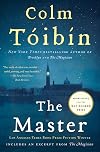
This book is about Henry James, and like Colm Tóibín's The Master, a key incident is the opening of James' play Guy Domville, where the venerable author was booed by the audience as he took a curtain call. But the wider focus here is James' desire for sales – partly for the cash and partly for the recognition – and his friendship with George Du Maurier, writer of the (contemporary) runaway bestseller Trilby.
Lodge has done plenty of research and makes use of quotes from actual letters and diaries. I think he was imitating James in the broad social sweep of his work – it's a portrait of a group rather than an individual – and also to a certain extent in his style, although this is largely through long sentences.
But – with the show more exception of the chapter about the ill-fated play, which explains very well how the debacle actually happened – for most of the book I was wondering what the point was.
James comes across as a man prone to embarrassment and awkwardness who finds it difficult to make the emotional commitment, especially to women, that underlies a real connection. But he doesn't make a very human character and I found it hard to care about him. (From what I remember of The Master, which I read 18 months ago, that Henry James is more sympathetic because he is more keenly aware of his failings). show less
Lodge has done plenty of research and makes use of quotes from actual letters and diaries. I think he was imitating James in the broad social sweep of his work – it's a portrait of a group rather than an individual – and also to a certain extent in his style, although this is largely through long sentences.
But – with the show more exception of the chapter about the ill-fated play, which explains very well how the debacle actually happened – for most of the book I was wondering what the point was.
James comes across as a man prone to embarrassment and awkwardness who finds it difficult to make the emotional commitment, especially to women, that underlies a real connection. But he doesn't make a very human character and I found it hard to care about him. (From what I remember of The Master, which I read 18 months ago, that Henry James is more sympathetic because he is more keenly aware of his failings). show less
"Author, Author" is a fictionalization of the life of author Henry James, with particular attention to his years as a playwright. The book is well written, and assuming the specific details of his life were actually true (and the Lodge didn’t simply make them up), they flowed well within the narrative and never seemed forced or superfluous.
Unfortunately, I struggled to finish the book. Again, it was well written, and I typically love writings set in the late 19th century, but it failed to capture my full attention. Likely by biggest distraction is that I have never read anything by Henry James. As the book progresses, it become clear that certain events described earlier in the book end up being the plot devices for works he later show more writes. Since I didn’t know the works, I missed the build-up. As a result, I failed to see the point of the book for about the first half. Now the flipside of that, since I have no knowledge of his works, it was always a surprise to me when one was successful or a failure. It’s like reading about a war and not knowing who’s going to win.
The end of the book picked up, and I found a strong desire to see how it would end. But overall, it was a mediocre experience – possibly better enjoyed by someone with a more refined literary background than my own. show less
Unfortunately, I struggled to finish the book. Again, it was well written, and I typically love writings set in the late 19th century, but it failed to capture my full attention. Likely by biggest distraction is that I have never read anything by Henry James. As the book progresses, it become clear that certain events described earlier in the book end up being the plot devices for works he later show more writes. Since I didn’t know the works, I missed the build-up. As a result, I failed to see the point of the book for about the first half. Now the flipside of that, since I have no knowledge of his works, it was always a surprise to me when one was successful or a failure. It’s like reading about a war and not knowing who’s going to win.
The end of the book picked up, and I found a strong desire to see how it would end. But overall, it was a mediocre experience – possibly better enjoyed by someone with a more refined literary background than my own. show less
Because Lodge's writing is rambling I found myself getting distracted and confused about what was happening when. Author, Author is a biography that focuses mainly on Henry James's relationships with Constance Fenimore Woolsen, the granddaughter of James Fenimore Cooper and with fellow author/friend George Du Maurier and the "horrible opening night" of his play "Guy Domville." The best part of the story was Henry's relationship with Constance Fenimore Woolsen (fondly known as Fenimore throughout the book). James struggles to have a relationship with her that is private yet meaningful.
Members
- Recently Added By
Lists

Lives of the Poets (and Philosophers)
110 works; 5 members

Llibres que he llegit el 2017
49 works; 1 member
Author Information

55+ Works 19,256 Members
Common Knowledge
- Canonical title*
- L'auteur ! L'auteur !
- Original title
- Author, Author
- Original publication date
- 2004
- People/Characters
- Henry James; Constance Fenimore Woolson
- Epigraph
- 'We work in the dark - we do what we can - we give what
we have. Our doubt is our passion and our passion is our
task. The rest is the madness of art.'
- Henry, James, 'The Middle Ye... (show all)ars'
Who was to be lucky and who to be rich,
Who'd get to the top of the tree ...
- Felix Moscheles, In Bohemia with Du Maurier - Dedication
- To Danny Moynihan
- First words
- London, December 1915. In the master bedroom (never was the estate agent's epithet more appropriate) of Flat 21, Carlyle Mansions, Cheyne Walk, Chelsea, the distinguished author is dying - slowly, but surely.
- Quotations
- Only success would justify his setting aside the fine-pointed pen of the novelist to take up the cruder instrument of the playwright.
He shared Flaubert's mania for sentences, sentences that were perfectly balanced, intricately constructed, subtly cadenced, and as densely packed with meaning as a nut with meat.
[Henry James] changed into plus-fours and Norfolk jacket, put on a soft cap, and fetched his bike from the stables at the back of the hotel [in Rye, Sussex] where it was kept. Rather than entertain other guests by attempting ... (show all)to mount the machine on the carriage drive in full view of their windows and balconies, he wheeled it out of the hotel grounds and on to the Meadfoot Road. After one false start and a few alarming wobbles, he got the bike under way and pedalled stoutly.
It was a pleasant, sunny afternoon, with a light breeze from the south that, augmented by his movement through the air, stirred his beard and cooled his cheeks agreeably. As always he felt exhilarated by the surge of speed compared with mere walking. In a few minutes he had travelled half a mile. What a wonderful invention it was! So simple, and so ingenious. Why had it taken mankind so long to realise that, given a certain momentum, a human being could balance indefinitely on two wheels? The combination of Momentum and Balance was the secret – and one might draw an analogy here with the art of fiction: momentum was the onward drive of narrative, the raising of questions to which the audience desired to know the answers, and balance was the symmetry of structure, the elimination of the irrelevant, the repetition of motifs and symbols, the elegant variation of –
At this point in his reverie a very small perambulator suddenly rolled out of a side alley in front of him, pursued by a young woman and a little girl. He braked hard, his front wheel locked and skidded in some loose gravel on the road, the bicycle overturned and he tumbled to the ground. The woman – she appeared to be a nursemaid – helped him rise to his feet. The little girl, aged about five, looked on from the side of the road with round eyes and a pale face.
'Are you all right, sir?' the woman asked anxiously.
'I think so,' he said, feeling himself, and flexing his limbs. He had grazed his hand – the left one fortunately, not his writing hand – and he would have a fresh bruise tomorrow on his shin, but otherwise he seemed to be all right. He picked up his bicycle. The handlebar was twisted slightly on its axis, but the machine did not appear to be seriously damaged. - Last words
- (Click to show. Warning: May contain spoilers.) Henry, wherever you are - take a bow.
- Original language*
- Anglais (Royaume-Uni) (Royaume-Uni)
*Some information comes from Common Knowledge in other languages. Click "Edit" for more information.
Classifications
Statistics
- Members
- 689
- Popularity
- 41,624
- Reviews
- 10
- Rating
- (3.60)
- Languages
- 8 — English, French, German, Italian, Polish, Portuguese, Spanish, Turkish
- Media
- Paper, Audiobook, Ebook
- ISBNs
- 21
- ASINs
- 3