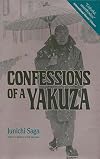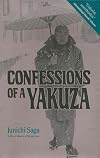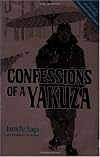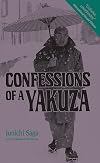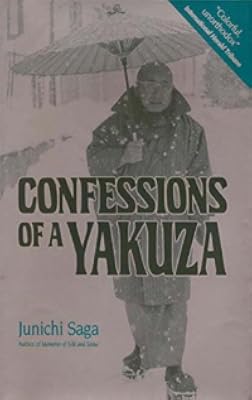
Confessions of a Yakuza: A Life in Japan's Underworld
by Junichi Saga
On This Page
Description
This is the true story, as told to the doctor who looked after him just before he died, of the life of one of the last traditional yakuza in Japan. It wasn't a good' life, in either sense of the word, but it was an adventurous one; and the tale he has to tell presents an honest and oddly attractive picture of an insider in that separate, unofficial world. In his low, hoarse voice, he describes the random events that led the son of a prosperous country shopkeeper to become a member, and show more ultimately the leader, of a gang organizing illegal dice games in Tokyo's liveliest' show lessTags
Recommendations









Member Reviews
This is a striking, beautifully wrtten story. It was so interesting I read it in a single sitting, which does not happen that often to me.
Main character is old crime boss, practically on his deathbed. When he decides to retire in japanese countryside he comes across the doctor (author) whom he starts to like very much. So much that after he witnesses doctor's affinity for history, especially history of small towns in Japan, he decides to tell him his life story.
While it is obvious that crime boss is a hard person, who lived the life of crime, murder and savage prison sentences, we are also given counterbalance - picture of the man who came from the poverty, who fought to survive but also tried to live according to some unwritten code of show more honor, trying to keep up with his image of hardcore criminal but also to try to be as human to possible to people around him. We are given very honest portrayal of people and what they are ready to do in order to survive, and I am not talking about savage violence, but down to earth coming to terms with the life they are living. Are they sometimes ruthless, yes, but not to the point of ruthlessness for the sake of ruthlessness, but to find a way out of the predicament they found themselves in, if possible with as little external suffering of others. You might call it small level thievery and con-artistry but when one has no other means, what else is left?
This is a story of very caste society, where everyone needs to find a position for oneself and try to live the best life possible living by the rules of his environment.
Again, a lot of unspoken lurks around the corner of the pages, potentially even very brutal, but these parts get skipped and only very human elements remain. Because of this book might be seen as an idealized view of the life of the Yakuza, that some would call even too polished or untrue. In my eyes it succeeds in telling a story of ordinary people who find themselves living an extraordinary life, told through their relations with others and their ways to keep their humanity. Nobody lives in the illusions of what Yakuza boss actually needs to do everyday, but it is refreshing to show how crime does not exist just for the crime sake but because of the way society is built, and there is just no other way to live for some strata of the society. It does not make saints of the criminals, but enables us to better understand what is it that drives their business forward. And it is not critique of the society - crime was, is and will remain. When there is a desire left unsatisfied there are always people who will try to profit on it.
Very interesting, and very beautifully written book (translation is excellent), full of love for the time past and the way old Japan once was.
Highly recommended. show less
Main character is old crime boss, practically on his deathbed. When he decides to retire in japanese countryside he comes across the doctor (author) whom he starts to like very much. So much that after he witnesses doctor's affinity for history, especially history of small towns in Japan, he decides to tell him his life story.
While it is obvious that crime boss is a hard person, who lived the life of crime, murder and savage prison sentences, we are also given counterbalance - picture of the man who came from the poverty, who fought to survive but also tried to live according to some unwritten code of show more honor, trying to keep up with his image of hardcore criminal but also to try to be as human to possible to people around him. We are given very honest portrayal of people and what they are ready to do in order to survive, and I am not talking about savage violence, but down to earth coming to terms with the life they are living. Are they sometimes ruthless, yes, but not to the point of ruthlessness for the sake of ruthlessness, but to find a way out of the predicament they found themselves in, if possible with as little external suffering of others. You might call it small level thievery and con-artistry but when one has no other means, what else is left?
This is a story of very caste society, where everyone needs to find a position for oneself and try to live the best life possible living by the rules of his environment.
Again, a lot of unspoken lurks around the corner of the pages, potentially even very brutal, but these parts get skipped and only very human elements remain. Because of this book might be seen as an idealized view of the life of the Yakuza, that some would call even too polished or untrue. In my eyes it succeeds in telling a story of ordinary people who find themselves living an extraordinary life, told through their relations with others and their ways to keep their humanity. Nobody lives in the illusions of what Yakuza boss actually needs to do everyday, but it is refreshing to show how crime does not exist just for the crime sake but because of the way society is built, and there is just no other way to live for some strata of the society. It does not make saints of the criminals, but enables us to better understand what is it that drives their business forward. And it is not critique of the society - crime was, is and will remain. When there is a desire left unsatisfied there are always people who will try to profit on it.
Very interesting, and very beautifully written book (translation is excellent), full of love for the time past and the way old Japan once was.
Highly recommended. show less
I have always been fascinated by the Yakuza, in addition to other criminal syndicates, secret societies, and mysterious organizations. However, the Yakuza hold a special fascination for me, so I was bound to read this eventually, and I am glad that I did. This is a really interesting portrait of Pre-War Japan, and the Pre-War Japanese Yakuza.
Found it quite amusing to read anecdotes that begin with "I always ran a clean dice game with absolutely no cheating" that are followed with "It sure does suck when your customers catch you cheating at dice games." That can only be topped by "The Yakuza were not actually that violent in my day" followed by ... well, you can probably imagine where I'm going with this!
Very niche work, but overall show more very satisfying portrait of a life and time far removed and distant. show less
Found it quite amusing to read anecdotes that begin with "I always ran a clean dice game with absolutely no cheating" that are followed with "It sure does suck when your customers catch you cheating at dice games." That can only be topped by "The Yakuza were not actually that violent in my day" followed by ... well, you can probably imagine where I'm going with this!
Very niche work, but overall show more very satisfying portrait of a life and time far removed and distant. show less
I really wanted to like this book, but it found it a bit dry, and I was a bit annoyed there were cuts made because they would be 'perplexing or tedious to the non-Japanese Reader', per the introduction. If I had finished the book, I may have found it to be more interesting, but life is too short for reading things that don't appeal to you.
Fun to stumble across lines from Dylan's 'Love & Theft.' Learn about pre-WWII gambling in Tokyo. Jail time in the military: coffin-sized cell. Civilian jail time: logging in the frozen north. The trouble is, every chapter is the same length, every incident has the same emotionless tenor. One damn thing after another.
A fascinating look at the underworld of Japan from one man's perspective, one of the last traditional gang bosses. His story starts back a little before 1907 and it goes up through his final days, all as told to his doctor over a number of months. The story progressed a little slower and more relaxed than most things that I usually read, but the ride was enjoyable.
I picked this up in Narita airport and read it during the flight to Paris - a pretty easy read. A doctor tells the story of a late patient of his, who was a yakuza in his younger days. Less dramatic than I expected, but still pretty interesting.
Engaging and interesting potted biography of a Yakuza boss in the first half of the 20th century.
Members
- Recently Added By
Author Information
8 Works 645 Members
Dr. Junichi Saga is a medical doctor with a general practice in Tsuchiura, Ibaraki Prefecture, on Lake Kasumigaura. He began taping his elderly patients' reminiscences about thirty years ago when he realized what a wealth of detail and information they contained. He has published numerous works of local history and ecology Juliet Winters Carpenter show more is a professor of English literature at Doshisha Women's College of Liberal Arts and one of the foremost translators of Japanese literature working today show less
Common Knowledge
- Important places
- Tokyo, Japan
- Important events
- 1923 Great Kantō earthquake
Classifications
- Genres
- Nonfiction, Biography & Memoir, General Nonfiction
- DDC/MDS
- 364 — Society, government, & culture Social problems and social services Crime
- LCC
- HV6722 .J3 .I36713 — Social sciences Social pathology. Social and public welfare. Criminology Social pathology. Social and public welfare. Criminology Crimes and offenses
- BISAC
Statistics
- Members
- 422
- Popularity
- 73,132
- Reviews
- 8
- Rating
- (3.60)
- Languages
- English, French, German, Japanese
- Media
- Paper, Audiobook, Ebook
- ISBNs
- 4
- ASINs
- 7