On This Page
Description
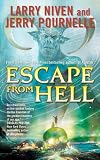
Allan Carpentier escaped from hell once but remained haunted by what he saw and endured. He has now returned, on a mission to liberate those souls unfairly tortured and confined. Partnering with the legendary poet and suicide, Sylvia Plath, Carpentier is a modern-day Christ who intends to harrow hell and free the damned. But now that he's returned to this Dantesque inferno, can he ever again leave?Tags
Recommendations




















Member Reviews
Sequel to their "Inferno," another trip through hell with a science fiction author who is now out to show people the way out (as you might have guessed from the title.) I found this one a little more irritating in that there were more discussions about hell and its purpose than in the first book and so my disagreements with the authors (which I knew were there) were made more evident. I can't imagine that Sylvia Plath or Albert Camus would enjoy their rather comic-book depictions, but I digress. I admire the authors for taking this on, renewing interest in Dante's Divine Comedy, and risking the theological speculation...but doesn't hell (with an escape hatch) end up being Purgatory? And can they really think, as they say in the show more afterword, that their picture is in line with the teaching of the Catholic Church? I'd love to see the Vatican response. show less
Once upon a time, I thought the combo of Niven and Pournelle were about the best ever. Everything I read by them was a page-turn, exciting, captivating. Then, I think, they got old. Or maybe I did. But as far as I'm concerned, they've lost their mojo. The last book I read by them, a sequel to their classic Mote in God's Eye, was painfully tedious The Gripping Hand. With Escape from Hell, the duo once again revisit an old classic of theirs, this time, the 1975 take off on Dante called Inferno.
Escape from Hell once again features deceased sci-fi author Alan Carpenter. This time, his travel companion is Sylvia Plath, the poet who offed herself. Whereas Inferno was about redemption for one of history's evil luminaries, Benito Mussolini, show more Sylvia Plath just doesn't provide the same sort of intensity. There were more conversations with the same demons, and attempts to move others from their current torment. Most of the famous people, such as Leon Trotsky, appear more in cameo form, while some of the more interesting characters are include a priest who managed to wind up in hell for bucking the church party line.
The book wasn't bad, it just wasn't very compelling. Some of the moral dilemmas are worthy of thought and consideration; unfortunately, the book did a poor job bringing this out in many cases. show less
Escape from Hell once again features deceased sci-fi author Alan Carpenter. This time, his travel companion is Sylvia Plath, the poet who offed herself. Whereas Inferno was about redemption for one of history's evil luminaries, Benito Mussolini, show more Sylvia Plath just doesn't provide the same sort of intensity. There were more conversations with the same demons, and attempts to move others from their current torment. Most of the famous people, such as Leon Trotsky, appear more in cameo form, while some of the more interesting characters are include a priest who managed to wind up in hell for bucking the church party line.
The book wasn't bad, it just wasn't very compelling. Some of the moral dilemmas are worthy of thought and consideration; unfortunately, the book did a poor job bringing this out in many cases. show less
In 1978, frequent collaborators Larry Niven and Jerry Pournelle wrote Inferno, in which middle-rank science fiction writer Alan Carpenter (sometimes Carpentier, for no apparent reason), gets a little inebriated at a science fiction convention, tries to duplicate Dolokhov’s rum-drinking bet from War and Peace, and falls to his death. Some indeterminate time later, Carpenter finds himself in Hell (more or less exactly the way Dante described it), escorted by the shade Benny (whose actual identity would be a spoiler). After various adventures and encounters with the damned, Benny makes it out of Hell and Carpenter goes back to try and rescue others.
Well, Escape from Hell is the sequel. Carpenter is back; this time he’s the one trying show more to rescue souls. Having editorial power over Hell must provide a certain satisfaction; Dante certainly enjoyed it. Some of Niven and Pournelle’s choices for the denizens and their locations are grim justice – Hugh Hefner in the Second Circle; Anna Nicole Smith in the Fourth; Reinhard Heydrich and “Bomber” Harris burning together eternally in Eighth, and Hitler and Stalin frozen together in the Ninth (well, Virgil did suggest Dante taunt the damned). Others are a little dubious; I’m not quite sure Carl Sagan belongs with the False Prophets or Robert Oppenheimer with the Traitors, and the book perpetuates the dual myth that Katrina flooded New Orleans because the levees failed and that the levees failed because they weren't inspected. The geography of Hell has changed somewhat; they’ve had to add a lot to the Circle of the Virtuous Pagans since Vatican II. Carpenter gets a sort-of-kind-of love interest in Sylvia Plath, who he helps escape from the Wood of the Suicides by setting her on fire and Sylvia, in turn, gets a meeting with Ted Hughes.
Not great world literature, obviously, but it did inspire me to go back and re-read Inferno (both of them) and pleasant enough for a quick read in a coffee shop. You need to read Dante and the Niven-Pournelle Inferno first. And perhaps Sylvia Plath. show less
Well, Escape from Hell is the sequel. Carpenter is back; this time he’s the one trying show more to rescue souls. Having editorial power over Hell must provide a certain satisfaction; Dante certainly enjoyed it. Some of Niven and Pournelle’s choices for the denizens and their locations are grim justice – Hugh Hefner in the Second Circle; Anna Nicole Smith in the Fourth; Reinhard Heydrich and “Bomber” Harris burning together eternally in Eighth, and Hitler and Stalin frozen together in the Ninth (well, Virgil did suggest Dante taunt the damned). Others are a little dubious; I’m not quite sure Carl Sagan belongs with the False Prophets or Robert Oppenheimer with the Traitors, and the book perpetuates the dual myth that Katrina flooded New Orleans because the levees failed and that the levees failed because they weren't inspected. The geography of Hell has changed somewhat; they’ve had to add a lot to the Circle of the Virtuous Pagans since Vatican II. Carpenter gets a sort-of-kind-of love interest in Sylvia Plath, who he helps escape from the Wood of the Suicides by setting her on fire and Sylvia, in turn, gets a meeting with Ted Hughes.
Not great world literature, obviously, but it did inspire me to go back and re-read Inferno (both of them) and pleasant enough for a quick read in a coffee shop. You need to read Dante and the Niven-Pournelle Inferno first. And perhaps Sylvia Plath. show less
Sequel to their "Inferno," another trip through hell with a science fiction author who is now out to show people the way out (as you might have guessed from the title.) I found this one a little more irritating in that there were more discussions about hell and its purpose than in the first book and so my disagreements with the authors (which I knew were there) were made more evident. I can't imagine that Sylvia Plath or Albert Camus would enjoy their rather comic-book depictions, but I digress. I admire the authors for taking this on, renewing interest in Dante's Divine Comedy, and risking the theological speculation...but doesn't hell (with an escape hatch) end up being Purgatory? And can they really think, as they say in the show more afterword, that their picture is in line with the teaching of the Catholic Church? I'd love to see the Vatican response. show less
Sequel to their "Inferno," another trip through hell with a science fiction author who is now out to show people the way out (as you might have guessed from the title.) I found this one a little more irritating in that there were more discussions about hell and its purpose than in the first book and so my disagreements with the authors (which I knew were there) were made more evident. I can't imagine that Sylvia Plath or Albert Camus would enjoy their rather comic-book depictions, but I digress. I admire the authors for taking this on, renewing interest in Dante's Divine Comedy, and risking the theological speculation...but doesn't hell (with an escape hatch) end up being Purgatory? And can they really think, as they say in the show more afterword, that their picture is in line with the teaching of the Catholic Church? I'd love to see the Vatican response. show less
Sequel to their "Inferno," another trip through hell with a science fiction author who is now out to show people the way out (as you might have guessed from the title.) I found this one a little more irritating in that there were more discussions about hell and its purpose than in the first book and so my disagreements with the authors (which I knew were there) were made more evident. I can't imagine that Sylvia Plath or Albert Camus would enjoy their rather comic-book depictions, but I digress. I admire the authors for taking this on, renewing interest in Dante's Divine Comedy, and risking the theological speculation...but doesn't hell (with an escape hatch) end up being Purgatory? And can they really think, as they say in the show more afterword, that their picture is in line with the teaching of the Catholic Church? I'd love to see the Vatican response. show less
The sequel to 'Inferno', with it's cheap looking Sci-Fi Channel cover, sees dead science fiction writer Allen Carpenter return to Dante's nine circles of hell to help free as many captives as possible. You see, hell isn't a one way ticket in this book and those condemned to it's circles can escape from their own torture if they truly desire. However, the catch lays in the fact that their sins on earth hold them back in hell. For instance if one was gluttonous in life they will be tempted with the tools of their gluttony in hell and they have to break through that vice in order to have any chance of progressing through the circles of hell. It's a fairly clever concept I suppose but one that is repeated over and over and becomes fairly show more boring after a while.
Along the way Carpenter encounters many famous people whom he tries to save and I have no problem with this even though I found a few of those "famous" people to be somewhat obscure (George Lincoln Rockwell anyone?). What I did take exception to was when recently deceased celebrities were used. For instance Anna Nicole Smith (her last name is never mentioned but we're left in no doubt who we are being introduced to as she's a busty blonde former Playboy model who was married to an 89 year old billionaire named Howard) is depicted as being in hell and won't entertain the notion of leaving as she just wants to stay where she is sitting a atop a giant diamond. Her sin then is greed. I would have no problem with that if Anna had died a hundred years ago but as she left behind a young daughter who might possibly read this one day I found her inclusion to be very distasteful. She was also a peripheral character that had no bearing on the story whatsoever and her inclusion, in my opinion, is there for shock value and completely unnecessary.
I found the majority of this novel to be somewhat dull which was a shame as I had high hopes of reading a classic. It wasn't by any means a terrible read just a bit repetitive at times and, as I had never read 'Inferno', I had no connection to the main character and wasn't given a reason to care about him in this book. And should I have cared about someone trying to get Hitler out of hell? show less
Along the way Carpenter encounters many famous people whom he tries to save and I have no problem with this even though I found a few of those "famous" people to be somewhat obscure (George Lincoln Rockwell anyone?). What I did take exception to was when recently deceased celebrities were used. For instance Anna Nicole Smith (her last name is never mentioned but we're left in no doubt who we are being introduced to as she's a busty blonde former Playboy model who was married to an 89 year old billionaire named Howard) is depicted as being in hell and won't entertain the notion of leaving as she just wants to stay where she is sitting a atop a giant diamond. Her sin then is greed. I would have no problem with that if Anna had died a hundred years ago but as she left behind a young daughter who might possibly read this one day I found her inclusion to be very distasteful. She was also a peripheral character that had no bearing on the story whatsoever and her inclusion, in my opinion, is there for shock value and completely unnecessary.
I found the majority of this novel to be somewhat dull which was a shame as I had high hopes of reading a classic. It wasn't by any means a terrible read just a bit repetitive at times and, as I had never read 'Inferno', I had no connection to the main character and wasn't given a reason to care about him in this book. And should I have cared about someone trying to get Hitler out of hell? show less
Members
- Recently Added By
Lists

Books Read in 2020
4,379 works; 124 members
Author Information

331+ Works 98,220 Members
Larry Niven received his B.A. in mathematics in 1962. His first novel, World of Ptavvs (1966), was a success and launched his career. Niven has won five Hugos and one Nebula award, testimony that his colleagues in the science fiction world respect his work. Perhaps Niven's most well-known creation is Ringworld, a distant planet that may be taken show more as a metaphor for Earth, as it was once great but has since fallen into decay. (Bowker Author Biography) show less

148+ Works 40,460 Members
Jerry Eugene Pournelle was born in Shreveport, Louisiana on August 7, 1933. During the Korean War, he served in the U. S. Army. He received a B.S. in psychology in 1955, an M.S. in psychology in 1958, and a Ph.D. in political science in 1964 from the University of Washington. He worked for Boeing and NASA where he worked on the Mercury, Gemini, show more and Apollo missions. He also advised the federal government on military matters and space exploration. He wrote science fiction and helped popularize the military science fiction genre. His first novel, Red Heroin, was published in 1969 under the pen name Wade Curtis. His other novels published under his own name included Janissaries, Starswarm, and The Mercenary. He also wrote novels with Larry Niven including Oath of Fealty, The Mote in God's Eye, Lucifer's Hammer, Inferno, Escape from Hell, and Footfall. Pournelle was widely credited as the first major author to write a published novel entirely on a computer. He wrote a witty advice columns for computer users in Byte magazine. He received the John W. Campbell Award for Best New Writer of 1973. He died of heart failure on September 8, 2017 at the age of 84. (Bowker Author Biography) show less
Some Editions
Series

Common Knowledge
- Original title
- Escape from Hell
- Original publication date
- 2009
- People/Characters
- Sylvia Plath; Carl Sagan; Allen Carpenter
- Important places
- Hell; Dis
- Epigraph
- Through me the road to the city of desolation
Through me the road to the city of sorrows diuternal
Through me the road among the lost creation
Justice moved my great maker; God eternal
Wrought me: the power, a... (show all)nd the unsearchably
High wisdom, and the primal love supernal
Nothing ere I was made was made to be
Save things eterne, and I eterne abide
All hope abandon, you that go in by me - Dedication
- For C. S. "Jack" Lewis
- First words
- This is a sequel to our first Inferno published in 1976. • • Preface
I sprawled with my back against a thick-boled tree, my ass settled comfortably between two thick roots, my legs and arms splayed ... (show all)out at random, palms to the sky. • • Chapter 1 - Last words
- (Click to show. Warning: May contain spoilers.)I had a long climb ahead of me, but at the end I would once again see the stars.
- Publisher's editor
- Gleason, Robert
- Blurbers
- Strieber, Whitley; Preston, Douglas
- Original language
- English
Classifications
Statistics
- Members
- 465
- Popularity
- 65,397
- Reviews
- 18
- Rating
- (3.31)
- Languages
- English
- Media
- Paper, Audiobook, Ebook
- ISBNs
- 10
- ASINs
- 5