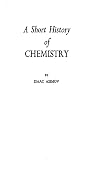
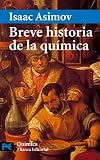
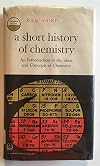
A Short History of Chemistry
by Isaac Asimov
On This Page
Description
From the use of metals by prehistoric man to the alchemical experiments of medieval and renaissance man to the complex chemical skills of contemporary man, Asimov traces the development of this building block of our technological world.Tags
Recommendations























Member Reviews
This is an excellent piece of popular science writing that crams an awful lot of information into a relatively small book. Asimov has a beautifully efficient writing style that manages to say a lot, effortlessly, in a few words. It's not showy writing, it's not the sort of book that claims to reveal some incredibly piece of hitherto-hidden knowledge. It simply tells the story of chemistry from a western european viewpoint from prehistoric times to the mid-1960s.
It's a much better book than I expected it to be. I've read a lot of Asimov's science fiction, and some of his writing about science fiction, but until now had not read any of his non-fiction. I was very pleased and surprised to find a book that's well-researched, informative, show more easy to read and full of great anecdotes whilst also managing to keep the big narrative of science history going. You get a real sense of how our understanding of the elements slowly emerged, the techniques available at different times, and the ways in which the periodic table was first conceived, and finally had its gaps all filled in. (And I admit to some surprise at discovering how late some of those gap-filling events happened.)
A simple joy, despite the fact that one or two parts are now somewhat dated. The best part of the story - and Asimov's writing ensures that it does have the narrative draw of a story - doesn't suffer from that problem. show less
It's a much better book than I expected it to be. I've read a lot of Asimov's science fiction, and some of his writing about science fiction, but until now had not read any of his non-fiction. I was very pleased and surprised to find a book that's well-researched, informative, show more easy to read and full of great anecdotes whilst also managing to keep the big narrative of science history going. You get a real sense of how our understanding of the elements slowly emerged, the techniques available at different times, and the ways in which the periodic table was first conceived, and finally had its gaps all filled in. (And I admit to some surprise at discovering how late some of those gap-filling events happened.)
A simple joy, despite the fact that one or two parts are now somewhat dated. The best part of the story - and Asimov's writing ensures that it does have the narrative draw of a story - doesn't suffer from that problem. show less
La concisión, amenidad y eficacia didáctica características de Isaac Asimov hacen de esta Breve historia de la Química un instrumento inmejorable para todo aquel que esté interesado en aproximarse a esta ciencia. Asimov traza la evolución de este dominio de conocimiento desde el momento en que el hombre comenzó a efectuar alteraciones en la naturaleza de las sustancias de una forma intuitiva, hasta la edad moderna, momento en el que, a través de la adquisición progresiva de rigor metodológico y la acotación del terreno de estudio, se va constituyendo plenamente como disciplina científica.
Jul 5, 2022Spanish
La búsqueda que siempre nos ha caracterizado expuesta de forma sencilla por uno de los mejores divulgadores científicos. La historia de la química de forma sencilla desde que cogimos la primera piedra hasta las explosiones nucleares.
Nov 2, 2010Spanish
Asimov traza la evolución de este ámbito de conocimiento desde el momento en que el hombre comenzó a efectuar alteraciones en la naturaleza de las sustancias de una forma intuitiva, hasta la edad moderna, momento en el que, a través de la adquisición progresiva de rigor metodológico y la acotación del terreno de estudio, se va constituyendo plenamente como disciplina.
May 2, 2007Spanish
Ratings
Members
- Recently Added By
Author Information

2,400+ Works 293,114 Members
Isaac Asimov was born in Petrovichi, Russia, on January 2, 1920. His family emigrated to the United States in 1923 and settled in Brooklyn, New York, where they owned and operated a candy store. Asimov became a naturalized U.S. citizen at the age of eight. As a youngster he discovered his talent for writing, producing his first original fiction at show more the age of eleven. He went on to become one of the world's most prolific writers, publishing nearly 500 books in his lifetime. Asimov was not only a writer; he also was a biochemist and an educator. He studied chemistry at Columbia University, earning a B.S., M.A. and Ph.D. In 1951, Asimov accepted a position as an instructor of biochemistry at Boston University's School of Medicine even though he had no practical experience in the field. His exceptional intelligence enabled him to master new systems rapidly, and he soon became a successful and distinguished professor at Columbia and even co-authored a biochemistry textbook within a few years. Asimov won numerous awards and honors for his books and stories, and he is considered to be a leading writer of the Golden Age of science fiction. While he did not invent science fiction, he helped to legitimize it by adding the narrative structure that had been missing from the traditional science fiction books of the period. He also introduced several innovative concepts, including the thematic concern for technological progress and its impact on humanity. Asimov is probably best known for his Foundation series, which includes Foundation, Foundation and Empire, and Second Foundation. In 1966, this trilogy won the Hugo award for best all-time science fiction series. In 1983, Asimov wrote an additional Foundation novel, Foundation's Edge, which won the Hugo for best novel of that year. Asimov also wrote a series of robot books that included I, Robot, and eventually he tied the two series together. He won three additional Hugos, including one awarded posthumously for the best non-fiction book of 1995, I. Asimov. "Nightfall" was chosen the best science fiction story of all time by the Science Fiction Writers of America. In 1979, Asimov wrote his autobiography, In Memory Yet Green. He continued writing until just a few years before his death from heart and kidney failure on April 6, 1992. (Bowker Author Biography) show less
Some Editions
Series
Belongs to Publisher Series
Common Knowledge
- Original publication date
- 1965
- Dedication
- To Catherine and Sprague de Camp, who in 25 years have not aged a day.
Classifications
Statistics
- Members
- 217
- Popularity
- 150,348
- Reviews
- 4
- Rating
- (4.08)
- Languages
- 5 — English, German, Italian, Spanish, Swedish
- Media
- Paper
- ISBNs
- 10
- ASINs
- 5