
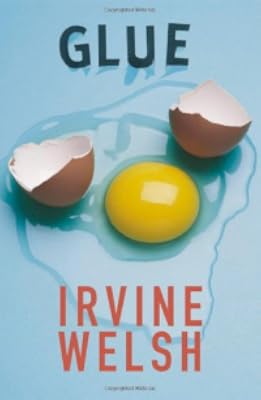
Glue
by Irvine Welsh
On This Page
Description
"Glue is the story of four boys growing up in the Edinburgh schemes, and about the loyalties, the experiences - and the secrets - that hold them together into their thirties. Four boys becoming men- Juice Terry, the work-shy fanny-merchant, with corkscrew curls and sticky fingers; Billy the boxer- driven, controlled, playing to his strengths; Carl, the Milky Bar Kid, drifting along to his own soundtrack; and the doomed Gally - who has one less skin than everyone else and seems to find show more catastrophe at every corner. As we follow their lives from the seventies into the new century - from punk to techno, from speed to Es - we can see each of them trying to struggle out from under the weight of the conditioning of class and culture, peer pressure and their parents' hopes that maybe their sons will do better than they did. What binds the four of them is the friendship formed by the scheme, their school, and their ambition to escape from both; their loyalty fused in street morality- back up your mates, don't hit women and, most importantly, never grass - on anyone. Despite its scale and ambition, Glue has all Irvine Welsh's usual pace and vigour, crackling dialogue, scabrous set-pieces show lessTags
Recommendations
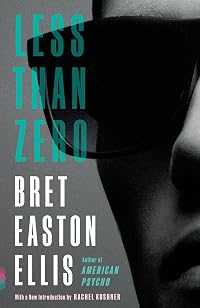
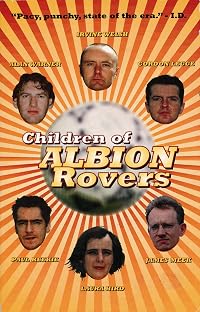
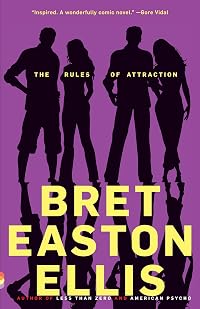
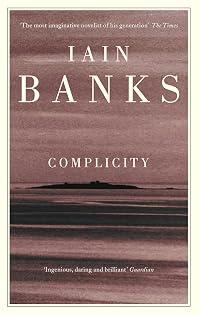



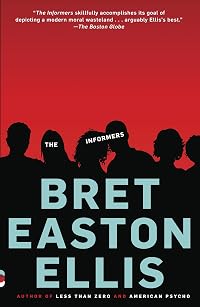
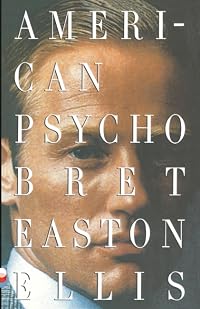
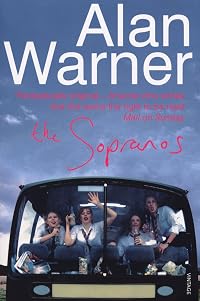
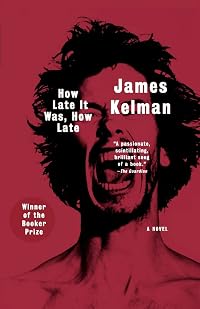

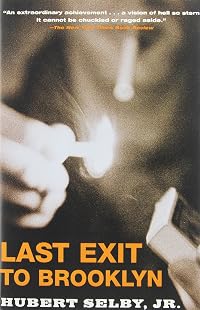
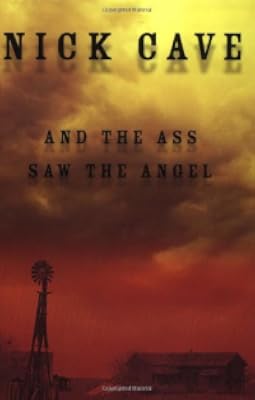
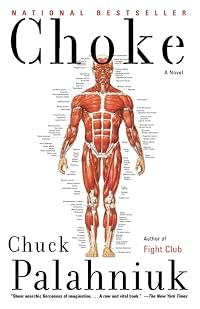
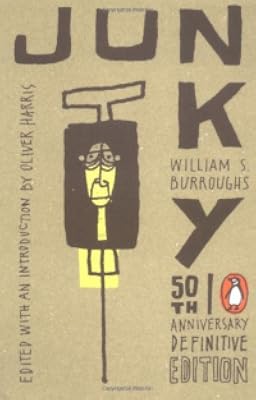



Member Recommendations
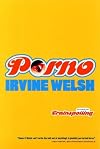
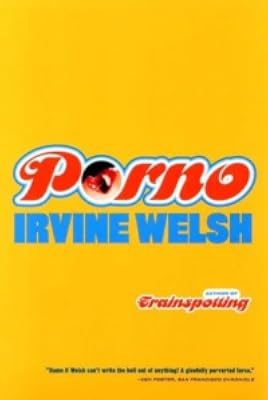
KevinRubin "Porno" continues on with the shenanigans of "Juice" Terry Lawson, one of the main characters from "Glue".
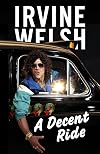
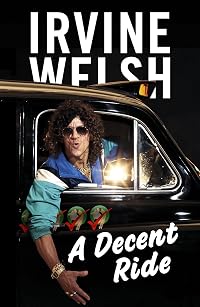
KevinRubin "A Decent Ride" continues on with later activities from "Juice" Terry Lawson from "Glue".
Member Reviews
"Glue" is about four boys from working class families in Edinburgh. It follows them from being small kids to adulthood, with some stops along the way. It runs roughly parallel with Welsh's "Trainspotting" and some of the characters from "Trainspotting" make brief appearances in "Glue" as they know some of the same friends and hang out at some of the same bars.
We're first introduced to the four mates in 1970 as small kids with their families. Carl "N-SIGN" Ewart and Billy "Business" Birrell's fathers meet at the metal fabrication shop where they both work hard and bond to become lifelong friends, which the boys follow. "Juice" Terry Lawson and his sister watch as their father leaves them and their mother for another, younger woman. And show more Andrew "Gally" Galloway is told "you're the man of the house now" while his mother cries and his father has to leave with some policemen, who he says "they need my help".
We meet them next in their midteens in 1980, Terry having dropped out of school to work on the juice lorries, hence his nickname, where he gets to meet and sleep with all the girls in a bunch of neighborhoods. The other three are still in school and hating it. From all four of them, three Hibees and a Jam Tart, we get their view on their brilliant plan for football hooliganism at a Hibs vs. Glasgow match, that they think has never been done before to go without their colours to the opposing side's bleachers and start a fight.
Then we meet them again in 1990 when the four head off to Munich for the Oktoberfest to drink, have fun and raise hell. Terry is the happiest of the bunch, whose life is all about thievery, sex and drinking, Billy is the hardest, a champion boxer, Carl is a successful club DJ, but Gally's been in and out of prison and has the worst luck of all.
And finally, we come to 2000 where all four of them have separated in various ways, not the least of which is death. Events bring the remaining three together again.
Welsh writes the whole thing, dialogue and narrative in a thick Scottish accent, with unconventional punctuation and chock full of vulgarities. I found myself not understanding words till many chapters later when suddenly they made sense, like "boatil" is actually "bottle" and "eh" is really "he" and so forth. It helped at times to try and imagine Scotty, from Star Trek, saying some of it...
It's hard to read, but well worth the effort. show less
We're first introduced to the four mates in 1970 as small kids with their families. Carl "N-SIGN" Ewart and Billy "Business" Birrell's fathers meet at the metal fabrication shop where they both work hard and bond to become lifelong friends, which the boys follow. "Juice" Terry Lawson and his sister watch as their father leaves them and their mother for another, younger woman. And show more Andrew "Gally" Galloway is told "you're the man of the house now" while his mother cries and his father has to leave with some policemen, who he says "they need my help".
We meet them next in their midteens in 1980, Terry having dropped out of school to work on the juice lorries, hence his nickname, where he gets to meet and sleep with all the girls in a bunch of neighborhoods. The other three are still in school and hating it. From all four of them, three Hibees and a Jam Tart, we get their view on their brilliant plan for football hooliganism at a Hibs vs. Glasgow match, that they think has never been done before to go without their colours to the opposing side's bleachers and start a fight.
Then we meet them again in 1990 when the four head off to Munich for the Oktoberfest to drink, have fun and raise hell. Terry is the happiest of the bunch, whose life is all about thievery, sex and drinking, Billy is the hardest, a champion boxer, Carl is a successful club DJ, but Gally's been in and out of prison and has the worst luck of all.
And finally, we come to 2000 where all four of them have separated in various ways, not the least of which is death. Events bring the remaining three together again.
Welsh writes the whole thing, dialogue and narrative in a thick Scottish accent, with unconventional punctuation and chock full of vulgarities. I found myself not understanding words till many chapters later when suddenly they made sense, like "boatil" is actually "bottle" and "eh" is really "he" and so forth. It helped at times to try and imagine Scotty, from Star Trek, saying some of it...
It's hard to read, but well worth the effort. show less
I spent longer reading this than I have on any book for years. Largely because of the middle sections narrated in Edinburgh slang, the sort of thing I remember from Trainspotting, and yet here it felt denser somehow. There are long sections covering shagging, football violence and robbery which are told pretty much in real time, but given that most sentences had to be picked apart and translated it was more like slow-motion! I'm not complaining, though I prefer reading quicker if I can. I rather liked the way unfamiliar slang terms became clear in their meaning from the context. At one point the narrative moves to Germany and the character Carl reflects on how quickly the locals clear everything up after a rave gets raided by the police show more (..."the same process wid take months ower in the UK: every c*nt wid be stoatin aboot cabbaged"). That made me laugh more than all the others - a totally relatable homage to German efficiency and the sort of slang that was 100% unfamiliar yet 100% clear.
Not surprisingly there is a lot of shocking content, graphic sex and violence etc, but it was interesting to note that a lot of the very dramatic life-changing events for the characters happen "off-camera" and are told as flashbacks or simply alluded to by the characters, while the day-to-day narrative concentrates on the characters' interests - largely drinkin/shaggin/swedgin.
The stories follow four friends, picking them up at approximately ten year intervals starting when they are around 6 years old. It wasn't until they hit their 20s that they started developing their own personalities in my head - before that they felt like an amorphous sweary mass of hormones and pent up violence. By the end they had separated out nicely. The last section is narrated mostly in the third person and at this point a faintly satirical authorial voice emerges, which brings the novel nicely to a close on a tide of rollicking humour with a faintly sentimental undertow. show less
Not surprisingly there is a lot of shocking content, graphic sex and violence etc, but it was interesting to note that a lot of the very dramatic life-changing events for the characters happen "off-camera" and are told as flashbacks or simply alluded to by the characters, while the day-to-day narrative concentrates on the characters' interests - largely drinkin/shaggin/swedgin.
The stories follow four friends, picking them up at approximately ten year intervals starting when they are around 6 years old. It wasn't until they hit their 20s that they started developing their own personalities in my head - before that they felt like an amorphous sweary mass of hormones and pent up violence. By the end they had separated out nicely. The last section is narrated mostly in the third person and at this point a faintly satirical authorial voice emerges, which brings the novel nicely to a close on a tide of rollicking humour with a faintly sentimental undertow. show less
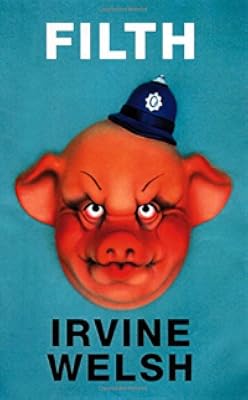
Front runner of Scottish writers during the last decade. Trainspotting a big breakthrough, several very popular books on his resume. His 2001 book is called Glue. Four main characters that are being followed in their lives up until then. Obviously all four of them are from Edinburgh and a lot of the stories go back to the wild night life and football. All very recognisable. This, to me, is immediately the problem. Apart from having to read in the Scottish dialect he chooses to use for all his characters, the book doesn’t really tempt me to hurry. I have read it completely, dutifully did a chapter every night before going to bed, but at no point I was temped to read on and miss another hour of sleep. A criminal, a dj, a drugs dealer, show more it’s more a case of been there, done that, bought the t-shirt. I expected more of Welsh, reading Filth made me eager for his next book, after reading glue I’m sure I’ll buy his new book Porno regardless, but it might be on the shelves for a while before I actually start reading it. Good book, but not as good as I hoped it would be. show less
i'm not really sure that i've ever actually gotten through a book in a different language before. but i'm counting this one, even though, technically, i guess he wrote in english. really, though, this is nearly 470 pages of scottish dialect, and it took some serious getting used to.
but once i did, it really wasn't so bad, so i guess my excuse for taking so long in reading this book wasn't just how hard it was to cut through the language, but also the story and the characters. i suppose it's a tale of growing up and hardship and boy bonding, and for that it was alright, but i just didn't like it. and i don't think it was because so much of the book was focused on dehumanizing the girls into sex objects, but i certainly didn't like that show more aspect of it much.
an example of scottish dialect for you all to muddle through:
"Or mibbe eh wisnae, ah dinnae ken! Ah didnae ken!" (translation: "Or maybe he wasn't, I don't know! I didn't know!") i've become fluent. show less
but once i did, it really wasn't so bad, so i guess my excuse for taking so long in reading this book wasn't just how hard it was to cut through the language, but also the story and the characters. i suppose it's a tale of growing up and hardship and boy bonding, and for that it was alright, but i just didn't like it. and i don't think it was because so much of the book was focused on dehumanizing the girls into sex objects, but i certainly didn't like that show more aspect of it much.
an example of scottish dialect for you all to muddle through:
"Or mibbe eh wisnae, ah dinnae ken! Ah didnae ken!" (translation: "Or maybe he wasn't, I don't know! I didn't know!") i've become fluent. show less
First book I read by Welsh and it took me over 3 weeks to finish. The Scottish "patois" was very hard to master but it was worth the effort.
Maybe not his best - personally I liked Filth better - but still a very good book. Both the characters and their environment come alive. Makes you want to visit the dodgiest pubs in Edinburgh!
I don't know what to say about Glue other than I liked the novel. It follows the story of four friends from the schemes of Edinburgh, a story that expands four decades. There are some familiar faces that pop up - Mark Renton, Franco Begbie, and Spud Murphy from Welsh's popular novel, Trainspotting. That's part of the reason I read this book, because I was told that a few characters featured were present in the Trainspotting sequel, Porno. To see what else I have to say (I didn't think my "review" was worthy of GoodReads) check out the blog.
Members
- Recently Added By
Lists

Most Disturbing Books
124 works; 27 members

Biggest Disappointments
606 works; 163 members
Author Information

40+ Works 23,186 Members
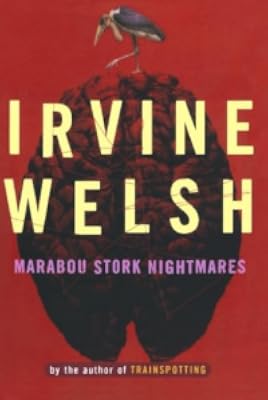
Irvine Welsh was born in Edinburgh on September 27, 1958. After leaving school, he lived in London for awhile, but eventually returned to Edinburgh where he worked for the city council in the housing department. He received a degree in computer science and studied for an MBA at Heriot Watt University. His first novel, Trainspotting, was published show more in 1993 and was adapted as a film starring Ewan McGregor and Robert Carlyle in 1996. He became a full-time writer in August 1995. His other works include The Acid House (1994), Marabou Stork Nightmares (1995), Ecstasy: Three Tales of Chemical Romance (1996), Filth (1998), Glue (2001), and Porno (2002). He also wrote the plays Headstate (1994) and You'll Have Had Your Hole (1998). (Bowker Author Biography) show less
Some Editions
Series
Belongs to Publisher Series
Common Knowledge
- Canonical title
- Glue
- Original title
- Glue
- Original publication date
- 2001-05-03
- People/Characters
- Carl Ewart (The Milky Bar Kid | DJ N-Sign); Terence Henry Lawson (Juice Terry); Andrew Galloway (Gally); Billy Birrell (Business); Gail
- Important places
- Edinburgh, Scotland, UK
- Epigraph*
- glue: glōō, n. an impure gelatine got by boiling animal refuse, used as an adhesive. Chambers 20th Century Dictionary
- Dedication*
- This book is dedicated to Shearer, Scrap, George, Jimmy, Deano, Mickey, Tam, Simon, Miless, Scott and Crawf for sticking together even when falling apart
- First words*
- The sun rose from behind the concrete of the block of flats opposite, beaming straight into their faces.
- Last words*
- (Click to show. Warning: May contain spoilers.)And thank fuck as well.
*Some information comes from Common Knowledge in other languages. Click "Edit" for more information.
Classifications
Statistics
- Members
- 1,472
- Popularity
- 15,796
- Reviews
- 13
- Rating
- (3.60)
- Languages
- 14 — Czech, Dutch, English, Finnish, French, German, Italian, Norwegian (Bokmål), Polish, Portuguese, Croatian, Spanish, Swedish, Turkish
- Media
- Paper, Audiobook, Ebook
- ISBNs
- 36
- ASINs
- 7