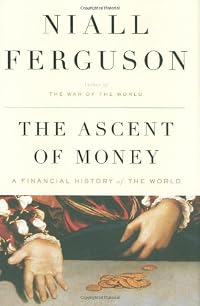
The Ascent of Money: A Financial History of the World
by Niall Ferguson
On This Page
Description
Business. History. Nonfiction. Bread, cash, dough, loot, moolah, readies, the wherewithal: Call it what you like, it matters. To Christians, love of it is the root of all evil. To generals, it's the sinews of war. To revolutionaries, it's the chains of labor. But in The Ascent of Money, Niall Ferguson shows that finance is, in fact, the foundation of human progress. What's more, he reveals financial history as the essential back story behind all history. Through Ferguson's expert lens, show more familiar historical landmarks appear in a new and sharper financial focus. Suddenly, the civilization of the Renaissance looks very different: a boom in the market for art and architecture made possible when Italian bankers adopted Arabic mathematics. The rise of the Dutch republic is reinterpreted as the triumph of the world's first modern bond market over insolvent Habsburg absolutism. And the origins of the French Revolution are traced back to a stock market bubble caused by a convicted Scot murderer. With the clarity and verve for which he is known, Ferguson elucidates key financial institutions and concepts by showing where they came from. What is money? What do banks do? What's the difference between a stock and a bond? Why buy insurance or real estate? And what exactly does a hedge fund do? This is history for the present. Ferguson travels to post-Katrina New Orleans to ask why the free market can't provide adequate protection against catastrophe. He also delves into the origins of the subprime mortgage crisis. Perhaps most important, The Ascent of Money documents how a new financial revolution is propelling the world's biggest countries, India and China, from poverty to wealth in the space of a single generation-an economic transformation unprecedented in human history. Yet the central lesson of the financial history is that sooner or later every bubble bursts-sooner or later the bearish sellers outnumber the bullish buyers; and sooner or later greed flips into fear. And that is why, whether you're scraping by or rolling in it, there's never been a better time to understand the ascent of money. show lessTags
Recommendations















Member Recommendations
Member Reviews
The book is well-written, and the author breaks down and explains the terms to make it understandable for a general audience, not just historians or economists, which I appreciated, however, the use of natural selection to explain the evolution of the financial system didn't convince me. The book was more ideological than historical, actually for a while I thought that I remember wrong and he didn't be historian when he confused Christianity with Catholicism. I was expecting a serious historical analysis of economic history by a social researcher, but instead, it devolved into a pseudoscientific essay where Ferguson tries to demonstrate that imperialism was beneficial to the rest of the world, when we are all witnessing the consequences show more of imperialism: poverty, resource abuse leading to species extinction, deforestation, famine, pollution (the most disastrous being France's dumping of radioactive material in Algeria), and so on. If someone claims this was beneficial for the world, then I don't even want to know what the negative consequences might be. show less
"To work the mines [at Potosi, Peru], the Spaniards at first relied on paying wages . . . . But conditions were so harsh that from the late sixteenth century a system of forced labour had to be introduced,"
What is wrong with that sentence?
I gripe at Microsoft Word when it highlights my intentional use of the passive voice, but the sentence quoted above exemplifies the reasons that writers who value accuracy and clear thinking regard the passive with caution. Why did forced labour have to be introduced? Well, because sane people will not work themselves to death for the benefit of strangers. That much is obvious. But the "had to be" elides the question of "according to whom?" The author seems to regard it as inevitable that a mountain show more of silver ore be mined. The option of leaving it alone is never mentioned. The same sense of inevitability seems to surround most of the financial innovations explained by the author. The idea that societies could be run in a different fashion is never mentioned. Nor is the notion that the triumph of Western economics owed more to the successful exploitation of fossil fuels than to the excellency of our banking and investment systems. The entire book is a justification for the current system of credit, speculation, investment, etc.
The financial history is probably accurate, yet the explanations never seem to really help the reader understand what is going on. How can billions of dollars of value disappear overnight? How can people who preside over that failure continue to collect huge salaries while others lose their jobs, homes, and pensions. One does not need to be a Marxist to suspect that the explanations aim more to convince than to clarify. show less
What is wrong with that sentence?
I gripe at Microsoft Word when it highlights my intentional use of the passive voice, but the sentence quoted above exemplifies the reasons that writers who value accuracy and clear thinking regard the passive with caution. Why did forced labour have to be introduced? Well, because sane people will not work themselves to death for the benefit of strangers. That much is obvious. But the "had to be" elides the question of "according to whom?" The author seems to regard it as inevitable that a mountain show more of silver ore be mined. The option of leaving it alone is never mentioned. The same sense of inevitability seems to surround most of the financial innovations explained by the author. The idea that societies could be run in a different fashion is never mentioned. Nor is the notion that the triumph of Western economics owed more to the successful exploitation of fossil fuels than to the excellency of our banking and investment systems. The entire book is a justification for the current system of credit, speculation, investment, etc.
The financial history is probably accurate, yet the explanations never seem to really help the reader understand what is going on. How can billions of dollars of value disappear overnight? How can people who preside over that failure continue to collect huge salaries while others lose their jobs, homes, and pensions. One does not need to be a Marxist to suspect that the explanations aim more to convince than to clarify. show less
This review is based on the Blinkist version of the book...thus a summary and my review needs to be qualified as such. Presumably the original full text has much more details and research.....but it also takes much longer to read. If I like the Blinkist version, I might seek out and read the full book.
The financial system is evolutionary in nature.....through market selection: the financial equivalent of natural selection. The firms that adapt to these new situations grow and prosper and are imitated by others. This is the financial equivalent of gene reproduction.
On the other hand, firms that cling to outdated practices and fail to produce sufficient returns are doomed to extinction.
Value of money comes from the trust we place in it, show more not from intrinsic worth......When the Spanish conquistadors swept through Central and South America in the sixteenth century, they were largely motivated by the quest for gold and silver....What happened though was that the increased supply of coinage actually led to its depreciation in value, regardless of what rare metal it was made of....The conquistadors failed to realize that the power and value of money comes not from its physical worth but from what people are willing to give you for it...It doesn’t matter what it is made of, as long as society trusts in its value.
We trust that the money we use will hold its value and that, unlike the Spaniards, our central banks won’t overproduce it. We trust that banks will keep our money safe, and they trust us to pay our loans back. Without this trust, money is not worth the paper it’s printed on.
The vast majority of money in the world doesn’t even physically exist; it is entirely virtual and can be transferred electronically across the world without ever materializing physically.
These worthless tokens are accepted as holders of value because together we trust in them.
The system of credit and debit funds the financial system via the creation of money.
The invention of credit and debit was one of the most important developments in human history. It stands alongside technological and scientific advancements as a driving force in human progress.....The earliest forms of borrowing and lending are found in ancient Mesopotamia. This simple process of borrowing and lending eventually evolved into the system of credit as we know it today....Banks are the primary creators of credit, which in turn funds the financial system through the expansion of money.....The expansion of money means credit actually creates money. Say you deposit € 100 into the bank. They will probably keep a little of this money in reserve and lend, say, € 90 to someone else. That person may place this loaned money in another bank, which then repeats the first bank’s process, keeping a little and loaning out the rest, e.g., € 80.....The system has therefore created € 270 from the original € 100, and the money supply has effectively been widened.
Monetary expansion has been crucial in the funding of the financial system, as the money created can be used to fund investments or buy goods. Without this basic relationship between debtor and creditor, the financial system would stall because the supply of money would become stagnant.
The financial system is a combination of interconnected financial markets and institutions developed over centuries.....In medieval Italy, increased trade with the Arab world brought with it financial rewards and better systems of accountancy. This led to the creation of the first banks, because merchants needed access to credit in order to fund their trade....Banks are crucial to the financial system because they fund the system by facilitating credit....War was the catalyst for the next financial development: the invention of bonds and the bond market....Again, this development first appeared in medieval Italy where city states were constantly at war with a need of funds to pay for soldiers and weapons.....They raised these funds through the sale of bonds: loans to the government that paid a fixed rate of interest. These government IOUs could be traded on the bond market.
The next development of the financial system first appeared in seventeenth-century Holland: the joint-stock company. Companies funded themselves by selling shares of ownership,
In the eighteenth century, insurance companies used analysis of the financial markets to create huge investment portfolios that helped manage risk. Governments also greatly expanded their role in the area in the twentieth century......Finally, beginning in the 1920s, the real estate market was expanded massively through deregulation and government incentives.
Finance, in particular access to credit, is the most effective route out of poverty.
Banks, for example, allow savers to deposit money that can then be loaned to those in need. If the money were not put in the bank, it would lie dormant until its owner spent it. By depositing it in the bank, the money is made available to others. It can be transformed from its static state into a more dynamic form (credit) and thus be transferred from the “idle to the industrious.”.....Without access to reliable credit, poor people have to borrow from less-reputable sources......Access to credit allows people to make long-term plans and decisions such as buying property, starting a business or investing in an enterprise.....As an example, consider microfinance in poor areas......These loans can fund the purchases of expensive items such as livestock or can help the borrowers start their own micro-businesses. Just a small amount of affordable credit can make a dramatic difference in areas of poverty.
Strong financial system society will prosper at the expense of financially inefficient.
In inefficient financial systems, such as the communist command economy or medieval feudalism, capital is unable to flow freely. Bureaucrats control financial resources inefficiently to fulfill political targets, or they hoard wealth to enforce social hierarchy. The situation is static, with little incentive for financial development.....The financial system that developed in Western Europe allows the freest and most efficient flow of capital when compared to other existing systems. Competition is fierce; financial institutions need to be profitable and reliable, otherwise they will be swept aside by better ones......The more efficient nations spread their geographical reach.......This manifested itself primarily as the rise of European Empires, In the twentieth century, the spread of the Western financial system continued through globalization.....In seventeenth-century Europe, the Netherlands, the birthplace of the stock market and a major developer of modern banking, was able to free itself from the much larger Spanish Habsburg Empire......Although the Empire was more abundant in gold and silver deposits, it had little economic understanding, which allowed the Netherlands to constantly outperform its rival economically.
The financial system mirrors human nature and is deeply irrational and unequal.
No financial system is perfect. This is because the people who control it and invest in it are human beings, and humans are irrational by nature....These irrational faults and inequalities are mirrored and even intensified in the financial system.....Firstly, financial rewards are not shared out equally. Those with the right attitude and skills to succeed in the financial world can gain wealth and power, while others will not earn the same rewards....Just as people experience mood swings, the financial markets also crash from highs to lows very quickly. Investor confidence is especially fragile. People are easily scared when their money is involved....People will also watch to see what other investors do in certain situations and then copy them. This tends to make financial markets unstable, because people rush in and out of investments en masse.
The stock market tends to develop bubbles, all of which eventually burst.
Sometimes the market will inflate at such a sharp rate that prices become unsustainable. Like an overfilled balloon, the pressure bursts the market, making prices fall dramatically. This is known as a stock market bubble.....The average financial career of a Wall Street CEO lasts 25 years–not long enough for most to grasp the up-and-down-nature of the market. Many feel that the good times will go on forever and fail to understand the downside of high growth.....The final reason for bubbles is that people don’t fully understand the financial system; many are lured in by tales of high profit margins and extraordinary growth.
Inflation and hyperinflation: often caused by political mismanagement of a currency.
A small amount of inflation is to be expected in any economy as more money is always being created, but excessive inflation, or hyperinflation, can be very dangerous.
It is particularly perilous for those holding government bonds and savings in a particular currency, because these forms of wealth become less and less valuable ....... Hyperinflation....can only occur, though, if a nation prints enormous amounts of money and fails to keep its national debt under control......its root causes are political.
Currency depreciation and hyperinflation can be effective ways for a government to wipe out its domestic debts, because they significantly decrease the value of these debts. Hyperinflation will always carry far-reaching, negative effects for society as a whole. It destroys the wealth of domestic creditors and savers whilst also hurting those on fixed salaries.
Both private insurance and the welfare state are imperfect systems for minimizing financial risk and uncertainty. Modern private insurance was invented in eighteenth-century Scotland by two hard-drinking Protestant ministers who wanted to provide financial aid to the families of deceased vicars. They used advancements in social and statistical analysis to create the first insurance scheme...This new system of private insurance provided financial help to the unfortunate and partially mitigated the element of financial risk in life......Before long, politicians realized that by providing insurance for these people, they could promote social stability and win over voters....The welfare state aims at minimizing financial risk through policies such as universal health care, old-age pensions and free education. There is, however, a downside: it has been argued that high taxes and universal coverage remove incentives to work hard and save money....Over the last few decades, there has been a backlash against the welfare state. Some governments have attempted to dismantle parts of the welfare system to encourage people to take financial risks once again.
Deregulation of real estate market: how political decisions can have dramatic financial repercussions.....Governments, especially those in the English-speaking world, have pursued policies to increase the percentage of home owners.....Yet, whilst this goal of a property-owning democracy was politically advantageous, its financial ramifications have been unbalancing. Consider for instance the 2008 financial crisis, the largest since the Wall Street Crash of 1929. It led to bank failures, national bailouts and a global debt crisis, and its cause lay in the deregulation of the US housing market....Politically, the loans were a positive step towards widening property ownership, especially amongst ethnic minorities.
Financially, however, subprime lending was unsustainable;
Final summary
The modern financial system, developed over centuries, is irrational, unequal, unstable and difficult to control. Nevertheless, it provides the most efficient method for the creation and allocation of capital. This allocation of money to the areas it is most needed is crucial to economic development and human progress.
My take on the book: It’s actually quite a good historical summary of the ascent of money. Interesting to note the constant referral to the irrationality of people and markets. I think this understanding is relatively recent. Not long ago the “market” was assumed to be the epitome of efficiency. Four stars from me. show less
The financial system is evolutionary in nature.....through market selection: the financial equivalent of natural selection. The firms that adapt to these new situations grow and prosper and are imitated by others. This is the financial equivalent of gene reproduction.
On the other hand, firms that cling to outdated practices and fail to produce sufficient returns are doomed to extinction.
Value of money comes from the trust we place in it, show more not from intrinsic worth......When the Spanish conquistadors swept through Central and South America in the sixteenth century, they were largely motivated by the quest for gold and silver....What happened though was that the increased supply of coinage actually led to its depreciation in value, regardless of what rare metal it was made of....The conquistadors failed to realize that the power and value of money comes not from its physical worth but from what people are willing to give you for it...It doesn’t matter what it is made of, as long as society trusts in its value.
We trust that the money we use will hold its value and that, unlike the Spaniards, our central banks won’t overproduce it. We trust that banks will keep our money safe, and they trust us to pay our loans back. Without this trust, money is not worth the paper it’s printed on.
The vast majority of money in the world doesn’t even physically exist; it is entirely virtual and can be transferred electronically across the world without ever materializing physically.
These worthless tokens are accepted as holders of value because together we trust in them.
The system of credit and debit funds the financial system via the creation of money.
The invention of credit and debit was one of the most important developments in human history. It stands alongside technological and scientific advancements as a driving force in human progress.....The earliest forms of borrowing and lending are found in ancient Mesopotamia. This simple process of borrowing and lending eventually evolved into the system of credit as we know it today....Banks are the primary creators of credit, which in turn funds the financial system through the expansion of money.....The expansion of money means credit actually creates money. Say you deposit € 100 into the bank. They will probably keep a little of this money in reserve and lend, say, € 90 to someone else. That person may place this loaned money in another bank, which then repeats the first bank’s process, keeping a little and loaning out the rest, e.g., € 80.....The system has therefore created € 270 from the original € 100, and the money supply has effectively been widened.
Monetary expansion has been crucial in the funding of the financial system, as the money created can be used to fund investments or buy goods. Without this basic relationship between debtor and creditor, the financial system would stall because the supply of money would become stagnant.
The financial system is a combination of interconnected financial markets and institutions developed over centuries.....In medieval Italy, increased trade with the Arab world brought with it financial rewards and better systems of accountancy. This led to the creation of the first banks, because merchants needed access to credit in order to fund their trade....Banks are crucial to the financial system because they fund the system by facilitating credit....War was the catalyst for the next financial development: the invention of bonds and the bond market....Again, this development first appeared in medieval Italy where city states were constantly at war with a need of funds to pay for soldiers and weapons.....They raised these funds through the sale of bonds: loans to the government that paid a fixed rate of interest. These government IOUs could be traded on the bond market.
The next development of the financial system first appeared in seventeenth-century Holland: the joint-stock company. Companies funded themselves by selling shares of ownership,
In the eighteenth century, insurance companies used analysis of the financial markets to create huge investment portfolios that helped manage risk. Governments also greatly expanded their role in the area in the twentieth century......Finally, beginning in the 1920s, the real estate market was expanded massively through deregulation and government incentives.
Finance, in particular access to credit, is the most effective route out of poverty.
Banks, for example, allow savers to deposit money that can then be loaned to those in need. If the money were not put in the bank, it would lie dormant until its owner spent it. By depositing it in the bank, the money is made available to others. It can be transformed from its static state into a more dynamic form (credit) and thus be transferred from the “idle to the industrious.”.....Without access to reliable credit, poor people have to borrow from less-reputable sources......Access to credit allows people to make long-term plans and decisions such as buying property, starting a business or investing in an enterprise.....As an example, consider microfinance in poor areas......These loans can fund the purchases of expensive items such as livestock or can help the borrowers start their own micro-businesses. Just a small amount of affordable credit can make a dramatic difference in areas of poverty.
Strong financial system society will prosper at the expense of financially inefficient.
In inefficient financial systems, such as the communist command economy or medieval feudalism, capital is unable to flow freely. Bureaucrats control financial resources inefficiently to fulfill political targets, or they hoard wealth to enforce social hierarchy. The situation is static, with little incentive for financial development.....The financial system that developed in Western Europe allows the freest and most efficient flow of capital when compared to other existing systems. Competition is fierce; financial institutions need to be profitable and reliable, otherwise they will be swept aside by better ones......The more efficient nations spread their geographical reach.......This manifested itself primarily as the rise of European Empires, In the twentieth century, the spread of the Western financial system continued through globalization.....In seventeenth-century Europe, the Netherlands, the birthplace of the stock market and a major developer of modern banking, was able to free itself from the much larger Spanish Habsburg Empire......Although the Empire was more abundant in gold and silver deposits, it had little economic understanding, which allowed the Netherlands to constantly outperform its rival economically.
The financial system mirrors human nature and is deeply irrational and unequal.
No financial system is perfect. This is because the people who control it and invest in it are human beings, and humans are irrational by nature....These irrational faults and inequalities are mirrored and even intensified in the financial system.....Firstly, financial rewards are not shared out equally. Those with the right attitude and skills to succeed in the financial world can gain wealth and power, while others will not earn the same rewards....Just as people experience mood swings, the financial markets also crash from highs to lows very quickly. Investor confidence is especially fragile. People are easily scared when their money is involved....People will also watch to see what other investors do in certain situations and then copy them. This tends to make financial markets unstable, because people rush in and out of investments en masse.
The stock market tends to develop bubbles, all of which eventually burst.
Sometimes the market will inflate at such a sharp rate that prices become unsustainable. Like an overfilled balloon, the pressure bursts the market, making prices fall dramatically. This is known as a stock market bubble.....The average financial career of a Wall Street CEO lasts 25 years–not long enough for most to grasp the up-and-down-nature of the market. Many feel that the good times will go on forever and fail to understand the downside of high growth.....The final reason for bubbles is that people don’t fully understand the financial system; many are lured in by tales of high profit margins and extraordinary growth.
Inflation and hyperinflation: often caused by political mismanagement of a currency.
A small amount of inflation is to be expected in any economy as more money is always being created, but excessive inflation, or hyperinflation, can be very dangerous.
It is particularly perilous for those holding government bonds and savings in a particular currency, because these forms of wealth become less and less valuable ....... Hyperinflation....can only occur, though, if a nation prints enormous amounts of money and fails to keep its national debt under control......its root causes are political.
Currency depreciation and hyperinflation can be effective ways for a government to wipe out its domestic debts, because they significantly decrease the value of these debts. Hyperinflation will always carry far-reaching, negative effects for society as a whole. It destroys the wealth of domestic creditors and savers whilst also hurting those on fixed salaries.
Both private insurance and the welfare state are imperfect systems for minimizing financial risk and uncertainty. Modern private insurance was invented in eighteenth-century Scotland by two hard-drinking Protestant ministers who wanted to provide financial aid to the families of deceased vicars. They used advancements in social and statistical analysis to create the first insurance scheme...This new system of private insurance provided financial help to the unfortunate and partially mitigated the element of financial risk in life......Before long, politicians realized that by providing insurance for these people, they could promote social stability and win over voters....The welfare state aims at minimizing financial risk through policies such as universal health care, old-age pensions and free education. There is, however, a downside: it has been argued that high taxes and universal coverage remove incentives to work hard and save money....Over the last few decades, there has been a backlash against the welfare state. Some governments have attempted to dismantle parts of the welfare system to encourage people to take financial risks once again.
Deregulation of real estate market: how political decisions can have dramatic financial repercussions.....Governments, especially those in the English-speaking world, have pursued policies to increase the percentage of home owners.....Yet, whilst this goal of a property-owning democracy was politically advantageous, its financial ramifications have been unbalancing. Consider for instance the 2008 financial crisis, the largest since the Wall Street Crash of 1929. It led to bank failures, national bailouts and a global debt crisis, and its cause lay in the deregulation of the US housing market....Politically, the loans were a positive step towards widening property ownership, especially amongst ethnic minorities.
Financially, however, subprime lending was unsustainable;
Final summary
The modern financial system, developed over centuries, is irrational, unequal, unstable and difficult to control. Nevertheless, it provides the most efficient method for the creation and allocation of capital. This allocation of money to the areas it is most needed is crucial to economic development and human progress.
My take on the book: It’s actually quite a good historical summary of the ascent of money. Interesting to note the constant referral to the irrationality of people and markets. I think this understanding is relatively recent. Not long ago the “market” was assumed to be the epitome of efficiency. Four stars from me. show less
Отдавна съм забелязал, че за много хора (включително и повечето завършили икономика, ако съдя по нивото на състуденти и колеги) финансите и икономиката са нещо свръхестествено – неразбираемо и сложно, пълно с чужди думички, формули, графики. За по-конспиративно настроените пък, финансите и икономиката са пъклен заговор за експлоатацията на човек от човека и понеже са неестествено състояние на обществото, show more трябва да бъдат премахнати/ограничени…
Понеже за разлика от гореописаните хора, не приемам света мистично или идеологически, а по-скоро причинно-следствено, за да разбера нещо, за да си го обясня, винаги ми е било най-удобно да погледна корените му, да видя от къде идва, как се развива, за да стигне до сегашното си състояние. Защото принципите са същите, само сложността се увеличава с времето – а е много по-лесно да разбереш първо принципите, на които са основани елементарните действия в миналото (за всичко става дума – човешки и семейни отношения, хранене, икономика и т.н.), които постепенно се усложняват днес.
Книгата на Найл Фюргюсън, подходящо наречена Възходът на парите: финансова история на света прави точно това в сферата на финансите – описва зараждането на икономическата активност още в древните общества, първите пари, как и защо са се появили. Преминава през античния свят и средновековието, обяснявайки първите финансови инструменти (акции, менителници) и как древните са ги прилагали, възхода на банкерството и на италианската фамилия Медичи – първите международни банкери (самотни конници, разнасящи ковчежета с пари насам натам :) ) и обменители на валути. И, разбира се, стига до съвременния свят, с неизмеримо сложните финансови институции и операции.
Всъщност, в един определен смисъл, Възходът на парите: финансова история на света е много подобна на Богатството на народите на Адам Смит – защото обяснява по прост и разбираем начин развитието на финансовата система – от мидени черупки през медни монети, до краткосрочни брейди облигации. Тя дава разбиране за финансите като за естествен и нормален резултат от взаимоотношенията между хората през вековете, които искат да търгуват и обменят стоки и блага. show less
Понеже за разлика от гореописаните хора, не приемам света мистично или идеологически, а по-скоро причинно-следствено, за да разбера нещо, за да си го обясня, винаги ми е било най-удобно да погледна корените му, да видя от къде идва, как се развива, за да стигне до сегашното си състояние. Защото принципите са същите, само сложността се увеличава с времето – а е много по-лесно да разбереш първо принципите, на които са основани елементарните действия в миналото (за всичко става дума – човешки и семейни отношения, хранене, икономика и т.н.), които постепенно се усложняват днес.
Книгата на Найл Фюргюсън, подходящо наречена Възходът на парите: финансова история на света прави точно това в сферата на финансите – описва зараждането на икономическата активност още в древните общества, първите пари, как и защо са се появили. Преминава през античния свят и средновековието, обяснявайки първите финансови инструменти (акции, менителници) и как древните са ги прилагали, възхода на банкерството и на италианската фамилия Медичи – първите международни банкери (самотни конници, разнасящи ковчежета с пари насам натам :) ) и обменители на валути. И, разбира се, стига до съвременния свят, с неизмеримо сложните финансови институции и операции.
Всъщност, в един определен смисъл, Възходът на парите: финансова история на света е много подобна на Богатството на народите на Адам Смит – защото обяснява по прост и разбираем начин развитието на финансовата система – от мидени черупки през медни монети, до краткосрочни брейди облигации. Тя дава разбиране за финансите като за естествен и нормален резултат от взаимоотношенията между хората през вековете, които искат да търгуват и обменят стоки и блага. show less
Ferguson’s unabashedly positive banking apology functions primarily to bolster those who want to believe that capitalism is good and as an indictment of the same system to those who question its efficacy and legitimacy. The book is exactly what I’d expect if Gordon Gekko wrote a series of articles on the history of banking for Slate.com: narrowly biased, unsympathetic to detractors, and triumphant as it marches through bankers steps as they inevitably grow larger and more powerful. Seemingly ignorant of Adam Smith’s theory on unintended consequences, ironically Ferguson quickly moves through the early Renaissance dissolution of usury prohibition as though the traditional prohibitions were completely baseless. Banking innovations show more are elevated as the engine of other innovations, as though innovation were an end unto itself, never pausing to think about what it means to decouple money from actual work and resources. Granted Ferguson completed writing in May 2008, but even so, his reduction of the world’s problems to individual’s ignorance of banking theory is laughable upon any reflection. show less
Like most of Ferguson's work, shallowly deep, expansively narrow, irreverently relevant and daringly good and highly readable. A history of finance from ancient Mesopotamia, focusing on Western innovations, to the (2008) present day. Some financial and economic jargon, but mostly defined; some mathematics, fuzzy; but a lot of good, narrative history. With Ferguson's sharp wit and insight to boot. I do wish he had better explained how the Christian West abandoned the idea that interest (i.e. usury) was sinful. Or at least how they justified the difference. But, other than that, an enjoyable read. Read his The Great Degeneration next, which works as a postscript, description of the economic fallout of 2007/2008, and a summary of the show more West's generation and degeneration when it comes to finance and then other matters. Which leads then to Ferguson's Civilization, which you should then read next. show less
Fergusonban azt becsülöm legjobban, hogy olyan egyszerűen és világosan csoportosítja az adatait, mint tán senki más. Ráadásul van egy jó értelemben vett „kereskedelmi” íráskészsége, amivel még a legelborultabb viszonyrendszereket is olvasmányos formába képes kalapálni*. Nyilván erre különösen nagy szükség van, amikor a pénzügyi világ eredettörténetét kívánja bemutatni – a kötvények, részvények és fedezeti alapok világa ugyanis önmagában annyira száraz olvasmánynak ígérkezik, hogy ahhoz képest Namíbia konkrétan az Ecsedi láp.
A pénz felemelkedése arról szól, amit ígér: a „látható” világtörténelem mögött meghúzódó párhuzamos történelemről, a bankok és hitelek show more világáról. Ez a világ Ferguson megvilágításában ellenállhatatlanul alakítja a másikat, ezért is abszurd, hogy milyen sok előítélettel és kevés valódi információval rendelkezünk róla. Ez a könyv pont ezen a problémán igyekszik segíteni: olyan ismeretterjesztő olvasmány, ami bevezet minket ebbe a rejtélyesnek tűnő, de valójában igencsak logikus birodalomba. Ferguson alapvetése, hogy az évszázadok alatt kialakult és alaposan megbonyolódott pénzmozgások a társadalmi fejlődés szempontjából sokkal inkább áldást jelentenek, mint átkot – hiszen (többek között) a hitelek útján eljuttatják az inaktív pénzt oda, ahol valakik aktivizálni akarják azt. Persze, akadnak ezen a vadászmezőn is szép számmal sakálok (kifejezetten sok szó is esik róluk e könyvben), de pont azért lehetséges ez, mert mi magunk nem vagyunk tisztában saját pénzügyeinkkel, így könnyű prédájává válunk a lelkiismeretlen apróbetűknek. Azt mondjuk éppen nem tudom, hogy ez a könyv felszabadítja-e az olvasót a gonosz befolyások alól, mindenesetre rendkívül eredeti és gondolatébresztő szöveg. Az meg, hogy élvezeti értéke is van – egyértelműen Ferguson páratlan talentumát dicséri.
* Ennek nyilván hátulütője is akad. Például a Kína és Amerika egymásra utaltságáról szóló fejezet végére rittyent egy analógiát az első világháborút megelőző időszak és a mostani viszonyok hasonlóságáról, amivel szerintem inkább dramaturgiai igényt elégít ki, az események logikája nem feltétlenül ezt támasztja alá. Bár természetesen még az is előfordulhat, hogy igaza lesz – de inkább ne legyen. show less
A pénz felemelkedése arról szól, amit ígér: a „látható” világtörténelem mögött meghúzódó párhuzamos történelemről, a bankok és hitelek show more világáról. Ez a világ Ferguson megvilágításában ellenállhatatlanul alakítja a másikat, ezért is abszurd, hogy milyen sok előítélettel és kevés valódi információval rendelkezünk róla. Ez a könyv pont ezen a problémán igyekszik segíteni: olyan ismeretterjesztő olvasmány, ami bevezet minket ebbe a rejtélyesnek tűnő, de valójában igencsak logikus birodalomba. Ferguson alapvetése, hogy az évszázadok alatt kialakult és alaposan megbonyolódott pénzmozgások a társadalmi fejlődés szempontjából sokkal inkább áldást jelentenek, mint átkot – hiszen (többek között) a hitelek útján eljuttatják az inaktív pénzt oda, ahol valakik aktivizálni akarják azt. Persze, akadnak ezen a vadászmezőn is szép számmal sakálok (kifejezetten sok szó is esik róluk e könyvben), de pont azért lehetséges ez, mert mi magunk nem vagyunk tisztában saját pénzügyeinkkel, így könnyű prédájává válunk a lelkiismeretlen apróbetűknek. Azt mondjuk éppen nem tudom, hogy ez a könyv felszabadítja-e az olvasót a gonosz befolyások alól, mindenesetre rendkívül eredeti és gondolatébresztő szöveg. Az meg, hogy élvezeti értéke is van – egyértelműen Ferguson páratlan talentumát dicséri.
* Ennek nyilván hátulütője is akad. Például a Kína és Amerika egymásra utaltságáról szóló fejezet végére rittyent egy analógiát az első világháborút megelőző időszak és a mostani viszonyok hasonlóságáról, amivel szerintem inkább dramaturgiai igényt elégít ki, az események logikája nem feltétlenül ezt támasztja alá. Bár természetesen még az is előfordulhat, hogy igaza lesz – de inkább ne legyen. show less
Members
- Recently Added By
Published Reviews
ThingScore 85
...The rise of ancient Babylon was intimately tied to the evolution of credit and debt; without banks and the bond markets, the splendours of the Italian Renaissance would never have materialised; corporate finance was the foundation of the Dutch and later British empires; the ultra-sophisticated Wall Street financial engineering which has now come crashing down is intractably linked with show more America's global primacy. And now, of course, the new-found geopolitical power of many emerging economies, such as China, comes from their embrace of modern finance and creation of huge sovereign wealth funds.
Especially fascinating is Ferguson's discussion of the rush of intellectual innovation, beginning in the 1660s, that created the theoretical basis for life insurance, one of the most important financial inventions of all time... show less
Especially fascinating is Ferguson's discussion of the rush of intellectual innovation, beginning in the 1660s, that created the theoretical basis for life insurance, one of the most important financial inventions of all time... show less
added by amorabunda
...According to Ferguson, much of the current crisis stems from this increasingly uneasy symbiosis. It turns out “there was a catch. The more China was willing to lend to the United States, the more Americans were willing to borrow.” This cascade of easy money, he argues, “was the underlying cause of the surge in bank lending, bond issuance and new derivative contracts that Planet show more Finance witnessed after 2000. . . . And Chimerica — or the Asian ‘savings glut,’ as Ben Bernanke called it — was the underlying reason why the U.S. mortgage market was so awash with cash in 2006 that you could get a 100 percent mortgage with no income, no job or assets.” Going forward, the system seems likely to be increasingly unstable, as Treasury Secretary Henry Paulson suggested recently when he warned that unless fundamental changes are made, “the pressure from global imbalances will simply build up again until it finds another outlet.” show less
added by amorabunda
...Ferguson's biography of finance, told with verve and insight, throws more light on our predicament than perhaps even he realises. The Ascent of Money charts the rise of money from clay tokens passed around the villages of Mesopotamia 5,000 years ago to flickering numbers on a foreign exchange screen; yet it also reminds us that money represents a relationship of trust.
Ferguson argues show more persuasively that the development of money has gone hand in hand with the development of modern societies, by quickening transactions, loans and investment. He gives a selection of case studies, showing how money underpinned the colonisation of South America, Roosevelt's New Deal and the rise of China. Money doesn't make the world go round, but "it does make staggering quantities of people, goods and services go around the world"... show less
Ferguson argues show more persuasively that the development of money has gone hand in hand with the development of modern societies, by quickening transactions, loans and investment. He gives a selection of case studies, showing how money underpinned the colonisation of South America, Roosevelt's New Deal and the rise of China. Money doesn't make the world go round, but "it does make staggering quantities of people, goods and services go around the world"... show less
added by amorabunda
Lists

Economics
60 works; 5 members

Read in 2013
28 works; 2 members

Non-Fiction Worth Reading
1,015 works; 261 members

Books read in 2016
5 works; 1 member

Entender el mundo
46 works; 1 member

Europe
205 works; 6 members

infjsarah's wishlist
408 works; 2 members

Mind Expanding Books by hackerkid
581 works; 8 members

My List
302 works; 1 member

My wishlist
85 works; 1 member
Author Information

59+ Works 18,005 Members
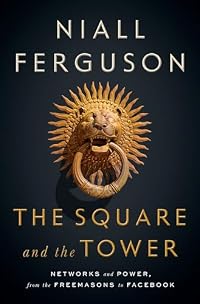
Niall Ferguson was born April 18, 1964, in Glasgow. He is a Scottish historian. He specializes in financial and economic history as well as the history of empire. He is the Laurence A. Tisch Professor of History at Harvard University and the William Ziegler Professor of Business Administration at Harvard Business School. His books include Paper show more and Iron: Hamburg Business and German Politics in the Era of Inflation 1897-1927 (1993), Virtual History: Alternatives and Counterfactuals (1997), The Pity of War: Explaining World War One (1998), The World's Banker: The History of the House of Rothschild (1998), The Cash Nexus: Money and Power in the Modern World, 1700-2000 (2001), Empire: The Rise and Demise of the British World Order and the Lessons for Global Power (2003), Colossus: The Rise and Fall of the American Empire (2004), The War of the World: Twentieth-Century Conflict and the Descent of the West (2006) and The Ascent of Money: A Financial History of the World (2008), Civilization: The West and the Rest (2011) , The Great Degeneration: How Institutions Decay and Economies Die, and The Square and the Tower: Networks and Power, from the Freemasons to Facebook. (Bowker Author Biography) show less
Some Editions
Awards and Honors
Awards
Distinctions
Common Knowledge
- Canonical title
- The Ascent of Money: A Financial History of the World
- Original title
- The Ascent of Money: A Financial History of the World
- Original publication date
- 2008
- People/Characters
- John Law; Rothschilds; Medicis; John Maynard Keynes
- Important places
- Florence, Tuscany, Italy
- Related movies
- The Ascent of Money (2008 | IMDb)
- Dedication
- In Memoriam
Gerald D. Feldman
(1937-2007) - First words
- Bread, cash, dosh, dough, loot, lucre, moolah, readies, the wherewithal,: call it what you like, money matters -- Introduction
- Last words
- (Click to show. Warning: May contain spoilers.)It is not the fault of the mirror if it reflects our blemishes as clearly as our beauty -- Afterword
Classifications
Statistics
- Members
- 3,977
- Popularity
- 3,921
- Reviews
- 78
- Rating
- (3.65)
- Languages
- 18 — Chinese, Czech, Dutch, English, Estonian, Finnish, French, German, Greek, Hebrew, Hungarian, Italian, Polish, Russian, Spanish, Swedish, Turkish, Portuguese (Portugal)
- Media
- Paper, Audiobook, Ebook
- ISBNs
- 69
- UPCs
- 4
- ASINs
- 30