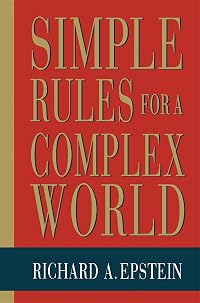
Simple Rules for a Complex World
by Richard A. Epstein
On This Page
Description
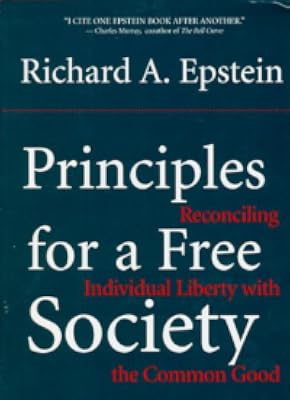
Too many laws, too many lawyers--that's the necessary consequence of a complex society, or so conventional wisdom has it. Countless pundits insist that any call for legal simplification smacks of nostalgia, sentimentality, or naiveté. But the conventional view, the noted legal scholar Richard Epstein tells us, has it exactly backward. The richer texture of modern society allows for more individual freedom and choice. And it allows us to organize a comprehensive legal order capable of show more meeting the technological and social challenges of today on the basis of just six core principles. In this book, Epstein demonstrates how. The first four rules, which regulate human interactions in ordinary social life, concern the autonomy of the individual, property, contract, and tort. Taken together these rules establish and protect consistent entitlements over all resources, both human and natural. These rules are backstopped by two more rules that permit forced exchanges on payment of just compensation when private or public necessity so dictates. Epstein then uses these six building blocks to clarify many intractable problems in the modern legal landscape. His discussion of employment contracts explains the hidden virtues of contracts at will and exposes the crippling weaknesses of laws regarding collective bargaining, unjust dismissal, employer discrimination, and comparable worth. And his analysis shows how laws governing liability for products and professional services, corporate transactions, and environmental protection have generated unnecessary social strife and economic dislocation by violating these basic principles.Simple Rules for a Complex World offers a sophisticated agenda for comprehensive social reform that undoes much of the mischief of the modern regulatory state. At a time when most Americans have come to distrust and fear government at all levels, Epstein shows how a consistent application of economic and political theory allows us to steer a middle path between too much and too little. show lessTags
Recommendations






























Member Reviews
What I especially appreciate about Epstein is the he can argue so clearly for his principled approach, without having to resort to ranting about specific examples. Richard Epstein explains how simple concepts of law have been subverted by complex rule-making, resulting in economic inefficiencies driven by ambiguity, defensive tactics, and poor allocation. x: "But how seriously can one take a legal system that devotes more of its intellectual ingenuity to identifying and correcting market failures resulting from asymmetrical and imperfect information in employment than to containing violence on the street?" The 6 simple rules are: Individual self-ownership, 2. first possession, 3. contract, 4. torts, 5. necessity, coordination, and just show more compensation, and 6. take and pay (and the 7th for tax law would be "flat tax"). show less
Ratings
Members
- Recently Added By
Lists

Libertarian Books
102 works; 19 members
Author Information
30+ Works 792 Members
Awards and Honors
Awards
Classifications
Statistics
- Members
- 104
- Popularity
- 309,143
- Reviews
- 1
- Rating
- (4.67)
- Languages
- English
- Media
- Paper, Ebook
- ISBNs
- 3