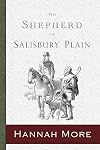
The Shepherd of Salisbury Plain
by Hannah More
16 Members (4.00)
On This Page
Description
Hannah More was born on February 2nd, 1745 at Fishponds in the parish of Stapleton, near Bristol. She was the fourth of five daughters. The City of Bristol, at that time, was a centre for slave-trading and Hannah would, over time, become one of its staunchest critics. She was keen to learn, possessed a sharp intellect and was assiduous in studying. Hannah first wrote in 1762 with The Search after Happiness (by the mid-1780s some 10,000 copies had been sold). In 1767 Hannah became engaged to show more William Turner. After six years, with no wedding in sight, the engagement was broken off. Turner then bestowed upon her an annual annuity of 200. This was enough to meet her needs and set her free to pursue a literary career. Her first play, The Inflexible Captive, was staged at Bath in 1775. The famous David Garrick himself produced her next play, Percy, in 1777 as well as writing both the Prologue and Epilogue for it. It was a great success when performed at Covent Garden in December of that year. Hannah turned to religious writing with Sacred Dramas in 1782; it rapidly ran through nineteen editions. These and the poems Bas-Bleu and Florio (1786) mark her gradual transition to a more serious and considered view of life. Hannah contributed much to the newly-founded Abolition Society including, in February 1788, her publication of Slavery, a Poem recognised as one of the most important of the abolition period. Her work now became more evangelical. In the 1790s she wrote several Cheap Repository Tracts which covered moral, religious and political topics and were both for sale or distributed to literate poor people. The most famous is, perhaps, The Shepherd of Salisbury Plain, describing a family of incredible frugality and contentment. Two million copies of these were circulated, in one year. In 1789, she purchased a small house at Cowslip Green in Somerset. She was instrumental in setting up twelve schools in the area by 1800. She continued to oppose slavery throughout her life, but at the time of the Abolition Bill of 1807, her health did not permit her to take as active a role in the movement as she had done in the late 1780s, although she maintained a correspondence with Wilberforce and others. In July 1833, the Bill to abolish slavery throughout the British Empire passed in the House of Commons, followed by the House of Lords on August 1st. Hannah More died on September 7th, 1833. show lessTags
Member Reviews
Members
- Recently Added By
Lists

Books Featured in Jane Austen's Bookshelf
37 works; 7 members
Author Information

67+ Works 342 Members
Common Knowledge
- Original publication date
- 1795
Classifications
Statistics
- Members
- 16
- Popularity
- 1,518,967
- Rating
- (4.00)
- Languages
- English
- Media
- Paper, Ebook
- ISBNs
- 3
- ASINs
- 2