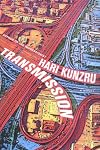
Transmission
by Hari Kunzru
On This Page
Description
In a networked world, anything can change n an instant, and sometimes everything does.... Transmission, Hari Kunzru's new novel of love and lunacy, immigration and immunity, introduces a daydreaming Indian computer geek whose luxurious fantasies about life in America are shaken when he accepts a California job offer. Lonely and na?ve, Arjun Mehta spends his days as a lowly assistant virus tester and pining away for his free-spirited colleague Christine. Arjun gets laid-off like so many of show more his Silicon Valley peers. In an act of desperation to keep his job, he releases a mischievous but destructive virus around the globe that has major unintended consequences. As world order unravels, so does Arjun's sanity, in a rollicking cataclysm that reaches Bollywood and, not so coincidentally, the glamorous star of Arjun's favorite Indian movie. Award-winning novelist Hari Kunzru was hailed as a "modern-day Kipling," for his bestselling debut, The Impressionist. With this exuberant follow-up, Kunzru takes an ultracontemporary turn in a stylish, playful, and wicked exploration of life at the click of a mouse. show lessTags
Recommendations

























Member Recommendations

by Dilara86
Member Reviews
Transmission is the story of the havoc wreaked on society by a computer virus named Leela, named after a fictional Bollywood star named Leela Zahir. At its center is a young Indian computer programmer, Arjun Mehta, who releases the virus when his tenuous, exploitative job with a Silicon Valley antivirus company comes under threat. Kunzru interweaves this main story with several other threads: the rise and fall of Guy Swift, a British new-money entrepreneur who runs a company called Tomorrow*, which seems to specialize in marketing empty rhetoric to various multinational businesses; the career of Gabriella Caro, Guy's girlfriend, who works as a public relations manager and suffers from her family's old money; and briefly, Leela Zahir show more herself, who has been thrust into the world of show-business by her pushy mother.
Kunzru has a brilliant eye for satire. Guy Swift's proposal, for instance, that Europe be rebranded as a sort of "VIP zone" for elites in the same way that certain nightclubs market themselves toward the rich and the famous is comedy gold, especially given what happens to him later in the novel. The only problem, in my opinion, is that most readers are a little too used to having their hands held: that is, they often want authors to reveal the satirical facade, just for a moment, to drop a wink after delivering a piece of searing irony so as to say "hey, it's just satire, I'm only kidding." What I admire about Kunzru is that he doesn't do this, and so those who don't get joke, well, they miss out. It's a daring strategy, one that, as a quick perusal of the academic criticism about Kunzru's novels suggests, leads to some overly literal interpretations of his work.
The main shortcoming I found in Transmission was that Kunzru struggled to find a consistent range for his considerable comedic talents. A deliberately flat character like Guy Swift, for example, seems better designed for a much broader kind of comedy than was on offer. Mostly, I think this problem had to do with how Kunzru deals with social class, since the grand conceits of those in charge generally make them a perfect target for the kind of humorous poetic justice which is conferred on characters like Swift or Darryl Gant, Arjun's passive-aggressive boss at Virugenix. The strategy works less well when it comes to the more difficult aspects of society, for disillusionment, poverty, and exploitation are much harder to laugh at from the bottom up.
Kunzru usually manages to address such issues without seeming preachy, but it does make it seem as though the novel proceeds at two different speeds that don't quite gel with each other. Thus, there is the touching story of Arjun, who seems like a kind of holy fool, on the one hand, on whom is conferred a mixture of innocent sincerity and frustrated pathos, and on the other hand, the broad satire of the delusional Guy Swift, who could easily have wandered out of the pages of a Martin Amis story. The result is an entertaining but uneven novel, one in which the various threads are tied together competently but a little too glibly for my taste. show less
Kunzru has a brilliant eye for satire. Guy Swift's proposal, for instance, that Europe be rebranded as a sort of "VIP zone" for elites in the same way that certain nightclubs market themselves toward the rich and the famous is comedy gold, especially given what happens to him later in the novel. The only problem, in my opinion, is that most readers are a little too used to having their hands held: that is, they often want authors to reveal the satirical facade, just for a moment, to drop a wink after delivering a piece of searing irony so as to say "hey, it's just satire, I'm only kidding." What I admire about Kunzru is that he doesn't do this, and so those who don't get joke, well, they miss out. It's a daring strategy, one that, as a quick perusal of the academic criticism about Kunzru's novels suggests, leads to some overly literal interpretations of his work.
The main shortcoming I found in Transmission was that Kunzru struggled to find a consistent range for his considerable comedic talents. A deliberately flat character like Guy Swift, for example, seems better designed for a much broader kind of comedy than was on offer. Mostly, I think this problem had to do with how Kunzru deals with social class, since the grand conceits of those in charge generally make them a perfect target for the kind of humorous poetic justice which is conferred on characters like Swift or Darryl Gant, Arjun's passive-aggressive boss at Virugenix. The strategy works less well when it comes to the more difficult aspects of society, for disillusionment, poverty, and exploitation are much harder to laugh at from the bottom up.
Kunzru usually manages to address such issues without seeming preachy, but it does make it seem as though the novel proceeds at two different speeds that don't quite gel with each other. Thus, there is the touching story of Arjun, who seems like a kind of holy fool, on the one hand, on whom is conferred a mixture of innocent sincerity and frustrated pathos, and on the other hand, the broad satire of the delusional Guy Swift, who could easily have wandered out of the pages of a Martin Amis story. The result is an entertaining but uneven novel, one in which the various threads are tied together competently but a little too glibly for my taste. show less
sometimes when a book gets so sprawling - like when at the end you are so far from the places and people you started with - the through-line of the book weakens. but with this book, i felt like i traveled far, very far, by the end - twists and turns all over - but somehow kunzru kept it vibrant and strong the whole time.
the descriptions of the programmers working at Virugenix made me laugh out loud - sounded like the floor i work on at MIT. throughout the book there were precisely accurate descriptions of people that i could picture, down to the last detail, like Leela's mom wearing "shiny snakeskin-effect jeans and a tiny T-shirt with the word "Angel" picked out in sequins across the front" ...but does that allow a book to age well? i show more guess i don't care. I also loved Guy Swift, especially when he devised his JGOE plan and when he got caught up in "Operation Atomium".
near the ending, i loved the conspiracy theorists, the Mehtologists - reviewing the surveillance tapes, hilarious.
i also loved the ending.
I'm so glad my brother recommended this book to me! show less
the descriptions of the programmers working at Virugenix made me laugh out loud - sounded like the floor i work on at MIT. throughout the book there were precisely accurate descriptions of people that i could picture, down to the last detail, like Leela's mom wearing "shiny snakeskin-effect jeans and a tiny T-shirt with the word "Angel" picked out in sequins across the front" ...but does that allow a book to age well? i show more guess i don't care. I also loved Guy Swift, especially when he devised his JGOE plan and when he got caught up in "Operation Atomium".
near the ending, i loved the conspiracy theorists, the Mehtologists - reviewing the surveillance tapes, hilarious.
i also loved the ending.
I'm so glad my brother recommended this book to me! show less
Arjun Mehta, computer geek and lover of Bollywood films is offered a lucrative IT job in "Amrika", but finds himself an exploited cybercoolie instead. When a job with a global software security organization turns up, it seems like his chance for a fulfilled life has arrived at last. But when he finds himself facing redundancy, he releases a malicious computer virus, so that he can impress his boss with his ability to create a cure for it. The whole wired world switches on their computers to see Arjun's favourite Bollywood actress, Leela Zahir, dancing on their computer while the virus embeds itself into their software, where it wrecks havoc for organisations across the globe. Arjun finds himself on the run from the FBI and declared a show more terrorist and hides out in the dark underbelly of America.
As the virus spreads, Arjun's actions have far-reaching implications for Marketing Exective Guy Swift with all his vacuous branding pyschobabble, and for the desperately unhappy Bollywood star shooting her next musical in a castle in Scotland.
Yes, it's a very funny, enjoyable read, but so richly detailed that you need to read carefully so as not to miss anything. Kunzru frequently delights with a clever turn of phrase (Arjun "meerkating" above his cubicle to see what's going on, a DJ "who bestrode the Uplifting Ambient Scene like a tight t-shirted colossus", are but a couple of things that made me laugh out loud). But the book also asks very important questions about globalisation, our dependency on computers, and the powerlessness of immigrants.
Oh and the ending! It's just so Bollywood! show less
As the virus spreads, Arjun's actions have far-reaching implications for Marketing Exective Guy Swift with all his vacuous branding pyschobabble, and for the desperately unhappy Bollywood star shooting her next musical in a castle in Scotland.
Yes, it's a very funny, enjoyable read, but so richly detailed that you need to read carefully so as not to miss anything. Kunzru frequently delights with a clever turn of phrase (Arjun "meerkating" above his cubicle to see what's going on, a DJ "who bestrode the Uplifting Ambient Scene like a tight t-shirted colossus", are but a couple of things that made me laugh out loud). But the book also asks very important questions about globalisation, our dependency on computers, and the powerlessness of immigrants.
Oh and the ending! It's just so Bollywood! show less
Quite a mind-blowing read, the sort of story that could be heading anywhere, you never know what to expect. Perhaps what I like most about Hari Kunzru's writing is the sheer ambition. Like Louis de Bernieres and David Mitchell, he is the sort of author who either doesn't give a toss about the maxim "write what you know" or he literally does know everything.
So many highlights, too many to list, but I loved the crowd in India "participating" in the aftermath of an accident, and the lengthy description (perhaps not even meant to be funny?) of the first-person shooter game. And Guy's meltdown was priceless.
A literary road trip through the most fascinating and well constructed scenery, and highly recommended.
So many highlights, too many to list, but I loved the crowd in India "participating" in the aftermath of an accident, and the lengthy description (perhaps not even meant to be funny?) of the first-person shooter game. And Guy's meltdown was priceless.
A literary road trip through the most fascinating and well constructed scenery, and highly recommended.
This book deserves a great deal more attention. It is the perfect satire
on: the Silicon Valley mindset, Conspiracy nuts, and Bollywood all rolled into a very funny novel.
on: the Silicon Valley mindset, Conspiracy nuts, and Bollywood all rolled into a very funny novel.
Wild postmodern tale of an Indian computer programmer stuck in Silicone Valley, who loses his job and unleashes a computer virus. Funny and fast moving.
Arjun, a naive young Indian thinks he has achieved the American Dream. He lands a job in the US, but finds he's in a computing sweatshop. Eventually he breaks out to get his own job at an antiviral software company who then make him redundant. He unleashes a virus to get his own back, planning to come up with the solution and get his job back, but its transmitted worldwide and everything goes horribly wrong.
Interspersed with the main plot and taking over most of the second half of the novel, we hear about Guy Swift, a brand marketer who owns a start-up company with no clients and dwindling funding; and Leela Zahir, a Bollywood starlet - adored by Arjun, who makes her the face of his virus - which cripples Guy's plans at the worst show more possible time.
Arjun, and to a certain extent Leela, appear to be realistic characters, you can't help but sympathise with Arjun, even if you can't condone what he did.
As for Guy, well he was a caricature of the young marketing man who lives and talks jargon, an empty shell fuelled by coke, with a trophy girlfriend and show-off apartment. I didn't like him at all - but then you're not meant to, and didn't care whether he sank or swam.
I'd have liked to have read more about Arjun, particularly after he went on the run, but the author cuts the story off in its prime after 268 pages, inserting a 25 page coda like the credits at the end of the movie Animal House which tells you what all the silly students went on to do. It would have been a much longer book without this device ...
I enjoyed the novel and I like Kunzru's style and confidence in writing about the technology without much technobabble, but given that the world is changing so fast, (it was first published in 2004), believe that it will date soon. Read it now while it's of its time. show less
Interspersed with the main plot and taking over most of the second half of the novel, we hear about Guy Swift, a brand marketer who owns a start-up company with no clients and dwindling funding; and Leela Zahir, a Bollywood starlet - adored by Arjun, who makes her the face of his virus - which cripples Guy's plans at the worst show more possible time.
Arjun, and to a certain extent Leela, appear to be realistic characters, you can't help but sympathise with Arjun, even if you can't condone what he did.
As for Guy, well he was a caricature of the young marketing man who lives and talks jargon, an empty shell fuelled by coke, with a trophy girlfriend and show-off apartment. I didn't like him at all - but then you're not meant to, and didn't care whether he sank or swam.
I'd have liked to have read more about Arjun, particularly after he went on the run, but the author cuts the story off in its prime after 268 pages, inserting a 25 page coda like the credits at the end of the movie Animal House which tells you what all the silly students went on to do. It would have been a much longer book without this device ...
I enjoyed the novel and I like Kunzru's style and confidence in writing about the technology without much technobabble, but given that the world is changing so fast, (it was first published in 2004), believe that it will date soon. Read it now while it's of its time. show less
Members
- Recently Added By
Lists

Best 21st Century Books (So Far)
679 works; 85 members

Literature About Social Class
134 works; 19 members

Best Workplace Fiction
47 works; 18 members

Literature by People of Color
81 works; 9 members

Indian Diaspora
42 works; 2 members
Author Information

20+ Works 4,904 Members
Born in London and raised in Essex, Hari Kunzru is a freelance journalist and editor living in London.
Common Knowledge
- Canonical title
- Transmission
- Original publication date
- 2004
- People/Characters
- Arjun Mehta; Leela Zahir; Guy Swift; Christine Schnorr; Gabriella Caro
- Important places
- Redmond, Washington, USA; London, England, UK; Highland, Scotland, UK; Brussels, Belgium
- Dedication
- It's for the Fran
- First words
- It was a simple message.
- Last words
- (Click to show. Warning: May contain spoilers.)According to conspiracy theorists, there is only one possible explanation, only one pattern that makes sense.
Classifications
Statistics
- Members
- 822
- Popularity
- 33,717
- Reviews
- 26
- Rating
- (3.40)
- Languages
- 9 — Danish, Dutch, English, French, German, Italian, Norwegian (Bokmål), Spanish, Swedish
- Media
- Paper, Audiobook, Ebook
- ISBNs
- 28
- ASINs
- 6