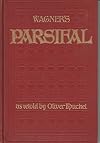
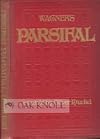
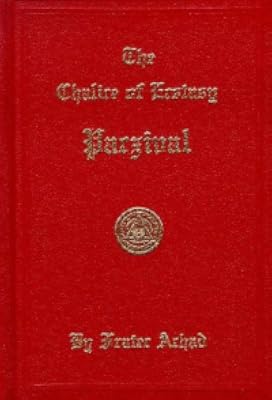
Wagner's Parsifal as Retold by Oliver Huckel
by Oliver Huckel
On This Page
Description
The criticism has sometimes been made that the basic religious idea of Parsifal is Buddhistic rather than Christian; that it is taken directly from the philosophy of Schopenhauer, who was perhaps as nearly a Buddhist as was possible for an Occidental mind to be; that the dominating idea in Parsifal is compassion as the essence of sanctity, and that Wagner has merely clothed this fundamental Buddhistic idea with the externals of Christian form and symbolism. This criticism is ingenious. It show more may also suggest that all great religions in their essence have much which is akin. But no one who reads carefully Wagner's own letters during the time that he was brooding over his Parsifal can doubt that he was trying in this drama to express in broadest and deepest way the essentials of Christian truth. Christianity has no need to go to Buddhism to find such a fundamental conception as that of an infinite compassion as a revelation of God. The legend of the Grail, as Wagner uses it, has in it the usual accompaniments of mediaeval tradition,-something of paganism and magic. But these pagan elements are only contrasts to the purity and splendor of the simple Christian truth portrayed. The drama suggests the early miracle and mystery plays of the Christian Church; but more nearly, perhaps, it reminds one of those great religious dramas, scenic and musical, which were given at night at Eleusis, near Athens, in the temple of the Mysteries, before the initiated ones among the Greeks in the days of Pericles and Plato. show lessTags
Recommendations


















Member Reviews
"Wagner's music is better than it sounds..." said Mark Twain.
He also said about Parsifal: "The first act of three occupied two hours, and I enjoyed that in spite of the singing. . . . Singing! It does seem the wrong name to apply to it. Strictly described, it is a practicing of difficult and unpleasant intervals, mainly."
Unfortunately, I agree. But I became interested in Wagner's Parsifal while I watched a movie which did not really source its claims very well, entitled "The Occult History of the Third Reich."
This movie claimed Hitler wanted the religion of Germania to be based on Wagner's Parsifal.
Reading this book, I can understand the power of the opera. The book is in English, and follows the plot of Parsifal and the Holy Grail. show more
The story is set with the knights who guard the grail, attending to their king who was wounded by the spear that struck Jesus' side, which was stolen by a knight-turned-villain.
It ends with Parsifal's return after many years to return the spear.
My rating comes because of my understanding of the opera through this translation.
Whether this opera influenced Hitler in the way presented, I don't know. I can understand the claim after I read the book.
I recommend it to anyone interested in this study. show less
He also said about Parsifal: "The first act of three occupied two hours, and I enjoyed that in spite of the singing. . . . Singing! It does seem the wrong name to apply to it. Strictly described, it is a practicing of difficult and unpleasant intervals, mainly."
Unfortunately, I agree. But I became interested in Wagner's Parsifal while I watched a movie which did not really source its claims very well, entitled "The Occult History of the Third Reich."
This movie claimed Hitler wanted the religion of Germania to be based on Wagner's Parsifal.
Reading this book, I can understand the power of the opera. The book is in English, and follows the plot of Parsifal and the Holy Grail. show more
The story is set with the knights who guard the grail, attending to their king who was wounded by the spear that struck Jesus' side, which was stolen by a knight-turned-villain.
It ends with Parsifal's return after many years to return the spear.
My rating comes because of my understanding of the opera through this translation.
Whether this opera influenced Hitler in the way presented, I don't know. I can understand the claim after I read the book.
I recommend it to anyone interested in this study. show less
Members
- Recently Added By
Author Information
18+ Works 62 Members
Work Relationships
Is a retelling of
Common Knowledge
- Canonical title
- Wagner's Parsifal as Retold by Oliver Huckel
- People/Characters
- Parsifal
Classifications
Statistics
- Members
- 26
- Popularity
- 1,007,878
- Reviews
- 1
- Rating
- (4.00)
- Languages
- English
- Media
- Paper, Ebook
- ISBNs
- 3
- ASINs
- 5