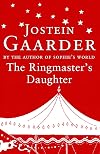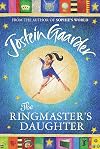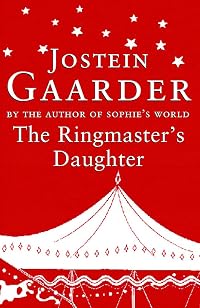
The Ringmaster's Daughter
by Jostein Gaarder
On This Page
Description
In an old fairy story Panina Manina, a trapeze artist, falls and breaks her neck. As the ringmaster bends over her he notices an amulet of amber around her neck, the same trinket he had given his own lost child, swept away in a torrent some sixteen years earlier. The theme of a father finding a long-lost daughter runs through this novel which is told by Petter, a precocious child and fantasist - a Norwegian Billy Liar. Petter's magical interior world contains Metre Man, a midget with a green show more felt cap and a bamboo cane; Metre Man runs his life and urges him to do things. As an adult, Petter's incredible imagination leads him to become a ghost writer known only as The Spider but he become involves in a sequence of literary deceits which are brought to a head at the Bologna Bookfair at the same time as events conspire to bring him face to face with his own long-lost daughter. show lessTags
Recommendations

















Member Reviews
The Baltic Sea is well known for its amber, solidified resin from forests around 44 million years old, and frequently trapped in these deposits are various flora and fauna of the period. The most striking image in The Ringmaster’s Daughter, which symbolises one of its major themes, is of a spider caught in this matrix, just like its victims might be caught in its web. The story that gives the novel its title concerns a trapeze artist who falls and breaks her neck. As the ringmaster bends over her injured body he sees an amber trinket on a slender chain around her neck, which he recognises as one he had given to a daughter he hasn’t seen for years. The importance of this tale of the lost daughter is underlined by it being told, with show more variations, three times during the course of the novel, in the presence of each of the three most important women in the narrator’s life.
The narrator is Petter. I don’t think we are told his family name, but he imagines himself as Petter Spider; this is the Norwegian nursery rhyme equivalent of Incey Wincey Spider, who gets washed away by a shower of rain but then re-ascends a hat (or spout in the English-language versions). The ending of this web-spinner’s tale is upbeat, leading one to expect The Ringmaster’s Daughter to have a similarly optimistic conclusion, but there is no guarantee that this will happen. Tragedies have a typical profile when it comes to plotting their courses against success and time: an apparent rise in good fortune takes a disastrous dip, a rally being followed by a further descent towards failure (comedies tend to mirror rises with falls and vice versa). The profile of Gaarder’s novel appears to match the tragic model, but we are left in limbo by the end — will Petter untangle himself from the web he has woven and, like Robert the Bruce’s inspiration, try and try again? Or will the taboo he has unwittingly broken cause him, like Oedipus, to suffer the consequences for the rest of his life with no hope of redemption?
The root of Petter’s misfortunes arise as a result of childhood traumas. One, revealed near the beginning of the book, relates to his mother’s rejection of the first story he has ever composed — written on her bedroom wall; as a result he has vowed never to write a novel, to just stick to successfully peddling synopses and aphorisms, plotlines that pour out of him as a result of his wide reading and observation of people. The other trauma, the existence of which emerges towards the end of the novel (or biography, as this is how Petter the narrator sees it), gave birth to the Rumpelstiltskin-like leprechaun figure who haunts his waking life, an enigmatic homunculus whose origins Petter is understandably reluctant to fathom.
Gaarder is known as a writer who extensively utilises metafiction so that we can get confused if the primary world merges into a secondary or even tertiary world (as, for example, in The Solitaire Mystery): Jostein Gaarder writes a novel about Petter, who narrates tales about other individuals, including those whose roles feature in the novel’s title. Petter is born in Norway around 1952, as is Gaarder, and is successful as a spinner of tales, as is Gaarder, and travels to book fairs, as no doubt does Gaarder. But Gaarder is not Petter, his life appearing to have followed the graph allocated to comedy (if we accept the classical meaning of the word).
The frame of the story is set on the Amalfi coast, in the house where Gaarder’s compatriot Ibsen wrote A Doll’s House. I’m not familiar with this play (I only supposedly studied The Pillars of Society and Hedda Gabler at school) so can’t comment on any relevance to The Ringmaster’s Daughter. But the one play by Ibsen that I’m reminded of his Peer Gynt, which is not referenced in the novel but which has some interesting parallels to Gaarder’s novel. Both works share a name (Peer is a diminutive of Petter, the Norwegian form of Peter); both have elements of magic realism in that the real world and the world of the imagination coexist for both Peer and Petter; in both the protagonist has a liaison which results in an offspring whose arrival has grave consequences; each work has a being who is an aspect of the protagonist, the Bøyg for Peer, the homunculus for Petter. And both works try to answer the question, what does ‘being yourself’ mean? The Troll King says that humans claim to live by the motto, Be true to yourself but that for trolls it is simply Be yourself! Petter’s life has epitomised a selfish troll-like existence; by the end he realises that he has to take responsibility for his attitudes and actions which have taken a human toll.
Like a spider’s web The Ringmaster’s Daughter throws out gossamer threads in all directions. Sometimes I muse on the plots of Puccini’s operas which are referenced here (and of course Puccini himself wrote operas virtually overlooking the same sea that Ibsen saw, though a little further north); other times I’m reminded of Shakespeare’s A Winter’s Tale which also features a lost daughter, Perdita; the tale synopses that punctuate the pages have the same bitter-sweet taste of the literary fairytales of Wilde or, particularly, Hans Christian Andersen, rather than driving inexorably to the expected ‘fairytale ending’ of traditional stories.
Only one thing I’m missing, and that’s a sense of the other people that Petter interacts with. All are seen through his eyes, of course, but because idealised or occasionally stereotyped they seem more like fairytale archetypes than rounded individuals. And probably that’s the point. His mother fails at being the ideal maternal figure, his hoped-for sweetheart refuses to be his anima, he is not to know his daughter, his only true creation; all humans are puppets on strings to be played with, victims enmeshed in a web. Perhaps all fiction writers are like this; maybe Gaarder’s metafiction is a meditation on the perils of playing God.
http://wp.me/s2oNj1-spider show less
The narrator is Petter. I don’t think we are told his family name, but he imagines himself as Petter Spider; this is the Norwegian nursery rhyme equivalent of Incey Wincey Spider, who gets washed away by a shower of rain but then re-ascends a hat (or spout in the English-language versions). The ending of this web-spinner’s tale is upbeat, leading one to expect The Ringmaster’s Daughter to have a similarly optimistic conclusion, but there is no guarantee that this will happen. Tragedies have a typical profile when it comes to plotting their courses against success and time: an apparent rise in good fortune takes a disastrous dip, a rally being followed by a further descent towards failure (comedies tend to mirror rises with falls and vice versa). The profile of Gaarder’s novel appears to match the tragic model, but we are left in limbo by the end — will Petter untangle himself from the web he has woven and, like Robert the Bruce’s inspiration, try and try again? Or will the taboo he has unwittingly broken cause him, like Oedipus, to suffer the consequences for the rest of his life with no hope of redemption?
The root of Petter’s misfortunes arise as a result of childhood traumas. One, revealed near the beginning of the book, relates to his mother’s rejection of the first story he has ever composed — written on her bedroom wall; as a result he has vowed never to write a novel, to just stick to successfully peddling synopses and aphorisms, plotlines that pour out of him as a result of his wide reading and observation of people. The other trauma, the existence of which emerges towards the end of the novel (or biography, as this is how Petter the narrator sees it), gave birth to the Rumpelstiltskin-like leprechaun figure who haunts his waking life, an enigmatic homunculus whose origins Petter is understandably reluctant to fathom.
Gaarder is known as a writer who extensively utilises metafiction so that we can get confused if the primary world merges into a secondary or even tertiary world (as, for example, in The Solitaire Mystery): Jostein Gaarder writes a novel about Petter, who narrates tales about other individuals, including those whose roles feature in the novel’s title. Petter is born in Norway around 1952, as is Gaarder, and is successful as a spinner of tales, as is Gaarder, and travels to book fairs, as no doubt does Gaarder. But Gaarder is not Petter, his life appearing to have followed the graph allocated to comedy (if we accept the classical meaning of the word).
The frame of the story is set on the Amalfi coast, in the house where Gaarder’s compatriot Ibsen wrote A Doll’s House. I’m not familiar with this play (I only supposedly studied The Pillars of Society and Hedda Gabler at school) so can’t comment on any relevance to The Ringmaster’s Daughter. But the one play by Ibsen that I’m reminded of his Peer Gynt, which is not referenced in the novel but which has some interesting parallels to Gaarder’s novel. Both works share a name (Peer is a diminutive of Petter, the Norwegian form of Peter); both have elements of magic realism in that the real world and the world of the imagination coexist for both Peer and Petter; in both the protagonist has a liaison which results in an offspring whose arrival has grave consequences; each work has a being who is an aspect of the protagonist, the Bøyg for Peer, the homunculus for Petter. And both works try to answer the question, what does ‘being yourself’ mean? The Troll King says that humans claim to live by the motto, Be true to yourself but that for trolls it is simply Be yourself! Petter’s life has epitomised a selfish troll-like existence; by the end he realises that he has to take responsibility for his attitudes and actions which have taken a human toll.
Like a spider’s web The Ringmaster’s Daughter throws out gossamer threads in all directions. Sometimes I muse on the plots of Puccini’s operas which are referenced here (and of course Puccini himself wrote operas virtually overlooking the same sea that Ibsen saw, though a little further north); other times I’m reminded of Shakespeare’s A Winter’s Tale which also features a lost daughter, Perdita; the tale synopses that punctuate the pages have the same bitter-sweet taste of the literary fairytales of Wilde or, particularly, Hans Christian Andersen, rather than driving inexorably to the expected ‘fairytale ending’ of traditional stories.
Only one thing I’m missing, and that’s a sense of the other people that Petter interacts with. All are seen through his eyes, of course, but because idealised or occasionally stereotyped they seem more like fairytale archetypes than rounded individuals. And probably that’s the point. His mother fails at being the ideal maternal figure, his hoped-for sweetheart refuses to be his anima, he is not to know his daughter, his only true creation; all humans are puppets on strings to be played with, victims enmeshed in a web. Perhaps all fiction writers are like this; maybe Gaarder’s metafiction is a meditation on the perils of playing God.
http://wp.me/s2oNj1-spider show less
Paris, 1940. Twenty-year-old Michel Bonnet lives on the edge of the law, finding work where he can breaking in horses on the outskirts of the city. But when the Nazis invade, Michel takes refuge as a stowaway on a rickety train bound for the rural south.
The train is property of Le Cirque Neumann – a travelling circus owned by the troubled and irritable showman Werner Neumann. Neumann offers Michel a job caring for the company’s horses – a lucky break, but with an unusual condition attached. Michel must keep to himself.
But as Michel finds himself pulled into the wondrous world of the great spectacular it becomes more difficult to keep his promise. How can Michel win the love of the beautiful and exotic trapeze artist Freida, when show more he’s been forbidden to even meet her gaze?
I was immediately drawn to this book because of its cover and also since I love history, especially stories relating to World War II, I couldn't stop myself getting attracted to this book.
While this book does have a cast of interesting characters and a few magical moments, I just couldn't get myself enchanted because there were parts in the book where,I felt the pace of the story slowed down a bit too much.
Also, I genuinely feel that the author should have thought of another title for the book because it literally spoils one of the main surprises in the book.
All in all, it wasn’t a bad book, I wouldn't mind recommending it to anyone who enjoys historical fiction.
Thank You to NetGalley and Bookouture for this ARC!! show less
The train is property of Le Cirque Neumann – a travelling circus owned by the troubled and irritable showman Werner Neumann. Neumann offers Michel a job caring for the company’s horses – a lucky break, but with an unusual condition attached. Michel must keep to himself.
But as Michel finds himself pulled into the wondrous world of the great spectacular it becomes more difficult to keep his promise. How can Michel win the love of the beautiful and exotic trapeze artist Freida, when show more he’s been forbidden to even meet her gaze?
I was immediately drawn to this book because of its cover and also since I love history, especially stories relating to World War II, I couldn't stop myself getting attracted to this book.
While this book does have a cast of interesting characters and a few magical moments, I just couldn't get myself enchanted because there were parts in the book where,I felt the pace of the story slowed down a bit too much.
Also, I genuinely feel that the author should have thought of another title for the book because it literally spoils one of the main surprises in the book.
All in all, it wasn’t a bad book, I wouldn't mind recommending it to anyone who enjoys historical fiction.
Thank You to NetGalley and Bookouture for this ARC!! show less
Second reads are strange. Particularly when they are about a decade apart. I still love Jostein´s writing but his content... His main character´s attitude to women rattles. And his attitude to people in general is rather too detached, which I can see my younger self loving. But while I still sympathy with how stories are the end of all of life for him, his complete disregard for human beings that he clearly understands SO well, comes off as creepy and psychopathic. If the character was not a grown man, I could maybe give him a little leeway but since his change of heart at the end is left incomplete and he´s almost fifty, it seems a bit unlikely that he will end up as someone I can think well off.
Anyway, it´s definitely worth show more reading if you are narratively inclined yourself, as the reflections on stories and storytelling are fascinating. One thing that he never seems to get that clearly, in his self-involved adoration, is that people who write are writers, and he himself is not superior for being able, in fact, being unable not to, come up with the plots and ideas for the stories but not to write. His feelings of superiority towards people who can actually TELL a story, gets rather annoying since THAT is the hardest part. I also found it quite strange that he never seemed very interested in any stories but the ones he made up, he mentions reading other books that those he inspired and even liking them but there is no love there. In fact, his early relationship to fiction seems to be born out of love but later it seems to feed a compulsion more than a passion. show less
Anyway, it´s definitely worth show more reading if you are narratively inclined yourself, as the reflections on stories and storytelling are fascinating. One thing that he never seems to get that clearly, in his self-involved adoration, is that people who write are writers, and he himself is not superior for being able, in fact, being unable not to, come up with the plots and ideas for the stories but not to write. His feelings of superiority towards people who can actually TELL a story, gets rather annoying since THAT is the hardest part. I also found it quite strange that he never seemed very interested in any stories but the ones he made up, he mentions reading other books that those he inspired and even liking them but there is no love there. In fact, his early relationship to fiction seems to be born out of love but later it seems to feed a compulsion more than a passion. show less
"My brain is seething. I'm bubbling with hundreds of new ideas. They just keep welling up. Before I manage to dwell on one of my inspirations, it generally melts into an even better idea, but this, too, is so fickle of character that I struggle to save it from the constant volcanic stream of new ideas..."
In an old fairy story Panina Manina, a trapeze artist, falls and breaks her neck. As the ringmaster bends over her he notices an amulet of amber around her neck, the same trinket he had given his own lost child, swept away in a torrent some sixteen years earlier. The theme of a father finding a long lost daughter runs through this novel which is told by Petter, a precocious child and a fantasist.
As an adult, Petter's incredible show more imagination leads him to become a ghost writer known only as The Spider. "At last I've decided what I want to be. I shall continue doing what I've always done, but from now on I'll make a living out of it. I don't feel the need to be famous, that's an important consideration, but I could still become extremely rich." But he become involves in a sequence of literary deceits which are brought to a head at the Bologna Bookfair at the same time as events conspire to bring him face to face with his own long lost daughter.
I really enjoyed this book to the point that I couldn't put it down. I thought it was really unique that we got to read the stories that Petter came up with. My definite favorite was his story of a chess game with living pieces set in Scotland. Other notables were his short stories of "The Souls' Constant", "Triple Murder Post-mortem" and a Danish family tragedy.
Sometimes Petter tells stories in a way that reveals something about him or something important that he can't say flat out. Every story that Petter tells is amazing and tragic and ends with a twist. Gaarder uses his "story within a story" method yet again and it works successfully like how he employed it with his other works: "The Solitaire Mystery" and "Sophie's World."
I think what has made it a better story than others lies in its intensity: love, pain, treason, mystery are interwoven very tightly. Gaarder has succeeded in creating a very intellectual, yet eccentric narrator with depth. Among other things, the book discusses the core of creativity and the role of the creator.
Book Details:
Title The Ringmaster's Daughter
Author Jostein Gaarder
Reviewed By Purplycookie show less
In an old fairy story Panina Manina, a trapeze artist, falls and breaks her neck. As the ringmaster bends over her he notices an amulet of amber around her neck, the same trinket he had given his own lost child, swept away in a torrent some sixteen years earlier. The theme of a father finding a long lost daughter runs through this novel which is told by Petter, a precocious child and a fantasist.
As an adult, Petter's incredible show more imagination leads him to become a ghost writer known only as The Spider. "At last I've decided what I want to be. I shall continue doing what I've always done, but from now on I'll make a living out of it. I don't feel the need to be famous, that's an important consideration, but I could still become extremely rich." But he become involves in a sequence of literary deceits which are brought to a head at the Bologna Bookfair at the same time as events conspire to bring him face to face with his own long lost daughter.
I really enjoyed this book to the point that I couldn't put it down. I thought it was really unique that we got to read the stories that Petter came up with. My definite favorite was his story of a chess game with living pieces set in Scotland. Other notables were his short stories of "The Souls' Constant", "Triple Murder Post-mortem" and a Danish family tragedy.
Sometimes Petter tells stories in a way that reveals something about him or something important that he can't say flat out. Every story that Petter tells is amazing and tragic and ends with a twist. Gaarder uses his "story within a story" method yet again and it works successfully like how he employed it with his other works: "The Solitaire Mystery" and "Sophie's World."
I think what has made it a better story than others lies in its intensity: love, pain, treason, mystery are interwoven very tightly. Gaarder has succeeded in creating a very intellectual, yet eccentric narrator with depth. Among other things, the book discusses the core of creativity and the role of the creator.
Book Details:
Title The Ringmaster's Daughter
Author Jostein Gaarder
Reviewed By Purplycookie show less
Second reads are strange. Particularly when they are about a decade apart. I still love Jostein´s writing but his content... His main character´s attitude to women rattles. And his attitude to people in general is rather too detached, which I can see my younger self loving. But while I still sympathy with how stories are the end of all of life for him, his complete disregard for human beings that he clearly understands SO well, comes off as creepy and psychopathic. If the character was not a grown man, I could maybe give him a little leeway but since his change of heart at the end is left incomplete and he´s almost fifty, it seems a bit unlikely that he will end up as someone I can think well off.
Anyway, it´s definitely worth show more reading if you are narratively inclined yourself, as the reflections on stories and storytelling are fascinating. One thing that he never seems to get that clearly, in his self-involved adoration, is that people who write are writers, and he himself is not superior for being able, in fact, being unable not to, come up with the plots and ideas for the stories but not to write. His feelings of superiority towards people who can actually TELL a story, gets rather annoying since THAT is the hardest part. I also found it quite strange that he never seemed very interested in any stories but the ones he made up, he mentions reading other books that those he inspired and even liking them but there is no love there. In fact, his early relationship to fiction seems to be born out of love but later it seems to feed a compulsion more than a passion. show less
Anyway, it´s definitely worth show more reading if you are narratively inclined yourself, as the reflections on stories and storytelling are fascinating. One thing that he never seems to get that clearly, in his self-involved adoration, is that people who write are writers, and he himself is not superior for being able, in fact, being unable not to, come up with the plots and ideas for the stories but not to write. His feelings of superiority towards people who can actually TELL a story, gets rather annoying since THAT is the hardest part. I also found it quite strange that he never seemed very interested in any stories but the ones he made up, he mentions reading other books that those he inspired and even liking them but there is no love there. In fact, his early relationship to fiction seems to be born out of love but later it seems to feed a compulsion more than a passion. show less
This book started so well, I was hoping for something along the lines of Sophie's World again - sadly it seemed to just get bogged down by its own inertia, repeated cyces of the same themes and plot lines.
If Jostein had just realised he had made his early points after about 80 pages, and either rounded off the story or developed a new story board it could still have been a very fine book.
As it is I've stalled at about page 100, and it sits neglected at my bedside as I always prefer to pick up one of my other current books.
I'll keep at it, it is still too good a book not to finish, but I may still have to revise my rating down as I progress.
If Jostein had just realised he had made his early points after about 80 pages, and either rounded off the story or developed a new story board it could still have been a very fine book.
As it is I've stalled at about page 100, and it sits neglected at my bedside as I always prefer to pick up one of my other current books.
I'll keep at it, it is still too good a book not to finish, but I may still have to revise my rating down as I progress.
Deu ser el libre més gros que he llegit en catalá, va de un noi i després un home que s'inventa moltes i moltes histories, té masses idees pero poder escriure-les o fer-les pelicules el mateix, i a més a més com que no el ve en gana, així que les ven. Les seves idees son tan bones i la resta del món tan poc original que es fa ric fent-ho però es molt important que es mantingui en secret que el es el "autor" de totes les obres famoses dels ultims anys, aixi que quan començen les sospites... No m'enganyo, es un libre per a escritors i tampoc per tots, es un libre sobre la creativitat i a mi em va a agradar perque de petita jo era exactamente el mateix que el protagonista, començava unes tres noveles semanals i quan una show more casualment va a excedir las divuit pagines(molt més que ninguna abans) vaig decidir que la escriuria exclusivament i per un temps vaig a ser mig famosa entre les meves amigues i me vaig guanyar a una professora de llengua molt dura pero al final tampoc la vaig a acabar i vaig continuar tomant notes per histories que volia escriure i mai escrivint-les realment...
Finally figured out this is the same as "The Ringmaster´s daughter", or, well, i think it´s the second time I realise this (I insist this title is much better than the original). show less
Finally figured out this is the same as "The Ringmaster´s daughter", or, well, i think it´s the second time I realise this (I insist this title is much better than the original). show less
Members
- Recently Added By
Lists

2024 Reads
31 works; 1 member
Author Information

49 Works 32,932 Members
Jostein Gaarder was born in Olso, Norway on August 8, 1952. A former high school philosophy teacher, he now writes numerous novels for children and adults. His best known work is Sophie's World. He has received numerous awards including the Deutscher Jugendliteraturpreis in 1994 for Sophie's World, the Buxtehude Bulle in 1997, and the show more Willy-Brandt-Award in 2004. (Bowker Author Biography) show less
Some Editions
Series
Belongs to Publisher Series
dtv (13250)
Common Knowledge
- Canonical title
- The Ringmaster's Daughter
- Original title
- Sirkusdirektørens datter
- Original publication date
- 2001
- People/Characters*
- Panina Manina
- First words
- My brain is seething.
- Quotations*
- ... naar mijn mening is het nu zover gekomen - in intellectueel opzicht bedoel ik - dat men zich kan afvragen of het niet tijd is voor een kleine cultuurpauze, zodat men even kan blijven stilstaan bij wat er is bereikt en ... (show all)kan verwerken wat men heeft opgenomen.
Johan E. Mellbye,
volksvertegenwoordiger voor de Boerenpartij
2 mei 1927
Zich losmaken uit de wereld van de media en de cultuurinstructeurs is als het betreden van een andere, magische wereld. Alsof je opnieuw de wereld van de werkelijkheid binnenstapt.
De tijd van dromen is voorbij.
... (show all)
Havard Simensen, jurist en columnist,
Aftenposten, 18 augustus 2001 - Last words
- (Click to show. Warning: May contain spoilers.)Ready for the greatest leap.
*Some information comes from Common Knowledge in other languages. Click "Edit" for more information.
Classifications
- Genres
- Fiction and Literature, General Fiction
- DDC/MDS
- 839.82374 — Literature & rhetoric German & related literatures Other Germanic literatures Danish and Norwegian literatures Norwegian literature Norwegian Bokmål fiction 1900–2000 Late 20th century 1945–2000
- LCC
- PT8951.17 .A17 .S5713 — Language and Literature German, Dutch and Scandinavian literatures Norwegian literature Individual authors or works 1961-2000
- BISAC
Statistics
- Members
- 847
- Popularity
- 32,222
- Reviews
- 20
- Rating
- (3.63)
- Languages
- 21 — Catalan, Czech, Danish, Dutch, English, French, German, Greek, Hungarian, Indonesian, Italian, Latvian, Lithuanian, Norwegian (Bokmål), Norwegian, Polish, Portuguese, Russian, Croatian, Spanish, Swedish
- Media
- Paper, Audiobook, Ebook
- ISBNs
- 46
- ASINs
- 8