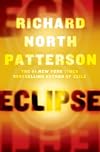
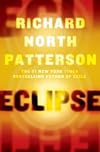
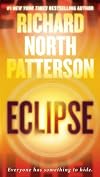
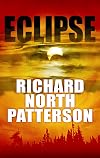
Eclipse
by Richard North Patterson
On This Page
Description
The spellbinding story of an American lawyer who takes on a nearly impossible case--the defense of an African freedom fighter against his corrupt government's charge of murdering three PetroGlobal workers.Tags
Recommendations



Member Reviews
Luandia, a fictitious African country with a Muslim north and an oil rich south, environmental despoliation, ethnic unrest, corruption and post colonial collapse, is the setting of Richard North Patterson’s new book – am I the only one who thinks ‘Luanda’ and ‘Nigeria’?
RNP is generally a boring writer – especially his so-called thrillers about American politics – but Eclipse is a surprising good read and poses several valid questions.
Pacifist writer Bobby Okari is facing unjust execution: America won’t help because it needs Luandia’s oil and dare not offend the country’s dictator: however South Africa, even Okari’s personal hero international idol Nelson Mandela, is also silent.
Will South Africa go all the way show more and excuse unspeakable evil simply because the heinous deeds are perpetrated by black Africans? The very thought is enough to cause indigestion. show less
RNP is generally a boring writer – especially his so-called thrillers about American politics – but Eclipse is a surprising good read and poses several valid questions.
Pacifist writer Bobby Okari is facing unjust execution: America won’t help because it needs Luandia’s oil and dare not offend the country’s dictator: however South Africa, even Okari’s personal hero international idol Nelson Mandela, is also silent.
Will South Africa go all the way show more and excuse unspeakable evil simply because the heinous deeds are perpetrated by black Africans? The very thought is enough to cause indigestion. show less
In Eclipse, Damon Pierce is an Irish lawyer, who despite success that he has experienced in his career, seems to be drifting listlessly. That changes when he gets a frantic message from Marissa Okari, an old friend of his who he had a romantic interest in that never materialized. Marissa is living in a fictional African country with her husband Bobby, who is protesting against his country’s government as well as Petro Global, a large oil conglomerate. Bobby has been arrested and is scheduled to be executed unless Damon can perform some heroics and save the day. This leads Damon to Africa where he uncovers layers of conspiracies.
For me this novel was a mixed bag. I didn’t appreciate the heavy-handed approach the author used to tell show more his story. If I wanted to be inundated with political opinion I would watch a cable news show and watch the talking heads. This isn’t what I want in my fiction. Furthermore, the facts that Patterson extols don’t hold up over time. He’s dead wrong on many of his suppositions, which really hurts his credibility. For those reasons, I couldn’t really get into this novel. On the plus side, I thought the characters were fairly well-developed. I also thought there was sufficient tension in the novel and a reasonable ending. In the end, this is just an okay novel. I didn’t hate it, but I certainly didn’t love it.
Carl Alves – author of Reconquest: Mother Earth show less
For me this novel was a mixed bag. I didn’t appreciate the heavy-handed approach the author used to tell show more his story. If I wanted to be inundated with political opinion I would watch a cable news show and watch the talking heads. This isn’t what I want in my fiction. Furthermore, the facts that Patterson extols don’t hold up over time. He’s dead wrong on many of his suppositions, which really hurts his credibility. For those reasons, I couldn’t really get into this novel. On the plus side, I thought the characters were fairly well-developed. I also thought there was sufficient tension in the novel and a reasonable ending. In the end, this is just an okay novel. I didn’t hate it, but I certainly didn’t love it.
Carl Alves – author of Reconquest: Mother Earth show less
Richard North Patterson’s compelling look at the corruption caused by the oil industry in a fictional African country is thoughtful, timely, and full of the rich characterizations that readers have come to expect from this author. Difficult to read in places, the book presents a frankly realistic depiction of government brutality and international indifference that mirrors real life in too many places in Africa today.
When American lawyer Damon Pierce’s midlife crisis is interrupted by a frantic e-mail from Marissa Okari, an old college flame, he responds, traveling to the volatile and dangerous West African nation of Luandia. Marissa and her husband, Bobbie Okari, are witnesses to the brutal slaughter of an entire village during a show more human-rights protest. Now Bobbie has been arrested for the murder of three employees of PetroGlobal, the American oil company whose money has made Luadia’s corrupt dictator a billionaire. Pierce, still in love with Marissa, agrees to represent Bobbie against the trumped-up charges. Okari’s eventual trial by tribunal is at once a masterpiece of legal fiction and an in-depth look at the injustice all too often born from the dirty womb of oil money in an otherwise impoverished nation.
While Luandia is clearly modeled on Nigeria (the author admits as much in an afterword), Patterson does a good job of creating a distinct setting that adds veracity to the story while managing to avoid being a mere photocopy of an actual nation. A thoughtful mix of actual and fictional cultural details brings Luandia to life and places the reader firmly in the characters’ world. The writing is excellent, and the story, while at times infuriating to Western sensibilities, carries the reader through to the thrilling if inevitable conclusion. Unfortunately included is an adulterous sexual encounter between Pierce and Marissa Okari that adds nothing to the story. The book also includes accounts of rape, murder, kidnapping, and other atrocities that are, sadly, realities of life in parts of Africa.
While not for squeamish readers, Eclipse is a worthwhile book for those able to endure some rather horrible depictions of violence and corruption (along with some leftist political leanings). It’s not exactly beach reading, but the message is important for Western readers ready to take a closer look at how our voracious appetite for oil affects the people who live in the nations it comes from. show less
When American lawyer Damon Pierce’s midlife crisis is interrupted by a frantic e-mail from Marissa Okari, an old college flame, he responds, traveling to the volatile and dangerous West African nation of Luandia. Marissa and her husband, Bobbie Okari, are witnesses to the brutal slaughter of an entire village during a show more human-rights protest. Now Bobbie has been arrested for the murder of three employees of PetroGlobal, the American oil company whose money has made Luadia’s corrupt dictator a billionaire. Pierce, still in love with Marissa, agrees to represent Bobbie against the trumped-up charges. Okari’s eventual trial by tribunal is at once a masterpiece of legal fiction and an in-depth look at the injustice all too often born from the dirty womb of oil money in an otherwise impoverished nation.
While Luandia is clearly modeled on Nigeria (the author admits as much in an afterword), Patterson does a good job of creating a distinct setting that adds veracity to the story while managing to avoid being a mere photocopy of an actual nation. A thoughtful mix of actual and fictional cultural details brings Luandia to life and places the reader firmly in the characters’ world. The writing is excellent, and the story, while at times infuriating to Western sensibilities, carries the reader through to the thrilling if inevitable conclusion. Unfortunately included is an adulterous sexual encounter between Pierce and Marissa Okari that adds nothing to the story. The book also includes accounts of rape, murder, kidnapping, and other atrocities that are, sadly, realities of life in parts of Africa.
While not for squeamish readers, Eclipse is a worthwhile book for those able to endure some rather horrible depictions of violence and corruption (along with some leftist political leanings). It’s not exactly beach reading, but the message is important for Western readers ready to take a closer look at how our voracious appetite for oil affects the people who live in the nations it comes from. show less
Note: this review is of the pre-publication edition in the Early Reviewer Program.
“ Eclipse” is a thinly-veiled, fictionalized account of atrocities and tragic environmental destruction in Nigeria carried out under the brutal regime of General Sani Abachaan from 1993-1998. Basically, North changed the names and added an irrelevant minor romance to the historical facts to create this tale of oppression and exploitation of the victimized inhabitants of an oil-rich African country.
North replaces oil-rich Nigeria with an African country named Luandia. An insane, brutal dictator named General Savior Karama, complete with tribal scars, replaces General Sani Abachaan. A U.S. oil company named PetroGlobal Luandia (PGL) acts as a show more co-conspirator with the corrupt Luandia government to protect its investment and the continued flow of oil and wealth out of the country; whereas, Shell Oil and other international corporations were the primary culprits in Nigeria.
The plot centers on a fictional activist leader named Bobby Okari, who is falsely accused of murdering three oil-workers and executed by hanging after a sham trial. Okari became a martyr for the tribal people suffering from the devastation of their land and waters caused by the petroleum industry. In reality, General Sani Abachaan hanged activist leader Ken Saro-Wiwa, who had led a nonviolent campaign for the rights of people living on the land damaged by the petroleum operations of international corporations, particularly Shell Oil.
North uses the vehicle of the trial of Okari, held in a tribunal redolent of the Star Chamber, to carry the story of the exploitation of the land and its people. In Luandia, Okari’s people live in shanty towns, where starving people dressed in rags scavenge in a massive garbage dump to sustain their desperate existence. This fiction accurately reflects the reality of the environmental destruction, poverty and ruin in Nigeria. Most telling is the depiction in a National Geographic article of February 2007 entitled: “Curse of the Black Gold: Hope and betrayal on the Niger Delta.” http://ngm.nationalgeographic.com/2007/02/nigerian-oil/oneill-text National Geographic describes the tragedy:
"Oil fouls everything in southern Nigeria. It spills from the pipelines, poisoning soil and water. It stains the hands of politicians and generals, who siphon off its profits. It taints the ambitions of the young, who will try anything to scoop up a share of the liquid riches—fire a gun, sabotage a pipeline, kidnap a foreigner."
In short, North uses “Eclipse” to lay out the Nigerian disaster in spades. Although plot, characters and action hang together and the writing is acceptable, this fantasy cannot touch the drama, impact and power of the actual historical events. Better to turn to Grisham, Baldacci, Connelly or Turow for a legal thriller and read the nonfictional account of the Nigerian events, which surpasses any fiction. show less
“ Eclipse” is a thinly-veiled, fictionalized account of atrocities and tragic environmental destruction in Nigeria carried out under the brutal regime of General Sani Abachaan from 1993-1998. Basically, North changed the names and added an irrelevant minor romance to the historical facts to create this tale of oppression and exploitation of the victimized inhabitants of an oil-rich African country.
North replaces oil-rich Nigeria with an African country named Luandia. An insane, brutal dictator named General Savior Karama, complete with tribal scars, replaces General Sani Abachaan. A U.S. oil company named PetroGlobal Luandia (PGL) acts as a show more co-conspirator with the corrupt Luandia government to protect its investment and the continued flow of oil and wealth out of the country; whereas, Shell Oil and other international corporations were the primary culprits in Nigeria.
The plot centers on a fictional activist leader named Bobby Okari, who is falsely accused of murdering three oil-workers and executed by hanging after a sham trial. Okari became a martyr for the tribal people suffering from the devastation of their land and waters caused by the petroleum industry. In reality, General Sani Abachaan hanged activist leader Ken Saro-Wiwa, who had led a nonviolent campaign for the rights of people living on the land damaged by the petroleum operations of international corporations, particularly Shell Oil.
North uses the vehicle of the trial of Okari, held in a tribunal redolent of the Star Chamber, to carry the story of the exploitation of the land and its people. In Luandia, Okari’s people live in shanty towns, where starving people dressed in rags scavenge in a massive garbage dump to sustain their desperate existence. This fiction accurately reflects the reality of the environmental destruction, poverty and ruin in Nigeria. Most telling is the depiction in a National Geographic article of February 2007 entitled: “Curse of the Black Gold: Hope and betrayal on the Niger Delta.” http://ngm.nationalgeographic.com/2007/02/nigerian-oil/oneill-text National Geographic describes the tragedy:
"Oil fouls everything in southern Nigeria. It spills from the pipelines, poisoning soil and water. It stains the hands of politicians and generals, who siphon off its profits. It taints the ambitions of the young, who will try anything to scoop up a share of the liquid riches—fire a gun, sabotage a pipeline, kidnap a foreigner."
In short, North uses “Eclipse” to lay out the Nigerian disaster in spades. Although plot, characters and action hang together and the writing is acceptable, this fantasy cannot touch the drama, impact and power of the actual historical events. Better to turn to Grisham, Baldacci, Connelly or Turow for a legal thriller and read the nonfictional account of the Nigerian events, which surpasses any fiction. show less
 This review was written for LibraryThing Early Reviewers.
I thought this was an excellent book. It is basically the story of an American lawyer, (Damon) and his "true" love (Marissa), fighting to save the life of his "true love's husband" (Bobbi). What makes the story compelling is the "other guy" is the leader of a freedom movement in the mythical African country of "Luandia" (patterend after Nigeria). The freedom fight involves oil wealth, money, power, politics and terrible living conditions for the Luandian people. As the story progresses, we understand better the complicated intractions amongst these items. Ultimately, the main characters are required to decide what is important to them and act accordingly. It is a very fast ans compelling read - Patterson fans will enjoy.
This review was written for LibraryThing Early Reviewers.As a long time fan of RNP I was excited when I won Eclipse in the Early Reviewers program. However, this book was a bit off the beaten Patterson path. Although there is a legal battle that binds the story together, the main thrust of the book revolves around oil, money, and geopolitics.
Set in the fictional African nation of Luandia (based on Nigeria), attorney Damon Pierce has been summoned by an old love to defend her current husband against charges of murder. The husband, Bobby Okari, is a freedom fighter hoping to bring justice and financial compensation to his tribe while the oil companies and corrupt politicians get rich off of their natural resources. Damon fights to win a legal battle in a land with no rules, governed by a show more corrupt, greedy kleptocracy.
I had a lot of trouble even getting through this book. The first and last section were interesting and engaging and followed a traditional fiction story arc. However, the entire middle section of the book felt like I was reading a cross between a one-note political lecture and court transcripts of numerous depositions. Completely dry, flat, and boring. The characters were not compelling, the narrative lost all rhythm, and the "facts" were presented through Patterson's obvious liberal lens. Being a lefty myself, this kind of thing should strike a chord with me, instead I just felt struck (over the head, continuously). Oh, NOW I get it: oil=bad, petroleum industry=greed.
I do like it when my fiction comes with some easily-digestible, nicely-packaged, previously unknown-to-me historical or civics lessons. This books makes me want to find out more about the African oil industry. These days it seems like diamonds get all the press, but I'm sure that's not the only natural resource causing conflict in developing African nations. So, in the end, Eclipse was not a total waste of time, simply a much less interesting and compelling read than I had hoped. Too bad. show less
Set in the fictional African nation of Luandia (based on Nigeria), attorney Damon Pierce has been summoned by an old love to defend her current husband against charges of murder. The husband, Bobby Okari, is a freedom fighter hoping to bring justice and financial compensation to his tribe while the oil companies and corrupt politicians get rich off of their natural resources. Damon fights to win a legal battle in a land with no rules, governed by a show more corrupt, greedy kleptocracy.
I had a lot of trouble even getting through this book. The first and last section were interesting and engaging and followed a traditional fiction story arc. However, the entire middle section of the book felt like I was reading a cross between a one-note political lecture and court transcripts of numerous depositions. Completely dry, flat, and boring. The characters were not compelling, the narrative lost all rhythm, and the "facts" were presented through Patterson's obvious liberal lens. Being a lefty myself, this kind of thing should strike a chord with me, instead I just felt struck (over the head, continuously). Oh, NOW I get it: oil=bad, petroleum industry=greed.
I do like it when my fiction comes with some easily-digestible, nicely-packaged, previously unknown-to-me historical or civics lessons. This books makes me want to find out more about the African oil industry. These days it seems like diamonds get all the press, but I'm sure that's not the only natural resource causing conflict in developing African nations. So, in the end, Eclipse was not a total waste of time, simply a much less interesting and compelling read than I had hoped. Too bad. show less
This review was written for LibraryThing Early Reviewers.What Patterson has done here is create a really great story in an interesting landscape with a few really interesting characters. The story is set in Luandia, which is loosely based on the country of Nigeria. Bobby Okari fashions himself a modern-day Nelson Mandela, fighting for the good of his people, the Asari. When he is accused (perhaps wrongly, perhaps not) of orchestrating the lynching of three oil workers, his wife, the American Marissa, calls up an old friend for legal help. Damon Pierce is a lawyer who specializes in international war crimes cases. He has struggled his whole life to feel like he is contributing something to society and the greater good, and by helping Marissa and representing Bobby Okari, he hopes to reclaim show more that feeling. Tied up with these three are a whole host of nefarious Luandian government officials and oil barons, none of them anyone you can believe or trust.
The story here is very captivating, because you can’t ever by sure whether Pierce will succeed in saving Okari’s life, or if they will all lose. Unfortunately, it does fall flat in a few places. The situation in Luandia is explained over and over and over again in the first third of the book, until you just want to shout, “Okay, I get it! It’s a hellhole!” How many times do we have to be shown the same situations? I feel like Patterson is shoving his own personal politics down our throats a bit. Also, Pierce is a very underdeveloped character. You know about his career and his feelings for Marissa, but I never felt like I really knew him. But when it was all said and done, I felt it was a compelling, solid read and I was very glad I had read it. show less
The story here is very captivating, because you can’t ever by sure whether Pierce will succeed in saving Okari’s life, or if they will all lose. Unfortunately, it does fall flat in a few places. The situation in Luandia is explained over and over and over again in the first third of the book, until you just want to shout, “Okay, I get it! It’s a hellhole!” How many times do we have to be shown the same situations? I feel like Patterson is shoving his own personal politics down our throats a bit. Also, Pierce is a very underdeveloped character. You know about his career and his feelings for Marissa, but I never felt like I really knew him. But when it was all said and done, I felt it was a compelling, solid read and I was very glad I had read it. show less
This review was written for LibraryThing Early Reviewers.Members
- Recently Added By
Author Information

44+ Works 16,027 Members
Richard North Patterson was born in Berkeley, California on February 22, 1947. He graduated from Ohio Wesleyan University in 1968 and Case Western Reserve University's School of Law in 1971. He has served as an assistant attorney general for the state of Ohio; a trial attorney for the Securities and Exchange Commission in Washington, D.C., and San show more Francisco; and was the SEC's liaison to the Watergate special prosecutor. He retired from the practice of law in 1993 to become a full-time writer. He studied creative writing with Jesse Hill Ford at the University of Alabama at Birmingham. His first novel, The Lasko Tangent, won an Edgar Allen Poe Award in 1979. His other works include Private Screening, Eyes of a Child, Silent Witness, No Safe Place, Exile, Eclipse, The Devil's Light, and Fall from Grace. He has received several awards of his work including the French Grand Prix de Litterature Policiere in 1995 for Degree of Guilt and a Maggie Award from Planned Parenthood for Protect and Defend. (Bowker Author Biography) show less
Common Knowledge
- Original title
- Eclipse
- People/Characters
- Marissa Okari; Bobby Okari; Damon Pierce
- Dedication
- For Nancy
- First words
- In a West African village, Marissa Brand Okari wathed her husband prepare to risk his life for the act of speaking out.
- Last words
- (Click to show. Warning: May contain spoilers.)Bobby Okari's last expression in life, perhaps intended as a mercy to Pierce, was the faintest of smiles.
Classifications
Statistics
- Members
- 610
- Popularity
- 47,913
- Reviews
- 27
- Rating
- (3.33)
- Languages
- English, Spanish
- Media
- Paper, Audiobook, Ebook
- ISBNs
- 32
- UPCs
- 1
- ASINs
- 10