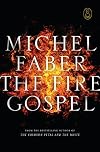
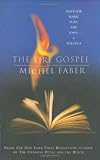
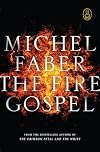
The Fire Gospel: The Myth of Prometheus
by Michel Faber
On This Page
Description
Theo Griepenkerl, a Canadian linguistics scholar, is sent to Iraq in search of artifacts that have survived the destruction and looting of the war. While visiting a museum in Mosul, he finds nine papyrus scrolls tucked in the belly of a bas-relief sculpture: they have been perfectly preserved for more than two thousand years. After smuggling them out of Iraq and translating them from Aramaic, Theo realizes the extent of his career-making find, for he is in possession of the Fifth Gospel, and show more it offers a shocking and incomparable eyewitness account of Christ's crucifixion and last days on Earth. Nakedly ambitious and recently dumped by his girlfriend, Theo sets out to share his discovery with the world in the form of a headline--grabbing U.S. book tour. Caught in the throes of his newfound fame, Theo fails to consider the global and cultural ramifications his discovery will have with God-fearing folks and religious zealots worldwide. Like Prometheus's gift of fire, Theo's book has incendiary consequences. show lessTags
Recommendations






















Member Reviews
Theo, upon finding a fifth Gospel, becomes an overnight sensation. He is beloved, he is hated, but more than that he is an ordinary man propelled into extraordinary circumstances. Theo's pragmatic and plebeian concerns make the book funny, cringey and completely relatable. The ending, where Theo is confronted with the consequences of his actions, is marvellous: part redemption, part sorrow, part relief, it is the crystallization of what makes humanity beautiful after the worst has been described.
This is a little masterpiece that shows how our faith and beliefs shape our worlds.
This is a little masterpiece that shows how our faith and beliefs shape our worlds.
I read this while also reading The Great Partnership (which I haven't yet finished) after finishing The Book of Strange New Things. So, I was (and still am) immersed in religion, but this is really more of a book about publishing and the book industry.
Books used to be significant things. The Bible didn't start off competing with crime fiction and didn't get liked on the internet but was a compendium of everything that was considered worth saying at the time. It didn't have a genre, or an author. God didn't promote it on book tours. The idea of a book being holy is almost anachronistic. A book is a commercial property now and in some ways, so are our lives.
Theo's girlfriend trades up for a better product while he is off in the birthplace show more of civilization turned war zone. In the midst of life and death Theo and the rest of us are preoccupied with trivia. The early Christians may have shared some of our superficiality but, perhaps because they were less insulated from their physicality, weren't rendering everything unto Caesar. Spiritual concerns also had a place in their lives. It is this tension between the unimportant and the Absolute that this book is about.
Theo's historical find serves mainly to undermine meaning from (some) people's lives. He begins to suspect this when he is threatened with a gun at a promotional event, but it's not until he is kidnapped with a strong likelihood he will be killed that the non-trivial finally gets his attention, but even that transformation doesn't happen easily. Most of his thoughts while a captive are petty and the sound track of his captivity is television.
In the end, though possibly mortally wounded, he gives up his selfish concerns. He is grateful to the guy who saved his life. He wanders through the "bad neighborhood" without feeling superior to it. He has experienced a sort of religious conversion.
The epilogue sums it up in the words of the fifth gospel--that we try and talk about things for which we lack the words which is like trying to capture a moonbeam in our pocket. We are immersed in trivia and can't escape it though the threat of death can momentarily awaken us. show less
Books used to be significant things. The Bible didn't start off competing with crime fiction and didn't get liked on the internet but was a compendium of everything that was considered worth saying at the time. It didn't have a genre, or an author. God didn't promote it on book tours. The idea of a book being holy is almost anachronistic. A book is a commercial property now and in some ways, so are our lives.
Theo's girlfriend trades up for a better product while he is off in the birthplace show more of civilization turned war zone. In the midst of life and death Theo and the rest of us are preoccupied with trivia. The early Christians may have shared some of our superficiality but, perhaps because they were less insulated from their physicality, weren't rendering everything unto Caesar. Spiritual concerns also had a place in their lives. It is this tension between the unimportant and the Absolute that this book is about.
Theo's historical find serves mainly to undermine meaning from (some) people's lives. He begins to suspect this when he is threatened with a gun at a promotional event, but it's not until he is kidnapped with a strong likelihood he will be killed that the non-trivial finally gets his attention, but even that transformation doesn't happen easily. Most of his thoughts while a captive are petty and the sound track of his captivity is television.
In the end, though possibly mortally wounded, he gives up his selfish concerns. He is grateful to the guy who saved his life. He wanders through the "bad neighborhood" without feeling superior to it. He has experienced a sort of religious conversion.
The epilogue sums it up in the words of the fifth gospel--that we try and talk about things for which we lack the words which is like trying to capture a moonbeam in our pocket. We are immersed in trivia and can't escape it though the threat of death can momentarily awaken us. show less
The Fire Gospel is an entertaining short novel about a man who discovers an authentic set of scrolls written by a witness to Jesus' final days. The scrolls' author provides a number of shocking revelations about this time, particularly relating to Jesus' crucifixion, which shake a number of fundamental beliefs of Christianity. Reminding me a bit of an episode of Black Mirror, Michel Faber, The Fire Gospel's author, uses the publication of these scrolls in order to provide a hit-and-miss satire.
Don't get me wrong: I loved the book. I like the subject matter and appreciate the brevity with which it was told. But because The Fire Gospel was so short - closer to being a novella rather than a novel - it didn't really satisfy in all of the show more things it was trying to satirise. On one level, it is trying to rework and update the story of Prometheus from Greek mythology, who in his benevolence gave fire to mankind. This is compelling, but the parallels aren't always easy to see. The book also seems to be satirising the modern publishing industry, media sensationalism and, most importantly, religious hysteria and the unwillingness of people with 'faith' to open their eyes. But because it was so short, it didn't seem like it had said everything it wanted to say. What it did manage to say was interesting, but you finish the book wanting more. To this end, the book's ending didn't really wrap things up with the tautness one might expect. The final chapter or so didn't really make much sense to me.
It's interesting, funny (the Amazon reviews written in response to the scrolls' publications are a treat) and pleasantly satirical, but it was too short to do justice to all of its ideas. It felt like it was reaching for something more, and I wish it could have grabbed it. Whilst the story tried to rework the Greek myth of Prometheus, the book itself left me in a state of mind that reminded me more of the story of Tantalus, who was condemned by the gods to stand in a pool of water, with the fruit of a tree above always just out of his grasp and the water always receding every time he stooped to take a drink. show less
Don't get me wrong: I loved the book. I like the subject matter and appreciate the brevity with which it was told. But because The Fire Gospel was so short - closer to being a novella rather than a novel - it didn't really satisfy in all of the show more things it was trying to satirise. On one level, it is trying to rework and update the story of Prometheus from Greek mythology, who in his benevolence gave fire to mankind. This is compelling, but the parallels aren't always easy to see. The book also seems to be satirising the modern publishing industry, media sensationalism and, most importantly, religious hysteria and the unwillingness of people with 'faith' to open their eyes. But because it was so short, it didn't seem like it had said everything it wanted to say. What it did manage to say was interesting, but you finish the book wanting more. To this end, the book's ending didn't really wrap things up with the tautness one might expect. The final chapter or so didn't really make much sense to me.
It's interesting, funny (the Amazon reviews written in response to the scrolls' publications are a treat) and pleasantly satirical, but it was too short to do justice to all of its ideas. It felt like it was reaching for something more, and I wish it could have grabbed it. Whilst the story tried to rework the Greek myth of Prometheus, the book itself left me in a state of mind that reminded me more of the story of Tantalus, who was condemned by the gods to stand in a pool of water, with the fruit of a tree above always just out of his grasp and the water always receding every time he stooped to take a drink. show less
Faber's entry into the Canongate Myth cycle is nominally Prometheus (punished to an eternity of pain by the gods for revealing the secret of fire to humankind), translated as the trials and tribulations of cocky Canadian academic Theo who discovers a new gospel in war-torn Mosul. The contentious text is as dry and self-absorbed as Theo himself, who never pauses to consider the religious and political impact a new (and rather less divine) account of the crucifixion and resurrection might have. His explosive translation of the gospel proves unpopular pretty much all-round, and unfortunately for Theo, the gods are perfectly happy to let over-zealous humankind punish his hubris for them. Accomplished and darkly comic - Faber is on form here show more and having fun with his topic, if arguably having a double-pot attempt at both Prometheus and the Bible. I particularly enjoyed his satirical pot shot at the place of Amazon reviews in determining an author's self-worth. show less
This is the retelling of the Promethean myth in modern times. In faber's myth, the arrogant and self-absorbed protagonist in this tale steals 9 Aaramaic scrolls that make up a long-lost Gospel from the already-looted museum in Iraq, the same way Promethus stole fire from the gods. And they both gave their incendiary loot to humans, and paid dearly for it.
Faber keeps the book's perspective on his main character, so he doesn't really flesh out the impact his new gospel actually had on the world, though you can tell from a long segment where the author reads reviews of his book on Amazon that a lot of people are heartbroken and pissed off. The Gospel Faber creates is a very potent one. (surprisingly, Faber writes a gospel that bluntly show more deals with some of the irregularities described in the new book "Jesus, Interrupted" by Bart D. Ehrman). The Gospel of Malchus suggests that that Jesus was a man - mortal and finite, but a powerful leader who inspired deep love and sacrifice from early Christians. The fact that he is not divine, did not rise from the dead, did not perform miracles, seems to suck the wind out of Christian faith even though it doesn't contradict a single one of Christ's teachings. People can't be good, turn the other cheek, or care for the sickest and poorest among them if they can't believe that Jesus walked on water. If His teachings don't have supernatural heft, it just sinks to the level of earnest advice, I suppose.
It's such a great idea to explore - do we need a supernatural Jesus to compel us to follow His teachings? Do we need the capital H to believe everything he stood for was right?
And the other point - that Theo, the author, actually is a narcissistic snob who couldn't care less about the meaning of the scrolls, just that he needs to make a buck on them before someone else does - is actually very important to the story. If you really cared about the well-being of the world, you wouldn't dump this shocking news on people without a lot of care and thought. Prometheus just handed out the fire to people - giving them the capacity for tremendous growth and tremendous damage. There's actually a whiff of contempt and carelessness in turning the world upside down like that, which is something I never thought about until I read this book.
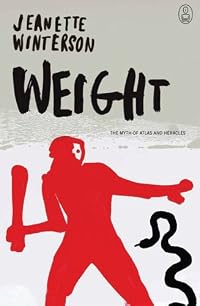
I'd put this third in the Canongate Myth series - behind Jeanette Winterson's extraordinary myth of Atlas and Hercules, and Margaret Atwood's retelling of the Odyssey from Penelope's perspective. And if I sound cranky in this review, it's mostly just that Faber turned in a 213-page book instead of a 900-pager that could have kept me happy for DAYS. show less
Faber keeps the book's perspective on his main character, so he doesn't really flesh out the impact his new gospel actually had on the world, though you can tell from a long segment where the author reads reviews of his book on Amazon that a lot of people are heartbroken and pissed off. The Gospel Faber creates is a very potent one. (surprisingly, Faber writes a gospel that bluntly show more deals with some of the irregularities described in the new book "Jesus, Interrupted" by Bart D. Ehrman). The Gospel of Malchus suggests that that Jesus was a man - mortal and finite, but a powerful leader who inspired deep love and sacrifice from early Christians. The fact that he is not divine, did not rise from the dead, did not perform miracles, seems to suck the wind out of Christian faith even though it doesn't contradict a single one of Christ's teachings. People can't be good, turn the other cheek, or care for the sickest and poorest among them if they can't believe that Jesus walked on water. If His teachings don't have supernatural heft, it just sinks to the level of earnest advice, I suppose.
It's such a great idea to explore - do we need a supernatural Jesus to compel us to follow His teachings? Do we need the capital H to believe everything he stood for was right?
And the other point - that Theo, the author, actually is a narcissistic snob who couldn't care less about the meaning of the scrolls, just that he needs to make a buck on them before someone else does - is actually very important to the story. If you really cared about the well-being of the world, you wouldn't dump this shocking news on people without a lot of care and thought. Prometheus just handed out the fire to people - giving them the capacity for tremendous growth and tremendous damage. There's actually a whiff of contempt and carelessness in turning the world upside down like that, which is something I never thought about until I read this book.
I'd put this third in the Canongate Myth series - behind Jeanette Winterson's extraordinary myth of Atlas and Hercules, and Margaret Atwood's retelling of the Odyssey from Penelope's perspective. And if I sound cranky in this review, it's mostly just that Faber turned in a 213-page book instead of a 900-pager that could have kept me happy for DAYS. show less
Theo Griekenperl discovers some papyri hidden in a statue in a bombed museum in Iraq. They turn out to be an eyewitness account of Jesus's last days on earth written by Malchus, the high priest's servant mentioned in the gospels. Theo's life changes dramatically when he publishes his translation of the papyri.
It's an excellent black comedy satirising the publishing circus of "The Da Vinci Code" and other books purporting to expose the truth behind the gospels. But the connection with the story of Prometheus is tangential at best. There are some explicit references to "Prometheus Bound" at one point but otherwise it's a real stretch, you have to be really looking for it. But then maybe that's the point?
It's an excellent black comedy satirising the publishing circus of "The Da Vinci Code" and other books purporting to expose the truth behind the gospels. But the connection with the story of Prometheus is tangential at best. There are some explicit references to "Prometheus Bound" at one point but otherwise it's a real stretch, you have to be really looking for it. But then maybe that's the point?
The character at the centre of this novel (Theo Griepenkerl) is arrogant, short-sighted and unlikeable - but this is entirely deliberate. After making the stunning discovery of a fifth gospel, apparently published before any of the other gospels in the New Testament, Theo's sole concern is how to wrench money and fame from his discovery. His thoughtlessness in releasing such a controversial document upon the world is rewarded by action from certain increasingly angry and determined citizens who have various reasons to hate the message the gospel sends - that Jesus was more human than transcendental.
The writer of the gospel, Malchus, is equally unlikeable, due to his dull reflections and obsession with bodily functions. Again, this is show more deliberate and suits the nature of the character perfectly. If you're someone who likes to identify and engage with characters then this is not the story for you.
Where the novella excels is in two areas: satirising the publishing and reviewing industries, then stirring up ideas and discussions, including how texts can affect us and how people respond when their certainties are challenged. It is worth reading for the eminently recognisable internet reviews alone ('I haven't read this yet, but I think...') Faber also seems to take a shot at the very human habit of focusing on meaningless trivia even when placed in the most unusual and dangerous situations.
It is cleverly written but not beautifully described. Action develops logically, albeit shockingly, but the text is narrated in such a way that drama itself is minimised, perhaps to emphasise the ideas over the content. Overall, this is a thought-provoking text, an ideal book to kick off a serious discussion, but not an enthralling read. This new addition to the Canongate Myths series will suit those who like stories to ignite debate, as this undoubtedly will. show less
The writer of the gospel, Malchus, is equally unlikeable, due to his dull reflections and obsession with bodily functions. Again, this is show more deliberate and suits the nature of the character perfectly. If you're someone who likes to identify and engage with characters then this is not the story for you.
Where the novella excels is in two areas: satirising the publishing and reviewing industries, then stirring up ideas and discussions, including how texts can affect us and how people respond when their certainties are challenged. It is worth reading for the eminently recognisable internet reviews alone ('I haven't read this yet, but I think...') Faber also seems to take a shot at the very human habit of focusing on meaningless trivia even when placed in the most unusual and dangerous situations.
It is cleverly written but not beautifully described. Action develops logically, albeit shockingly, but the text is narrated in such a way that drama itself is minimised, perhaps to emphasise the ideas over the content. Overall, this is a thought-provoking text, an ideal book to kick off a serious discussion, but not an enthralling read. This new addition to the Canongate Myths series will suit those who like stories to ignite debate, as this undoubtedly will. show less
Members
- Recently Added By
Lists

Myth (Reuse and Retelling)
188 works; 24 members
Author Information

45+ Works 15,774 Members
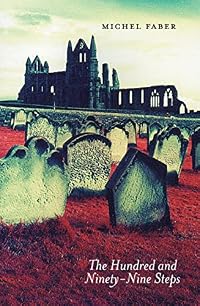
Michel Faber was born in The Hague, Netherlands on April 13, 1960. He was educated at the University of Melbourne. His books include The Crimson Petal and the White, The Fahrenheit Twins, Under the Skin, The Apple, and The Book of Strange New Things. He is also the author of two novellas, The Hundred and Ninety-Nine Steps and The Courage Consort. show more He won several short-story awards, including the Neil Gunn, Ian St James and Macallan. He made The New York Times Best Seller List with his title The Book of Strange New Things. This title also made the shortlist for the Arthur C Clarke Award for science-fiction in 2015. (Bowker Author Biography) show less
Some Editions
Awards and Honors
Awards
Series
Belongs to Publisher Series
The Myths (12)
Common Knowledge
- Canonical title
- The Fire Gospel: The Myth of Prometheus
- Original publication date
- 2009-08; 2010 (Denmark) (Denmark)
- People/Characters
- Theo Griepenkerl
- Important places
- Mosul, Iraq; Toronto, Ontario, Canada
- Dedication
- Thanks to Eva, always.
- First words
- The museum curator swung open another antique door and, as if on cue, a lion's head fell off its body.
- Last words
- (Click to show. Warning: May contain spoilers.)He is the end of all stories.
Classifications
Statistics
- Members
- 458
- Popularity
- 66,247
- Reviews
- 25
- Rating
- (3.33)
- Languages
- 8 — Czech, Danish, Dutch, English, French, Italian, Polish, Swedish
- Media
- Paper, Ebook
- ISBNs
- 23
- ASINs
- 5