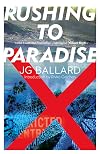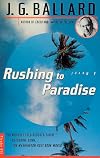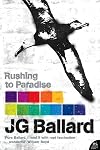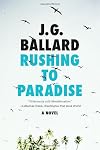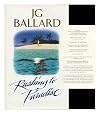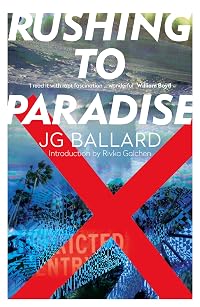
Rushing to Paradise
by J. G. Ballard
On This Page
Description
"[A] chilling . . . tale about humans who gamely follow their own worst instincts."—Chicago TribuneLed by a charismatic and slightly unhinged woman, a group of environmentalists wrest control over a small South Pacific island in hopes of cultivating it into their own private Eden. But paradise is not quite what it seems in this "searing" (Kirkus Reviews) send-up of environmentalism, feminism, and extremism of all sorts.
Tags
Recommendations



























Member Reviews
I read "Crash" a while back. Everything that happened in the book from beginning to end was completely unbelievable, but still I quite liked it. It was somehow compelling, like the car crashes it described. The characters were unreal, human emotions and motivations were absent, the plot meandered through more and more ridiculous territory, and yet, still, I quite liked it. The vision of the world was so stunningly weird and recognisable at the same time.
Rushing to Paradise is similar to Crash in that nothing in it is remotely believable. But, unlike Crash, it is not remotely compelling. Perhaps it is simply the premise that I disagree with. The dystopic vision of a soul-dead society obsessed with sex and cars and death was something I show more could buy into. The snide vision of environmentalists and feminists as naive and/or psychotic man-hating lunatics is not so appealing.
There's also the familiar and, to me, endlessly annoying "Lord of the Flies" assumption - take people out of a rule-based environment for a few months and they'll become mad, murderous, paint-wearing, totem-worshipping savages. It's a highly retrogressive (very un-Ballardian) view, which naturally leads us to the conclusion that we need a good strong government to save us from ourselves. I'm afraid I just don't buy it. Maybe I'm naive myself, but I honestly believe that if you put a random group of people on a desert island, they'll come up with a reasonably sensible way of surviving as a group until they get rescued. It's what humans have done very successfully for thousands of years. Most of the savagery, as I see it, has come from governments.
So maybe that's why I didn't like this book. My own political prejudices clouding my judgement. The environmentalists, for example, are endlessly counterproductive, from the moment their boat becomes beached on a coral reef and emits a "huge oil slick" to the time when they start eating the endangered animals they've come to the island to protect. Halfway through, evidently feeling he has skewered the greens effectively, Ballard veers abruptly towards feminists. All the men start mysteriously dying, the women shave their heads, and the only man left on the island is kept alive purely to impregnate the women. Shaven-headed women taking over and reducing men to the role of sperm-producing entities to be discarded when no longer useful - it's the ultimate male fear. And it's utterly absurd.
I'm sure, though, that it's not just politics that made me hate this. The writing in this book was definitely more pedestrian than in Crash. Crash felt hallucinatory, somehow; this was dull. Here, Ballard seems more aware of the absurdity of the concept, and tries to paper over it with over-long psychological explanations of the character's motives (why does Neil, a non-environmentalist, nuclear-obsessed "youth", go on the environmentalist expedition? Oh yeah, we are reminded endlessly, it's because Dr Barbara, the leader who becomes a psychotic man-killing lunatic, is a replacement parent figure, etc. etc.). No real redeeming features on this one - just didn't work for me. show less
Rushing to Paradise is similar to Crash in that nothing in it is remotely believable. But, unlike Crash, it is not remotely compelling. Perhaps it is simply the premise that I disagree with. The dystopic vision of a soul-dead society obsessed with sex and cars and death was something I show more could buy into. The snide vision of environmentalists and feminists as naive and/or psychotic man-hating lunatics is not so appealing.
There's also the familiar and, to me, endlessly annoying "Lord of the Flies" assumption - take people out of a rule-based environment for a few months and they'll become mad, murderous, paint-wearing, totem-worshipping savages. It's a highly retrogressive (very un-Ballardian) view, which naturally leads us to the conclusion that we need a good strong government to save us from ourselves. I'm afraid I just don't buy it. Maybe I'm naive myself, but I honestly believe that if you put a random group of people on a desert island, they'll come up with a reasonably sensible way of surviving as a group until they get rescued. It's what humans have done very successfully for thousands of years. Most of the savagery, as I see it, has come from governments.
So maybe that's why I didn't like this book. My own political prejudices clouding my judgement. The environmentalists, for example, are endlessly counterproductive, from the moment their boat becomes beached on a coral reef and emits a "huge oil slick" to the time when they start eating the endangered animals they've come to the island to protect. Halfway through, evidently feeling he has skewered the greens effectively, Ballard veers abruptly towards feminists. All the men start mysteriously dying, the women shave their heads, and the only man left on the island is kept alive purely to impregnate the women. Shaven-headed women taking over and reducing men to the role of sperm-producing entities to be discarded when no longer useful - it's the ultimate male fear. And it's utterly absurd.
I'm sure, though, that it's not just politics that made me hate this. The writing in this book was definitely more pedestrian than in Crash. Crash felt hallucinatory, somehow; this was dull. Here, Ballard seems more aware of the absurdity of the concept, and tries to paper over it with over-long psychological explanations of the character's motives (why does Neil, a non-environmentalist, nuclear-obsessed "youth", go on the environmentalist expedition? Oh yeah, we are reminded endlessly, it's because Dr Barbara, the leader who becomes a psychotic man-killing lunatic, is a replacement parent figure, etc. etc.). No real redeeming features on this one - just didn't work for me. show less
Initially, faced with another physician-of-questionable-reputation character and a character with a nuclear weapons fascination and the inevitability of an isolated microcosm of society setting for most of the book, I found myself wondering if I really needed to read any more Ballard? All of these were old hat; nuclear obsessions: Empire of the Sun, Dubious Doctor: Day of Creation, microcosm; Concrete Island, Day of Creation, Empire of the Sun...well I stuck with it and was very well rewarded. The slow pace picked up dramatically once the scene was set and continued to accelerate through the book, which turned out to be quite a 'friller, which is not the first thing that would enter my head if you asked me to describe Ballard's work. It show more is also a supremely well constructed novel where the history of the characters prior to the novel's opening appears on the face of it merely to be an excuse to set up a situation but in fact ramify through-out the novel's action. It's the type of combination of character, setting and incident combining to make the story seem inevitable that I normally associate with Ursula LeGuin at her best (and I can offer little higher praise).
Many have noted the fact that Ballard's career has followed a reverse trend from that of many main-stream novelists in the sense that most start heavily autobiographically in theme or content and get less so as time goes on where-as Ballard did the reverse. This book shows considerable biographical influence: a boy with a nuclear bomb fascination who is used and abused by a surrogate mother-figure whose psychological influence he apparently never escapes from, despite his physical escape from her horrors and depradations - and what a woman! Ballard has often portrayed women that are mentally stronger and more demanding than most men and Dr. Barbara Rafferty is perhaps the epitome. She is also slow revealed as being utterly unhinged - frighteningly crazy in fact - and the dangerously insane but convincingly real character is another Ballard theme. People with a will to power in a world isolated and small enough for them to obtain it. Rafferty's insane urge is not merely to control but to test everything; as things and people fail these tests so the survivors are pushed to ever more stringent tests. In Rafferty's world, only the fit deserve life and she judges who and what is fit. In the end everyone and everything is found to be weak; only she is strong enough to thrive - everything else is judged and found wanting.
Of Ballard's bleak attempts to show how the modern world continually builds its societies and how they subsequently collapse, this is perhaps the one I like most - at least so far as I've read. Do I need to read another Ballard? Perhaps I do. show less
Many have noted the fact that Ballard's career has followed a reverse trend from that of many main-stream novelists in the sense that most start heavily autobiographically in theme or content and get less so as time goes on where-as Ballard did the reverse. This book shows considerable biographical influence: a boy with a nuclear bomb fascination who is used and abused by a surrogate mother-figure whose psychological influence he apparently never escapes from, despite his physical escape from her horrors and depradations - and what a woman! Ballard has often portrayed women that are mentally stronger and more demanding than most men and Dr. Barbara Rafferty is perhaps the epitome. She is also slow revealed as being utterly unhinged - frighteningly crazy in fact - and the dangerously insane but convincingly real character is another Ballard theme. People with a will to power in a world isolated and small enough for them to obtain it. Rafferty's insane urge is not merely to control but to test everything; as things and people fail these tests so the survivors are pushed to ever more stringent tests. In Rafferty's world, only the fit deserve life and she judges who and what is fit. In the end everyone and everything is found to be weak; only she is strong enough to thrive - everything else is judged and found wanting.
Of Ballard's bleak attempts to show how the modern world continually builds its societies and how they subsequently collapse, this is perhaps the one I like most - at least so far as I've read. Do I need to read another Ballard? Perhaps I do. show less
If the psychotic (male) psychiatrists from Ballard's other novels wrote a book depicting women as they imagined women really are, when unconstrained by civilization, they might write a story like this.
Environmental horror story.
Neil Dempsey, a 16 yo boy still recovering from the death of his father, is dragged into the ecological campaign, "Save the Albatross", led by the mysterious Doctor Barbara Rafferty. During their first trip to the island of Saint-Esprit Neil to protest against the French military occupation is shot in the ankle, making him an instant hero to the environmental movement. On the back of Neil's new-found fame, Rafferty is able to fund a new better campaign against the French on the tropical island. On board the Dugong, in addition to Neil and Rafferty, are - Kimo, who dreams of a new Hawaiian kingdom; David Carline, president of a small pharmaceutical company with a penchant for participating on do-gooding show more missions; Professor Saito, a botanist, and his wife come assistant; Monique, an air stewardess whose father was one of France's leading ecologists; and, Malcolm and Janet Bracewell, film-makers.
Upon reaching Saint-Esprit the second time the French attempt to stop them by ramming the Dugong, resulting in the death of Malcolm Bracewell, all captured on film, which creates a media storm resulting in the French leaving the island. It also makes Saint-Esprit the holiday choice of every environmental campaigner, and the island is swamped with people and donations. Rafferty announces that the island will be another ark, a place to protect all the endangered species of the earth. As the stream of people and materials continues Rafferty eventually cracks and engineers situations to destroy all the supplies and close the island off - returning the island to purer simpler place. Inevitably, tensions mount as supplies run out but Rafferty organises a new society, one in which the men are surplus to requirement, with the exception of Neil, who being young and healthy could be of potential use. The men start to suffer from unknown diseases, rumours of the French returning start growing, and the body count keeps growing.
All the elements we expect from Ballard are here - a mysterious doctor whose motives may not be what they seem; a closed environment that is both paradisaical and dangerous; a motley group of individuals with various pyschopathological reasons for colluding with disaster. The protagonist, Neil, appears to be a spiritual companion to Jim from Empire of the Sun. He even shares similar nuclear dreams -
It was this sideways look at aspects of modern technological culture that first piqued my interest Ballard - it seemed that was a writer of modernity, while so many of his contemporaries were essentially still writing 19th century novels. But times change and the nuclear dreams of Neil seem forced in this work, a homage to better earlier works.
In fact that is the problem with the whole novel - we have been here too often, the scenery may have changed but the story remains the same. (To be honest, Ballard always uses the same plot - how successful each novel is is down to Ballard's engagement with the subject matter). That's not to say there is nothing to enjoy here, even lesser Ballard is worth the effort. Rafferty's attempt to recreate Eden and produce a paradise with no men is fun, as is her murderous rampage (Neil finding the bodies in the greenhouse is a nice nod to classic detective fiction); using the zoo stuffed full of rare animals as a larder - Rafferty, the saviour becomes the angel of destruction. There are some good satiric jabs at the environmental movement, feminism, the weaknesses of men, etc, but they are nice soft targets. This is Ballard going through the motions, with the result being a solid professional read. When this novel was first published most critics were writing Ballard off as a spent force but a few years later he was to embark on a series of novels that cemented his reputation as one of the best post-war British novelists.
Not prime Ballard but still worth a read. (It could be that first-time Ballard readers may enjoy this more, not being so au fair with Ballard's techniques). show less
Neil Dempsey, a 16 yo boy still recovering from the death of his father, is dragged into the ecological campaign, "Save the Albatross", led by the mysterious Doctor Barbara Rafferty. During their first trip to the island of Saint-Esprit Neil to protest against the French military occupation is shot in the ankle, making him an instant hero to the environmental movement. On the back of Neil's new-found fame, Rafferty is able to fund a new better campaign against the French on the tropical island. On board the Dugong, in addition to Neil and Rafferty, are - Kimo, who dreams of a new Hawaiian kingdom; David Carline, president of a small pharmaceutical company with a penchant for participating on do-gooding show more missions; Professor Saito, a botanist, and his wife come assistant; Monique, an air stewardess whose father was one of France's leading ecologists; and, Malcolm and Janet Bracewell, film-makers.
Upon reaching Saint-Esprit the second time the French attempt to stop them by ramming the Dugong, resulting in the death of Malcolm Bracewell, all captured on film, which creates a media storm resulting in the French leaving the island. It also makes Saint-Esprit the holiday choice of every environmental campaigner, and the island is swamped with people and donations. Rafferty announces that the island will be another ark, a place to protect all the endangered species of the earth. As the stream of people and materials continues Rafferty eventually cracks and engineers situations to destroy all the supplies and close the island off - returning the island to purer simpler place. Inevitably, tensions mount as supplies run out but Rafferty organises a new society, one in which the men are surplus to requirement, with the exception of Neil, who being young and healthy could be of potential use. The men start to suffer from unknown diseases, rumours of the French returning start growing, and the body count keeps growing.
All the elements we expect from Ballard are here - a mysterious doctor whose motives may not be what they seem; a closed environment that is both paradisaical and dangerous; a motley group of individuals with various pyschopathological reasons for colluding with disaster. The protagonist, Neil, appears to be a spiritual companion to Jim from Empire of the Sun. He even shares similar nuclear dreams -
The power of the atomic test explosions, portents of a now forgotten apocalypse, had played an important part in drawing him to the pacific. As he screened cold-war newsreels for the modern-history classes in the film school theatre he stared in awe at the vast detonations over the Eniwetok and Bikini lagoons, sacred sites of the twentieth-century imagination. But he could never admit this to anyone, and even felt vaguely guilty, as if his fascination with nuclear weapons and electro-magnetic death had retrospectively caused his father's cancer.
It was this sideways look at aspects of modern technological culture that first piqued my interest Ballard - it seemed that was a writer of modernity, while so many of his contemporaries were essentially still writing 19th century novels. But times change and the nuclear dreams of Neil seem forced in this work, a homage to better earlier works.
In fact that is the problem with the whole novel - we have been here too often, the scenery may have changed but the story remains the same. (To be honest, Ballard always uses the same plot - how successful each novel is is down to Ballard's engagement with the subject matter). That's not to say there is nothing to enjoy here, even lesser Ballard is worth the effort. Rafferty's attempt to recreate Eden and produce a paradise with no men is fun, as is her murderous rampage (Neil finding the bodies in the greenhouse is a nice nod to classic detective fiction); using the zoo stuffed full of rare animals as a larder - Rafferty, the saviour becomes the angel of destruction. There are some good satiric jabs at the environmental movement, feminism, the weaknesses of men, etc, but they are nice soft targets. This is Ballard going through the motions, with the result being a solid professional read. When this novel was first published most critics were writing Ballard off as a spent force but a few years later he was to embark on a series of novels that cemented his reputation as one of the best post-war British novelists.
Not prime Ballard but still worth a read. (It could be that first-time Ballard readers may enjoy this more, not being so au fair with Ballard's techniques). show less
Whoa, I wasn't expecting much of this. I became interested in Ballard because of his connection to the psychogeographic movement (he may not know he's connected, but according to experts he, apparently, is). Not sure how I could comment on this book without giving anything away, but think a weird combination of Lord of the Flies, the Handmaid's Tale (bent by gender) and perhaps a dash of Naked Lunch.
A gripping and terrifying story of a colony of eco-feminists voluntarily stranded on a South Sea island collapsing into violence and insanity.
Death oozes off the page.
http://www.spikemagazine.com/0901ballardreview.php
Death oozes off the page.
http://www.spikemagazine.com/0901ballardreview.php
Ratings
Members
- Recently Added By
Published Reviews
ThingScore 100
A cross between Greenpeace-gone-black and Golding's Lord of the Flies, Rushing to Paradise is Ballard's most powerful novel in years, a terrifying, all-too-real "what if." Which is exactly what Ballard does best, what-iffing Armageddon-like possibilities in this paradise we call Earth.
added by Diabolical_DrZ
Lists

Vote - Bookmarque's Teetering TBR Tower
33 works; 8 members
Author Information

291+ Works 37,768 Members
J. G. Ballard was born to British parents in Shanghai, China on November 15, 1930. While a child during World War II, he spent four years in a Japanese POW camp. This experience was the basis for the emotionally moving novel Empire of the Sun, which he adapted into a successful movie, directed by Steven Spielberg. Before becoming a full-time show more writer, he studied medicine at Cambridge University and served as a pilot in the British Royal Air Force. Ballard is best known for his science fiction writings. His early works were heavily influenced by surrealism. Most of his novels deal with death and destruction of the human spirit. Novels such as Crash, Concrete Island, and High Rise portray a society that is devolving into barbaric chaos. Crash was made into a movie by David Cronenberg in 1996. The Drowned World describes an apocalyptic society, with a hero that ushers in the destruction of the world. His novel Empire of the Sun was shortlisted for the Booker Prize and awarded the Guardian Fiction Prize and James Tait Black Memorial Prize for fiction. Empire of the Sun was filmed by Steven Spielberg in 1987, starring a young Christian Bale as Jim (Ballard). Ballard moved away from science fiction, but he is still considered one of the leading authors of the genre. He died on April 19, 2009 at the age of 78. (Bowker Author Biography) show less
Awards and Honors
Awards
Series
Belongs to Publisher Series
Common Knowledge
- Original publication date
- 1994
Classifications
Statistics
- Members
- 512
- Popularity
- 58,651
- Reviews
- 6
- Rating
- (3.15)
- Languages
- 7 — Danish, English, French, German, Italian, Japanese, Turkish
- Media
- Paper, Audiobook, Ebook
- ISBNs
- 20
- ASINs
- 5