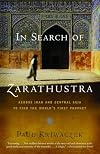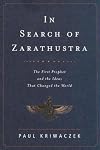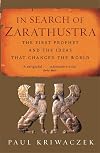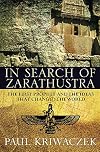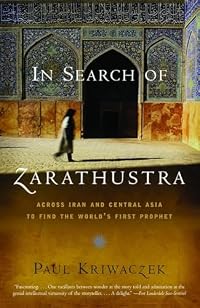
In Search of Zarathustra: The First Prophet and the Ideas That Changed the World
by Paul Kriwaczek
On This Page
Description
A journey through time and across Europe and Central Asia, in search of the prophet Zarathustra (a.k.a. Zoroaster)--perhaps the greatest religious lawgiver of the ancient world--and his vast influence. In Persia more than three thousand years ago, Zarathustra spoke of a single universal god, the battle between good and evil, the devil, heaven and hell, and an eventual end to the world--foreshadowing the core beliefs of Judaism, Christianity, and Islam. Moving from present to past, journalist show more Kriwaczek examines the effects of the prophet's teachings on the spiritual and daily lives of diverse peoples. He walks us back through Nietzsche's nineteenth-century interpretation of Zarathustra, to the Cathars of thirteenth-century France and the ninth-century Bulgars; from ancient Rome to the time of Alexander the Great's destruction of the Persian Empire; and, finally, to the time of Zarathustra himself. show lessTags
Recommendations




















Member Recommendations
timspalding Has a two solid chapters on ancient Zoroastrianism.
Member Reviews
Kriwaczek combines intellectual curiosity, a sense of adventure, and enough historical/philosophical understanding not to insist on definitive answers to the kinds of questions that inspire the most rewarding journeys. He writes in the End Notes that his intent was 'more illustrative than scholarly,' and he is fun to travel with and listen to—on the eccentricities of Abraham Hyacynthe Anquetil du Perron, bowdlerized Roman Mithraism and the Cathar heresy to the Sarmatian influence on Gothic architecture, the pre-Islamic roots of Shi’ism and the fuzzy line between prophecy and imposture.That an ancient Persian seeker is the earliest known source for some of the ideas that became key religious tenets in the formulation of European show more identity shows us that cross-cultural fertilization has been the driving force in the development of human civilization since the Bronze Age. show less
The scholarship in this work is candidly wanting. The author goes out of his way to force connections that are altogether dubious as from Zoroastrianism to Manicheanism to the Bogomils to Catharism. I have no idea who has the right of it, but this work is radically different than O'Shea's work on Catharism I recently finished. Which book is correct I'm unsure, possibly even both are.
Where this book works is as a travel narrative, and with his interesting observations how certain elements of Zoroastrianism have been overlaid by Islam in Iran.
Where this book works is as a travel narrative, and with his interesting observations how certain elements of Zoroastrianism have been overlaid by Islam in Iran.
A failure in what could have been a great book on a fascinating and overlooked subject matter. Zarathustra was a historical figure in Ancient Persia who through his teachings and prophesies gave rise to a religious belief system acknowledging one creator and stressing a dualism between light and shadow/good and evil. Once predominant in Persia, it has survived to this day in small communities.
The author tries hard to establish this book as an authoritative account of Zoroastrianism’s history, beliefs and impact, but is unconvincing. I found this book to be at times presumptuous in the conclusions it draws from the evidence presented, and hollow in what it tangible information it offers: despite promising to reveal all about show more Zarathustra, I had to do my own internet research on Parsi, one of the few surviving communities in India and one can find much better resources on the link between Zoroastrianism/Manichaeism and the Bulgars/Cathars.
A book that does not know whether to be an entertaining travelogue or thoughtful historical research, and ends up being neither. show less
The author tries hard to establish this book as an authoritative account of Zoroastrianism’s history, beliefs and impact, but is unconvincing. I found this book to be at times presumptuous in the conclusions it draws from the evidence presented, and hollow in what it tangible information it offers: despite promising to reveal all about show more Zarathustra, I had to do my own internet research on Parsi, one of the few surviving communities in India and one can find much better resources on the link between Zoroastrianism/Manichaeism and the Bulgars/Cathars.
A book that does not know whether to be an entertaining travelogue or thoughtful historical research, and ends up being neither. show less
An interesting book, speculative and light on scholarship, on the continuing influences of Zoroastrian tradition on modern Iran. It is somewhat of a travelogue, about the author's visit to Iran in search of holy places, and much historical speculation about the links of the ancient Zoroastrian ideas to the Albigensien heresy, the Sarmatians who were a noble horse-race from the Caucausus, who might have been the origin of chivalry, and about the roots of Shi'a Islam in Iran. The bibiliography was thin and made me wonder how much of the book, although seemingly learned, was speculative
It's been weeks now since I finished this one, and I'm trying to think what I still remember of it! Just an interesting wander through history around the mysterious figure of Zarathustra: a little Nietzsche, travels in Iran & Afghanistan, ruins under London, etc. He makes a pretty decent case for elements of Zoroastrianism being present in the big three monotheisms. Also, more tidbits that I can use for this idea I have for a D&D setting based loosely on central Asia.
Interesting but also not very well organized. I felt like there was little coherence, although the history was incredibly interesting.
It seemed to be a very rambling story. The information wasn't organized well. It would have been better if it was chronological. The main part of the book is also history lessons on almost everything but Zarathustra. I suppose I was expecting more about Zoroastrianism and how it affected the traditions of later religions. Also, the way it's written makes it harder to get through. It's not very conversational. It feels stuffy. I've read textbooks that were more clearly written. The redeeming factor in all of this is that it does offer some information, if not exactly what I was looking for. The joke on the last line isn't too bad either.
Members
- Recently Added By
Author Information

5 Works 1,306 Members
Common Knowledge
- Original publication date
- 2004
- People/Characters
- Zoroaster; Zarathustra
- Important places
- Iran
Classifications
- Genres
- Religion & Spirituality, Nonfiction, History, General Nonfiction, Travel
- DDC/MDS
- 295 — Religion Other religions Zoroastrianism (Mazdaism, Parseeism)
- LCC
- BL1555 .K75 — Philosophy, Psychology and Religion Religions. Mythology. Rationalism Religions. Mythology. Rationalism History and principles of religions Asian. Oriental By religion Zoroastrianism (Mazdeism). Parseeism
- BISAC
Statistics
- Members
- 461
- Popularity
- 65,883
- Reviews
- 9
- Rating
- (3.63)
- Languages
- Dutch, English, Hungarian
- Media
- Paper, Ebook
- ISBNs
- 10
- ASINs
- 5