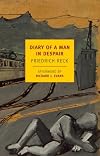
Diary of a Man in Despair
by Friedrich Reck-Malleczewen
On This Page
Description
Friedrich Reck might seem an unlikely rebel against Nazism. Not just a conservative but a rock-ribbed reactionary, he played the part of a landed gentleman, deplored democracy, and rejected the modern world outright. To Reck the Nazis were ruthless revolutionaries in Gothic drag, and helpless as he was to counter the spell they had cast on the German people, he felt compelled to record the corruptions of their rule. The result is less a diary than a sequence of stark and astonishing show more snapshots of life in Germany between 1936 and 1944. We see the Nazis at the peak of power, and the murderous panic with which they respond to approaching defeat; their travesty of traditional folkways in the name of the Volk; and the author's own missed opportunity to shoot Hitler. This riveting book is not only, as Hannah Arendt proclaimed it, "one of the most important documents of the Hitler period" but a moving testament of a decent man struggling to do the right thing in a depraved world. show lessTags
Recommendations











































Member Reviews
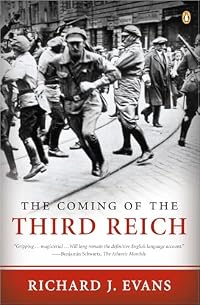
I currently (March 2014) seem to be drawn to books about the world wars. Diary of a man in despair came out in English translation in 1974. I became aware if it reading Richard Evans trilogy on the whole Nazi movement. It's taking me a little while to get round to reading it. Friedrich Malleczewen was a very cultured writer who the Nazis eventually caught up with and killed even though he was a minor character in every sense and no agitator. He kept a secret diary through the war years and before which is a fascinating and well written read. Not sensationalist in any way it gives a good idea of the horror of those years. Malleczewen's Catholic faith peeks through at certain times. It is difficult to see how anyone can look at those show more years with any degree of composure without a theistic worldview. Always the remarkable thing for many of us is that it happened here in Europe and not so very long ago. How sobering. show less
I came upon this extraordinary book while browsing in the library, having never heard of it. Reck writes in horrified, apocalyptic tones of Nazi Germany from 1936 to 1944. In almost every other situation, his pronouncements would seem hyperbolic and melodramatic; in context, they seem terribly appropriate. From the beginning of the book, Reck utterly condemns everything about the Nazis and foretells a Second World War which will bring catastrophe to Germany. Indeed, he invites it as the only way to bring down the Nazis. What makes his account especially striking is that he is a self-proclaimed aristocrat and conservative, not necessarily the type to support the Nazis but not someone you would expect to hate them so completely and show more consistently either. Reck’s analysis of the social and political situation in Germany at the time is thus unusual and fascinating to read. He rails against nationalism, which he claims began with the French Revolution, and industrial technology, which he states has brought political disaster to Germany since 1848. His moving and powerful prognostications of apocalyptic doom are interspersed with anecdotes, apparently of varying reliability. The strict letter of what says is much less important, however, that the overall atmosphere of a country gone horribly wrong. As the excellent afterword puts it,
Reck’s conservative, upper class perspective is also more nuanced than might be expected. He doesn’t see Hitler as a demagogue who appeals to the worse off, rather he praises the workers and condemns ‘mass-man’ who appear to be composed of urban petty bourgeoisie. His writing style is vivid and memorable, sprinkled with such phrases as, ‘I only know people who would rather weep with God than laugh with Satan!’ (Reck frequently uses imagery of the devil and demons, but comments firmly that this is figurative and humanity has no-one to blame but ourselves). I found his dissections of nationalism chilling, as it reappears across Europe in the 21st century. He defines it like this: ‘Nationalism: a state of mine in which you do not love your own country as much as you hate somebody else’s’. I was also struck by his questioning of how nationalism appears as a contradiction to globalised capitalism:
Sadly, Brexit makes these questions all too relevant seventy-six years after Reck wrote them. That is perhaps what makes the book truly extraordinary: Reck writes as if with miraculous hindsight and his analyses still have relevance today. The man himself perished in Dachau concentration camp in 1945, less than three months before the end of the Second World War. His writing deservedly lives on. show less
Yet what strikes the reader about ‘Diary of a Man in Despair’ are neither the occasional and perhaps inevitably errors and exaggerations nor the pseudo-aristocratic, pseudo-military pretensions of its author, but the unflinching honesty and growing anger of the writer as he confronts a world seemingly gone mad, a world in which the standards and values of the civilisation in which he believes so deeply are being trampled on every level. It throws up a troubling question that remains impossible to answer: If Reck could see so clearly that the Third Reich was plunging Germany into a maelstrom of crime and degradation, why did hardly any other Germans share his clarity of vision?
Reck’s conservative, upper class perspective is also more nuanced than might be expected. He doesn’t see Hitler as a demagogue who appeals to the worse off, rather he praises the workers and condemns ‘mass-man’ who appear to be composed of urban petty bourgeoisie. His writing style is vivid and memorable, sprinkled with such phrases as, ‘I only know people who would rather weep with God than laugh with Satan!’ (Reck frequently uses imagery of the devil and demons, but comments firmly that this is figurative and humanity has no-one to blame but ourselves). I found his dissections of nationalism chilling, as it reappears across Europe in the 21st century. He defines it like this: ‘Nationalism: a state of mine in which you do not love your own country as much as you hate somebody else’s’. I was also struck by his questioning of how nationalism appears as a contradiction to globalised capitalism:
Is such a symbiosis of autarchy and technology even possible? Doesn’t technology itself mix different peoples, and standardise their tastes and requirements? What is the point of building an auto to go two hundred kilometres an hour when after an hour’s drive you come to a border post, where a full-bearded Teuton waggles a threatening finger as he forbids further travel as ‘contrary to the interests of the government’?
Sadly, Brexit makes these questions all too relevant seventy-six years after Reck wrote them. That is perhaps what makes the book truly extraordinary: Reck writes as if with miraculous hindsight and his analyses still have relevance today. The man himself perished in Dachau concentration camp in 1945, less than three months before the end of the Second World War. His writing deservedly lives on. show less
I could hardly put this book down. The diary runs from 1937 to 1944. The last entry was written in prison. How did that happen? How did these writings survive, how were they discovered? But then the author was well connected and with other opponents of the Nazi regime, so it is possible, however remarkable.
My theory is that right wing political thinkers believe in some natural order to the world, that what is proper is what is natural. On the other hand. the left wing types don't really believe in any fixed natural order but see things are more fluid and needing some steering to head in the right direction.
Of course, among right wingers, there can be considerable difference in the vision of just what the natural order is. Reck describes show more himself as a monarchist. He expresses support for duels to settle matters of honor rather than court cases. He is a blood and soil conservative.
This diary is constant stream of hatred for the Nazis. The Nazis are brutal industrialist, allied with technology. They level everything to the lowest common denominator. Reck sees this leveling as extending far beyond the Nazis. The origins seem to go perhaps back to 1870... ah, my German history is shaky,... Reck calls Prussia a colony. The servants took over the house when the master was away and are getting drunk on the wine from the cellar. This Mass Man take-over is not limited to Germany either, though that's the principal manifestation at the time of writing.
Really this is a scary book. Reck points out that the lunacy of Nazi Germany can well strike elsewhere. I thought about Pol Pot's Cambodia. Really though: Stalin, Mao...
What is a curious puzzle is: why? Is this a pattern that happens again and again through history? Of course our globalized culture is somewhat unique, but maybe that just gives a bit of a different flavor but doesn't touch the essence. Or maybe modern mass media, rapid transportation, just the scale of industry like strip mines. The cult of greed probably does become prominent from time to time, but when has it had such material forces at hand?
It remains a disturbing mystery: how could the Germany of Beethoven and Goethe and Kant fall into such blind and brutal depravity? If it can happen there, what will stop it here? To hear the perspective of a monarchist... that is not so common nowadays. And no idle monarchist but a prominent social figure and well educated, thoughtful, etc. This diary brings a rare and valuable perspective to a crucial problem. show less
My theory is that right wing political thinkers believe in some natural order to the world, that what is proper is what is natural. On the other hand. the left wing types don't really believe in any fixed natural order but see things are more fluid and needing some steering to head in the right direction.
Of course, among right wingers, there can be considerable difference in the vision of just what the natural order is. Reck describes show more himself as a monarchist. He expresses support for duels to settle matters of honor rather than court cases. He is a blood and soil conservative.
This diary is constant stream of hatred for the Nazis. The Nazis are brutal industrialist, allied with technology. They level everything to the lowest common denominator. Reck sees this leveling as extending far beyond the Nazis. The origins seem to go perhaps back to 1870... ah, my German history is shaky,... Reck calls Prussia a colony. The servants took over the house when the master was away and are getting drunk on the wine from the cellar. This Mass Man take-over is not limited to Germany either, though that's the principal manifestation at the time of writing.
Really this is a scary book. Reck points out that the lunacy of Nazi Germany can well strike elsewhere. I thought about Pol Pot's Cambodia. Really though: Stalin, Mao...
What is a curious puzzle is: why? Is this a pattern that happens again and again through history? Of course our globalized culture is somewhat unique, but maybe that just gives a bit of a different flavor but doesn't touch the essence. Or maybe modern mass media, rapid transportation, just the scale of industry like strip mines. The cult of greed probably does become prominent from time to time, but when has it had such material forces at hand?
It remains a disturbing mystery: how could the Germany of Beethoven and Goethe and Kant fall into such blind and brutal depravity? If it can happen there, what will stop it here? To hear the perspective of a monarchist... that is not so common nowadays. And no idle monarchist but a prominent social figure and well educated, thoughtful, etc. This diary brings a rare and valuable perspective to a crucial problem. show less
Apparently, there is some disagreement about how 'authentic' Reck's diary is. For instance, he talks like a south-German gentleman, but was actually Prussian. Researchers who care about these things say that he lies a lot. This might dampen your reading experience, but not mine: I don't care if Reck's Diary is false, or a persona, or a character, because the speaker in these diaries is one of the most entertaining, enlightening characters I've ever come across in fiction. Whatever else Reck did or was, he certainly lived through Nazi Germany, very nearly to the end, only to end up in Dachau, where he died.
He acts like an old nobleman... but one who is generally kind to the proletariat and the peasantry, and reserves his scorn and show more hatred for the bourgeoisie and other nobles (at a time when these words still meant something). He's a reader of Spengler, and acts at times like a genuine pessimist... but a pessimist who has great hopes for the future, in which the vulgarity, cruelty, barbarity and injustice of the present may be overcome. Most of all, he depicts himself as an extraordinarily kind man, willing to use his (I assume) gravity and bearing in defense of the victims of petty arrogance, but at the same time harbors an incredible hatred.
DMD is one of the best books I've read recently thanks to these two things: the qualities of its probably half fictional narrator, and the openness with which he hates everything that deserves hatred--Nazis, of course, but everything they stand for. Vulgarity, pettiness, barbarity, stupidity, irrationality, self-interest, gullibility (whether conscious or not). Reck's narrator scorns everything that deserves scorn, and any book that reminds us of that is worth reading. That you get the scorn, and the narrator. And above all you get the incredible sensation--like seeing a Greek tragedy--of reading about Nazi Germany while knowing what's going to happen (i.e., Reck's hopes for the defeat of the Nazis will be fulfilled, but he won't live to see the future).
A clearer head could probably criticize this book heartily; Reck obviously lives in a fantasy world that is part medieval and part modern. But I forgot that while I was reading. Recommended for all.
"A storm is coming up over the heads of a people blindly drunk with victory, and the man who sees it is alone today in Germany... of all the things that have ever been asked of life, just on remains: that in the hour of martyrdom, which our epoch requires of any man not part of the mass, a man be able to bring forth out f himself the strength that comes from having kept faith with the truth.
Surely, all human wishes, provided only that they are big enough, must come to fulfillment?" [129]. show less
He acts like an old nobleman... but one who is generally kind to the proletariat and the peasantry, and reserves his scorn and show more hatred for the bourgeoisie and other nobles (at a time when these words still meant something). He's a reader of Spengler, and acts at times like a genuine pessimist... but a pessimist who has great hopes for the future, in which the vulgarity, cruelty, barbarity and injustice of the present may be overcome. Most of all, he depicts himself as an extraordinarily kind man, willing to use his (I assume) gravity and bearing in defense of the victims of petty arrogance, but at the same time harbors an incredible hatred.
DMD is one of the best books I've read recently thanks to these two things: the qualities of its probably half fictional narrator, and the openness with which he hates everything that deserves hatred--Nazis, of course, but everything they stand for. Vulgarity, pettiness, barbarity, stupidity, irrationality, self-interest, gullibility (whether conscious or not). Reck's narrator scorns everything that deserves scorn, and any book that reminds us of that is worth reading. That you get the scorn, and the narrator. And above all you get the incredible sensation--like seeing a Greek tragedy--of reading about Nazi Germany while knowing what's going to happen (i.e., Reck's hopes for the defeat of the Nazis will be fulfilled, but he won't live to see the future).
A clearer head could probably criticize this book heartily; Reck obviously lives in a fantasy world that is part medieval and part modern. But I forgot that while I was reading. Recommended for all.
"A storm is coming up over the heads of a people blindly drunk with victory, and the man who sees it is alone today in Germany... of all the things that have ever been asked of life, just on remains: that in the hour of martyrdom, which our epoch requires of any man not part of the mass, a man be able to bring forth out f himself the strength that comes from having kept faith with the truth.
Surely, all human wishes, provided only that they are big enough, must come to fulfillment?" [129]. show less
I'm not capable of writing a review that would do this justice, so I'll just say this: I highlighted like mad and can't stop thinking about what I've read. Reck's words are prophetic, insightful, engaging, disturbing, unforgettable and timely. His diary ought to be required reading in universities across the globe to serve as a warning against the blind hero-worship of political leaders that makes it possible for immoral aberrations like Hitler to become men of power. Yes, they can eventually be stopped, but only after so much blood and bone become grist to the mill. Some wrongs can never be made right. Better to be a martyr than a cog in the wheel of evil.
If this wasn't a diary, I would give it a five. One of the back cover reviews used the word "stunning", and I agree. I couldn't believe that this guy, with so much to lose, felt and wrote as he did. I was thinking more than once that the predictions or fears for the future were so close to what eventually played out that the book had to have been written long after when it actually was in order to get so much right.
I read that Reck fabricated some and puffed himself up a bit, but that doesn't detract from the story.
I read that Reck fabricated some and puffed himself up a bit, but that doesn't detract from the story.
Chillingly resonant in this place (U.S.) and time (2025).
Members
- Recently Added By
Lists

Recommend the 20 best books you've read in the last five years
2,168 works; 602 members
Author Information

13 Works 472 Members
Some Editions
Series
Belongs to Publisher Series
Common Knowledge
- Canonical title
- Diary of a Man in Despair
- Original title
- Tagebuch eines Verzweifelten
- Original publication date
- 1936-1944 (Rédaction des textes) (Ré | daction des textes); 1947 (1e édition originale allemande, Bürger-Vert, Lorch) (1e é | dition originale allemande, Bü | rger-Vert, Lorch); 1969 (1e traduction par Elie Gabey et édition française sous le titre 'La Haine et la honte, journal d'un aristocrate allemand", 19 36 - 19 44, Seuil) (1e traduction par Elie Gabey et é | dition franç | aise sous le titre 'La Haine et la honte, journal d'un aristocrate allemand", 19 36 - 19 44, Seuil); 2015-02-20 (Nouvelle édition française, Vuibert) (Nouvelle é | dition franç | aise, Vuibert); 2017-02-02 (Réédition française, Tempus, Perrin) (Ré | é | dition franç | aise, Tempus, Perrin)
- People/Characters
- Frederick Reck
- Important places
- Munich, Bavaria, Germany
- Important events
- World War II
- Epigraph*
- (Préface)
« Il n’est pas un témoignage de culture qui ne soit en même temps un témoignage de barbarie. »
Walter Benjamin, Sur le concept d’histoire (1940)
(Préface)
« Il était plus commode de fuir vers la civilisation que de demeurer dans cet avant-poste plein de dangers, que de rester dans la barbarie pour affronter l’illégalité. »
Friedri... (show all)ch Reck-Malleczewen, septembre 1937 - First words
- Spengler is dead, then.
- Blurbers
- Raphael, Frederic
- Original language
- German
*Some information comes from Common Knowledge in other languages. Click "Edit" for more information.
Classifications
- Genres
- Nonfiction, Biography & Memoir, History
- DDC/MDS
- 943.086092 — History & geography History of Europe Central Europe: Germany, Austria, Switzerland, Czech, Poland, Hungary Historical periods of Germany Germany 1866- Third Reich 1933-1945 History, geographic treatment, biography Biographies, Diaries And Journals
- LCC
- DD256.5 .R3813 — History of Europe, Asia, Africa and Oceania Germany History of Germany History By period Modern, 1519- 19th-20th centuries Revolution and Republic, 1918- Hitler, 1933-1945. National socialism Period of World War II, 1939-1945
- BISAC
Statistics
- Members
- 433
- Popularity
- 70,746
- Reviews
- 9
- Rating
- (4.07)
- Languages
- 8 — Dutch, English, French, German, Italian, Polish, Portuguese, Spanish
- Media
- Paper, Ebook
- ISBNs
- 19
- ASINs
- 6