Stories
by Fyodor Dostoyevsky
On This Page
Tags
Recommendations



















Member Reviews
This collection of Dostoevsky stories contains three tales from before his arrest and three written after his return from Siberia. I've had this book since the 80s when I studied in Russia, and although I've read all the stories before, the better known ones in Russian, the rest in English, I'd forgotten how strange and mesmerizing his short stories are. There is something claustrophobic about these tales, as if you are locked in a small cell at night with only a candle and a person who may or may not be completely mad, telling you an episode from his life that may or may not be true.
Contents: Poor Folk, White Nights, A Faint Heart, A Most Unfortunate Incident, A Meek One, The Dream of a Ridiculous Man
Contents: Poor Folk, White Nights, A Faint Heart, A Most Unfortunate Incident, A Meek One, The Dream of a Ridiculous Man
Faint Heart is the story I'd recommend. It's very much like a nightmare. Main character has happiness awaiting him--marriage to the woman he loves and a friendship with a kindred spirit. All he has to do is to continue what he's done so far: work as a scribe for a wealthy man who likes him. But, in his happiness over his upcoming marriage, he finds himself unable to work, i.e., unable to be happy. So, he destroys everything not by acting, but by inactivity. Marvelous story, painful to read.
Poor Folk - Perhaps a good read for these economic climes. The protagonist lives in a partitioned area off a communal kitchen in what we imagine to be a boarding house. He has a rather complicated relationship with a young woman across the way, whose window he can see from his window. The book is a series of letters between the two. His first letter, to my eyes, was like a declaration of love. But then in following letters he protests that he has only a fatherly interest in her welfare. He buys her sweets, chemises, geraniums etc whilst describing his impoverished life where he can barely afford tea and sugar and his own clothes are falling to pieces. Literature and its role is discussed as the two read and alternately practise writing show more to each other about their past and daily life. I won't describe much more as it defeats the purpose of reading it but I welcome a discussion with others about the little book and its observations on society in Russia at the time. show less
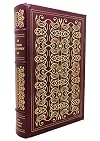
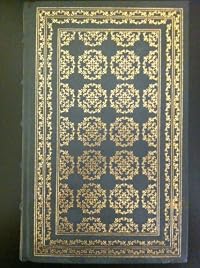
Fine Condition. It apparently was never opened until we did so, very carefully, to catalog it. A beautiful leather book in the Franklin Library tradition that will enhance any book shelf or library. Frontis. black-and-white, sketched portrait of Dostoevsky. Translated by Constance Garnett. 476 pages, Bound in full burgundy leather with elaborate gilt-tooled decorations. Three raised bands on spine with gilt title and decorations in the compartments. All edges gilt. Pale gold silk moire end papers. Attached silk ribbon page marker. A limited edition published for the subscribers to The Collected Stories of The World's Greatest Writers.
Ratings
Members
- Recently Added By
Author Information

1,423+ Works 179,501 Members
One of the most powerful and significant authors in all modern fiction, Fyodor Dostoevsky was the son of a harsh and domineering army surgeon who was murdered by his own serfs (slaves), an event that was extremely important in shaping Dostoevsky's view of social and economic issues. He studied to be an engineer and began work as a draftsman. show more However, his first novel, Poor Folk (1846), was so well received that he abandoned engineering for writing. In 1849, Dostoevsky was arrested for being a part of a revolutionary group that owned an illegal printing press. He was sentenced to be executed, but the sentence was changed at the last minute, and he was sent to a prison camp in Siberia instead. By the time he was released in 1854, he had become a devout believer in both Christianity and Russia - although not in its ruler, the Czar. During the 1860's, Dostoevsky's personal life was in constant turmoil as the result of financial problems, a gambling addiction, and the deaths of his wife and brother. His second marriage in 1887 provided him with a stable home life and personal contentment, and during the years that followed he produced his great novels: Crime and Punishment (1886), the story of Rodya Raskolnikov, who kills two old women in the belief that he is beyond the bounds of good and evil; The Idiots (1868), the story of an epileptic who tragically affects the lives of those around him; The Possessed (1872), the story of the effect of revolutionary thought on the members of one Russian community; A Raw Youth (1875), which focuses on the disintegration and decay of family relationships and life; and The Brothers Karamazov (1880), which centers on the murder of Fyodor Karamazov and the effect the murder has on each of his four sons. These works have placed Dostoevsky in the front rank of the world's great novelists. Dostoevsky was an innovator, bringing new depth and meaning to the psychological novel and combining realism and philosophical speculation in his complex studies of the human condition. (Bowker Author Biography) show less

Fyodor Dostoyevsky has a Legacy Library. Legacy libraries are the personal libraries of famous readers, entered by LibraryThing members from the Legacy Libraries group.
Classifications
- Genres
- Fiction and Literature, General Fiction
- DDC/MDS
- 891.7 — Literature & rhetoric Asian Literature East Indo-European and Celtic literatures Russian and East Slavic languages
- LCC
- PZ3 .D742 — Language and Literature Fiction and juvenile belles lettres Fiction and juvenile belles lettres Fiction in English
Statistics
- Members
- 112
- Popularity
- 289,227
- Reviews
- 4
- Rating
- (3.94)
- Languages
- English, German
- Media
- Paper, Ebook
- ISBNs
- 9
- ASINs
- 9