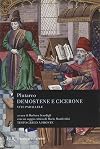
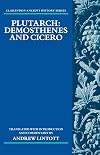
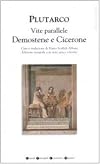
Vite parallele. Demostene e Cicerone. Testo greco a fronte
by Plutarch
41 Members (4.50)
On This Page
Description
Plutarch's Lives have been popular reading from antiquity to the present day, combining engaging biographical detail with a strong underlying moral purpose. The Lives of Demosthenes and Cicero are an unusual pair in that they are about unmilitary men who, while superb technically as orators,were both in the end political failures, crushed by the military power which dominated their world.In these two Lives, Plutarch is not so much interested in Demosthenes' and Cicero's rhetorical technique show more as in their ability to persuade an audience to vote for the right course of action, even if that action was prima facie unpopular. In Plutarch's own time, when the empire of the Caesars had beenestablished for over a century, liberty was of necessity limited, but still an issue, for both Greeks and Romans.His home, Chaeroneia, was a provincial town in Greece, but he travelled regularly to Italy where he met Romans from the elite that ruled the empire. He wrote both for his fellow imperial subjects who still sought to enjoy what freedom they could obtain from the ruling power, and for the Romans whoexercised that power but were always subject to the ultimate authority of the emperor.Along with the translations and commentaries, Lintott provides a detailed introduction which discusses the background and context of these two Lives, essential information about the author and the periods in which these two orators lived, and the philosophy which underlies Plutarch's presentation ofthe two personalities. show lessTags
Recommendations















Member Reviews
Members
- Recently Added By
Author Information

1,633+ Works 26,082 Members
PLUTARCH. c.46--c.125 Considered by many to be the most important Greek writer of the early Roman period, Plutarch was a member of a well-to-do Greek family, a chief magistrate, a priest at Delphi, and an exceptionally well-read individual. His philosophical views were based on those of Plato and, although a Greek, he esteemed the achievements and show more attributes of the Romans. By the time Plutarch's works were published for the first time in the eleventh century, some had already been lost. He wrote innumerable essays on philosophical, historical, political, religious, and literary subjects, 78 of which survive today and are known collectively as the "Moralia." He is known primarily, however, for his Parallel Lives of Greeks and Romans, which consists of 50 biographies---23 of prominent Greeks, 23 of Roman leaders, and 4 separate lives---accompanied at intervals by short comparative essays. Although historical information is included in the work, Plutarch wrote it originally to inspire emulation in youth, so the emphasis is on character, moral choice, and anecdote. Sir Thomas North's 1579 translation into English of Parallel Lives became an important source for William Shakespeare which he used for three plays, Julius Caesar, Antony and Cleopatra, and Coriolanus. (Bowker Author Biography) show less
Classifications
- Genres
- History, Nonfiction, Biography & Memoir
- DDC/MDS
- 920.038 — History & geography Biographies, Genealogy, Heraldry Biographies General and collective by localities Ancient
- LCC
- PA4369 .D5 .Z5 — Language and Literature Greek language and literature. Latin language and literature Greek literature Individual authors Plutarch
- BISAC
Statistics
- Members
- 41
- Popularity
- 718,664
- Rating
- (4.50)
- Languages
- English, Greek (Ancient), Italian, Turkish
- Media
- Paper
- ISBNs
- 6