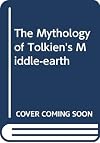
The Mythology of Middle-Earth
by Atanielle Annyn Noël
On This Page
Description
Examines the relationship of Tolkien's Middle-earth mythology to the legends and myths of many cultures.Tags
Recommendations


















Member Reviews
Memo to aspiring authors: The Golden Bough is not all of mythology, and if you're going to do a mythological study, you'll need to read more than that.
As a folklorist and a student of medieval romances (which is what The Lord of the Rings is, even though it was written in the twentieth century), I found this book intriguing. In concept. In practice, it is yet another book that tries to explain Tolkien without understanding Tolkien.
Take the key entry "Denial of Death." Yes, this is a very big theme, and accepting death is important in both The Lord of the Rings (observe that Aragorn dies calmly and acceptingly) and the back history of the Second Age (where the early kings of Númenor die peacefully but the later ones "do not go gently show more into that good night"). But the goal of avoiding death is not simply to become immortal -- as the tale of Tithonus reminds us. Tolkien on many occasions reminds us that death is "the gift of men," and that in time to come, even the immortals will envy it.
But what does author Noel tell us? "The most satisfying eucatastrope occurs when death is eluded entirely and immortal life substituted. This highest form of escape from death was bestowed upon the Ringbearers and the Guardians of the Eleven Rings when they sailed into the West to the Undying Lands." Um -- no. Frodo had hoped to be able to live in Middle-Earth after the end of the Third Age. He couldn't; he had been too deeply wounded. He didn't go west to live forever; he went west to be healed. In a very real sense, the Undying Lands are not Heaven; they are Limbo, the place without punishment where the virtuous pagans go, living in separation from the true presence of Ilúvatar. It may be that those in the Undying Lands will some time be taken to Ilúvatar -- but (we read in Tolkien's other works) this was not explicitly promised; it is men, not elves, who are promised a place in the final Music of the Ainur.
Or take the chapter "The Old Gods." It declares that many creatures, from Valar to elves to dwarves to Ents to Orcs, are "entirely supernatural," and that all of them were worshipped by someone in our world. The Valar, maybe -- after all, they are basically angels. But Ents came out of Tolkien's head (yes, based on the roots that gave us the English word "Ettin," but the idea is Tolkien's), and no one would ever worship an orc! Elves and dwarves in Scandinavian myth had special powers, but not supernatural powers; they were simply of a different substance. And so, too, with Tolkien's variants.
And how in the bleepity-bleep can you claim a book is about the folklore sources of The Lord of the Rings and not link it to Stith Thompson's monumental Motif-Index of Folk Literature? Take dragons. Want to find the analogies to Tolkien's dragons? Look them up in Thompson's index and see where it takes you. Some examples: Dragon haunts lake (G308.4); Dragon as power of evil (B11.9); Dragon seen in sky (F796); Deeds of dragon (B11.6ff.); Fight with dragon (B11.11ff.); Habitat of dragon (B11.3ff.); Overcoming dragon as task (H1174.2).
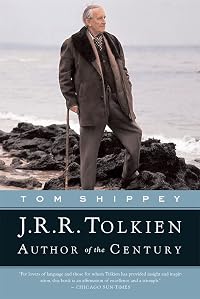
J. R. R. Tolkien was a great maker of mythology -- because he was a great student of mythology. You can read his works without knowing his sources. But if you want to learn the stone from which he built his tower (to turn upside down an analogy from his great essay on "Beowulf"), this is not the place to start. Tom Shippey's linguistic analysis is far better. Or just read a good collection of folktales. Even if you don't learn anything about Tolkien, you'll learn a lot about people. show less
As a folklorist and a student of medieval romances (which is what The Lord of the Rings is, even though it was written in the twentieth century), I found this book intriguing. In concept. In practice, it is yet another book that tries to explain Tolkien without understanding Tolkien.
Take the key entry "Denial of Death." Yes, this is a very big theme, and accepting death is important in both The Lord of the Rings (observe that Aragorn dies calmly and acceptingly) and the back history of the Second Age (where the early kings of Númenor die peacefully but the later ones "do not go gently show more into that good night"). But the goal of avoiding death is not simply to become immortal -- as the tale of Tithonus reminds us. Tolkien on many occasions reminds us that death is "the gift of men," and that in time to come, even the immortals will envy it.
But what does author Noel tell us? "The most satisfying eucatastrope occurs when death is eluded entirely and immortal life substituted. This highest form of escape from death was bestowed upon the Ringbearers and the Guardians of the Eleven Rings when they sailed into the West to the Undying Lands." Um -- no. Frodo had hoped to be able to live in Middle-Earth after the end of the Third Age. He couldn't; he had been too deeply wounded. He didn't go west to live forever; he went west to be healed. In a very real sense, the Undying Lands are not Heaven; they are Limbo, the place without punishment where the virtuous pagans go, living in separation from the true presence of Ilúvatar. It may be that those in the Undying Lands will some time be taken to Ilúvatar -- but (we read in Tolkien's other works) this was not explicitly promised; it is men, not elves, who are promised a place in the final Music of the Ainur.
Or take the chapter "The Old Gods." It declares that many creatures, from Valar to elves to dwarves to Ents to Orcs, are "entirely supernatural," and that all of them were worshipped by someone in our world. The Valar, maybe -- after all, they are basically angels. But Ents came out of Tolkien's head (yes, based on the roots that gave us the English word "Ettin," but the idea is Tolkien's), and no one would ever worship an orc! Elves and dwarves in Scandinavian myth had special powers, but not supernatural powers; they were simply of a different substance. And so, too, with Tolkien's variants.
And how in the bleepity-bleep can you claim a book is about the folklore sources of The Lord of the Rings and not link it to Stith Thompson's monumental Motif-Index of Folk Literature? Take dragons. Want to find the analogies to Tolkien's dragons? Look them up in Thompson's index and see where it takes you. Some examples: Dragon haunts lake (G308.4); Dragon as power of evil (B11.9); Dragon seen in sky (F796); Deeds of dragon (B11.6ff.); Fight with dragon (B11.11ff.); Habitat of dragon (B11.3ff.); Overcoming dragon as task (H1174.2).
J. R. R. Tolkien was a great maker of mythology -- because he was a great student of mythology. You can read his works without knowing his sources. But if you want to learn the stone from which he built his tower (to turn upside down an analogy from his great essay on "Beowulf"), this is not the place to start. Tom Shippey's linguistic analysis is far better. Or just read a good collection of folktales. Even if you don't learn anything about Tolkien, you'll learn a lot about people. show less
Book Description: Boston, MA: Houghton Mifflin Company, 1977. Trade Paperback. Very Good. First printing. 8vo - over 7¾" - 9¾" tall. Near-fine. Tight, clean copy. Appears never read
Ratings
Members
- Recently Added By
Lists

Tolkien Studies
9 works; 1 member
Author Information
6 Works 1,894 Members
Common Knowledge
- Original publication date
- 1977
- People/Characters
- J. R. R. Tolkien; Aragorn II; Beowulf; Bilbo Baggins; Tom Bombadil; Frodo Baggins (show all 10); Gandalf; Arthur, King of the Britons; Odin; Sauron
- Important places
- Middle-earth
- Important events
- War of the Ring
- Dedication
- To my brother,
Jefferson Putnam Swycaffer - First words
- INTRODUCTION
*
There is something in Professor John Ronald Reuel Tolkien's works that lies deeper than fantasy or escape. - Last words
- (Click to show. Warning: May contain spoilers.)For both kings a song of mourning was sung, for each, horsemen rode around the completed mounds singing the king's praise.
Classifications
Statistics
- Members
- 183
- Popularity
- 179,317
- Reviews
- 2
- Rating
- (3.18)
- Languages
- English, Italian
- Media
- Paper
- ISBNs
- 4
- ASINs
- 2