On This Page
Description
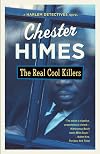
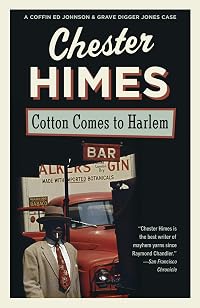
Many people had reasons for killing Galen, a big Greek with too much money and too great a liking for young black girls. But there are complications--like Sonny, high on hash, found standing over the body with a gun in his hand that fires only blanks; a street gang called the Moslems; a disappearing suspect; and the fact that Coffin Ed's daughter is up to her pretty little neck in the whole explosive business. -- from publisher's description.Tags
Recommendations












Member Recommendations
andomck African American police procedurals
Member Reviews
A white man is murdered on a Harlem street and the NYPD arrives in force to solve the crime. Most notably, two black detectives, Gravedigger Jones and Coffin Ed Johnson, are first on the scene. To say that chaos ensues would be an understatement. The narrative shifts between the police and the youth gang, The Real Cool Moslems, that has spirited away the suspected murderer. Though the subject matter is very sordid, this isn't as downbeat a book as most of Jim Thompson, Charles Willeford, or David Goodis. But even the two detectives don't come across as totally sympathetic. The violence that runs through Harlem in this book runs through their veins too. As the novel twists its way to its (perhaps) surprising conclusion, we see show more prostitutes, madams, pimps, juvenile delinquents, and lots of people who choose to look the other way when a crime occurs. Nevertheless, there is also a vein of humor, particularly the bumbling antics of some of the white policemen, who are shown to be out of their element in the depths of Harlem. Himes is a good storyteller, though the novel has a few strictly explicatory passages that seem a little out of place. I'll definitely check out his other novels in the Gravedigger/Coffin Ed series to see how these two manage to cope on their other cases. show less
I think this will be a pass.
Written in 1958, there's much here that will feel a lot like sad, horrible, violent 2020. Some blurbs call it 'action-filled' and 'over-the-top,' but I'd call it scathing social commentary. Dress it up and make it 'funny,' but wow, there's desperation, heartbreak, addiction, violence, cycles, inequity, and enough 'ism to destroy a character. Which is, indeed, the point. How can you even blame Coffin Ed forkilling the kid that threw perfume on him, when he has a history of someone tossing acid in his face? Or blame the cops for covering it up?
The story begins with a white man in a bar, accused of fooling around with someone's wife. The accuser is exceedingly drunk and is working himself up towards attacking show more with a knife when the bartender gets involved with a machete. The white guy escapes and is watching the ensuing chaos from the outside when yet another intoxicated black man approaches from behind and accuses him of the same thing. The white guy runs and the accuser chases through the streets of Harlem, attracting hecklers and bystanders, including a suspicious group of young black men called the 'Real Cool Moslems' (s.i.c.) who run around dressing as 'Arabs.' The young men hide out in a local tenement and during their discussion, I lost my interest.
"The other front windows were jammed with colored faces, looking like clusters of strange purple fruit in the stark white light.
The first book in this series was amazing, as read by the incomparable Samuel M.F. Jackson, and perhaps he could save this, but I think between the relentless amorality of the youngsters and the relentlessly aggressive amorality of black detectives Grave Digger and Coffin Ed, the 1950w era racism and the police corruption, it's just not going to work for me right now.
They looked like big-shouldered plowhands in Sunday suits at a Saturday night jamboree."
Note: quit at chapter 7/p.60 show less
Written in 1958, there's much here that will feel a lot like sad, horrible, violent 2020. Some blurbs call it 'action-filled' and 'over-the-top,' but I'd call it scathing social commentary. Dress it up and make it 'funny,' but wow, there's desperation, heartbreak, addiction, violence, cycles, inequity, and enough 'ism to destroy a character. Which is, indeed, the point. How can you even blame Coffin Ed for
The story begins with a white man in a bar, accused of fooling around with someone's wife. The accuser is exceedingly drunk and is working himself up towards attacking show more with a knife when the bartender gets involved with a machete. The white guy escapes and is watching the ensuing chaos from the outside when yet another intoxicated black man approaches from behind and accuses him of the same thing. The white guy runs and the accuser chases through the streets of Harlem, attracting hecklers and bystanders, including a suspicious group of young black men called the 'Real Cool Moslems' (s.i.c.) who run around dressing as 'Arabs.' The young men hide out in a local tenement and during their discussion, I lost my interest.
"The other front windows were jammed with colored faces, looking like clusters of strange purple fruit in the stark white light.
The first book in this series was amazing, as read by the incomparable Samuel M.F. Jackson, and perhaps he could save this, but I think between the relentless amorality of the youngsters and the relentlessly aggressive amorality of black detectives Grave Digger and Coffin Ed, the 1950w era racism and the police corruption, it's just not going to work for me right now.
They looked like big-shouldered plowhands in Sunday suits at a Saturday night jamboree."
Note: quit at chapter 7/p.60 show less
I discovered this Chester Himes novel during my grandaughters' 12th-grade lit class, which I attended as a part of Grandparent's Day activities last year. The teacher handed out copies and had a student start reading it. (Meanwhile, I'm reading a squib from a reviewer that the publisher highlighted on the book cover: "The action is slapstick, preposterously violent." Hmmm.)
On page one, the black patrons of Harlem's Dew Drop Inn are hoppin' and dancin', laughing and singing, to raucous jukebox music. A tall white man stands near the bar, scanning the crowd, when a loud voice says, "Ah feels like cutting me some white mother-raper's throat." The scrawny man voicing the thought wields a switch-blade knife and—zzzpp—like that, slashes off show more the white man's blood-red necktie right through the knot. Missed his throat. The bartender takes exception to this conduct, and as the slasher slices open his forearm in reply, he's able to swing the hatchet he keeps behind the bar and lops off slasher's knife-wielding arm just below the elbow. The slasher drops to the floor, sweeping with his remaining arm, hopeful of finding the disembodied arm so he can retrieve the knife and further the mayhem.
By page five, the white man's on the sidewalk outside the bar. There he's accosted by yet another black man, this one with a revolver. " 'You there!' this one shouts. 'You the man what's been messing around with my wife.'...Orange flame lanced toward the big white man's chest. Sound shattered the night." The white man takes off, running as fast as he can, the gunman and two henchmen in pursuit.
This ruckus naturally brings the police, and in particular officers Coffin Ed Johnson and Grave Digger Jones. Coffin Ed and Grave Digger are protagonists in all of Himes' Harlem Detectives novels. The police hierarchy turns a blind eye to the methods of the pair, so long as they get results.
As the lit class wrapped up everyone was at the end of the seven-page first chapter. Well, except for the guy who had tuned out the discussion to focus on reading; he was on page 40. It's that kind of book. If you like it, you just read straight through to the last page. I liked it. show less
On page one, the black patrons of Harlem's Dew Drop Inn are hoppin' and dancin', laughing and singing, to raucous jukebox music. A tall white man stands near the bar, scanning the crowd, when a loud voice says, "Ah feels like cutting me some white mother-raper's throat." The scrawny man voicing the thought wields a switch-blade knife and—zzzpp—like that, slashes off show more the white man's blood-red necktie right through the knot. Missed his throat. The bartender takes exception to this conduct, and as the slasher slices open his forearm in reply, he's able to swing the hatchet he keeps behind the bar and lops off slasher's knife-wielding arm just below the elbow. The slasher drops to the floor, sweeping with his remaining arm, hopeful of finding the disembodied arm so he can retrieve the knife and further the mayhem.
By page five, the white man's on the sidewalk outside the bar. There he's accosted by yet another black man, this one with a revolver. " 'You there!' this one shouts. 'You the man what's been messing around with my wife.'...Orange flame lanced toward the big white man's chest. Sound shattered the night." The white man takes off, running as fast as he can, the gunman and two henchmen in pursuit.
This ruckus naturally brings the police, and in particular officers Coffin Ed Johnson and Grave Digger Jones. Coffin Ed and Grave Digger are protagonists in all of Himes' Harlem Detectives novels. The police hierarchy turns a blind eye to the methods of the pair, so long as they get results.
As the lit class wrapped up everyone was at the end of the seven-page first chapter. Well, except for the guy who had tuned out the discussion to focus on reading; he was on page 40. It's that kind of book. If you like it, you just read straight through to the last page. I liked it. show less
Grave Digger Jones and Coffin Ed Johnson have fantastic names but are utterly believable as is every wonderful word of Chester Himes THE REAL COOL KILLERS. Their interplay based on mutual respect and a shared understanding of the world around them makes opening any of their stories worthwhile. The patois of the streets and the bitter resignation of those who patrol a world largely outside the dominant white culture (though often subject to it's whims and desires) gives this book and much of Himes writing a pulse to pop and lungs to breath with. Even characters that appear for only a few lines beg to be followed into their own lives. Amazing that I want to know more about everyone who comes into the light of the narrative. The action show more moves around Harlem in such a fashion that it becomes a character too. In fact so vividly, that I printed up a map of Harlem to follow the action. Even the shadows had as much substance as the keypad I'm typing on. Contained almost entirely in one evening, the story never stops moving and the pressure steadily increases until an explosive ending is unavoidable. But there is never really a resolution--no tidy ending. Johnson and Jones are doing their job. Often they come across people who deserve to be stood up and knocked down, but it never makes those people less tragic. So much is wasted in Harlem except for Himes words that describe the tragic beauty of it all. show less
If you like your hard boiled with a healthy dose of historical racism, this is the novel for you. Hardly long enough to be called a novel and tightly plotted. Grave Digger Jones and Coffin Ed Johnson are two black NYC police detectives. Harlem is their beat. When a white pedophile sadistic pervert is "murdered" in Harlem all hell breaks loose. Jones and Johnson have got to find the killer even while the black body count goes unmourned. There doesn't seem to be any murder weapon however and too many people with a motive. Oh, and there is a gang known as the Real Cool Moslems to deal with too.
Full of social commentary buried in good ol' hard boiled grit the novel is as much a treatise on race relations and the ghettoization of America in show more the late '50s as it is about suspense, mystery, and crime. All packed into 160 tightly written pages. show less
Full of social commentary buried in good ol' hard boiled grit the novel is as much a treatise on race relations and the ghettoization of America in show more the late '50s as it is about suspense, mystery, and crime. All packed into 160 tightly written pages. show less
Street Justice in Old Harlem
If you need convincing either that the 1950s were anything but halcyon and that racism was, and continues to be, a real, visceral issue in the United States, Chester Himes’ The Real Cool Killers will serve as a potent persuader. Himes dresses this education in a quickly read and very brutal hunt for a killer by his two black detectives, Grave Digger Jones and Coffin Ed Johnson.
In the novel, second in Himes’ Harlem Detective Series (nine completed novels, one unfinished), the white cops are blatantly racists, the black bad guys (particularly Sheik) respond with their own racial hatred, and any semblance of citizen rights barely exist. If that isn’t enough, the victim is a white man shot dead amid a show more crowd in Harlem. Forget that a black man in a bar has an arm chopped off and another gets gunned down by Coffin Ed. The outrage of the cops focuses on the murder of a white man by a black killer. And the white man, Ulysses Galen, turns out to be a sadist preying on young black women. Lest you think anything is given away here, the novel ends on a big twist that in a weird way serves justice. Maybe.
Even if you are not ordinarily a detective novel reader, you’ll find several reasons to try the book. First, of course, is Himes’ snapshot of a Harlem almost gone, where now African Americans no longer comprise the majority and the place rushes along in a wave of gentrification. Second, is the absolute rawness of the novel, particularly the language. Literally, most detective fiction today isn’t nearly as stuffed with vulgarity as this novel; you’ll be surprised. Himes also creates mood by employing a scaled back, easily accessible street vernacular.
Then there’s the way the cops go about their work; that is, with no regard, zero, for the rights of citizens, with Grave Digger and Coffin Ed as bad as the white cops. To wit, Grave Digger is interviewing (well, actually badgering, intimidating and threatening a group of teens in the Dew Drop Inn, where said arm separation occurred earlier) and a teen cautions about rights. Mistake: “Grave Digger slapped him out of his seat, reached down and lifted him from the floor by the coat lapels and slammed him back into his seat.” That’s a civics lesson, for sure.
Chester Himes was born in Missouri, and moved to Arkansas and Ohio with his family. His father taught industrial trades at the University of Arkansas at Pine Bluff (formerly Normal College). His mother also was a teacher. He became truly embittered when a school experiment blinded his brother Joseph and a whites-only hospital refused him treatment. After his family resettled in Cleveland, he attended Ohio State University, before the school expelled him for pranking. He then began committing crimes, which landed him in the Ohio Penitentiary for a long sentence. There, he started writing and publishing. Totally fed up with the U.S. by the 50s, he moved to France in 1953, where his work was respected. He met his second wife in Paris and mingled with some of the most famous writers, artists, and intellectuals of the day, such as Picasso and Nikki Giovanni. Later, he and his wife moved to Spain, where he died of Parkinson’s disease at age 75. For more about Himes, see Chester Himes: A Life, by James Sallis. show less
If you need convincing either that the 1950s were anything but halcyon and that racism was, and continues to be, a real, visceral issue in the United States, Chester Himes’ The Real Cool Killers will serve as a potent persuader. Himes dresses this education in a quickly read and very brutal hunt for a killer by his two black detectives, Grave Digger Jones and Coffin Ed Johnson.
In the novel, second in Himes’ Harlem Detective Series (nine completed novels, one unfinished), the white cops are blatantly racists, the black bad guys (particularly Sheik) respond with their own racial hatred, and any semblance of citizen rights barely exist. If that isn’t enough, the victim is a white man shot dead amid a show more crowd in Harlem. Forget that a black man in a bar has an arm chopped off and another gets gunned down by Coffin Ed. The outrage of the cops focuses on the murder of a white man by a black killer. And the white man, Ulysses Galen, turns out to be a sadist preying on young black women. Lest you think anything is given away here, the novel ends on a big twist that in a weird way serves justice. Maybe.
Even if you are not ordinarily a detective novel reader, you’ll find several reasons to try the book. First, of course, is Himes’ snapshot of a Harlem almost gone, where now African Americans no longer comprise the majority and the place rushes along in a wave of gentrification. Second, is the absolute rawness of the novel, particularly the language. Literally, most detective fiction today isn’t nearly as stuffed with vulgarity as this novel; you’ll be surprised. Himes also creates mood by employing a scaled back, easily accessible street vernacular.
Then there’s the way the cops go about their work; that is, with no regard, zero, for the rights of citizens, with Grave Digger and Coffin Ed as bad as the white cops. To wit, Grave Digger is interviewing (well, actually badgering, intimidating and threatening a group of teens in the Dew Drop Inn, where said arm separation occurred earlier) and a teen cautions about rights. Mistake: “Grave Digger slapped him out of his seat, reached down and lifted him from the floor by the coat lapels and slammed him back into his seat.” That’s a civics lesson, for sure.
Chester Himes was born in Missouri, and moved to Arkansas and Ohio with his family. His father taught industrial trades at the University of Arkansas at Pine Bluff (formerly Normal College). His mother also was a teacher. He became truly embittered when a school experiment blinded his brother Joseph and a whites-only hospital refused him treatment. After his family resettled in Cleveland, he attended Ohio State University, before the school expelled him for pranking. He then began committing crimes, which landed him in the Ohio Penitentiary for a long sentence. There, he started writing and publishing. Totally fed up with the U.S. by the 50s, he moved to France in 1953, where his work was respected. He met his second wife in Paris and mingled with some of the most famous writers, artists, and intellectuals of the day, such as Picasso and Nikki Giovanni. Later, he and his wife moved to Spain, where he died of Parkinson’s disease at age 75. For more about Himes, see Chester Himes: A Life, by James Sallis. show less
Street Justice in Old Harlem
If you need convincing either that the 1950s were anything but halcyon and that racism was, and continues to be, a real, visceral issue in the United States, Chester Himes’ The Real Cool Killers will serve as a potent persuader. Himes dresses this education in a quickly read and very brutal hunt for a killer by his two black detectives, Grave Digger Jones and Coffin Ed Johnson.
In the novel, second in Himes’ Harlem Detective Series (nine completed novels, one unfinished), the white cops are blatantly racists, the black bad guys (particularly Sheik) respond with their own racial hatred, and any semblance of citizen rights barely exist. If that isn’t enough, the victim is a white man shot dead amid a show more crowd in Harlem. Forget that a black man in a bar has an arm chopped off and another gets gunned down by Coffin Ed. The outrage of the cops focuses on the murder of a white man by a black killer. And the white man, Ulysses Galen, turns out to be a sadist preying on young black women. Lest you think anything is given away here, the novel ends on a big twist that in a weird way serves justice. Maybe.
Even if you are not ordinarily a detective novel reader, you’ll find several reasons to try the book. First, of course, is Himes’ snapshot of a Harlem almost gone, where now African Americans no longer comprise the majority and the place rushes along in a wave of gentrification. Second, is the absolute rawness of the novel, particularly the language. Literally, most detective fiction today isn’t nearly as stuffed with vulgarity as this novel; you’ll be surprised. Himes also creates mood by employing a scaled back, easily accessible street vernacular.
Then there’s the way the cops go about their work; that is, with no regard, zero, for the rights of citizens, with Grave Digger and Coffin Ed as bad as the white cops. To wit, Grave Digger is interviewing (well, actually badgering, intimidating and threatening a group of teens in the Dew Drop Inn, where said arm separation occurred earlier) and a teen cautions about rights. Mistake: “Grave Digger slapped him out of his seat, reached down and lifted him from the floor by the coat lapels and slammed him back into his seat.” That’s a civics lesson, for sure.
Chester Himes was born in Missouri, and moved to Arkansas and Ohio with his family. His father taught industrial trades at the University of Arkansas at Pine Bluff (formerly Normal College). His mother also was a teacher. He became truly embittered when a school experiment blinded his brother Joseph and a whites-only hospital refused him treatment. After his family resettled in Cleveland, he attended Ohio State University, before the school expelled him for pranking. He then began committing crimes, which landed him in the Ohio Penitentiary for a long sentence. There, he started writing and publishing. Totally fed up with the U.S. by the 50s, he moved to France in 1953, where his work was respected. He met his second wife in Paris and mingled with some of the most famous writers, artists, and intellectuals of the day, such as Picasso and Nikki Giovanni. Later, he and his wife moved to Spain, where he died of Parkinson’s disease at age 75. For more about Himes, see Chester Himes: A Life, by James Sallis. show less
If you need convincing either that the 1950s were anything but halcyon and that racism was, and continues to be, a real, visceral issue in the United States, Chester Himes’ The Real Cool Killers will serve as a potent persuader. Himes dresses this education in a quickly read and very brutal hunt for a killer by his two black detectives, Grave Digger Jones and Coffin Ed Johnson.
In the novel, second in Himes’ Harlem Detective Series (nine completed novels, one unfinished), the white cops are blatantly racists, the black bad guys (particularly Sheik) respond with their own racial hatred, and any semblance of citizen rights barely exist. If that isn’t enough, the victim is a white man shot dead amid a show more crowd in Harlem. Forget that a black man in a bar has an arm chopped off and another gets gunned down by Coffin Ed. The outrage of the cops focuses on the murder of a white man by a black killer. And the white man, Ulysses Galen, turns out to be a sadist preying on young black women. Lest you think anything is given away here, the novel ends on a big twist that in a weird way serves justice. Maybe.
Even if you are not ordinarily a detective novel reader, you’ll find several reasons to try the book. First, of course, is Himes’ snapshot of a Harlem almost gone, where now African Americans no longer comprise the majority and the place rushes along in a wave of gentrification. Second, is the absolute rawness of the novel, particularly the language. Literally, most detective fiction today isn’t nearly as stuffed with vulgarity as this novel; you’ll be surprised. Himes also creates mood by employing a scaled back, easily accessible street vernacular.
Then there’s the way the cops go about their work; that is, with no regard, zero, for the rights of citizens, with Grave Digger and Coffin Ed as bad as the white cops. To wit, Grave Digger is interviewing (well, actually badgering, intimidating and threatening a group of teens in the Dew Drop Inn, where said arm separation occurred earlier) and a teen cautions about rights. Mistake: “Grave Digger slapped him out of his seat, reached down and lifted him from the floor by the coat lapels and slammed him back into his seat.” That’s a civics lesson, for sure.
Chester Himes was born in Missouri, and moved to Arkansas and Ohio with his family. His father taught industrial trades at the University of Arkansas at Pine Bluff (formerly Normal College). His mother also was a teacher. He became truly embittered when a school experiment blinded his brother Joseph and a whites-only hospital refused him treatment. After his family resettled in Cleveland, he attended Ohio State University, before the school expelled him for pranking. He then began committing crimes, which landed him in the Ohio Penitentiary for a long sentence. There, he started writing and publishing. Totally fed up with the U.S. by the 50s, he moved to France in 1953, where his work was respected. He met his second wife in Paris and mingled with some of the most famous writers, artists, and intellectuals of the day, such as Picasso and Nikki Giovanni. Later, he and his wife moved to Spain, where he died of Parkinson’s disease at age 75. For more about Himes, see Chester Himes: A Life, by James Sallis. show less
Members
- Recently Added By
Lists

Donald E. Westlake's Top Ten Mystery Books
20 works; 3 members

Books Read in 2014
2,344 works; 86 members

Read These Too
458 works; 9 members

Books Read in 2024
4,727 works; 128 members

Books I Read Before The Invention Of The Internet.
144 works; 1 member
Reading LIst
648 works; 1 member
Author Information

59+ Works 6,155 Members
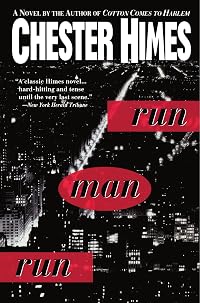
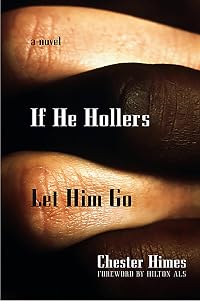
Chester B. Himes was born in Jefferson City, Missouri on July 29, 1909. He attended Ohio State University in Columbus, but was expelled his freshman year for a prank. He began writing short stories and having them published in national magazines such as Abbott's Monthly Magazine and Esquire while in prison for armed robbery. He was paroled after 8 show more years and eventually joined the Works Progress Administration, where he served as a writer with the Ohio Writers' Project. His first novel, If He Hollers Let Him Go, is about the fear, anger, and humiliation of a black employee at a racist defense plant during World War II and was published in 1945. He moved to Paris, France in the 1950s and then to Moraira, Spain in 1969. He was more popular in Europe than in the United States and primarily wrote about black protagonists plagued by white racism and self-hate. His other works include Lonely Crusade, Pinktoes, Black on Black, The Quality of Hurt, and My Life As Absurdity. He also wrote detective novels set in Harlem, New York City including Run Man, Run, The Real Cool Killers, and Blind Man with a Pistol. He won the 1958 Grand Prix de Littérature Policière and the 1982 Columbus Foundation award. He died on November 12, 1984 from Parkinson's Disease. (Bowker Author Biography) show less
Series

Belongs to Publisher Series
Work Relationships
Is contained in
Common Knowledge
- Canonical title
- The Real Cool Killers
- Original title
- The Real Cool Killers
- Alternate titles
- If Trouble was Money
- Original publication date
- 1959
- People/Characters
- Coffin Ed Johnson; Grave Digger Jones
- Important places
- Harlem, New York, New York, USA
- First words
- Big Joe Turner was singing a rock-and-roll adaptation of Dink's Blues.
- Last words
- (Click to show. Warning: May contain spoilers.)"... I'll talk to the man and see if I can arrange it."
- Original language*
- English
*Some information comes from Common Knowledge in other languages. Click "Edit" for more information.
Classifications
Statistics
- Members
- 501
- Popularity
- 60,315
- Reviews
- 22
- Rating
- (3.82)
- Languages
- 5 — Dutch, English, French, German, Spanish
- Media
- Paper, Audiobook, Ebook
- ISBNs
- 24
- ASINs
- 9