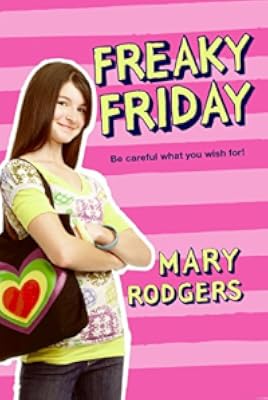
Freaky Friday
by Mary Rodgers
On This Page
Description
A thirteen-year-old girl gains a much more sympathetic understanding of her relationship with her mother when she has to spend a day in her mother's body.Tags
Recommendations





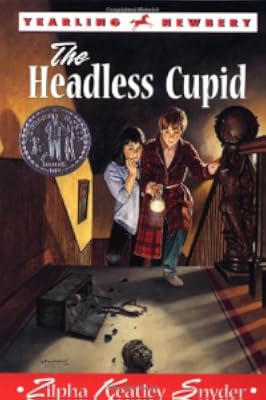
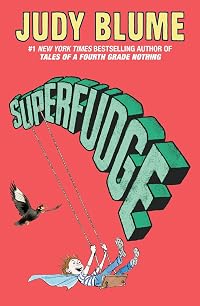
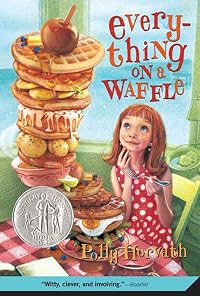
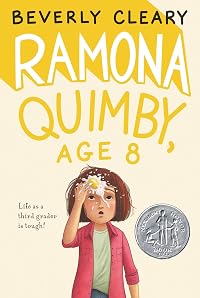




Member Recommendations
Member Reviews
Reviewed by Samantha Clanton, aka "Harlequin Twilight" for TeensReadToo.com
I don't know about anyone else, but whenever I hear the words Freaky and Friday, I automatically think back to Lindsay Lohan and Jamie Lee Curtis circa 2003. But this is a different FREAKY FRIDAY, the original, the better of the two in my opinion (I know there was another movie version in the 70s, but I've not seen it in years, and don't remember much about it besides Jodie Foster). This is the story of Annabel and Ellen Andrews, and Annabel needing to learn her lesson.
I will tell you now, don't expect the same exact story as the movie that you've probably seen at some point in your life; expect the same premise, but a better story. Annabel is the stereotypical show more 13-year-old girl: she's loud, bossy, and negative, hates her family and teachers, but loves her friends and annoying her brother. Annabel is a highly amusing narrator and she sees things like most kids do, i.e. better than adults give them credit for.
Annabel wakes up as her mother, gets dressed, fixes breakfast, sends Ben, aka Ape Face, and Annabel off to school, and then goes through her day in her mother's body. Dealing with all kinds of issues throughout the day, from the neighbor boy saying he loves her, losing both the kids, the police thinking she's crazy, and her husband's unexpected clients as guests, she handles it well...at first.
Not only does she have a wild ride, dealing with things her mother normally would have to deal with, she also has a school meeting to attend...about herself. She finds out things that she probably needed to hear, but things that hurt to hear, and that's where the lesson really starts to set in.
The majority of the story is told from Annabel's perspective, while she is in her mother's body, and that actually helps the humor even more. Take this little gem for instance: "Well, in case you're interested, a mouthful of heart is something like a mouthful of captured frog, and a mind in turmoil simply means all the blood in your body rushes around in your head, leaving you icy cold from the neck down. As for 'butterflies in the stomach,' there is no such thing. They are June bugs." You'll have to read the book to find out the context here, but there are plenty more humorous moments between the 175 pages that make up this book.
This is a quick read, but one I definitely recommend. It's funny and somewhat realistic, not in the whole switching bodies with your mother aspect, but in the way this family interacts with one another. I know that despite the length and the material that make up this adorable story, even I learned something about myself and I think everyone could take something away from this book, kids and parents alike.
The whole 1972 copyright may throw some people off, but don't let it; it's a story that is still relevant today and probably will continue to be for as long as there are 13-year-old girls with mothers and little brothers especially. show less
I don't know about anyone else, but whenever I hear the words Freaky and Friday, I automatically think back to Lindsay Lohan and Jamie Lee Curtis circa 2003. But this is a different FREAKY FRIDAY, the original, the better of the two in my opinion (I know there was another movie version in the 70s, but I've not seen it in years, and don't remember much about it besides Jodie Foster). This is the story of Annabel and Ellen Andrews, and Annabel needing to learn her lesson.
I will tell you now, don't expect the same exact story as the movie that you've probably seen at some point in your life; expect the same premise, but a better story. Annabel is the stereotypical show more 13-year-old girl: she's loud, bossy, and negative, hates her family and teachers, but loves her friends and annoying her brother. Annabel is a highly amusing narrator and she sees things like most kids do, i.e. better than adults give them credit for.
Annabel wakes up as her mother, gets dressed, fixes breakfast, sends Ben, aka Ape Face, and Annabel off to school, and then goes through her day in her mother's body. Dealing with all kinds of issues throughout the day, from the neighbor boy saying he loves her, losing both the kids, the police thinking she's crazy, and her husband's unexpected clients as guests, she handles it well...at first.
Not only does she have a wild ride, dealing with things her mother normally would have to deal with, she also has a school meeting to attend...about herself. She finds out things that she probably needed to hear, but things that hurt to hear, and that's where the lesson really starts to set in.
The majority of the story is told from Annabel's perspective, while she is in her mother's body, and that actually helps the humor even more. Take this little gem for instance: "Well, in case you're interested, a mouthful of heart is something like a mouthful of captured frog, and a mind in turmoil simply means all the blood in your body rushes around in your head, leaving you icy cold from the neck down. As for 'butterflies in the stomach,' there is no such thing. They are June bugs." You'll have to read the book to find out the context here, but there are plenty more humorous moments between the 175 pages that make up this book.
This is a quick read, but one I definitely recommend. It's funny and somewhat realistic, not in the whole switching bodies with your mother aspect, but in the way this family interacts with one another. I know that despite the length and the material that make up this adorable story, even I learned something about myself and I think everyone could take something away from this book, kids and parents alike.
The whole 1972 copyright may throw some people off, but don't let it; it's a story that is still relevant today and probably will continue to be for as long as there are 13-year-old girls with mothers and little brothers especially. show less
Everyone knows the basic plot of Freaky Friday - teenager wakes up in her mother's body and learns life lessons. I don't know how I ended up with this book, it's one of those that seemed to have always been a part of my bookshelf. At the oldest, I was ten when I first read it (I have a school year written in the front, but that only means I was 10 when I first took it into school, I may have owned it before that). I do remember that 13-year-old Annabel Andrews seemed impossibly grown up to me at the time. Which is hilarious now. To be honest, I think that she acts a lot older than 13 (this is partly explained later by her abnormally high IQ), but the whole 'romance' between her and a 14-year-old boy (who gets the hots for her show more 35-year-old mother) is a bit creepy reading it now I am OLDER THAN THE MOTHER MYSELF!
It being both American and published in the 1970s, I didn't understand all the references as a kid and it has certainly dated a bit in the 50 years since it first came out. (Fifty?!) But Annabel's first person narration is zippy and a hoot. The book is dripping in personality. Yes, there are some outdated attitudes but to be fair Annabel calls out the racism and sexism she encounters. Shame that the R-slur appears towards the end of the book. Also not sure how I feel about her 'makeover' improving her life, but since the book also emphasises her intelligence and feminism, I guess it's okay.
So yeah, it's dated and I've aged, but it's brilliantly written and a lot of fun. show less
It being both American and published in the 1970s, I didn't understand all the references as a kid and it has certainly dated a bit in the 50 years since it first came out. (Fifty?!) But Annabel's first person narration is zippy and a hoot. The book is dripping in personality. Yes, there are some outdated attitudes but to be fair Annabel calls out the racism and sexism she encounters. Shame that the R-slur appears towards the end of the book. Also not sure how I feel about her 'makeover' improving her life, but since the book also emphasises her intelligence and feminism, I guess it's okay.
So yeah, it's dated and I've aged, but it's brilliantly written and a lot of fun. show less
Loved this when I was a kid, and it always makes me smile. By dame is Boris and I’b cub to bake you a beetloaf! Annabel is an ungrateful teenager, and her mum magically switches their bodies for the day, with the expected mix of hi-jinx, cringe comedy, and coming of age realisations. Reading this as a grown up, there are some subtle and uncomfortable insights on grown-up life (her mum lying to her dad about how it is the cleaning lady who can’t iron his shirts right, when in fact the cleaning lady is a drunkard who can’t iron shirts at all but who her mother doesn’t have the grip to sack, and she’s ironing all the shirts herself, and the shopping list which is mostly gin), and the ethics is all a little bit more uncomfortable show more (if she wanted Annabel to have a hair cut, it would be better to take her for one than take over her body and just have it done! And the ‘you can magically be attractive if you get a hair cut and new clothes’ meme isn’t great). But it’s lots of fun, and Annabel is a great balance between irritating teenager and sympathetic narrator. show less
This is a quick page-turning read which was first published in 1973 and by 1976 had been made into a film starring Jodie Foster in the title role, as shown by the cover of the film-tie-in 1976 Puffin edition which I picked up second hand quite recently.
The book gives us a first person narrative of one day in the life of 13-year-old Annabel Andrews who wakes up in the body of her thirty-five year old mother after an argument where she complains about not being allowed to have responsiblity for herself, and her mother says she will show her the meaning of that. Far from freaking out, Annabel is quite cool about it although she thinks that her mother's mind has gone jaunting off to possess someone else, such as Jacqueline Onassis, because show more Annabel's body is behaving as if Annabel is still onboard.
After the bodily form of Annabel departs for school with younger brother Ben, whom Annabel persists in calling Ape Face and detests, she has to cope with the various things her mother is meant to be doing, including hosting dinner for her father's clients and attending a conference at school about Annabel's disappointing performance. During the day there are various farcical occurrences, such as the boy from upstairs, on whom Annabel has a crush, showing he is in fact smitten with her mother, certainly the Annabel-possessed version, and various run-ins with the police force.
Parts of the story are very funny, such as the case conference at school. Other parts are just weird and don't work as the slapstick they are obviously meant to be, such as her telephone conversation with the police when she thinks her brother has been kidnapped. During the course of the story, she learns not to take for granted what her mother does, and to appreciate her little brother, who is actually a sweet kid.
The story shows its age in some aspects, such as her insistence on being an adherent of Women's Lib in capital letters. The contradiction is that the feminism is superficial: her mother does all the things expected of women at the time including doing the catering for the husband's clients, doing his washing etc. Also, beauty is very much skin deep, with the boy Annabel fancies being put off her while she wears braces, and Annabel herself seeming to go along with the importance of physical attractiveness over other aspects. There is also a run-in with an unpleasant cleaning woman with racist attitudes, though the story shows its liberal credentials when Annabel gives her the sack.
Overall it is a nice light read, although the above attitudes make it of limited relevance to today's teenagers. And obviously this is a portrayal of teenage life without the internet, smartphones and all the paraphenalia of being a teenager in the modern world. Having not seen either of the film adaptations - I gather there was a more recent one than the one starring Jodie Foster - I don't know if any of these issues were overcome. show less
The book gives us a first person narrative of one day in the life of 13-year-old Annabel Andrews who wakes up in the body of her thirty-five year old mother after an argument where she complains about not being allowed to have responsiblity for herself, and her mother says she will show her the meaning of that. Far from freaking out, Annabel is quite cool about it although she thinks that her mother's mind has gone jaunting off to possess someone else, such as Jacqueline Onassis, because show more Annabel's body is behaving as if Annabel is still onboard.
After the bodily form of Annabel departs for school with younger brother Ben, whom Annabel persists in calling Ape Face and detests, she has to cope with the various things her mother is meant to be doing, including hosting dinner for her father's clients and attending a conference at school about Annabel's disappointing performance. During the day there are various farcical occurrences, such as the boy from upstairs, on whom Annabel has a crush, showing he is in fact smitten with her mother, certainly the Annabel-possessed version, and various run-ins with the police force.
Parts of the story are very funny, such as the case conference at school. Other parts are just weird and don't work as the slapstick they are obviously meant to be, such as her telephone conversation with the police when she thinks her brother has been kidnapped. During the course of the story, she learns not to take for granted what her mother does, and to appreciate her little brother, who is actually a sweet kid.
The story shows its age in some aspects, such as her insistence on being an adherent of Women's Lib in capital letters. The contradiction is that the feminism is superficial: her mother does all the things expected of women at the time including doing the catering for the husband's clients, doing his washing etc. Also, beauty is very much skin deep, with the boy Annabel fancies being put off her while she wears braces, and Annabel herself seeming to go along with the importance of physical attractiveness over other aspects. There is also a run-in with an unpleasant cleaning woman with racist attitudes, though the story shows its liberal credentials when Annabel gives her the sack.
Overall it is a nice light read, although the above attitudes make it of limited relevance to today's teenagers. And obviously this is a portrayal of teenage life without the internet, smartphones and all the paraphenalia of being a teenager in the modern world. Having not seen either of the film adaptations - I gather there was a more recent one than the one starring Jodie Foster - I don't know if any of these issues were overcome. show less
I am sad that I never realized the movies were based on a book, because had I not watched the movies beforehand, I think I would have liked this book more. Yes, this is one of those rare books where I like the movies better than the book. For one thing, in the book the switch is caused by the mother, and only Anna learns a lesson. I thought this was completely unfair, because a lot of times adults forget what it's like to be a kid and they don't realize what kids have to go through. I love how the movies show this. Unfortunately, the book does not go into that. Another thing I didn't like was how unrealistic it was. It may be because of a generational difference (after all, it was first published in 1972), but I was surprised how Anna show more could ditch school, go shopping all around town, and not once be stopped or questioned by an adult.
Despite that, I thought it was a funny book. There were times I laughed out loud because everything was so ridiculous. It's a fun, quick read that keeps you interested the entire time. It is somewhat dated, but I think it's still very relevant to teens and moms today. If anything, it's interesting to see where this famous story originated. show less
Despite that, I thought it was a funny book. There were times I laughed out loud because everything was so ridiculous. It's a fun, quick read that keeps you interested the entire time. It is somewhat dated, but I think it's still very relevant to teens and moms today. If anything, it's interesting to see where this famous story originated. show less
I don’t know about anyone else, but whenever I hear the words Freaky and Friday, I automatically think back to Lindsay Lohan and Jamie Lee Curtis circa 2003. But this is a different Freaky Friday, the original, the better of the two in my opinion (I know there was another movie version in the 70s, but I’ve not seen it in years, and don’t remember much about it besides Jodie Foster). This is the story of Annabel and Ellen Andrews, and Annabel needing to learn her lesson.
I will tell you now, don’t expect the same exact story as the movie that you’ve probably seen at some point in your life; expect the same premise, but a better story. Annabel is the stereotypical 13 year old girl she’s loud, bossy and negative, hates her show more family and teachers, but loves her friends and annoying her brother. Annabel is a highly amusing narrator and she sees things like most kids do, i.e. better than adults give them credit for.
Annabel wakes up as her mother, gets dressed, fixes breakfast, sends Ben, aka Ape Face, and Annabel off to school, and then goes through her day in her mother’s body. Dealing with all kinds of issues throughout the day, from the neighbor boy saying he loves her, losing both the kids, the police thinking she’s crazy, and husband’s unexpected clients as guests, she handles it well…at first. Not only does she have a wild ride, dealing with things her mother normally would have to deal with she also has a school meeting to attend…about herself. She finds things that she probably needed to hear, but things that hurt to hear, and that’s where the lesson really starts to set in.
The majority of the story is told from Annabel’s perspective, while she is in her mother’s body and that actually helps the humor even more, take this little gem for instance: “Well in case you’re interested, a mouthful of heart is something like a mouthful of captured frog, and a mind in turmoil simply means all the blood un your body rushes around in your head, leaving you icy cold from the neck down. As for “butterflies in the stomach,” there is no such thing. They are June bugs.” You’ll have to read the book to find out the context there, but there are plenty more humorous moments between the 175 pages that make up this book.
This is a quick read, but one I definitely recommend. It’s funny and somewhat realistic, not in the whole switching bodies with your mother aspect, but in the way this family interacts with one another. I know that despite the length and the material that make up this adorable story, even I learned something about myself and I think everyone could take something away from this book, kids and parents alike. The whole 1972 copyright may throw some people off, but don’t let it; it’s a story that is still relevant today and probably will continue to be for as long as there are 13 year old girls with mothers and little brothers especially. show less
I will tell you now, don’t expect the same exact story as the movie that you’ve probably seen at some point in your life; expect the same premise, but a better story. Annabel is the stereotypical 13 year old girl she’s loud, bossy and negative, hates her show more family and teachers, but loves her friends and annoying her brother. Annabel is a highly amusing narrator and she sees things like most kids do, i.e. better than adults give them credit for.
Annabel wakes up as her mother, gets dressed, fixes breakfast, sends Ben, aka Ape Face, and Annabel off to school, and then goes through her day in her mother’s body. Dealing with all kinds of issues throughout the day, from the neighbor boy saying he loves her, losing both the kids, the police thinking she’s crazy, and husband’s unexpected clients as guests, she handles it well…at first. Not only does she have a wild ride, dealing with things her mother normally would have to deal with she also has a school meeting to attend…about herself. She finds things that she probably needed to hear, but things that hurt to hear, and that’s where the lesson really starts to set in.
The majority of the story is told from Annabel’s perspective, while she is in her mother’s body and that actually helps the humor even more, take this little gem for instance: “Well in case you’re interested, a mouthful of heart is something like a mouthful of captured frog, and a mind in turmoil simply means all the blood un your body rushes around in your head, leaving you icy cold from the neck down. As for “butterflies in the stomach,” there is no such thing. They are June bugs.” You’ll have to read the book to find out the context there, but there are plenty more humorous moments between the 175 pages that make up this book.
This is a quick read, but one I definitely recommend. It’s funny and somewhat realistic, not in the whole switching bodies with your mother aspect, but in the way this family interacts with one another. I know that despite the length and the material that make up this adorable story, even I learned something about myself and I think everyone could take something away from this book, kids and parents alike. The whole 1972 copyright may throw some people off, but don’t let it; it’s a story that is still relevant today and probably will continue to be for as long as there are 13 year old girls with mothers and little brothers especially. show less
Just a cute little read from my childhood that I decided to read again for fun.
The only part I found strange was a moment when the narrator [still in her Mother's body] talks about finding a letter-opener and slitting her throat.
I don't remember that portion from my youth and found it a tad bit inappropriate for the age group of this book.
The only part I found strange was a moment when the narrator [still in her Mother's body] talks about finding a letter-opener and slitting her throat.
I don't remember that portion from my youth and found it a tad bit inappropriate for the age group of this book.
Members
- Recently Added By
Lists

Favorite Childhood Books
1,646 works; 518 members

Best Children's Books You've Read
197 works; 74 members

Read the book and saw the movie
1,170 works; 195 members

Works That Inspired Disney Movies
119 works; 13 members

Elevenses
316 works; 88 members

Childhood Favorites
427 works; 24 members

Books Featured on Gilmore Girls
307 works; 21 members
Movie Adaptations
111 works; 4 members

Mothers and Daughters
114 works; 11 members

Main Character is aged 10-19
361 works; 6 members

Novels featuring Mothers
64 works; 8 members

Rory Gilmore Book Club
193 works; 5 members

Books Read in 2011
684 works; 19 members

1970s
657 works; 23 members

Books Read in 2012 (Numbered)
168 works; 6 members

Books Read in 2016
4,666 works; 198 members

Edward Gorey Covers
150 works; 8 members

Swap identities, trade places -- children's/young adult fiction
54 works; 6 members

The Complete Rory Gilmore Reading List
506 works; 5 members
Author Information

30+ Works 2,539 Members
Mary Rodgers was born in Manhattan, New York on January 11, 1931. She attended Wellesley College, where she studied music, but she left before graduating to get married. While at Wellesley, she wrote numerous songs. A dozen were published in 1952 under the title Some of My Best Friends Are Children. In 1957, she met composer Leonard Bernstein, who show more hired her to help write and produce the television shows of Bernstein's New York Philharmonic Young People's Concerts, a job she held for more than a decade. She wrote the music for Once Upon a Mattress, Hot Spot, and the off Broadway revue, The Mad Show. She also wrote a musical for television entitled Feathertop. She wrote children's books including Freaky Friday, A Billion for Boris, The Rotten Book, and Summer Switch. Freaky Friday was adapted into a movie starring Barbara Harris and Jodie Foster in 1976 and a remake movie starring Jamie Lee Curtis and Lindsay Lohan in 2003. She died of heart failure on June 26, 2014 at the age 83. (Bowker Author Biography) show less
Some Editions
Awards and Honors
Awards
Work Relationships
Is contained in
Has the adaptation
Has as a student's study guide
Has as a teacher's guide
Common Knowledge
- Canonical title
- Freaky Friday
- Original title
- Freaky Friday
- Original publication date
- 1972
- People/Characters
- Annabel Andrews; Ellen Jean Benjamin Andrews; Boris Harris; Ben "Ape Face" Andrews
- Important places
- New York, New York, USA
- Related movies
- Freaky Friday (1976 | IMDb); Freaky Friday (1995 | IMDb); Freaky Friday (2003 | IMDb); Freaky Friday (2018 | IMDb)
- Dedication
- For Nina, Kimmy, and Ma
- First words
- You are not going to believe me, nobody in their right minds could possibly believe me, but it's true, really it is!
- Last words
- (Click to show. Warning: May contain spoilers.)And the story ends the same way.
- Disambiguation notice
- This is the novel that the movie "Freaky Friday" was based on. Please do not combine any film version with this book. Thanks.
Classifications
- Genres
- Fiction and Literature, Kids, Children's Books
- DDC/MDS
- 813.54 — Literature & rhetoric American literature in English American fiction in English 1900-1999 1945-1999
- LCC
- PZ7 .R6155 .F — Language and Literature Fiction and juvenile belles lettres Fiction and juvenile belles lettres Juvenile belles lettres
- BISAC
Statistics
- Members
- 1,602
- Popularity
- 14,146
- Reviews
- 18
- Rating
- (3.61)
- Languages
- Catalan, English, Italian, Spanish
- Media
- Paper, Audiobook, Ebook
- ISBNs
- 53
- UPCs
- 1
- ASINs
- 22