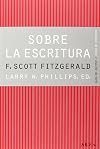
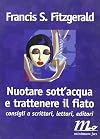
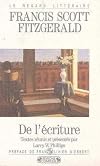
F Scott Fitzgerald on Writing
by F. Scott Fitzgerald, Larry W. Phillips (Editor)
On This Page
Description
Scott Fitzgerald loitou ao longo da súa vida por desvelar os misterios da literatura de ficción. “Un autor debe escribir para os mozos da súa xeración, os críticos da vindeira e para todos os docentes do futuro”, afirmou. Sobre a escritura. Francis Scott Fitzgerald capta ese entusiasmo e claridade. Aquí reúnense un conxunto de citas e fragmentos de textos do autor de O gran Gatsby sobre o que significa ser escritor e escribir literatura. A selección de Larry Phillips é impecable show more e dános unha idea moi precisa do legado do mestre. show lessTags
Recommendations








Member Reviews
No fue lo que esperaba en su adquisición. en el extracto de Larry Phillips hay ideas y conceptos que dan ideas, es mejor leer al escritor en sus obras.
Jan 7, 2025Spanish
Recueil de textes tirés d'oeuvres, de la correspondance et des carnets de notes de Fitzgerald.
Apr 23, 2013French
Ratings
Members
- Recently Added By
Author Information

630+ Works 142,761 Members
F(rancis) Scott Fitzgerald was born in St. Paul, Minnesota, on September 24, 1896. He was educated at Princeton University and served in the U.S. Army from 1917 to 1919, attaining the rank of second lieutenant. In 1920 Fitzgerald married Zelda Sayre, a young woman of the upper class, and they had a daughter, Frances. Fitzgerald is regarded as one show more of the finest American writers of the 20th Century. His most notable work was the novel, The Great Gatsby (1925). The novel focused on the themes of the Roaring Twenties and of the loss of innocence and ethics among the nouveau riche. He also made many contributions to American literature in the form of short stories, plays, poetry, music, and letters. Ernest Hemingway, who was greatly influenced by Fitzgerald's short stories, wrote that Fitzgerald's talent was "as fine as the dust on a butterfly's wing." Yet during his lifetime Fitzgerald never had a bestselling novel and, toward the end of his life, he worked sporadically as a screenwriter at motion picture studios in Los Angeles. There he contributed to scripts for such popular films as Winter Carnival and Gone with the Wind. Fitzgerald's work is inseparable from the Roaring 20s. Berenice Bobs Her Hair and A Diamond As Big As The Ritz, are two short stories included in his collections, Tales of the Jazz Age and Flappers and Philosophers. His first novel The Beautiful and Damned was flawed but set up Fitzgerald's major themes of the fleeting nature of youthfulness and innocence, unattainable love, and middle-class aspiration for wealth and respectability, derived from his own courtship of Zelda. This Side of Paradise (1920) was Fitzgerald's first unqualified success. Tender Is the Night, a mature look at the excesses of the exuberant 20s, was published in 1934. Much of Fitzgerald's work has been adapted for film, including Tender is the Night , The Great Gatsby, and Babylon Revisited which was adapted as The Last Time I Saw Paris by Metro-Goldwyn-Mayer in 1954. The Last Tycoon, adapted by Paramount in 1976, was a work in progress when Fitzgerald died of a heart attack on December 21, 1940, in Hollywood, California. Fitzgerald is buried in the historic St. Mary's Cemetery in Rockville, Maryland. (Bowker Author Biography) show less
Common Knowledge
- Original title
- F. Scott Fitzgerald on Writing
- Original publication date
- 1985
Classifications
- Genre
- Fiction and Literature
- DDC/MDS
- 808.02 — Literature & rhetoric Literature, rhetoric & criticism Composition Rhetoric and anthologies Authorship techniques, plagiarism, editorial techniques
- LCC
- PS3511 .I9 .A6 — Language and Literature American literature American literature Individual authors 1900-1960
Statistics
- Members
- 69
- Popularity
- 452,451
- Reviews
- 2
- Rating
- (4.08)
- Languages
- English, French, Italian, Spanish
- Media
- Paper
- ISBNs
- 6
- ASINs
- 1