On This Page
Description
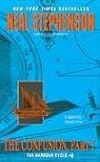
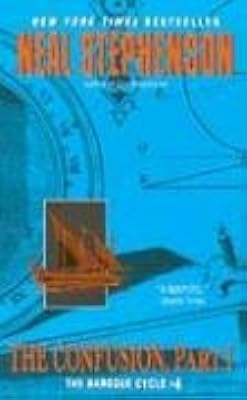
In this compelling adventure, Stephenson brings to life a cast of unforgettable characters in the late 1600s on the high seas. It is a time of breathtaking genius and discovery for men and women whose exploits define an age known as Baroque.Tags
Recommendations









Member Reviews
Oh thank BOG there's a competent, nay, glorious, voice actress to narrate all of Eliza's epistolary bits. Now, shorn, mostly, of male fantasizing/sexualizing of her, she emerges as someone to admire and even, maybe, like.
Now, I admit to being a huge fanboy of Stephenson in general, but unfortunately, I wasn't horribly thrilled about this book.
That's not to say that it didn't have some really fascinating bits and sequences... because it did. And I had no problems with the jumping between different times in the Baroque period, the admittedly rather heavy explorations of period economics, of political intrigues, or any of the like. Even the main characters, Eliza and Jack, are rather interesting when they're in the very heart of things, but the rest of the time, there was a lot of what might be called filler.
It's great if you're reading the book for the history, for the feel of the late 1600's and early 1700's Greater Europe (and eventually elsewhere), or show more just reading it for the unique mix of vagabondry and high-court intrigue with silver and gold heists, revenge, and the language.
Best of all, however, was the alchemy. There's a lot less science in this than in the first volume, unfortunately, but what there is, is really fascinating. Solomon's gold is a special kind of gold that's heavier than regular gold... but throw that into the mix of a gigantic heist and attempted unloading of said heist and the impact that it would have on whole economies, witting or unwitting... and we've got a huge Con... with a Fusion of different alchemies. :) Of course, there's also the combining of different economies in the mix, too, but no matter how clever this book might be when we dig deeper into it, the entire thing does rather fall into the plain old other kinds of confusion.
I'm going to continue because I do have a bit of fondness for Jack and Eliza, but I'm mainly sticking with it because it is, after all, Stephenson. show less
That's not to say that it didn't have some really fascinating bits and sequences... because it did. And I had no problems with the jumping between different times in the Baroque period, the admittedly rather heavy explorations of period economics, of political intrigues, or any of the like. Even the main characters, Eliza and Jack, are rather interesting when they're in the very heart of things, but the rest of the time, there was a lot of what might be called filler.
It's great if you're reading the book for the history, for the feel of the late 1600's and early 1700's Greater Europe (and eventually elsewhere), or show more just reading it for the unique mix of vagabondry and high-court intrigue with silver and gold heists, revenge, and the language.
Best of all, however, was the alchemy. There's a lot less science in this than in the first volume, unfortunately, but what there is, is really fascinating. Solomon's gold is a special kind of gold that's heavier than regular gold... but throw that into the mix of a gigantic heist and attempted unloading of said heist and the impact that it would have on whole economies, witting or unwitting... and we've got a huge Con... with a Fusion of different alchemies. :) Of course, there's also the combining of different economies in the mix, too, but no matter how clever this book might be when we dig deeper into it, the entire thing does rather fall into the plain old other kinds of confusion.
I'm going to continue because I do have a bit of fondness for Jack and Eliza, but I'm mainly sticking with it because it is, after all, Stephenson. show less
My favourite part of this book is how people non ironically use the phrase "Behold!" in normal conversation. That should make a comeback.
My favourite part of this book is how people non ironically use the phrase "Behold!" in normal conversation. that should make a comeback.
My favourite part of this book is how people non ironically use the phrase "Behold!" in normal conversation. that should make a comeback.
Jack Shaftoe, el llamado Rey de los Vagabundos que será rey de verdad en Indostán, sigue con sus peripecias por todo el mundo, de Japón a México. Mientras, Eliza, la joven de Qwghlm que ha sido odalisca y espía para acabar convertida en una influyente dama en la corte de Francia, estrecha lazos con Sofía Carlota, esposa de Federico I de Prusia y protectora de Leibniz.
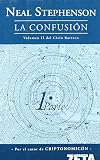
La confusión inevitablemente asociada al nacimiento del mundo y la mentalidad modernos es, en realidad, el eje central de una vasta peripecia humana, social e intelectual que configura el segundo volumen de una obra magna, el Ciclo Barroco.
La confusión inevitablemente asociada al nacimiento del mundo y la mentalidad modernos es, en realidad, el eje central de una vasta peripecia humana, social e intelectual que configura el segundo volumen de una obra magna, el Ciclo Barroco.
Dec 20, 2022Spanish
Ratings
Members
- Recently Added By
Author Information

80+ Works 118,676 Members
Neal Stephenson, the science fiction author, was born on October 31, 1959 in Maryland. He graduated from Boston University in 1981 with a B.A. in Geography with a minor in physics. His first novel, The Big U, was published in 1984. It received little attention and stayed out of print until Stephenson allowed it to be reprinted in 2001. His second show more novel was Zodiac: The Eco-Thriller was published in 1988, but it was his novel Snow Crash (1992) that brought him popularity. It fused memetics, computer viruses, and other high-tech themes with Sumerian mythology. Neal Stephenson has won several awards: Hugo for Best Novel for The Diamond Age (1996), the Arthur C. Clarke for Best Novel for Quicksilver (2004), and the Prometheus Award for Best Novel for The System of the World (2005). He recently completed the The Baroque Cycle Trilogy, a series of historical novels. It consists of eight books and was originally published in three volumes and Reamde. His latest novel is entitled The Rise and Fall of D. O. D. O. Stephenson also writes under the pseudonym Stephen Bury. (Bowker Author Biography) show less
Series

Work Relationships
Is contained in
Common Knowledge
- Canonical title
- The Confusion, Part 1 {Baroque Cycle, Book 4}
- First words
- He was not merely awakened, but detonated out of an uncommonly long and repetitive dream.
- Disambiguation notice
- This is the fourth volume of the eight-volume edition. Please don't combine with the second volume of the three-volume edition, or with the fifth volume of the eight-volume edition.
Classifications
Statistics
- Members
- 63
- Popularity
- 491,391
- Reviews
- 6
- Rating
- (4.21)
- Languages
- English, Polish, Spanish
- Media
- Paper
- ISBNs
- 4