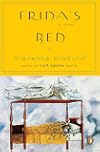
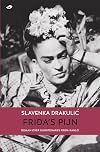
Frida's Bed
by Slavenka Drakulic
On This Page
Description
A beautifully imagined story of the last days of Frida Kahlo's life A few days before Frida Kahlo's death in 1954, she wrote in her diary, ?I hope the exit is joyful'and I hope never to return.' Diagnosed with polio at the age of six and plagued by illness and injury throughout her life, Kahlo's chronic pain was a recurrent theme in her extraordinary art. In Frida's Bed, Slavenka Drakulic´ explores the inner life of one of the world's most influential female artists, skillfully weaving show more Frida's memories into descriptions of her paintings, producing a meditation on the nature of chronic pain and creativity. With an intriguing subject whose unusual life continues to fascinate, this poignant imagining of Kahlo's thoughts during her final hours by another daringly original and uncompromising creative talent will attract readers of literary fiction and art lovers alike. show lessTags
Recommendations





















Member Recommendations
Member Reviews
I learned about this book from SqueakyChu, who read it earlier this year. I was especially interested in the novel, based on the life of the Mexican painter Frida Kahlo, as I was enthralled by the Kahlo exhibit at the Philadelphia Museum of Art last year.
This was a brilliant and enlightening story, in which Kahlo is an occasional narrator. She was born with spina bifida, developed polio at a young age, which caused extreme pain and atrophy of her right leg, and barely survived a horrible accident aboard a streetcar as a young woman, which led to chronic debilitating pain and disability throughout the rest of her life. Her mother gave her supplies to paint during her convalescence from the accident, and she turned to painting to take show more her mind off of the pain, and as a mode of self expression.
She boldly took several of her works to the famed muralist Diego Rivera, referred to as "the Maestro" throughout the book, who almost immediately recognized her talent and her beauty, leaving his wife to marry the much younger Kahlo. Their marriage was a necessary but not happy one, as her art flourished with his support but his wanton infidelities took an emotional toll on her.
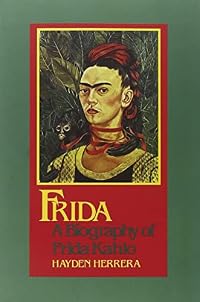
Drakulic does a masterful job in unveiling Kahlo, and [Frida's Bed] feels less like a novel than a short autobiography. The author includes several descriptions of Kahlo's portraits within the story, but prints are not included. I had the catalogue from the museum exhibit, Frida: A Biography of Frida Kahlo by Hayden Herrera, and could quickly refer to these prints. However, someone reading this novel without access to these prints, whether online or on paper, would not gain the same experience and understanding of her work.
The last 30-40 pages were somewhat tedious and repetitive, but [Frida's Bed] was a fascinating psychological, medical and historical analysis of the life and work of Frida Kahlo, and is highly recommended. show less
This was a brilliant and enlightening story, in which Kahlo is an occasional narrator. She was born with spina bifida, developed polio at a young age, which caused extreme pain and atrophy of her right leg, and barely survived a horrible accident aboard a streetcar as a young woman, which led to chronic debilitating pain and disability throughout the rest of her life. Her mother gave her supplies to paint during her convalescence from the accident, and she turned to painting to take show more her mind off of the pain, and as a mode of self expression.
She boldly took several of her works to the famed muralist Diego Rivera, referred to as "the Maestro" throughout the book, who almost immediately recognized her talent and her beauty, leaving his wife to marry the much younger Kahlo. Their marriage was a necessary but not happy one, as her art flourished with his support but his wanton infidelities took an emotional toll on her.
Drakulic does a masterful job in unveiling Kahlo, and [Frida's Bed] feels less like a novel than a short autobiography. The author includes several descriptions of Kahlo's portraits within the story, but prints are not included. I had the catalogue from the museum exhibit, Frida: A Biography of Frida Kahlo by Hayden Herrera, and could quickly refer to these prints. However, someone reading this novel without access to these prints, whether online or on paper, would not gain the same experience and understanding of her work.
The last 30-40 pages were somewhat tedious and repetitive, but [Frida's Bed] was a fascinating psychological, medical and historical analysis of the life and work of Frida Kahlo, and is highly recommended. show less
It's no wonder that quite a few novels are based on the life of Mexican artist Frida Kahlo. Her life story has the kind of detail and psychological drama that make for stirring novels. This book by Slavenka Drakulic is definitely one to add to any Frida Kahlo story collection.
Two things set Frida’s Bed apart from other novels about this artist. The first is the literary device of moving back and forth randomly from third to first person narrative. Although some readers may find this distracting, I find it an excellent way to tell a detailed story while adding personal thoughts of the main character. This must be done with skill, and I think the author succeeds.
The second device is the description within the story of the artist’s show more individual paintings done along with an interpretation. One must remember, however, that this is a novel and understand that any interpretation is open for discussion. What I especially loved about this device was the opportunity to run to my computer every so often to look up each picture and study it. True, the pictures could have been included in the novel, but novels make better use of words while computers present far better pictures.
I loved the author’s use of color in her narrative in the same way an artist would do with brushes. You can almost see the colors “pop” in these passages:
"...gray, the color of fear, is ever-present in her life and a part of her",
"You lay there on the green felt, naked, covered in blood and dusted in gold…"
"At night she watched death flit around her bed and dreamed of being a yellow butterfly."
Although this novel can be read with no previous knowledge of the artist, I think it would be best to at least read something based on her true life story to get an idea where fantasy leaves fact, although the story seems pretty close to what I do know of Frida Kahlo’s life. The ending of the book dragged a bit, but that was okay. Perhaps Kahlo herself felt that way as her life continued to unravel and all she could do was wait for a solution to her lifelong problems. show less
Two things set Frida’s Bed apart from other novels about this artist. The first is the literary device of moving back and forth randomly from third to first person narrative. Although some readers may find this distracting, I find it an excellent way to tell a detailed story while adding personal thoughts of the main character. This must be done with skill, and I think the author succeeds.
The second device is the description within the story of the artist’s show more individual paintings done along with an interpretation. One must remember, however, that this is a novel and understand that any interpretation is open for discussion. What I especially loved about this device was the opportunity to run to my computer every so often to look up each picture and study it. True, the pictures could have been included in the novel, but novels make better use of words while computers present far better pictures.
I loved the author’s use of color in her narrative in the same way an artist would do with brushes. You can almost see the colors “pop” in these passages:
"...gray, the color of fear, is ever-present in her life and a part of her",
"You lay there on the green felt, naked, covered in blood and dusted in gold…"
"At night she watched death flit around her bed and dreamed of being a yellow butterfly."
Although this novel can be read with no previous knowledge of the artist, I think it would be best to at least read something based on her true life story to get an idea where fantasy leaves fact, although the story seems pretty close to what I do know of Frida Kahlo’s life. The ending of the book dragged a bit, but that was okay. Perhaps Kahlo herself felt that way as her life continued to unravel and all she could do was wait for a solution to her lifelong problems. show less
What a stunning work of fiction! The odd time that I have encountered Frida Kahlo's art, I have looked at it with my head tilted sideways trying to see inside the mind of the artist behind the work. Drakulic has accomplished what I couldn't.... she has given voice in her novel to Frida's inner mind, the pain that demonized her life, and her resilience and overall strength of will to carry on when others would have shriveled up in a corner in the fetal position and cried "enough!"
Drakulic's uncompromising novel, caressingly tender at times, searingly blunt at other times, focuses on Frida's last day, her dying thoughts, the poignant memories of her life, her family and her love for Diego Rivera, the "Maestro" of Mexico, and her lovers, show more including Tolstoy.
Yes, this is a work of fiction. Even so, I felt that Drakulic did an amazing job conveying the chronic pain Frida endured, at six when she was struck with polio and the pain that would follow her through the rest of her life after surviving a bus/trolley car accident in her late teens that resulted in a broken spinal column, collarbone, ribs, pelvis, eleven fractures to her right leg and impalement by a broken handrail. The impalement is just too horrific to go into here. The memories told in the story have a candid, reflective quality to them.
Interspersed in the story are descriptions of some of Frida's portraits/paintings. I enjoyed reading the book and viewing Frida's art, and in particular her various self portraits, in a whole new light. A truly amazing, brilliant mosaic of Frida's life. show less
Drakulic's uncompromising novel, caressingly tender at times, searingly blunt at other times, focuses on Frida's last day, her dying thoughts, the poignant memories of her life, her family and her love for Diego Rivera, the "Maestro" of Mexico, and her lovers, show more including Tolstoy.
Yes, this is a work of fiction. Even so, I felt that Drakulic did an amazing job conveying the chronic pain Frida endured, at six when she was struck with polio and the pain that would follow her through the rest of her life after surviving a bus/trolley car accident in her late teens that resulted in a broken spinal column, collarbone, ribs, pelvis, eleven fractures to her right leg and impalement by a broken handrail. The impalement is just too horrific to go into here. The memories told in the story have a candid, reflective quality to them.
Interspersed in the story are descriptions of some of Frida's portraits/paintings. I enjoyed reading the book and viewing Frida's art, and in particular her various self portraits, in a whole new light. A truly amazing, brilliant mosaic of Frida's life. show less
Intriquing book written in a unique style. Shares the supposed life of Frida Kahlo, famous Mexican surrealist artist. Style of the narrative varies from first to third person in a fashion which make it a challenge to read but it is a powerful story of love, the impact of chronic illness on self and family and the evolution of art to express feelings.
This book touched me deeply as I am nearing the end of my life as a result of metstatic cancer. I am also bipolar and have dealt with thoughts of suicide, depression and mania. It's not a pretty book to read if you've not come to some acceptance of your terminal condition, but I see it as a good choice for people who've come to terms with death. I intend to share it with my counselor in hopes that she can use it for others like myself.
Frida's Bed is a strange tale strangely written. Of course Slavenka Drakulić isn't entirely to blame, it IS Frida Khalo's life it chronicles, afterall.
Admittedly I'm not generally a fan of historical fiction because you just can't tell where the history leaves off and the fiction begins. But Drakulić's biography-slash-novel is even more egregious as she indiscriminately switches from first person to third and back again. The effect is, fittingly, surrealistic.
And this surrealist literary style carries through to the (bitter) end. For Khalo lead a pretty tortuous life - physically due to illness and injury as well as emotionally - and the book follows right along! The end was a slow death for poor Khalo and it feels like a slow death show more for the reader too. The final pages are an exhausting tirade that ultimately leaves us with a sense of relief at Khalo's departure.
As an interpretation of an artist's life, its an interesting read. A biography, however, it is not. For a slight book, it feels longer that it should. show less
Admittedly I'm not generally a fan of historical fiction because you just can't tell where the history leaves off and the fiction begins. But Drakulić's biography-slash-novel is even more egregious as she indiscriminately switches from first person to third and back again. The effect is, fittingly, surrealistic.
And this surrealist literary style carries through to the (bitter) end. For Khalo lead a pretty tortuous life - physically due to illness and injury as well as emotionally - and the book follows right along! The end was a slow death for poor Khalo and it feels like a slow death show more for the reader too. The final pages are an exhausting tirade that ultimately leaves us with a sense of relief at Khalo's departure.
As an interpretation of an artist's life, its an interesting read. A biography, however, it is not. For a slight book, it feels longer that it should. show less
If you don't already know Frida Kahlo's story or her art, this is not the place to start. I picked up this book because I like her art and wanted to know more about her. But the time shifts and change of narrator, especially, had me confused until I was more than halfway through this short book. I might have liked this as a short story; but even this slim volume was too much gloom.
Members
- Recently Added By
Author Information

28+ Works 2,524 Members
Some Editions
Awards and Honors
Awards
Common Knowledge
- People/Characters
- Frida Kahlo; Diego Rivera (the Maestro); Kity; Don Guillermo; Doña Matilda; Leon Trotsky (show all 7); Natalia Trotsky
- Related movies
- Frida (2002 | IMDb | Julie Taymor); Frida, naturaleza viva (1986 | IMDb | Paul Leduc)
- Epigraph
- Physical pain does not simply resist language but actively destroys it, bringing about an immediate reversion to a state anterior to language, to sounds and cries a human being makes before language is learned.
--E... (show all)laine Scarry, The Body in Pain
Mi pintura llava el mensaje del dolor
--Frida Kahlo - First words
- That early July morning Frida woke up in her bed at her parents' house.
- Quotations
- A ghostly white skull with touches of gray; gray, the color of fear, is ever-present in her life and is part of her.
We always think we will have time to say and explain everything to those we care about, to show how much we understand and love them. Sudden death is unfair to everybody, including those left behind.
She knew from her own experience that every illness carries with it shame...
As with every religion, so with communism, belief in the idea was more important than the crimes committed in its name, she thought, watching the light in the room grow stronger. - Last words
- (Click to show. Warning: May contain spoilers.)And Frida surrendered to her touch.
- Blurbers
- Alvarez, Julia
- Original language
- Croatian
Classifications
- Genres
- Fiction and Literature, General Fiction
- DDC/MDS
- 891.8336 — Literature & rhetoric Asian Literature East Indo-European and Celtic literatures West and South Slavic languages (Bulgarian, Slovene, Polish, Czech, Slovak, Serbo-Croatian, and Macedonian) Croatian and other Shtokavian languages Croatian fiction 1991–
- LCC
- PG1619.14 .R34 .F7513 — Language and Literature Slavic languages and literatures. Baltic languages. Albanian language Slavic. Baltic. Albanian Serbo-Croatian
- BISAC
Statistics
- Members
- 133
- Popularity
- 244,898
- Reviews
- 13
- Rating
- (3.74)
- Languages
- 7 — English, German, Hungarian, Italian, Norwegian, Croatian, Swedish
- Media
- Paper, Ebook
- ISBNs
- 12
- ASINs
- 5