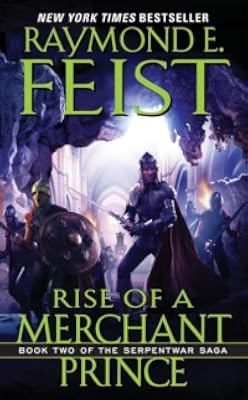
Rise of a Merchant Prince
by Raymond E. Feist
Serpentwar Saga (2), The Riftwar Cycle: Publication (Series Name) (The Serpentwar Saga, 2), The Riftwar Cycle, Alternative Reading Order (10 (Serpentwar Saga 02)), The Riftwar Cycle: Publication (Series Blocks) (13), The Riftwar Cycle: Chronological (17 (Serpentwar Saga 02))
On This Page
Description
The Serpentwar Saga continues! The second book in master fantasist Raymond E. Feist's New York Times bestselling classic epic fantasy adventure of war, magic, betrayal, and heroism, Rise of a Merchant Prince chronicles the further exploits of the young protagonists of Shadow of a Dark Queen in the aftermath of the initial confrontation with the fearsome reptilian Sauur and the invading armies of the dreaded Emerald Queen. Return once more to Midkemia-and discover why Science Fiction show more Chronicle calls Raymond E. Feist, 'Without question one of the very best writers of fantasy adventure practicing today.' Any reader addicted to the works of Terry Goodkind, George R. R. Martin, and Terry Brooks simply must add Feist's Serpentwar Saga to his fantasy bookshelf. show lessTags
Recommendations


Member Reviews
This book continues the story established in "Shadow of a Dark Queen," but really takes it to another level. It's still nothing profound, but the structure and characterization both get a lot deeper. The key difference is that instead of telling a straightforward fantasy adventure story as in the first book, Feist's main story is about commerce: a greedy, morally questionable fellow doing what it takes to get filthy rich. In the background, the warriors and wizards of the prior volume continue their struggle against an advancing dark army.
Adding the viewpoint of Roo to the existing ones of Erik and Miranda helps a lot, in part because Roo's a much more interesting character. Erik's ultimately pretty boring and conventional, and Miranda show more is largely a cypher, but Roo is deeply flawed. He's ultimately on the side of the heroes, but Feist doesn't shy away from playing up his callousness, greed, short-sightedness and lust. That plus the novelty of the mercantile plot sets this above the rest of the series. show less
Adding the viewpoint of Roo to the existing ones of Erik and Miranda helps a lot, in part because Roo's a much more interesting character. Erik's ultimately pretty boring and conventional, and Miranda show more is largely a cypher, but Roo is deeply flawed. He's ultimately on the side of the heroes, but Feist doesn't shy away from playing up his callousness, greed, short-sightedness and lust. That plus the novelty of the mercantile plot sets this above the rest of the series. show less
Tweede deel uit de "De Slangenoorlog" serie, en eigenlijk past dit niet zo goed in de fantasy-hoek. Teveel van het boek ging over de opkomst van Ru's zakenimperium. Weinig echte actie-scenes.
De strijd tegen de duistere koningin gaat door. Voor een groot deel echter ligt de focus op Ru en zijn pogingen om een van de rijkste mannen van Kondor te worden, en lijkt de strijd tegen de legers van de duistere koningin naar de achtergrond te zijn verdreven. Jammer, want juist dat was het mooiste uit het vorige boek De Schaduw van een Duistere Koningin. Het verhaal om Ru past naar mijn idee niet zo goed in deze wereld, tenzij een van de komende boeken anders blijkt uit te wijzen.
Ru is op geen enkele manier een typische fantasyheld. In plaats show more daarvan is hij een zeer gebrekkige mens, met echte motieven en aspiraties die, hoewel ik het er misschien niet mee eens ben, meer trouw zijn aan het leven. Ru zal ook in eerste instantie denken 'wat zit er voor mij in,' en dan pas naar wat goed is voor het rijk.
Het einde van het boek is een beetje teleurstellend. Erik en zijn groep worden gered door Ru en zijn bemanning, maar dat is het eigenlijk wel een beetje.
Zoals ik in een eerdere opmerking al heb geschreven, is het jammer dat de vertaler schijnbaar niet de moeite heeft genomen om naar het vorige boek te kijken, anders had die waarschijnlijk de namen wel consequent doorgevoerd. Iemand die in De Schaduw van een Duistere Koningin Robby heette, heet nu opeens Bobby. Een personage met de naam Puur Bloed heet nu Baldor Bloed. En dat is toch wel jammer.
Op naar De razernij van een demonenkoning. show less
De strijd tegen de duistere koningin gaat door. Voor een groot deel echter ligt de focus op Ru en zijn pogingen om een van de rijkste mannen van Kondor te worden, en lijkt de strijd tegen de legers van de duistere koningin naar de achtergrond te zijn verdreven. Jammer, want juist dat was het mooiste uit het vorige boek De Schaduw van een Duistere Koningin. Het verhaal om Ru past naar mijn idee niet zo goed in deze wereld, tenzij een van de komende boeken anders blijkt uit te wijzen.
Ru is op geen enkele manier een typische fantasyheld. In plaats show more daarvan is hij een zeer gebrekkige mens, met echte motieven en aspiraties die, hoewel ik het er misschien niet mee eens ben, meer trouw zijn aan het leven. Ru zal ook in eerste instantie denken 'wat zit er voor mij in,' en dan pas naar wat goed is voor het rijk.
Het einde van het boek is een beetje teleurstellend. Erik en zijn groep worden gered door Ru en zijn bemanning, maar dat is het eigenlijk wel een beetje.
Zoals ik in een eerdere opmerking al heb geschreven, is het jammer dat de vertaler schijnbaar niet de moeite heeft genomen om naar het vorige boek te kijken, anders had die waarschijnlijk de namen wel consequent doorgevoerd. Iemand die in De Schaduw van een Duistere Koningin Robby heette, heet nu opeens Bobby. Een personage met de naam Puur Bloed heet nu Baldor Bloed. En dat is toch wel jammer.
Op naar De razernij van een demonenkoning. show less
Oddly enough, I had a lot more fun with this than I expected I'd have with a title with MERCHANT and PRINCE in it.
As a matter of fact, I pretty much loved every part of Avery and his rise to grand wealth from practically nothing. All the bit parts from characters we've seen and loved before were just icing. Avery, on the other hand, was the real star. I think I liked this better than the first book in the Serpentwar Saga. By a lot.
HOWEVER, I do have one gripe that has a lot more to do with my personal preferences more than anything else.
Why do we need MCs who are unable to keep their pens in their pockets? I was pretty thrilled by his marriage and the news of his kid. I would SOOOO have preferred it if the man just stayed loyal. It show more really killed much of my enjoyment. I would have given a full five stars for his clever exploits. This other stuff just left a bad taste in my mouth. A different kind of Achilles heel would have been just about perfect.
Oh, well. Win some, lose some. I'm just happy that the rest of the novel was fun. :) show less
As a matter of fact, I pretty much loved every part of Avery and his rise to grand wealth from practically nothing. All the bit parts from characters we've seen and loved before were just icing. Avery, on the other hand, was the real star. I think I liked this better than the first book in the Serpentwar Saga. By a lot.
HOWEVER, I do have one gripe that has a lot more to do with my personal preferences more than anything else.
Why do we need MCs who are unable to keep their pens in their pockets? I was pretty thrilled by his marriage and the news of his kid. I would SOOOO have preferred it if the man just stayed loyal. It show more really killed much of my enjoyment. I would have given a full five stars for his clever exploits. This other stuff just left a bad taste in my mouth. A different kind of Achilles heel would have been just about perfect.
Oh, well. Win some, lose some. I'm just happy that the rest of the novel was fun. :) show less
With Roo and Erik safely back in Krondor, they're offered the choice of re-upping in the Crimson Eagles or mustering out. Erik stays in - he might not particular enjoy soldiering but he was good at it and he knew what was coming. Roo, too, knew what was coming and wanted as little as possible to do with it so he leaves the army to pursue his dream of vast wealth. But he finds himself starting off at the bottom as a waiter in Barrett's Coffee House (not *that* low really - Barrett's is Krondor's equivalent of London's Lloyds) and it is here that he puts his sneakiness to good effect in building his portfolio.
Before too long with a bit of help from Lord James, Duke of Krondor and that man's secret service, he's on the rise. Roo finds his show more plain daughter of a rich merchant to marry but he's infatuated by another woman; the daughter of his greatest competitor, who was definitely not plain.
As wealth is accrued and the spies from Novindus report on the growing strength of the Emerald Queen, Duke James remind Roo of help given and it's price.
The final invasion is one of the most bloody scenes in any of these books and is quite explicitly unpleasant (though not too bad). show less
Before too long with a bit of help from Lord James, Duke of Krondor and that man's secret service, he's on the rise. Roo finds his show more plain daughter of a rich merchant to marry but he's infatuated by another woman; the daughter of his greatest competitor, who was definitely not plain.
As wealth is accrued and the spies from Novindus report on the growing strength of the Emerald Queen, Duke James remind Roo of help given and it's price.
The final invasion is one of the most bloody scenes in any of these books and is quite explicitly unpleasant (though not too bad). show less
I fairly enjoyed the first book of this series. This one, however, was horrible. Let's put aside the pacing problems (something I can handle) and get to the two issues that bugged me. The lesser issue is the fact that Feist cannot write women characters. Seriously, every female character is either a sexual instrument or a pathetic weakling. They are only there to support the male characters. Even Roo's wife (a character who I started out really liking) turns out to be nothing more than a plot device. And the one possibly strong woman in the book is sleeping with at least two men; because, you know, sex makes them feel special...or something like that.
The biggest problem I have with this is the main character: Roo Avery. He is not a show more strong protagonist. He is unsympathetic to say the least, and I found myself hating him more and more as the book progresses. He starts out well enough: deciding he needs to marry Karli. He doesn't really care about her, but he begins to see she's interesting and fairly intelligent (the author goes nowhere with Karli's knowledge about trading). After the wedding, however, Roo is so infatuated with making money that he couldn't really care less what happens to his wife and his children (oh, don't get me started on how childish he acts when he finds out his firstborn is a girl). He later on has a mistress and decides he doesn't love his wife. He does multiple despicable things, and then at the end he has some immediate breakthrough and all of a sudden he's a doting husband and father. What?! The fact that Roo's overall story could have been told in 100 pages didn't help. I couldn't care less about the trading practices going on in Krondor (again, pacing issues). And now I'm supposed to CARE about Roo because suddenly he feels bad? Nope. Sorry. I found myself liking Roo's employees much more than liking him. show less
The biggest problem I have with this is the main character: Roo Avery. He is not a show more strong protagonist. He is unsympathetic to say the least, and I found myself hating him more and more as the book progresses. He starts out well enough: deciding he needs to marry Karli. He doesn't really care about her, but he begins to see she's interesting and fairly intelligent (the author goes nowhere with Karli's knowledge about trading). After the wedding, however, Roo is so infatuated with making money that he couldn't really care less what happens to his wife and his children (oh, don't get me started on how childish he acts when he finds out his firstborn is a girl). He later on has a mistress and decides he doesn't love his wife. He does multiple despicable things, and then at the end he has some immediate breakthrough and all of a sudden he's a doting husband and father. What?! The fact that Roo's overall story could have been told in 100 pages didn't help. I couldn't care less about the trading practices going on in Krondor (again, pacing issues). And now I'm supposed to CARE about Roo because suddenly he feels bad? Nope. Sorry. I found myself liking Roo's employees much more than liking him. show less
This book took an annoying side character and made you understand how truly horrible snd despicable he is without any lasting consequences for the character and with the teensiest of character growth. Which is annoying because the set up is good, I'm all for a low stakes fantasy novel and dislikable main characters but not like this. You don't have to read this book to continue on with the series, and I absolutely recomend that you don't.
Leuke karakters, vooral Ru en Eric, maar de plot is echt minder dan die van de Keizerrijkserie en die van De Oorlog van de grote Scheuring. Het is me allemaal net te toevallig en sommige zaken zijn echt ongeloofwaardig. (Hoewel ik niet echt een voorbeeld kan noemen. Het is meer een algemeen gevoel) Maar ik heb wel erg van de boeken genoten. Het blijft heerlijk leesbare fantasy. En ik haat Sylvia. Wat een bitch.
Members
- Recently Added By
Lists

Best Fantasy Novels
821 works; 361 members
Favourite High Fantasy Books
113 works; 23 members
Author Information

153+ Works 96,558 Members
Fantasy writer Raymond E. Feist was born in Southern California. He received a B.A. in Communication Arts with honors from the University of California at San Diego in 1977. His first novel, Magician, published in 1982 is the first book of The Riftwar Saga. His other series include The Serpentwar Saga, The Empire Trilogy, The Riftwar Legacy, show more Krondor's Sons, Legends of the Riftwar, Conclave of Shadows, Darkwar Saga, Chaoswar Saga, Demonwar Saga, and The Firemane Saga. Feist's work appears regularly on the bestseller lists of The New York Times and The Times of London. He has also worked with Sierra Studios and PyroTechnix to produce a role-playing game. (Bowker Author Biography) show less
Some Editions
Series

Serpentwar Saga
4 works (2)

The Riftwar Cycle: Publication (Series Name)
31 works (The Serpentwar Saga, 2)

The Riftwar Cycle, Alternative Reading Order
33 works (10 (Serpentwar Saga 02))

The Riftwar Cycle: Publication (Series Blocks)
30 works (13)

The Riftwar Cycle: Chronological
32 works (17 (Serpentwar Saga 02))
Work Relationships
Is contained in
Contains
Is abridged in
Common Knowledge
- Canonical title
- Rise of a Merchant Prince
- Original title
- Rise of a Merchant Prince
- Original publication date
- 1995-10
- People/Characters
- Aglaranna; Calis; Patrick conDoin; Erik von Darkmoor; Macros the Black; Miranda (show all 9); Nakor; Pug; Roo
- Important places
- Midkemia; Krondor, Kingdom of the Isles, Midkemia; Novindus
- Epigraph
- Wealth, howsoever got, in England makes Lords of mechanics, gentlemen of rakes; Antiquity and birth are needless here; 'Tis Impudence and monkey makes a peer.
-Daniel Defoe
the True-Born Englisman, Pt. I - Dedication
- This book is dedicated to Diane and David Clark, good friends
- First words
- The soul screamed.
- Last words
- (Click to show. Warning: May contain spoilers.)The two men went below, and the ship came fully around and began the long journey back the way she had come, heading for adistant port that the two men called home.
- Original language*
- Englisch
*Some information comes from Common Knowledge in other languages. Click "Edit" for more information.
Classifications
Statistics
- Members
- 3,496
- Popularity
- 4,734
- Reviews
- 29
- Rating
- (3.67)
- Languages
- 8 — Dutch, English, Finnish, French, German, Hungarian, Swedish, Turkish
- Media
- Paper, Audiobook, Ebook
- ISBNs
- 33
- ASINs
- 21