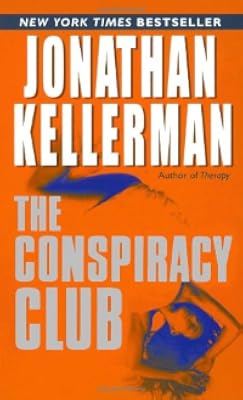
The Conspiracy Club
by Jonathan Kellerman
On This Page
Description
NEW YORK TIMES BESTSELLERWhen his passionate romance with nurse Jocelyn Banks is cut short by her kidnapping and brutal murder, young psychologist Jeremy Carrier is left emotionally devastated, haunted by his lover’s grisly demise—and eyed warily by police still seeking a prime suspect in the slaying.
“An unnerving, highly cinematic plot . . . [Kellerman has] headed off into different terrain . . . with striking success in this . . . quick-witted outing.”—Janet Maslin, The show more New York Times
To escape the pain, he buries himself in his work at City Central Hospital—only to be drawn deeper into a walking nightmare when more women are murdered in the same gruesome fashion as Jocelyn. As the suspicion surrounding Jeremy intensifies, the only way for him to prove his innocence and put his torment to rest is to follow the deadly trail of a modern-day Jack the... show less
Tags
Recommendations





















Member Reviews
Dr. Jeremy Carrier, a phycologist on staff at City Central Hospital, is excellent at his job comforting the anxious patient facing surgery or giving hope to the unfortunate facing a devastating diagnosis. But, when his girlfriend, Jocelyn, is murdered, Jeremy is the one overwhelmed with grief. Then Dr. Chess, a mysterious pathologist, invites him to dinner at an isolated yet posh club, where he meets a group of eccentric strangers. The book moves slowly from there but eventually makes its point. After interpreting oblique clues, Jeremy realizes he knows who the killer might be and that he's being groomed to apprehend him. Punctuated with subtle humor and insightful dialog, the plot twists at the end make this book worth the time invested.
85 out of 100 points -- 4 stars
Plot -- 17 out of 20 points
In a killing eerily reminiscent of Jack the Ripper, a young nurse is brutally murdered by someone with specific surgical skills. When Jeremy Carrier, the psychologist hero, becomes a suspect in his girlfriend’s murder, his grief-driven attitude and psychically-numbed responses cloud his judgment, leading him deeper into dangerous territory. A series of mysterious communications arrive in his office, leading him to conclude that the unknown sender has some personal knowledge of the killer. As he is lured into the chase to identify the psychopath, he seems to be feeling his way through a dark, depraved world like a blind man, relying on sensory input in his lonely isolation show more chamber-like existence. Apparently, Jeremy never forged meaningful friendships and lacks the personal connections most of us rely on in a crisis.
Characters -- 17 out of 20 points
Having the lovely Jocelyn Banks murdered early on tinges the tale with a sadness that doesn’t seem to leave much room for her successor in the bereaved psychologist’s bedroom. There is some rather graphic sex here and there, but Mr. Kellerman uses it to explore Jeremy’s experience with the grief process as he tries to move on and begin a new romance. Several characters seem to be so psychologically damaged they teeter on the edge of reason, in danger of crossing the fine line of sanity. The reader is left to pick out the real killer from an extensive group of “weird” people, who seem to challenge even the hardiest reader’s ability to trust as danger lurks in the shadows. One of Mr. Kellerman’s strengths is his compassion for the patients his fictional psychologist treats; cardiac patient Merilee Saunders and cancer survivor Doug Vilardi seem to bring out the best in the emotionally distant Jeremy as he goes through the motions of being a psychologist. The big drawback of the book for me was that I found the members of the Conspiracy Club hard to relate to as fictional people.
Setting -- 17 points out of 20
Jeremy, whether tucked away in the bowels of the hospital or the dreary apartment of his new girlfriend, is so overwhelmed by his loss that he appears to function on automatic pilot. City Central Hospital seems to have a dark, sinister chilliness that seems to chase away the sun. Even the meeting place for the Conspiracy Club feels unwelcoming and awkward. The too-willing Jeremy follows this storm cloud as it spreads menacing gloom in his path. (I felt like sending him away -- somewhere, anywhere -- for a long weekend, just to expose him to a little natural light and stimulate his senses in a healthier direction. “Psychologist, heal thyself!”)
Pacing -- 18 points out of 20
The story moves along like a powerful river, sweeping the reader into black, treacherous water where hidden dangers lurk. This isn’t a comfortable read -- too many characters grieving real losses and health challenges, while other characters remain stuck in their own earlier tragedies. But the action unfolds with enough chilling discoveries to keep the tale moving forward. The reader does wonder what brought all this tragedy to fruition, even as the dread builds and the finale reveals the answer.
Tone -- 16 points out of 20
Picture yourself waking up inside a dark closet. Is the closet locked from the inside or from the outside? Is it a sanctuary from the cruel outside world for you or a tomb? That’s the kind of tone this tale provides. At times, it’s hard to tell whether the growing uncertainty will end in the demise of the bad guy or take everyone else down in the process. While there is great tension, it seemed to get snagged from time to time on the subject of Death itself, as opposed to the loss of individuals. Was that deliberate on the part of the author? show less
Plot -- 17 out of 20 points
In a killing eerily reminiscent of Jack the Ripper, a young nurse is brutally murdered by someone with specific surgical skills. When Jeremy Carrier, the psychologist hero, becomes a suspect in his girlfriend’s murder, his grief-driven attitude and psychically-numbed responses cloud his judgment, leading him deeper into dangerous territory. A series of mysterious communications arrive in his office, leading him to conclude that the unknown sender has some personal knowledge of the killer. As he is lured into the chase to identify the psychopath, he seems to be feeling his way through a dark, depraved world like a blind man, relying on sensory input in his lonely isolation show more chamber-like existence. Apparently, Jeremy never forged meaningful friendships and lacks the personal connections most of us rely on in a crisis.
Characters -- 17 out of 20 points
Having the lovely Jocelyn Banks murdered early on tinges the tale with a sadness that doesn’t seem to leave much room for her successor in the bereaved psychologist’s bedroom. There is some rather graphic sex here and there, but Mr. Kellerman uses it to explore Jeremy’s experience with the grief process as he tries to move on and begin a new romance. Several characters seem to be so psychologically damaged they teeter on the edge of reason, in danger of crossing the fine line of sanity. The reader is left to pick out the real killer from an extensive group of “weird” people, who seem to challenge even the hardiest reader’s ability to trust as danger lurks in the shadows. One of Mr. Kellerman’s strengths is his compassion for the patients his fictional psychologist treats; cardiac patient Merilee Saunders and cancer survivor Doug Vilardi seem to bring out the best in the emotionally distant Jeremy as he goes through the motions of being a psychologist. The big drawback of the book for me was that I found the members of the Conspiracy Club hard to relate to as fictional people.
Setting -- 17 points out of 20
Jeremy, whether tucked away in the bowels of the hospital or the dreary apartment of his new girlfriend, is so overwhelmed by his loss that he appears to function on automatic pilot. City Central Hospital seems to have a dark, sinister chilliness that seems to chase away the sun. Even the meeting place for the Conspiracy Club feels unwelcoming and awkward. The too-willing Jeremy follows this storm cloud as it spreads menacing gloom in his path. (I felt like sending him away -- somewhere, anywhere -- for a long weekend, just to expose him to a little natural light and stimulate his senses in a healthier direction. “Psychologist, heal thyself!”)
Pacing -- 18 points out of 20
The story moves along like a powerful river, sweeping the reader into black, treacherous water where hidden dangers lurk. This isn’t a comfortable read -- too many characters grieving real losses and health challenges, while other characters remain stuck in their own earlier tragedies. But the action unfolds with enough chilling discoveries to keep the tale moving forward. The reader does wonder what brought all this tragedy to fruition, even as the dread builds and the finale reveals the answer.
Tone -- 16 points out of 20
Picture yourself waking up inside a dark closet. Is the closet locked from the inside or from the outside? Is it a sanctuary from the cruel outside world for you or a tomb? That’s the kind of tone this tale provides. At times, it’s hard to tell whether the growing uncertainty will end in the demise of the bad guy or take everyone else down in the process. While there is great tension, it seemed to get snagged from time to time on the subject of Death itself, as opposed to the loss of individuals. Was that deliberate on the part of the author? show less
Dedicated young psychologist Dr. Jeremy Carrier is unschooled in the ways of violent crime and incalculable evil – until his life is irreversibly touched by both. When his romance with nurse Jocelyn Banks is cut short by her kidnapping and brutal murder, he is left emotionally devastated and being warily eyed by police seeking a prime suspect in the unsolved killing. To escape the pain, he buries himself in his work. But when more women turn up murdered in the same gruesome fashion as Jocelyn, the suspicion surrounding Jeremy intensifies and the only way for him to prove his innocence is to follow the trail of a cunning psychopath. Spurring on Jeremy's investigation is Dr. Arthur Chess, an enigmatic pathologist who harbors a keen show more fascination with the darker deeds committed by the living. Arthur draws Jeremy into the confidence of a cryptic society devoted to matters unknown and unspoken. But when Arthur suddenly slips away, Jeremy is left to contend with an onslaught of anonymous clues  and the growing realization that a harrowing game of cat and mouse has been set in motion. show less
I love Jonathan Kellerman's Alex Delaware character and have read all his books. I guess the problem with becoming use to a certain set of characters is that when they aren't there all of a sudden, it's like part of your family is missing. It's not a Delaware book but was it a good book? Yes. It was a good plot although it did seem that it took a long time to build the personalities of the characters.
Jonathan Kellerman takes a break from his usual Alex Delaware novels with this entry. The main protagonist is Jeremy Carrier, a psychologist at a hospital, who is recovering from the brutal murder of his wife. He befriends Dr. Arthur Chess, an older doctor and his group of elderly friends who have a private group that are interested in investigating crime and studying evil. Meanwhile, Jeremy is receiving messages that are clues about his wife’s killer as well as other murders that have plagued the area.
This was not up to par with other Jonathan Kellerman novels that I have read. Plot holes abound in this novel, almost to the point of ridiculousness. The story line was not especially believable, and the characters left much to be show more desired. I wasn’t remotely impressed with this novel and I would advise skipping it.
Carl Alves – author of Blood Street show less
This was not up to par with other Jonathan Kellerman novels that I have read. Plot holes abound in this novel, almost to the point of ridiculousness. The story line was not especially believable, and the characters left much to be show more desired. I wasn’t remotely impressed with this novel and I would advise skipping it.
Carl Alves – author of Blood Street show less
This book had so much potential, I was sure it was going to be a 4.5 rating. It was intriguing. It had a murder, a mysterious man, an innocent suspect and then........it just kind of dropped off and I was blase about it. With a name like Consipiracy Club, I was expecting, well, a Consipiracy. But then it got good again and I wanted to know what happened and I was sure I had narrowed down the suspects and then....it dropped off and who I thought did it, didn't. and then whom else I thought did it...didn't and then I found out who did do it and it was anti-climatic and I just didn't care anymore. And that makes me sad.
Maybe one for the boys? sorry if that sounds sexist but I do like crime but this one just wasn't one for me. It was my first dip into his work and although it won't be the last, I won't rush out for any more. I found the vocabulary choices quite inappropriate at times and high class words stood out like a sore thumb. I didn't feel it lived up to the blurb.
Dr Jeremy Carrier did not appeal to me as a character at all. The only one who did was Dr Arthur Chess. Carrier often has an inner dialogue which became quite irritating. The plot, although formulaic, did keep me reading. Basically, Carrier is given clues to a series of murders carried out in the same gruesom fashipn as his girlfriend's. I thought they must have been together for a show more long time but it was only a matter of months.
With characters who were difficult to bond with, I don't really know who this book would appeal to. If you want to read a book whilst on a plance then this would be it. If you're looking for something deep and meaningful look elsewhere.
I do have others of his at home to read but I'm afraid they'll be pushed to the back of my tbr pile! show less
Dr Jeremy Carrier did not appeal to me as a character at all. The only one who did was Dr Arthur Chess. Carrier often has an inner dialogue which became quite irritating. The plot, although formulaic, did keep me reading. Basically, Carrier is given clues to a series of murders carried out in the same gruesom fashipn as his girlfriend's. I thought they must have been together for a show more long time but it was only a matter of months.
With characters who were difficult to bond with, I don't really know who this book would appeal to. If you want to read a book whilst on a plance then this would be it. If you're looking for something deep and meaningful look elsewhere.
I do have others of his at home to read but I'm afraid they'll be pushed to the back of my tbr pile! show less
Members
- Recently Added By
Author Information

124+ Works 71,834 Members
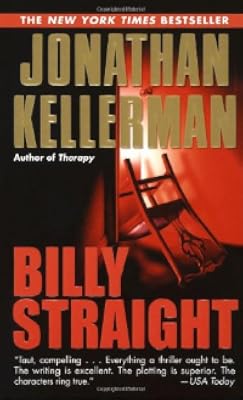
Jonathan Kellerman is one of the world's most popular authors. He has brought his expertise as a child psychologist to 16 consecutive bestselling novels of suspense, including The Butcher's Theater, Jerusalem, and Billy Straight and 32 previous Alex Delaware novels, translated into two dozen languages. He is also the author of numerous essays, show more short stories, and scientific articles, two children's books, and three volumes on psychology, including Savage Spawn: Reflections on Violent Children. (Publisher Provided) show less
Awards and Honors
Distinctions
Series
Belongs to Publisher Series
Goldmann (45810)
Work Relationships
Is contained in
Common Knowledge
- Canonical title*
- Lege plek
- Original title
- The Conspiracy Club
- Original publication date
- 2003
- People/Characters
- Jeremy Carrier; Arthur Chess
- Epigraph*
- Humpty-Dumpty sat on a wall,
Humpty-Dumpty had a great fall.
All the king's horses,
And all the king's men,
Couldn't put Humpty together again. - Dedication
- To the memory of my father, David Kellerman. 1918-2003
- First words
- Raging emotions, dead tissue.
- Quotations
- I never thought [hypnosis] was something I could do, Doc. Tell the truth, when you first mentioned it I thought it was bogus-pocus.
Intelligence is like fire... You can burn down the house, learn to cook, or forge beautiful works of art in a kiln. - Last words
- (Click to show. Warning: May contain spoilers.)And some that coincided.
*Some information comes from Common Knowledge in other languages. Click "Edit" for more information.
Classifications
Statistics
- Members
- 1,827
- Popularity
- 11,897
- Reviews
- 24
- Rating
- (3.42)
- Languages
- 7 — Czech, Dutch, English, French, German, Polish, Portuguese
- Media
- Paper, Audiobook, Ebook
- ISBNs
- 36
- ASINs
- 13