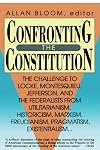
Confronting the Constitution: The Challenge to Locke, Montesquieu, Jefferson and the Federalists From Utilitarianism, Historicism, Marxism, Freudianism, Pragmatism, Existentialism
by Allan David Bloom
On This Page
Description
With the communist nations a shambles everywhere, the American constitution may appear to have weathered its greatest challenge. Yet notions hostile to its principles pose no less serious threats. Ways of thinking that spring from the social sciences, for example, launch a direct assault on US traditions.Tags
Recommendations









Member Reviews
We live in an era in which the incumbent President believes that his office has "absolute authority" in the exercise of the the police power (health, safety and morals - well morals, not so much) at the state and local levels. The not at all loyal opposition promises (again) a "fundamental transformation" once they are (inevitably) returned to control of the Presidency and the Senate this fall. No one ever asks what "fundamental transformation" consists of and why it is desirable.
In addition, the support for fundamental rights such as freedom of speech and the free exercise of religion are under attack by the cancel culture of the antinomian left; while the right to peaceful protest is considered by some elected officials to encompass show more acts such as throwing Molotov cocktails and setting fire to private and public property and overturning and defacing any statue or monument to which the "woke" among us take exception.
In these circumstances it would be especially useful to step back from the headlines and pay some attention to the fundamental political science of the American regime, and understand something about the major criticisms of the philosophy of America's founding and the implications for whether or not it will or should endure.
Thirty years ago this volume of essays was published under the auspices of the American Enterprise Institute on the occasion of the bicentennial of the U.S. Constitution. The volume was edited principally by Allan Bloom (The Closing of the American Mind) and consists of 17 essays by a distinguished collection of professors of political philosophy and authors whose primary professional experience was in some area of public service.
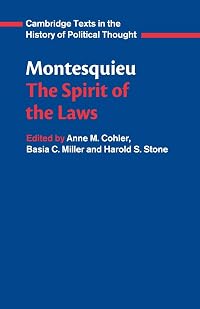
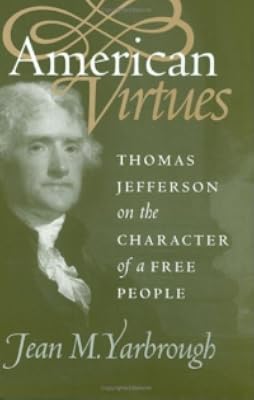
The first part consists of six essays on the Intellectual Foundations of the American Republic. Briefly, they elaborate on the natural rights basis of the regime adduced from a serious study of (mainly) Locke's Second Treatise on Civil Government and Montesquieu's Spirt of the Laws. The political theory of the Founding as explicated primarily by Madison and Hamilton in the Federalist, the character of Jefferson's republicanism, the social theory of the Founders, and the influences of the Scottish Enlightenment thinkers, primarily David Hume and Adam Smith round out Part One.
The second part includes essays that attempt to explain the alternatives that emerged over time that criticized the philosophical foundations of the regime, mainly the attack on the doctrine of the state of nature and the natural rights derived therefrom, again mainly from Locke's account of the origins of political communities based on the consent of their members.
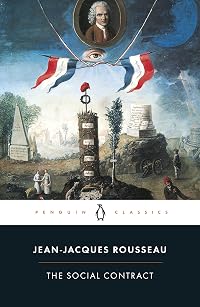
This critique begins with Hume's rejection of Locke's state of nature but climaxes with Rousseau's Discourses on the Origin of Inequality which inaugurates a decisive turn away from classic liberalism and in turn becomes the inspiration for many of the theoretical assaults on natural right that followed in his wake. These are dealt with in essays on German Idealism, primarily Kant and Hegel, Utilitarianism, Historicism, Marxism, Pragmatism, Freudianism, Existentialism, and concluding with two essays on the more recent attempts to find a new ground for liberal institutions based on social science and theories of rights that are grounded in neither nature or revelation.
All of the essays in this volume are excellent and in a couple of instances also entertaining. For those who are past the time in life when formal education is still an option (assuming it's still an option for those who aren't past that time in life), this volume would be an excellent course in itself in political science with the caveat that nothing can finally substitute for a critical engagement with the thinkers discussed here.
It would be a prudent thing if the thoughtful part of the population spent a little time understanding something about the fundamentals of the American regime before signing up for anything that advertises itself as dedicated to its fundamental transformation. show less
In addition, the support for fundamental rights such as freedom of speech and the free exercise of religion are under attack by the cancel culture of the antinomian left; while the right to peaceful protest is considered by some elected officials to encompass show more acts such as throwing Molotov cocktails and setting fire to private and public property and overturning and defacing any statue or monument to which the "woke" among us take exception.
In these circumstances it would be especially useful to step back from the headlines and pay some attention to the fundamental political science of the American regime, and understand something about the major criticisms of the philosophy of America's founding and the implications for whether or not it will or should endure.
Thirty years ago this volume of essays was published under the auspices of the American Enterprise Institute on the occasion of the bicentennial of the U.S. Constitution. The volume was edited principally by Allan Bloom (The Closing of the American Mind) and consists of 17 essays by a distinguished collection of professors of political philosophy and authors whose primary professional experience was in some area of public service.
The first part consists of six essays on the Intellectual Foundations of the American Republic. Briefly, they elaborate on the natural rights basis of the regime adduced from a serious study of (mainly) Locke's Second Treatise on Civil Government and Montesquieu's Spirt of the Laws. The political theory of the Founding as explicated primarily by Madison and Hamilton in the Federalist, the character of Jefferson's republicanism, the social theory of the Founders, and the influences of the Scottish Enlightenment thinkers, primarily David Hume and Adam Smith round out Part One.
The second part includes essays that attempt to explain the alternatives that emerged over time that criticized the philosophical foundations of the regime, mainly the attack on the doctrine of the state of nature and the natural rights derived therefrom, again mainly from Locke's account of the origins of political communities based on the consent of their members.
This critique begins with Hume's rejection of Locke's state of nature but climaxes with Rousseau's Discourses on the Origin of Inequality which inaugurates a decisive turn away from classic liberalism and in turn becomes the inspiration for many of the theoretical assaults on natural right that followed in his wake. These are dealt with in essays on German Idealism, primarily Kant and Hegel, Utilitarianism, Historicism, Marxism, Pragmatism, Freudianism, Existentialism, and concluding with two essays on the more recent attempts to find a new ground for liberal institutions based on social science and theories of rights that are grounded in neither nature or revelation.
All of the essays in this volume are excellent and in a couple of instances also entertaining. For those who are past the time in life when formal education is still an option (assuming it's still an option for those who aren't past that time in life), this volume would be an excellent course in itself in political science with the caveat that nothing can finally substitute for a critical engagement with the thinkers discussed here.
It would be a prudent thing if the thoughtful part of the population spent a little time understanding something about the fundamentals of the American regime before signing up for anything that advertises itself as dedicated to its fundamental transformation. show less
Ratings
Members
- Recently Added By
Lists

You Couldn't Pay Me to Read That (Take 2)
213 works; 87 members
Author Information

17+ Works 5,667 Members
Common Knowledge
- People/Characters
- Thomas Jefferson; Locke, John, 1632-1704; Charles-Louis de Secondat, Baron de Montesquieu
- Important places
- USA
Classifications
- Genres
- Politics and Government, Nonfiction, Philosophy, History, General Nonfiction
- DDC/MDS
- 342.73 — Society, government, & culture Law U.S. Constitution - Bill of Rights, Amendments North America Constitutional law--United States
- LCC
- JA84 .U5 .C62 — Political Science Political science (General) Political science (General) History
- BISAC
Statistics
- Members
- 68
- Popularity
- 461,625
- Reviews
- 1
- Rating
- (4.00)
- Languages
- English
- Media
- Paper
- ISBNs
- 2