On This Page
Description
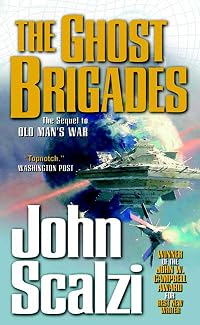
John Scalzi's eagerly anticipated sequel to the extraordinary Old Man's War. The Ghost Brigades are the Special Forces of the Colonial Defense Forces, elite troops created from the DNA of the dead and turned into the perfect soldiers for the CDF's toughest operations. They're young, they're fast and strong, and they're totally without normal human qualms. The universe is a dangerous place for humanity-and it's about to become far more dangerous. Three races that humans have clashed with show more before have allied to halt our expansion into space. Their linchpin: the turncoat military scientist Charles Boutin, who knows the CDF's biggest military secrets. To prevail, the CDF must find out why Boutin did what he did. Jared Dirac is the only human who can provide answers-a superhuman hybrid, created from Boutin's DNA, Jared's brain should be able to access Boutin's electronic memories. But when the memory transplant appears to fail, Jared is given to the Ghost Brigades. At first, Jared is a perfect soldier, but as Boutin's memories slowly surface, Jared begins to intuit the reason's for Boutin's betrayal. As Jared desperately hunts for his "father," he must also come to grips with his own choices. Time is running out: The alliance is preparing its offensive, and some of them plan worse things than humanity's mere military defeat. show lessTags
Recommendations



Member Reviews
79 points, 4 stars!
The Ghost Brigades are children. They're also the Special Forces of the Colonial Defense Force. Clones of people who died before they could sign up, they come into existence knowing nothing. This happened to Jared Dirac. When the CDF found a backup of the traitor Charles Boutin's brain, they created a clone in the hopes that it would be able to tell them everything Boutin knew. When they found that the clone had no knowledge, he became Jared Dirac and he became Special Forces.
Quote:
Review:
The Ghost Brigades is so much better than Old Man's War, in all the best ways show more possible. I had already decided to continue on with the series after reading the previous book, but boy am I so glad. This book was everything I wanted in this military sci-fi!
New book, new set of characters. This installation of the series mainly follows a new character we hadn't seen before, Jared Dirac. We hadn't seen him before mostly because he didn't exist prior to the start of this book. Ah, sci-fi. It is the best, isn't it? Don't despair, though! We also get a lot of some characters we have already met. Not as often as I would have liked to have had them around during, but that is just me. I get attached to character quite easily.
I really liked Jared. I really liked his story. Perry was just too limited in what we could see. Jared opened up so much more. He is a clone of someone who they thought to be dead, but isn't. Charles Boutin. Traiter. Only, he doesn't know it. He thinks he is just one of the Ghost Brigade - a group of adult children who start out with no knowledge and no sense of self, who learn how to become soldiers. Then, the memories start coming back. Poor guy.
The story presented in The Ghost Brigades is quite fucked up, all told. And very, very creepy. It is just as fucked as the end of Old Man's War was, but this time there is more of it. The idea of babies with no sense of self training for war is horrific, even if they eventually learn how to become human. The things the Colonial Union does to its people is awful. But it makes for great story. They are able to justify even the worst actions possible to themselves.
The biggest change between this book and the previous was the amount of story that was set up for later. In the previous book, it mostly just set up the world, and John Perry, soldier extraordinaire. In The Ghost Brigades, Scalzi sets up what is to be the rest of the series. A lot of enemies and allies. A lot of hints about what is to come. A lot of just really interesting stuff.
The Ghost Brigades was just much more my type of story. Its humor was my type of humor, whereas the humor in the last book definitely wasn't. Everything I loved about the first book got brought out to the forefront this time around, and I loved it. I'm so eager to read the next book now. show less
The Ghost Brigades are children. They're also the Special Forces of the Colonial Defense Force. Clones of people who died before they could sign up, they come into existence knowing nothing. This happened to Jared Dirac. When the CDF found a backup of the traitor Charles Boutin's brain, they created a clone in the hopes that it would be able to tell them everything Boutin knew. When they found that the clone had no knowledge, he became Jared Dirac and he became Special Forces.
Quote:
"Ah, the vaunted Special Forces snotty attitude," Mattson said. "I was wondering when it would become obvious you were six." "I'm nine," Sagan said.
Review:
The Ghost Brigades is so much better than Old Man's War, in all the best ways show more possible. I had already decided to continue on with the series after reading the previous book, but boy am I so glad. This book was everything I wanted in this military sci-fi!
New book, new set of characters. This installation of the series mainly follows a new character we hadn't seen before, Jared Dirac. We hadn't seen him before mostly because he didn't exist prior to the start of this book. Ah, sci-fi. It is the best, isn't it? Don't despair, though! We also get a lot of some characters we have already met. Not as often as I would have liked to have had them around during, but that is just me. I get attached to character quite easily.
I really liked Jared. I really liked his story. Perry was just too limited in what we could see. Jared opened up so much more. He is a clone of someone who they thought to be dead, but isn't. Charles Boutin. Traiter. Only, he doesn't know it. He thinks he is just one of the Ghost Brigade - a group of adult children who start out with no knowledge and no sense of self, who learn how to become soldiers. Then, the memories start coming back. Poor guy.
The story presented in The Ghost Brigades is quite fucked up, all told. And very, very creepy. It is just as fucked as the end of Old Man's War was, but this time there is more of it. The idea of babies with no sense of self training for war is horrific, even if they eventually learn how to become human. The things the Colonial Union does to its people is awful. But it makes for great story. They are able to justify even the worst actions possible to themselves.
The biggest change between this book and the previous was the amount of story that was set up for later. In the previous book, it mostly just set up the world, and John Perry, soldier extraordinaire. In The Ghost Brigades, Scalzi sets up what is to be the rest of the series. A lot of enemies and allies. A lot of hints about what is to come. A lot of just really interesting stuff.
The Ghost Brigades was just much more my type of story. Its humor was my type of humor, whereas the humor in the last book definitely wasn't. Everything I loved about the first book got brought out to the forefront this time around, and I loved it. I'm so eager to read the next book now. show less
HE GHOST BRIGADES is John Scalzi's second novel, but you would never know it based on this second book in his Old Man's War series. It suffers from none of the usual sequel pitfalls and shows a marked improvement in setting and other secondary details. It is also the first time we see him delve into various sticky, anthropological, and philosophical ideas - ideas that need attention whenever you talk about humans and other beings.
One of the ways Mr. Scalzi succeeds with THE GHOST BRIGADES is his choice to shift the story's focus to a side character of the first book. This allows him to expand his world and explore other areas of action, adventure, and philosophy because he doesn't have to stick with what would already be considered show more canon. It allows him the opportunity to flesh out certain areas he previously ignored and present his readers with not only new characters and adventures but other perspectives as well.
The action may not be as hot and heavy as it was in Old Man's War, but those few action scenes we do get serve a purpose outside of showing how the body modifications allow humans to fight against superior foes. We get greater insight into the Colonial Defense Forces' Special Forces, their bonding and training methods, and the unique way they use the technology given to them.
In turn, this dedicated viewpoint provides the perfect counterpoint to the arguments made by the traitor and even certain alien species we meet in greater detail. Through Charles Boutin, Mr. Scalzi makes some great points about humankind, its penchant for xenophobia, and its collective insistence upon being far superior to other entities. He also hints at a larger issue within the universe that the CDF is keeping secret, thereby setting the stage for the third book.
I love how Mr. Scalzi plays with innate assumptions and perceptions in THE GHOST BRIGADES. The opening scene, in particular, is brilliant in pointing out the danger of assuming and highlighting the very same issues you, as a reader, have that will also become an issue later on in the story. The insight we get into other Special Forces soldiers, Jared Dirac, and other characters serves as a constant reminder to never assume you know the truth.
Another aspect of THE GHOST BRIGADES I loved was the debate about souls, consciousness, and the idea of intelligence. With his use of three different alien species, all at different stages in evolutionary advancement, alongside humankind, the ideas Mr. Scalzi presents are fascinating. Maybe he intended these discussions to provide learning opportunities for readers; maybe he didn't. Whatever his intention, these scenes challenge you to stop and think about these ideas as they pertain to life on Earth.
Alongside this, Mr. Scalzi also touches on the notion of doing something for the greater good. Here again, he provides you with a fresh angle to look at this age-old issue. His focus is less on whether you should do something for the greater good versus the individual, but who decides what it is and when it is okay to take action on its behalf.
It might be easy to say that science fiction novels are the perfect instrument to get a larger audience thinking about philosophical ideas. Any story that explores humankind's expansion into new territories is ripe for those types of discussions, whether they occur in space, in the oceans' depths, or in a remote corner of the planet. Mr. Scalzi is the first writer I've experienced that doesn't hide these questions within the narrative, forcing you to dig deeper into each sentence to find them. Instead, he all but slaps you in the face with them, and I appreciate that more than you know.
That he does so is of even greater benefit because it is so easy to get lost in the story of THE GHOST BRIGADES. Jane and Jared's viewpoints are compelling. Jane's because we met her before and know a little something about her. Jared is fascinating because he is newly born/newly aware. Not only do we get to see the challenges faced by that fact, but we also see the difficulties that ensue when he is made aware of the reasons for his existence. Moral and ethical dilemmas abound, and it is all excellent.
I started the Old Man's War series because I wanted to get caught up with all of Mr. Scalzi's published works, and this series is one of the remaining novels left. As I finish the second book and look to start the third, my purpose for reading them is not to check a book anymore, but to find out what happens to John Perry, Jane Sagan, and the rest of the humans that make up the Colonial Defense Forces. I care about the characters and the world Mr. Scalzi brings to life. While we get glimpses of his future tendency for sarcasm and irony, THE GHOST BRIGADE is surprisingly earnest in its attempts to grasp all of the future potentials for conflict should humankind ever make it to that final frontier. I love the challenges he gives us as readers and the twists that only he can create. I look forward to continuing with the series because I know the other novels are going to be just as impressive and fun to read. show less
One of the ways Mr. Scalzi succeeds with THE GHOST BRIGADES is his choice to shift the story's focus to a side character of the first book. This allows him to expand his world and explore other areas of action, adventure, and philosophy because he doesn't have to stick with what would already be considered show more canon. It allows him the opportunity to flesh out certain areas he previously ignored and present his readers with not only new characters and adventures but other perspectives as well.
The action may not be as hot and heavy as it was in Old Man's War, but those few action scenes we do get serve a purpose outside of showing how the body modifications allow humans to fight against superior foes. We get greater insight into the Colonial Defense Forces' Special Forces, their bonding and training methods, and the unique way they use the technology given to them.
In turn, this dedicated viewpoint provides the perfect counterpoint to the arguments made by the traitor and even certain alien species we meet in greater detail. Through Charles Boutin, Mr. Scalzi makes some great points about humankind, its penchant for xenophobia, and its collective insistence upon being far superior to other entities. He also hints at a larger issue within the universe that the CDF is keeping secret, thereby setting the stage for the third book.
I love how Mr. Scalzi plays with innate assumptions and perceptions in THE GHOST BRIGADES. The opening scene, in particular, is brilliant in pointing out the danger of assuming and highlighting the very same issues you, as a reader, have that will also become an issue later on in the story. The insight we get into other Special Forces soldiers, Jared Dirac, and other characters serves as a constant reminder to never assume you know the truth.
Another aspect of THE GHOST BRIGADES I loved was the debate about souls, consciousness, and the idea of intelligence. With his use of three different alien species, all at different stages in evolutionary advancement, alongside humankind, the ideas Mr. Scalzi presents are fascinating. Maybe he intended these discussions to provide learning opportunities for readers; maybe he didn't. Whatever his intention, these scenes challenge you to stop and think about these ideas as they pertain to life on Earth.
Alongside this, Mr. Scalzi also touches on the notion of doing something for the greater good. Here again, he provides you with a fresh angle to look at this age-old issue. His focus is less on whether you should do something for the greater good versus the individual, but who decides what it is and when it is okay to take action on its behalf.
It might be easy to say that science fiction novels are the perfect instrument to get a larger audience thinking about philosophical ideas. Any story that explores humankind's expansion into new territories is ripe for those types of discussions, whether they occur in space, in the oceans' depths, or in a remote corner of the planet. Mr. Scalzi is the first writer I've experienced that doesn't hide these questions within the narrative, forcing you to dig deeper into each sentence to find them. Instead, he all but slaps you in the face with them, and I appreciate that more than you know.
That he does so is of even greater benefit because it is so easy to get lost in the story of THE GHOST BRIGADES. Jane and Jared's viewpoints are compelling. Jane's because we met her before and know a little something about her. Jared is fascinating because he is newly born/newly aware. Not only do we get to see the challenges faced by that fact, but we also see the difficulties that ensue when he is made aware of the reasons for his existence. Moral and ethical dilemmas abound, and it is all excellent.
I started the Old Man's War series because I wanted to get caught up with all of Mr. Scalzi's published works, and this series is one of the remaining novels left. As I finish the second book and look to start the third, my purpose for reading them is not to check a book anymore, but to find out what happens to John Perry, Jane Sagan, and the rest of the humans that make up the Colonial Defense Forces. I care about the characters and the world Mr. Scalzi brings to life. While we get glimpses of his future tendency for sarcasm and irony, THE GHOST BRIGADE is surprisingly earnest in its attempts to grasp all of the future potentials for conflict should humankind ever make it to that final frontier. I love the challenges he gives us as readers and the twists that only he can create. I look forward to continuing with the series because I know the other novels are going to be just as impressive and fun to read. show less
In this sequel to "Old Man's War," John Scalzi examines more of the social and political implications of the universe he's set in motion. While just about any analysis would open up a whole kettle of plot spoilers, and I enjoyed this novel too much to do that to you, Scalzi does try to get to grips with the sort of issues of identity and loyalty that would afflict a synthetic person such as the main character here. Jared Dirac was created with the sole surpose of getting a handle as to why a noted Human scientist would turn traitor in a galaxy where war tends to be genocidal in nature, and his choices turn out to be rather challenging in the end; particularly when there turns out to be a lot NOT to admire about the Human conduct of war. show more As with "Old Man's War," what I really like about Scalzi's writing is how he can display real sentiment without being forced. I also like how he can write about a future where the towel dispensers in the lavatories are still empty, where there are still dim-witted regulations about who can eat in the flag officer's mess, and there are still politicians who don't trust us with the truth. show less
The Ghost Brigades returns to the universe of Scalzi's novel Old Man's War, a novel which I absolutely loved.
In the first book, Scalzi introduced readers to John Perry and Earth's rejuvenated soldiers, the Colonial Defense Forces. This time around, he takes us into the world of The Ghost Brigades, the special forces of the CDF. Jane Sagan, a character from Old Man's War, must track down a traitor named Charles Boutin, who knows the CDF's biggest secrets, and what better way to find a traitor than to copy his consciousness into a freshly-baked Ghost Brigade soldier? But the transfer doesn't work ... at least, not right away. Then, as Boutin's memories slowly surface, Jared begins to intuit the reasons for Boutin's betrayal. Themes of show more counciousness, choice, free-will, and identity are explored. This is thinking man's sci-fi that also happens to include humor, and kick ass military/sci-fi action.
Though labeled a sequel to Old Man's War, The Ghost Brigades is very much a stand-alone adventure. While it expands upon ideas introduced in the earlier novel, John Scalzi doesn't require you to have read it to become fully absorbed in this one. So feel free to jump in. show less
In the first book, Scalzi introduced readers to John Perry and Earth's rejuvenated soldiers, the Colonial Defense Forces. This time around, he takes us into the world of The Ghost Brigades, the special forces of the CDF. Jane Sagan, a character from Old Man's War, must track down a traitor named Charles Boutin, who knows the CDF's biggest secrets, and what better way to find a traitor than to copy his consciousness into a freshly-baked Ghost Brigade soldier? But the transfer doesn't work ... at least, not right away. Then, as Boutin's memories slowly surface, Jared begins to intuit the reasons for Boutin's betrayal. Themes of show more counciousness, choice, free-will, and identity are explored. This is thinking man's sci-fi that also happens to include humor, and kick ass military/sci-fi action.
Though labeled a sequel to Old Man's War, The Ghost Brigades is very much a stand-alone adventure. While it expands upon ideas introduced in the earlier novel, John Scalzi doesn't require you to have read it to become fully absorbed in this one. So feel free to jump in. show less
This was a fun sci-fi and sequel to Old Man’s War. The book itself starts off with a conspiracy afoot, involving many aliens and the turncoat scientist Charles Boutin. The story then progresses into a war account of the Colonial Union’s super soldier special forces, the Ghost Brigades. Jared Dirac, a failed experiment to clone Charles Boutin for his expertise, is conscripted into the Ghost Brigades and thrust into impossible missions to break-up the interstellar alliance threatening humanity. Some points of interest are how the Colonial Union manipulates alien politics, how they genetically-birth neo-humans modified for space exposure, and a rough estimate on how old the Colonial Union actually is. What we also get is the dark show more nature of the Colonial Union and the horrible things governments demand of soldiers. Unlike Old Man’s War, this is a tale about dredging up old skeletons in the closet. A Dune Messiah to Frank Herbert’s Dune as it subverts the hero’s quest in the most terrifying way. It is a complicated, but brilliant successor to Old Man’s War and the third novel only gets better. show less
Scalzi introduces a new dimension to his Old Man's War series. Jared Dirac is even more of a super-soldier than John was turned into when he joined the Colonial Defense Forces. [Spoilers follow if you haven't read Old Man's War ] Jared and his team were artificially bred from the DNA of humans who signed up for the CDF but didn't make it to their 75th birthday for whatever reason. They're "born" adults, and learn to be soldiers incredibly quickly via assistance from an implanted computer called a BrainPal. Jared, however, has not been 'decanted' in quite the same way as his fellow troops.
Jared and his team are tasked with locating a traitor to the CDF and preventing the war this traitor is fomenting with two other alien races.
I love show more Jared as a character and discovering along with him what makes him different from other humans and also what he has in common with them as well as other aliens. Can there be a diplomatic solution? Can you be friends with a Rrey? In addition to these philosophical questions, the action and suspense of battles and the political and scientific machinations of the traitor are expertly woven throughout. I can't wait to read the next one! show less
Jared and his team are tasked with locating a traitor to the CDF and preventing the war this traitor is fomenting with two other alien races.
I love show more Jared as a character and discovering along with him what makes him different from other humans and also what he has in common with them as well as other aliens. Can there be a diplomatic solution? Can you be friends with a Rrey? In addition to these philosophical questions, the action and suspense of battles and the political and scientific machinations of the traitor are expertly woven throughout. I can't wait to read the next one! show less
The beginning of this book was not easy: first, I was surprised, and maybe a little disappointed, to discover that it did not go on with the storyline concerning John Perry (the main character in Old Man's War) and second, it took some time before clicking into gear. But once it did it hooked me in a major way, so much that I raced to finish it at record speed.
The initial disappointment in the change of p.o.v. did not last long: once I overcame the surprise that the story would be told by a new set of characters, I found myself enjoying very much the in-depth look at the famous Ghost Brigades and what makes them what they are. Moreover, I became quite invested in the journey of Private Jared Dirac and the unusual circumstances show more surrounding his "birth".
My earlier suspicions that there was indeed a darker side to the Colonial Defense Force were confirmed in this book: I already knew that cloned bodies of potential soldiers, those who did not live long enough to enlist at 75, were "recycled" into the Ghost Brigades, but here I learned more about these special forces, and what I saw was beyond chilling.
These soldiers look nothing less than an ongoing experiment carried out on people deprived of any rights: born without the experience or the memories of a previous life – as it happens for the rest of the recruits – they are bonded in something approaching a hive mind, compensating their lack of accumulated background with a forced sense of belonging implemented through the BrainPal connection. The severing of that connection with the rest of the group is often depicted as a subtle means of control, not so different from the pressure exerted by a pusher on his clients/victims. As it's stressed several times in the book, Ghost Brigade soldiers have no real choices in life and represent the ultimate form of exploitation: the CDF's facade starts to show some ugly cracks in here.
Private Dirac's personal story starts from this premise to explore the concept of self-awareness and choice, and does this in such a poignant way that it took me no time at all to feel strongly for this character and to become emotionally invested in his journey. There is a huge measure of childish innocence in Dirac, whose consciousness has been implanted with the memories of turncoat scientist Boutin in the hope that they will surface, giving the CDF a strategic advantage over their enemies. My sympathies would have gone to him anyway, considering the premise, but the moment when he became aware of the implanted experiences is the one where my heart went out to him, because the first triggered memory is that of Boutin's lost daughter Zoe. In a way, these two innocents – children both of them, because Dirac is emotionally a child – are the true protagonists of the story and Zoe becomes the catalyst for Dirac's decisions and for his first meaningful choice as an independent individual.
This book moved me deeply more than once and further raised my appreciation for Mr. Scalzi's way of dealing with important issues in a deceptively light and offhand way. This universe is expanding and acquiring more facets with each new installment and I more than look forward to the next books in the series. show less
The initial disappointment in the change of p.o.v. did not last long: once I overcame the surprise that the story would be told by a new set of characters, I found myself enjoying very much the in-depth look at the famous Ghost Brigades and what makes them what they are. Moreover, I became quite invested in the journey of Private Jared Dirac and the unusual circumstances show more surrounding his "birth".
My earlier suspicions that there was indeed a darker side to the Colonial Defense Force were confirmed in this book: I already knew that cloned bodies of potential soldiers, those who did not live long enough to enlist at 75, were "recycled" into the Ghost Brigades, but here I learned more about these special forces, and what I saw was beyond chilling.
These soldiers look nothing less than an ongoing experiment carried out on people deprived of any rights: born without the experience or the memories of a previous life – as it happens for the rest of the recruits – they are bonded in something approaching a hive mind, compensating their lack of accumulated background with a forced sense of belonging implemented through the BrainPal connection. The severing of that connection with the rest of the group is often depicted as a subtle means of control, not so different from the pressure exerted by a pusher on his clients/victims. As it's stressed several times in the book, Ghost Brigade soldiers have no real choices in life and represent the ultimate form of exploitation: the CDF's facade starts to show some ugly cracks in here.
Private Dirac's personal story starts from this premise to explore the concept of self-awareness and choice, and does this in such a poignant way that it took me no time at all to feel strongly for this character and to become emotionally invested in his journey. There is a huge measure of childish innocence in Dirac, whose consciousness has been implanted with the memories of turncoat scientist Boutin in the hope that they will surface, giving the CDF a strategic advantage over their enemies. My sympathies would have gone to him anyway, considering the premise, but the moment when he became aware of the implanted experiences is the one where my heart went out to him, because the first triggered memory is that of Boutin's lost daughter Zoe. In a way, these two innocents – children both of them, because Dirac is emotionally a child – are the true protagonists of the story and Zoe becomes the catalyst for Dirac's decisions and for his first meaningful choice as an independent individual.
This book moved me deeply more than once and further raised my appreciation for Mr. Scalzi's way of dealing with important issues in a deceptively light and offhand way. This universe is expanding and acquiring more facets with each new installment and I more than look forward to the next books in the series. show less
Members
- Recently Added By
Lists

Best Military Science Fiction
57 works; 26 members

Best Science Fiction Novels
816 works; 430 members

Space Colonization
100 works; 26 members

Books Read in 2016
4,666 works; 197 members

Books Read in 2021
5,361 works; 114 members

Books Read in 2022
5,164 works; 113 members

Books Read in 2025
4,091 works; 97 members
Author Information

137+ Works 67,478 Members
John Michael Scalzi was born May 10, 1969 in California. He attended the University of Chicago. During his 1989 -1990 school year he was the editor-in-chief of The Chicago Maroon. After graduating in 1991, Scalzi took a job as the film critic for the Fresno Bee newspaper, eventually also becoming a humor columnist. In 1996 he was hired as the show more in-house writer and editor at America Online. When he was laid off in 1998, he decided to become a full-time freelance writer and author. His first published novel was Old Man's War. His other works include Agent to the Stars, The Ghosts Brigades, The Androids Team, The Sagan Diary, The Last Colony, and Redshirts: A Novel with Three Codas. In 2014 his title, Locked In, made The New York Times Best Seller List. (Bowker Author Biography) show less
Some Editions
Awards and Honors
Awards
Notable Lists
Series

Belongs to Publisher Series
Work Relationships
Common Knowledge
- Canonical title
- The Ghost Brigades
- Original title
- The Ghost Brigades
- Original publication date
- 2006-02
- People/Characters
- Jared Dirac; Charles Boutin; Jane Sagan; Zoë Boutin Perry (as Zoë Boutin)
- Important places
- Phoenix (planet); The Kite (spaceship)
- Dedication
- To Shara Zoll, for friendship and everything else. To Kristine and Athena, for their patience and love.
- First words
- No one noticed the rock.
- Quotations
- Fear isn't the desire to avoid death or pain. Fear is rooted in the knowledge that what you recognize as yourself can cease to exist. Fear is existential.
Harvey lived for this sort of shit.
His chief worry as they approached the science station was that Lieutenant Sagan would do one of her patented thoughtful, methodical approaches; something sneaky that would require him t... (show all)o tiptoe around like a goddamn spy or something. He hated that crap. Harvey knew what he was and what he was best at: He was a noisy son of a bitch and he was good at making things fall down and go boom. In his few introspective moments, Harvey wondered if his progie, the guy he was mostly made from, hadn’t been something really antisocial, like a pyromaniac or a professional wrestler, or maybe had done time for assault. Whoever or whatever he was, Harvey would have been happy to give him a nice big smack on the lips. Harvey was absolutely at peace with his inner nature, in the sort of way that Zen Buddhist monks could only dream about. And so when Sagan told him his job was to draw attention to himself so she and Seaborg could do their jobs, Harvey did a little dance on the inside. He could definitely draw attention to himself. The question was how. - Last words
- (Click to show. Warning: May contain spoilers.)"Well," Sagan said, hugging the girl close. "I'm so very glad to hear it."
- Publisher's editor
- Nielsen Hayden, Patrick
Classifications
Statistics
- Members
- 5,231
- Popularity
- 2,599
- Reviews
- 181
- Rating
- (3.96)
- Languages
- 14 — Czech, English, Estonian, French, German, Hungarian, Italian, Korean, Portuguese, Romanian, Russian, Spanish, Turkish, Ukrainian
- Media
- Paper, Audiobook, Ebook
- ISBNs
- 31
- ASINs
- 22