Foucault
by Gilles Deleuze
On This Page
Description
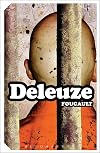
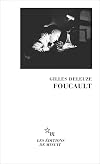
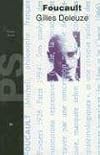
In Foucault, Deleuze presents one of the most incisive and productive analyses of the work of Michel Foucault. This is a crucial examination of the philosophical foundations and principal themes of Foucault's work, providing a rigorous engagement with Foucault's views on knowledge, punishment, power, and the nature of subjectivity. Book jacket.Tags
Recommendations








































Member Reviews
We must take quite literally the idea that man is a face drawn in the sand between two tides: he is a composition appearing between two others, a classical past that never knew him, and a future that will no longer know him.
I remain leery of those who profess to "know" Foucault, all the epistemological breaks and fissures lead one to count more on a fluid awareness of Foucault's thought, rather than any fluency of sorts. This is one of the theses flashed by Deleuze. He rejects those who demarcate a solid position and resign Foucault to that corner exclusively.
Today wasn't a smart day for me personally. I treasure those. Today, however I woke early and began clawing through this volume. Sundays are generous in this encouragement. show more Deleuze's Foucault is one of statements, not propositions. He archives rather than constructs. It is a process swimming with Power, Knowledge and Self. The self folds these other experiences inwards, internalizing them, letting rummy ripples sequence outwards. This isn't a question of dualities but rather multiplicities. There is no hierarchy here, just a diagram, that peerless positioning of concepts and forces. I'm not sure I have a handle on the diagram's significance, it is a slippery notion. Ultimately the foundation for Foucault's experience is the visual and the articulable. Deleuze's survey skips from the power books on the clinic, the asylum and the prison. A leap is then made to the History of Sexuality and another parallel on towards a project involving Heidegger.
In truth, one thing haunts Foucault - thought. The question: 'What does thinking signify? What do we call thinking?' is the arrow first fired by Heidegger and then again by Foucault. He writes a history, but a history of thought as such.
This leads us towards Deleuze's final section, the appendix which some reviewers found to redeem this whole project. The title is On the death of Man and Superman. This draws some wonky post-human thoughts into the fore and I wish there would have been more. show less
I remain leery of those who profess to "know" Foucault, all the epistemological breaks and fissures lead one to count more on a fluid awareness of Foucault's thought, rather than any fluency of sorts. This is one of the theses flashed by Deleuze. He rejects those who demarcate a solid position and resign Foucault to that corner exclusively.
Today wasn't a smart day for me personally. I treasure those. Today, however I woke early and began clawing through this volume. Sundays are generous in this encouragement. show more Deleuze's Foucault is one of statements, not propositions. He archives rather than constructs. It is a process swimming with Power, Knowledge and Self. The self folds these other experiences inwards, internalizing them, letting rummy ripples sequence outwards. This isn't a question of dualities but rather multiplicities. There is no hierarchy here, just a diagram, that peerless positioning of concepts and forces. I'm not sure I have a handle on the diagram's significance, it is a slippery notion. Ultimately the foundation for Foucault's experience is the visual and the articulable. Deleuze's survey skips from the power books on the clinic, the asylum and the prison. A leap is then made to the History of Sexuality and another parallel on towards a project involving Heidegger.
In truth, one thing haunts Foucault - thought. The question: 'What does thinking signify? What do we call thinking?' is the arrow first fired by Heidegger and then again by Foucault. He writes a history, but a history of thought as such.
This leads us towards Deleuze's final section, the appendix which some reviewers found to redeem this whole project. The title is On the death of Man and Superman. This draws some wonky post-human thoughts into the fore and I wish there would have been more. show less
> Gilles Deleuze, Foucault Paris: Minuit, 1986. 141 pages
Se reporter au compte rendu de Alain VIZIER
In: MLN, Vol. 102, No. 4, French Issue (Sep., 1987), pp. 943-947… ; (en ligne),
URL : https://drive.google.com/file/d/1tpMiRLWh-CYxFDQmYfM6TQ4emJbgZGLc/view?usp=shari...
Se reporter au compte rendu de Alain VIZIER
In: MLN, Vol. 102, No. 4, French Issue (Sep., 1987), pp. 943-947… ; (en ligne),
URL : https://drive.google.com/file/d/1tpMiRLWh-CYxFDQmYfM6TQ4emJbgZGLc/view?usp=shari...
Jan 3, 2021French
""
Sep 2, 2015French
Ratings
Members
- Recently Added By
Author Information

167+ Works 17,451 Members
Gilles Deleuze (1925-1995) was professor of philosophy at the University of Paris, Vincennes-St. Denis.
Series
Belongs to Publisher Series
Common Knowledge
- Original publication date
- 1986 (original French) (original French); 1988 (English) (English)
- People/Characters
- Michel Foucault
Classifications
Statistics
- Members
- 616
- Popularity
- 47,316
- Reviews
- 3
- Rating
- (4.06)
- Languages
- 13 — Catalan, Danish, English, French, German, Greek, Italian, Japanese, Polish, Portuguese, Spanish, Swedish, Turkish
- Media
- Paper, Ebook
- ISBNs
- 33
- ASINs
- 4