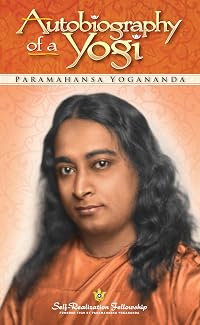
Autobiography of a Yogi
by Paramahansa Yogananda
On This Page
Description
'Autobiography of a Yogi' introduces the reader to the life of Paramahansa Yogananda and his encounters with spiritual figures of both the East and West. The book begins with his childhood family life, to finding his guru, to becoming a monk and establishing his teachings of Kriya Yoga meditation. The book continues in 1920 when Yogananda accepts an invitation to speak in a religious congress in Boston, Massachusetts, USA. He then travels across America lecturing and establishing his show more teachings in Los Angeles, California. In 1935 he returns to India for a yearlong visit. When he returns to America, he continues to establish his teachings, including writing this book. show lessTags
Recommendations








Member Reviews
"The Autobiography of a Yogi" by Paramahansa Yogananda is more than a personal history; it is a profound spiritual testament that introduces the West to the ancient wisdom of India. Published in 1946, the book chronicles the life of Mukunda Lal Ghosh (later Paramahansa Yogananda), detailing his remarkable journey from an earnest seeker in India to a world-renowned spiritual teacher who brought the science of Kriya Yoga to America.
The narrative begins with Yogananda's early life in Gorakhpur, India, where he was born in 1893. From a young age, he displayed an extraordinary spiritual temperament and a deep longing for a personal relationship with the divine. He recounts his family's devout nature, particularly the influence of his mother show more and father, who were both disciples of Lahiri Mahasaya, a revered guru in the lineage of Kriya Yoga. This early exposure to yogic philosophy and the miraculous stories of saints and masters ignited a fire within him. He describes his youthful attempts to run away to the Himalayas in search of a master, driven by an intense desire to find God. These anecdotes, often humorous and filled with a childlike innocence, establish the sincerity and depth of his spiritual quest.
The pivotal moment in his life occurs when he is a teenager: he meets his guru, Swami Sri Yukteswar Giri. Yogananda's description of their first encounter is powerful, marked by an immediate and profound recognition, as if they were reuniting after many lifetimes. The years spent under Sri Yukteswar’s strict yet loving guidance form the core of the book's teachings. Yogananda recounts the rigorous discipline and spiritual lessons imparted by his guru, who focused on transcending intellectual understanding to achieve direct, experiential knowledge of the Self. Sri Yukteswar taught him to balance the external world of duties with the internal world of meditation, emphasizing the scientific, systematic nature of Kriya Yoga. Through these accounts, the reader is introduced to the principles of this meditation technique, which aims to accelerate spiritual evolution by revitalizing subtle energy in the spine and brain.
Beyond his training with Sri Yukteswar, the autobiography is filled with incredible tales of Yogananda's encounters with various spiritual masters and figures. He recounts meeting the elusive Mahavatar Babaji, a deathless Himalayan master who is said to have revived Kriya Yoga in this age. He also shares stories of Lahiri Mahasaya, the guru who initiated his family into Kriya Yoga, and the legendary "Perfume Saint" who could manifest any scent at will. Perhaps the most captivating of these accounts is his meeting with the saintly master Giri Bala, who could remain underwater for extended periods. These vignettes serve not only to entertain but also to ground the spiritual teachings in tangible, miraculous reality, demonstrating the extraordinary potential of human consciousness. Yogananda's ability to recount these supernatural events with a simple, matter-of-fact tone makes them all the more compelling and believable.
The second half of the book details Yogananda’s transformative mission to the West. Guided by his guru’s prophecy, he travels to America in 1920 to attend the International Congress of Religious Liberals in Boston. His speech, "The Science of Religion," received an enthusiastic response, marking the beginning of his lifelong work. He established the Self-Realization Fellowship (SRF) to disseminate his teachings, traveling extensively and giving lectures to packed auditoriums across the United States. He describes the challenges he faced in adapting to a new culture and the skepticism he encountered, as well as the deep reverence and spiritual hunger he found among many Westerners. He successfully presented yoga not as a mystical, esoteric practice but as a universal, scientific method of attaining God-realization.
"The Autobiography of a Yogi" is revered for its clear and accessible explanation of complex spiritual concepts. Yogananda meticulously explains the principles of karma, reincarnation, and the unity of all religions. He emphasizes that the truths of yoga are not exclusive to any single faith but are the underlying principles of all spiritual paths. He presents Kriya Yoga as a "master key" to inner freedom, a practical technique for spiritual growth that can be practiced by anyone, regardless of their religious background. Through his life story, he illustrates the profound peace and joy that come from a deep, consistent spiritual practice. The book concludes with Yogananda’s final return to India to visit his guru, followed by his continued work in the West, establishing centers and spreading his message of universal love and self-realization. It remains a timeless classic, inspiring millions to explore the depths of their own consciousness and embark on their own spiritual journeys. show less
The narrative begins with Yogananda's early life in Gorakhpur, India, where he was born in 1893. From a young age, he displayed an extraordinary spiritual temperament and a deep longing for a personal relationship with the divine. He recounts his family's devout nature, particularly the influence of his mother show more and father, who were both disciples of Lahiri Mahasaya, a revered guru in the lineage of Kriya Yoga. This early exposure to yogic philosophy and the miraculous stories of saints and masters ignited a fire within him. He describes his youthful attempts to run away to the Himalayas in search of a master, driven by an intense desire to find God. These anecdotes, often humorous and filled with a childlike innocence, establish the sincerity and depth of his spiritual quest.
The pivotal moment in his life occurs when he is a teenager: he meets his guru, Swami Sri Yukteswar Giri. Yogananda's description of their first encounter is powerful, marked by an immediate and profound recognition, as if they were reuniting after many lifetimes. The years spent under Sri Yukteswar’s strict yet loving guidance form the core of the book's teachings. Yogananda recounts the rigorous discipline and spiritual lessons imparted by his guru, who focused on transcending intellectual understanding to achieve direct, experiential knowledge of the Self. Sri Yukteswar taught him to balance the external world of duties with the internal world of meditation, emphasizing the scientific, systematic nature of Kriya Yoga. Through these accounts, the reader is introduced to the principles of this meditation technique, which aims to accelerate spiritual evolution by revitalizing subtle energy in the spine and brain.
Beyond his training with Sri Yukteswar, the autobiography is filled with incredible tales of Yogananda's encounters with various spiritual masters and figures. He recounts meeting the elusive Mahavatar Babaji, a deathless Himalayan master who is said to have revived Kriya Yoga in this age. He also shares stories of Lahiri Mahasaya, the guru who initiated his family into Kriya Yoga, and the legendary "Perfume Saint" who could manifest any scent at will. Perhaps the most captivating of these accounts is his meeting with the saintly master Giri Bala, who could remain underwater for extended periods. These vignettes serve not only to entertain but also to ground the spiritual teachings in tangible, miraculous reality, demonstrating the extraordinary potential of human consciousness. Yogananda's ability to recount these supernatural events with a simple, matter-of-fact tone makes them all the more compelling and believable.
The second half of the book details Yogananda’s transformative mission to the West. Guided by his guru’s prophecy, he travels to America in 1920 to attend the International Congress of Religious Liberals in Boston. His speech, "The Science of Religion," received an enthusiastic response, marking the beginning of his lifelong work. He established the Self-Realization Fellowship (SRF) to disseminate his teachings, traveling extensively and giving lectures to packed auditoriums across the United States. He describes the challenges he faced in adapting to a new culture and the skepticism he encountered, as well as the deep reverence and spiritual hunger he found among many Westerners. He successfully presented yoga not as a mystical, esoteric practice but as a universal, scientific method of attaining God-realization.
"The Autobiography of a Yogi" is revered for its clear and accessible explanation of complex spiritual concepts. Yogananda meticulously explains the principles of karma, reincarnation, and the unity of all religions. He emphasizes that the truths of yoga are not exclusive to any single faith but are the underlying principles of all spiritual paths. He presents Kriya Yoga as a "master key" to inner freedom, a practical technique for spiritual growth that can be practiced by anyone, regardless of their religious background. Through his life story, he illustrates the profound peace and joy that come from a deep, consistent spiritual practice. The book concludes with Yogananda’s final return to India to visit his guru, followed by his continued work in the West, establishing centers and spreading his message of universal love and self-realization. It remains a timeless classic, inspiring millions to explore the depths of their own consciousness and embark on their own spiritual journeys. show less
I first read this book in 1971. It opened a whole other dimension of spirituality that I found fascinating.
To read this book today, more than 39 years later, was an interesting exercise. If you want miraculous tales of siddhis, read this book. If you want a most tedious account of the afterlife, this is also your book. Yet in spite of my skepticism, this book is a fascinating entry into monastic Hinduism.
It gives a good account of the relationship between guru and student and introduces the reader to several Indian saints.
To read this book today, more than 39 years later, was an interesting exercise. If you want miraculous tales of siddhis, read this book. If you want a most tedious account of the afterlife, this is also your book. Yet in spite of my skepticism, this book is a fascinating entry into monastic Hinduism.
It gives a good account of the relationship between guru and student and introduces the reader to several Indian saints.
After painfully wading through fifty odd pages of what I consider to be lies or, at best, delusions of a (typical Bengali :P) megalomaniac, I decided to put this book down. I don't know what else I was expecting from a book of this genre. It was a mistake to pick it up in the first place.
I absolutely fail to understand how learned, intelligent people can like this book so much. People apparating in and out of thin air! Someone willing himself out of photographs! Are you fucking kidding me! Am I supposed to take these things on face value? Does Mukunda Ghosh mean us to take these miracles literally at all? If so, shouldn't I be seeking wisdom from someone less delusional? If not, are these stories supposed to have some hidden lessons? (I show more am yet to decipher any) Is the world as it is not beautiful and spiritually rich enough for him? Even if we leave the miracles out of the discussion for a moment, which is pretty difficult considering that they appear in the book at the rate of at least one per page, what IS the message that is hidden in this treasure of a book?
Before you berate me for being close-minded, I do understand that there is a wonderful world outside of science. I appreciate beauty and art and wonder. I would even appreciate spirituality, but I have to hear about it from a person who can be honest about it to himself and to me. show less
I absolutely fail to understand how learned, intelligent people can like this book so much. People apparating in and out of thin air! Someone willing himself out of photographs! Are you fucking kidding me! Am I supposed to take these things on face value? Does Mukunda Ghosh mean us to take these miracles literally at all? If so, shouldn't I be seeking wisdom from someone less delusional? If not, are these stories supposed to have some hidden lessons? (I show more am yet to decipher any) Is the world as it is not beautiful and spiritually rich enough for him? Even if we leave the miracles out of the discussion for a moment, which is pretty difficult considering that they appear in the book at the rate of at least one per page, what IS the message that is hidden in this treasure of a book?
Before you berate me for being close-minded, I do understand that there is a wonderful world outside of science. I appreciate beauty and art and wonder. I would even appreciate spirituality, but I have to hear about it from a person who can be honest about it to himself and to me. show less
This is not Yoga!!
The first prerequisite for Yoga is to have Vidya, or an intellectual base arrived at by reasoning, though in the final culmination Vidya is left behind. Yoga is an intelligent search for the truth. It doesnt depend on fanciful fables and claims.
And Yogananda really does stretch our credulity!! It starts with him remembering himself as a fetus when he knew all languages and finally selected the one he was hearing as his mother tongue and his first memories right after he was born. The claims keep getting more and more astonishing, beginning with minor miracles like controlling his kite as a child, to fantastical claims like Yogis who never eat, become invisible, fly through the air and do just about anything that show more Superman does, and much more! There's a photograph of Yogananda standing alone with a caption, "Yogananda standing with his master, who did not care to be photographed, so he made himself invisible." It requires a very strong gullibility to accept this. If anyone wants to become invisible or fly, they should go, not to a Yoga teacher, but to David Copperfield.
I am amazed that people in the West still seem to like this book. Many reviewers write about how they have learned about a 'different culture' and a 'different way of thinking' from this book, as if in India we are quite used to seeing our Yogis flying through the air and so on.
I must make it clear that I am not belittling the book in entirety, it has a childlike purity which makes it a compelling read. Yogananda's transparent sincerity, ability to laugh at himself and his genuine love for god and his thirst for spirituality is all too apparent, and his account of his spiritual quest is often touching and revelatory. This is what gives the book its charm and power. Some of the passages deserve to be counted among the most illuminating accounts of mystical experience ever. But all too often, his eagerness to discover god and people on the spiritual path strays into descriptions of fantastical and unbelievable anecdotes.
It would be quite natural for anyone who first comes into contact with Yoga through this book to develop a strong cynicism about Hinduism and its practises, including Yoga. But this is not Yoga at all. To learn about Yoga, I would recommend reading Swami Vivekananda and Ramkrishna Paramahansa, these were great teachers who also achieved relevatory experiences through Yoga but certainly never made such incredible claims. Yoga is not all about magic and fable that this book makes it out to be.
I am sorry if this review offends anyone who has found this book inspiring. I can understand people being inspired by Yogananda's profound love of God which is so transparent in this book, and which did not fail to move me, but I would like to make my own stand for reason in following the path of Yoga. show less
The first prerequisite for Yoga is to have Vidya, or an intellectual base arrived at by reasoning, though in the final culmination Vidya is left behind. Yoga is an intelligent search for the truth. It doesnt depend on fanciful fables and claims.
And Yogananda really does stretch our credulity!! It starts with him remembering himself as a fetus when he knew all languages and finally selected the one he was hearing as his mother tongue and his first memories right after he was born. The claims keep getting more and more astonishing, beginning with minor miracles like controlling his kite as a child, to fantastical claims like Yogis who never eat, become invisible, fly through the air and do just about anything that show more Superman does, and much more! There's a photograph of Yogananda standing alone with a caption, "Yogananda standing with his master, who did not care to be photographed, so he made himself invisible." It requires a very strong gullibility to accept this. If anyone wants to become invisible or fly, they should go, not to a Yoga teacher, but to David Copperfield.
I am amazed that people in the West still seem to like this book. Many reviewers write about how they have learned about a 'different culture' and a 'different way of thinking' from this book, as if in India we are quite used to seeing our Yogis flying through the air and so on.
I must make it clear that I am not belittling the book in entirety, it has a childlike purity which makes it a compelling read. Yogananda's transparent sincerity, ability to laugh at himself and his genuine love for god and his thirst for spirituality is all too apparent, and his account of his spiritual quest is often touching and revelatory. This is what gives the book its charm and power. Some of the passages deserve to be counted among the most illuminating accounts of mystical experience ever. But all too often, his eagerness to discover god and people on the spiritual path strays into descriptions of fantastical and unbelievable anecdotes.
It would be quite natural for anyone who first comes into contact with Yoga through this book to develop a strong cynicism about Hinduism and its practises, including Yoga. But this is not Yoga at all. To learn about Yoga, I would recommend reading Swami Vivekananda and Ramkrishna Paramahansa, these were great teachers who also achieved relevatory experiences through Yoga but certainly never made such incredible claims. Yoga is not all about magic and fable that this book makes it out to be.
I am sorry if this review offends anyone who has found this book inspiring. I can understand people being inspired by Yogananda's profound love of God which is so transparent in this book, and which did not fail to move me, but I would like to make my own stand for reason in following the path of Yoga. show less
This is one of my all-time favorite reads. It gave me answers to spiritual encounters I have had that no one before was able to help me find. It is written with a fresh innocence that gave me 'permission' to search outside of my cultural box to find an ancient world filled with beauty and the love of God.
Este é um livro de muitas jornadas, há nesta obra muitos livros dentro de um só. Publicado logo após o fim da Segunda Guerra Mundial, mas escrito ainda ao longo do terror, ele sinaliza uma nova esperança, uma nova era para a espiritualidade humana: que tenha sobrevivido ao tempo, e que seja até hoje um bestseller global, é um sopro de alívio para todos aqueles que despertaram da ilusão material. Ao longo da leitura de Autobiografia de um iogue, Yogananda vai nos seduzindo pouco a pouco
Autobiography of a Yogi is at once a beautifully written account of an exceptional life and a profound introduction to the ancient science of Yoga and its time-honored tradition of meditation. Profoundly inspiring, it is at the same time vastly entertaining, warmly humorous and filled with extraordinary personages.
Members
- Recently Added By
Lists

Best Autobiographies and Memoirs
370 works; 66 members

Top Five Books of 2016
795 works; 229 members

Excellent Yoga Books
108 works; 5 members

501 Must-Read Books
529 works; 72 members

Mind Expanding Books by hackerkid
581 works; 8 members

Healing resources for women
587 works; 1 member

el
1,139 works; 1 member

The Book You Would Give To Everyone You Meet If You Could
7 works; 1 member

Men's healing resources
747 works; 1 member
Author Information

221 Works 6,943 Members
Swami Yogananda, a young Hindu monk, delivered his first address, "The Science of Religion," to the International Congress of Religious Liberals meeting in Boston on October 6, 1920. He remained in America and began to attract thousands to his public lectures. In 1925, Yogananda established the headquarters of his organization, the show more Self-Realization Fellowship, on Mount Washington in Los Angeles. (One of his most distinguished disciples was the horticulturist Luther Burbank.) His Autobiography of a Yogi Autobiography of a Yogi was published in 1946 and has been translated into 18 languages. Yogananda and the Self-Realization Fellowship have been the means by which many Americans have been introduced to and have adopted Hindu modes of thought and religious practice. Yogananda taught that Hindu mysticism was compatible with and similar to Western and Christian mysticism. In 1935 his guru gave Yogananda the title Paramahansa, which means "supreme swan" and is a title indicating the highest spiritual attainment. His disciples regard the manner of Yogananda's death---he expired immediately after addressing a banquet in honor of the ambassador from India---as a demonstration of his supreme yogic bodily control. The Self-Realization Fellowship continues to be an important alternative religion in America, and it has a strong institutional presence in and around the Los Angeles area. (Bowker Author Biography) show less
Some Editions
Awards and Honors
Work Relationships
Common Knowledge
- Original publication date
- 1946
- People/Characters
- Paramahansa Yogananda; Sri Yukteswar Giri; Lahiri Mahasaya; Babaji
- Important places
- Calcutta, India; Serampore, India; Los Angeles, California, USA
- Epigraph
- "Except ye see signs and wonders, ye will not believe." - John 4:48
- Dedication
- Dedicated to the Memory of LUTHER BURBANK "An American Saint"
- First words
- The characteristic features of Indian culture have long been a search for ultimate verities and the concomitant disciple-guru relationship.
- Quotations
- Do not imagine rice sustains you nor that men or money support you. Could they aid if the Lord withdraws your life breath? Page 104
- Last words
- (Click to show. Warning: May contain spoilers.)"Lord, Thou hast given this monk a large family!"
- Original language
- Inglese
Classifications
- Genres
- Religion & Spirituality, Biography & Memoir, Nonfiction, Philosophy, General Nonfiction
- DDC/MDS
- 294.55 — Religion Other religions Buddhism/Hinduism Hinduism Sects and reform movements
- LCC
- BP605 .S43 .Y6 — Philosophy, Psychology and Religion Islam. Bahaism. Theosophy, etc. Islam. Bahai Faith. Theosophy, etc. Other beliefs and movements
- BISAC
Statistics
- Members
- 3,471
- Popularity
- 4,784
- Reviews
- 53
- Rating
- (4.10)
- Languages
- 20 — Chinese, Czech, Danish, Dutch, English, Estonian, French, German, Hindi, Italian, Japanese, Korean, Malayalam, Polish, Spanish, Swedish, Tamil, Telugu, Turkish, Portuguese (Portugal)
- Media
- Paper, Audiobook, Ebook
- ISBNs
- 192
- ASINs
- 51