
Sonnets to Orpheus
by Rainer Maria Rilke
On This Page
Description
An accomplished poet's first and only sonnet sequence.Tags
Recommendations









Member Recommendations

by anonymous user
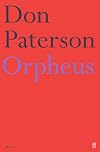
chrisharpe Don Paterson calls his 'Orpheus' versions, rather than translations, of Rilke's 'Sonnets to Orpheus'.
Member Reviews
Technically great, occasionally beautiful and thought-provoking, often silly imagery and it can be a bit of a drag. I prefer other Rilke.
Regarding this edition, it features a Dutch translation & the original German right next to each other so you can fall back without having to use grab a dictionary; good presentation.
Regarding this edition, it features a Dutch translation & the original German right next to each other so you can fall back without having to use grab a dictionary; good presentation.
Great translation with lots of helpful notes and analytical essays
Even as the farmer labors
there where the seed turns into summer,
it is not his work. It is Earth who gives.
Despite the parched ground it is but a shade of spring outside. The world appears geared to disrupt such edenic days with the distant rumble of foreign thunder and a blurred blunder on the button.
There were flashes here which I truly admired but not others. My hazed judgement might conceal a concern or two -- perhaps it doesn't. This series didn't engender thought so I'm moving on.
there where the seed turns into summer,
it is not his work. It is Earth who gives.
Despite the parched ground it is but a shade of spring outside. The world appears geared to disrupt such edenic days with the distant rumble of foreign thunder and a blurred blunder on the button.
There were flashes here which I truly admired but not others. My hazed judgement might conceal a concern or two -- perhaps it doesn't. This series didn't engender thought so I'm moving on.
Read a different edition than this. Had the original German across from the English verses, which I appreciated. I don't know enough Ovid to really appreciate this so lots of it was lost on me.
A seductive, if corny, idea that permeates Rilke's poetry is that death can bring about transformations in the world of the living—as in "the dead, those who strengthen the earth" in one of these Sonnets. For passionate readers, Rilke is the patron saint of poetry, a Mecca to be visited in life's most difficult or introspective moments. Most of the sonnets sing of life and death as a cosmic experience. Lines like "All that we have gained the machine threatens, while / it dares to exist as an idea, not an obedient tool" reflect our modern paranoia about the current Third Industrial Revolution, as well as Rilke's own anti-modernism. He was often conceptual through imagistic reflections, as, for example, in: "Desire for transformation. show more Ah, be a voracious fire in which something that rises in change forever escapes you; that directing Spirit that projects the flowering of the earth loves above all, in the élan of the figure, the moment of turning."
Rilke had an obsession with the now, with taking in the moment, with, at the same time, awareness and appreciation of death, of the temporariness of things. He seemingly wanted to embrace death. He also had a love of mythology that comes through, especially as an idea remembered, often returning to Orpheus to tie into a music in nature and in our deepest darkest mental spaces. NB however that most of the stuff seems to be swirling around unreachable places, and this left me with more feelings than understanding. Sometimes it just seemed he just out there. Also, poetry in translation always seems to have lost something. It was altogether more enjoyable that I had imagined. It was never unpleasant, but it is a little strange and frustrating that I never REALLY got Rainer Maria... show less
Rilke had an obsession with the now, with taking in the moment, with, at the same time, awareness and appreciation of death, of the temporariness of things. He seemingly wanted to embrace death. He also had a love of mythology that comes through, especially as an idea remembered, often returning to Orpheus to tie into a music in nature and in our deepest darkest mental spaces. NB however that most of the stuff seems to be swirling around unreachable places, and this left me with more feelings than understanding. Sometimes it just seemed he just out there. Also, poetry in translation always seems to have lost something. It was altogether more enjoyable that I had imagined. It was never unpleasant, but it is a little strange and frustrating that I never REALLY got Rainer Maria... show less
May 8, 2016 (Edited)Portuguese
Estos sonetos, nacidos bajo la excusa de epitafio a la bailarina Wera Oukama, cuya enfermedad y muerte tanto impresionaron al poeta, constituyen una versión apolínea —y no sólo por el formalismo estrófico— de ciertos temas concretos vinculados a la iluminación general de las Elegías de Duino.
Sep 1, 2023Spanish
Rainer Maria Rilke, född René Karl Wilhelm Johann Josef Maria Rilke 4 december 1875 i Prag, död 29 december 1926 på Valmont-sanatoriet i Montreux, Schweiz, är en tyskspråkig lyriker som betraktas som en av det tyska språkets främsta poeter.
Han skrev både i vers och med en väldigt lyrisk prosa. Hans två mest kända versesekvenser är Die Sonette an Orpheus och Duineser Elegien medan hans två mest kända verk är Briefe an einen jungen Dichter och den semibiografiska Malte Laurids Brigges anteckningar. Hans omfattade brevväxling är också en viktig del av hans litterära verk. Han skrev dessutom över 400 dikter på franska, som dedicerades till hans valda hemland, kantonen Valais i Schweiz.
Under en intensiv kreativ period show more färdiggjorde Rilke Duineser Elegien inom bara några veckor i februari 1922. Före och efter skrev han båda delarna av poemet Die Sonette an Orpheus. Båda verken anses vara höjdpunkterna av Rilkes arbete. show less
Han skrev både i vers och med en väldigt lyrisk prosa. Hans två mest kända versesekvenser är Die Sonette an Orpheus och Duineser Elegien medan hans två mest kända verk är Briefe an einen jungen Dichter och den semibiografiska Malte Laurids Brigges anteckningar. Hans omfattade brevväxling är också en viktig del av hans litterära verk. Han skrev dessutom över 400 dikter på franska, som dedicerades till hans valda hemland, kantonen Valais i Schweiz.
Under en intensiv kreativ period show more färdiggjorde Rilke Duineser Elegien inom bara några veckor i februari 1922. Före och efter skrev han båda delarna av poemet Die Sonette an Orpheus. Båda verken anses vara höjdpunkterna av Rilkes arbete. show less
Mar 20, 2010Swedish
Members
- Recently Added By
Lists

German Literature
518 works; 56 members

Poetry Corner
187 works; 15 members

Harold Bloom - The Western Canon: D. The Chaotic Age
833 works; 24 members

Philip Ward's Lifetime Reading Plan
592 works; 22 members

Recommended Reading : 600 Classics Reviewed, Editors of Salem Press, 2015
634 works; 6 members
Author Information

More than any other modern German writer, Rainer Maria Rilke seems to match our romantic idea of what a poet should be, though, as with many writers, separating artistry from affectation is often difficult. Restless, sensitive, reverent, yet egotistical, Rilke often seems to hover in his poems like a sort of ethereal being. He was born in 1875 to show more a wealthy family in Prague. After a few years devoted to the study of art and literature, he spent most of his adult life wandering among the European capitals and devoting himself single-mindedly to poetry. His early poems reflect his interest in the visual and plastic arts, as he tries to lose himself in contemplation of objects such as an antique torso of Apollo.His later books of poetry, such as Duino Elegies (1923) and Sonnets to Orpheus (1923), on the contrary, focus intently on internal realms. The poetry of Rilke is noted, above all, for metaphysical and psychological nuances. (Bowker Author Biography) show less
Some Editions
Awards and Honors
Series
Belongs to Publisher Series
Work Relationships
Is contained in
Has the adaptation
Common Knowledge
- Canonical title
- Sonnets to Orpheus
- Original title
- Die Sonette an Orpheus
- Original publication date
- 1922 (original German) (original German); 1923; 1942 (English: Norton) (English: Norton); 1960 (English: MacIntyre) (English: MacIntyre)
- First words
- A tree ascended there.
- Last words
- (Click to show. Warning: May contain spoilers.)Where it was right, all things could be summoned; here there are mostly abandoned vows.
- Original language*
- Tedesco
*Some information comes from Common Knowledge in other languages. Click "Edit" for more information.
Classifications
Statistics
- Members
- 1,221
- Popularity
- 20,363
- Reviews
- 8
- Rating
- (4.17)
- Languages
- 15 — Catalan, Dutch, English, Finnish, French, German, Galician, Italian, Multiple languages, Norwegian (Bokmål), Portuguese, Russian, Spanish, Swedish, Turkish
- Media
- Paper, Ebook
- ISBNs
- 75
- ASINs
- 29