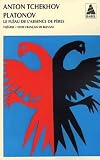
Platonov
by Anton Chekhov
On This Page
Description
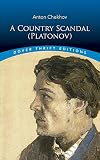
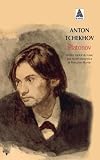
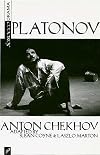
A Russian version of Don Juan is the focus of Chekhov's first play, a farce in which a newly arrived schoolmaster proves irresistible to the bored women of a provincial community. Platonov's charm lies in his novelty, and his seductions are strictly passive as a libidinous widow, her idealistic stepdaughter, and an earnest student vie for his romantic attentions. Discovered in 1923, two decades after Chekhov's death, this play was written while the author was still a medical student. Adapted show more and translated by Alex Szogyi, it offers the trenchant wit and rich characterizations typical of the dramatist's later works. Woven amid the love affairs, suicide attempts, parties, and shootings are the customary themes of Chekhovian theater: the passions and frailties of human nature, the futility of the search for happiness, and the alternating episodes of comedy and tragedy that shape every life. show lessTags
Recommendations
























Member Reviews
Esto es como the room del teatro pero sin la gracia ironica
Ratings
Members
- Recently Added By
Author Information

Anton Pavlovich Chekhov was born in the provincial town of Taganrog, Ukraine, in 1860. In the mid-1880s, Chekhov became a physician, and shortly thereafter he began to write short stories. Chekhov started writing plays a few years later, mainly short comic sketches he called vaudvilles. The first collection of his humorous writings, Motley show more Stories, appeared in 1886, and his first play, Ivanov, was produced in Moscow the next year. In 1896, the Alexandrinsky Theater in St. Petersburg performed his first full- length drama, The Seagull. Some of Chekhov's most successful plays include The Cherry Orchard, Uncle Vanya, and Three Sisters. Chekhov brought believable but complex personalizations to his characters, while exploring the conflict between the landed gentry and the oppressed peasant classes. Chekhov voiced a need for serious, even revolutionary, action, and the social stresses he described prefigured the Communist Revolution in Russia by twenty years. He is considered one of Russia's greatest playwrights. Chekhov contracted tuberculosis in 1884, and was certain he would die an early death. In 1901, he married Olga Knipper, an actress who had played leading roles in several of his plays. Chekhov died in 1904, spending his final years in Yalta. (Bowker Author Biography) show less
Work Relationships
Is contained in
Has the adaptation
Common Knowledge
- Original publication date
- 1923
- Related movies
- Neokonchennaya pyesa dlya mekhanicheskogo pianino (1977 | IMDb)
Classifications
- Genre
- Fiction and Literature
- DDC/MDS
- 891.723 — Literature & rhetoric Asian Literature East Indo-European and Celtic literatures Russian and East Slavic languages Russian drama 1800–1917
- LCC
- PG3456 .P43 .S9 — Language and Literature Slavic languages and literatures. Baltic languages. Albanian language Slavic. Baltic. Albanian Russian literature Individual authors and works 1870-1917 Chekhov
- BISAC
Statistics
- Members
- 99
- Popularity
- 324,847
- Reviews
- 1
- Rating
- (2.95)
- Languages
- 8 — Dutch, English, French, German, Italian, Russian, Spanish, Swedish
- Media
- Paper, Ebook
- ISBNs
- 16
- UPCs
- 1
- ASINs
- 7