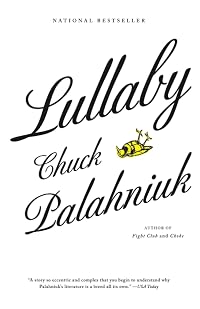
Lullaby
by Chuck Palahniuk
On This Page
Description
Carl Streator, a 40-something widower and newspaper reporter, has lived a reclusive life since the death of his wife. His latest assignment is to write a series of articles on Sudden Infant Death Syndrome. In doing so, he discovers that there is an underlying commonality in the deaths. A children's book, Poems and Rhymes Around the World, containing an African Death chant, is found at the scene of the cases he investigates. Having read the chant aloud, he quickly realizes the lethal power of show more the words. As he fights against its powerful grip, which has turned him into a serial killer, he enlists the aid of some eccentric compatriots who vow to rid every library and bookstore of the deadly text before further lives are jeopardized. But what begins as a crusade to save lives soon becomes the ultimate game of cat and mouse, as they uncover the truth about the rhyme and are hunted by the force holding Streator captive. show lessTags
Recommendations

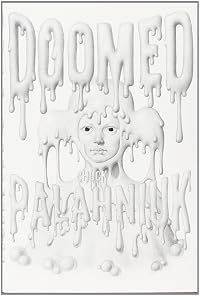
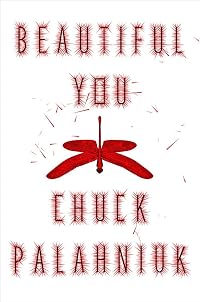
Member Reviews
I'm so paranoid, thanks Chuck. Lullaby plays on every single one of my fears, from the most primal fear of ghosts and bloody things to the modern day liberal neo-hippie fear of slow death by overstimulating media and/or ecological apocalypse. It's a very manipulative book (and a thrilling ride) but I can't help feeling like sensational novels and science fiction (of a sort) are yet another form of overstimulation, even when firing the imagination on all cylinders and calling for an end to spiritual death by pop culture.
I liked this book-- didn't love it, did't hate it. It's the story of a baby's lullaby that has the power to kill instantly, even if thought in someone's direction, even if by accident. An potential epidemic ensues, especially if the book of poems falls into the wrong hands. A motley cast of characters attempts to gather and destroy all copies, but each has his/her own personal agenda. Not for the feint of heart, but not as course as some of the Palahniuk's other works.
The Cons: Palahniuk's characters are very 1-D, caricatures conceived of entirely to forward the plot. They do not resemble real people in anyway. That's OK, probably his intent, but makes it difficult for me to have any empathy or get drawn in tho the story emotionally. show more We're talking about a story about babies dying-- that could really get to me if told from a human point of view.
The Pros: I thought Palahniuk did a wonderful job of weaving in the parable (the lullaby story) with his underlying theme--- who should have power over life and death and when is it justified to wield that power? The additional storyline of the eco-distasters from kudzu and similar was a nice touch, as it showed another completely different angle on the larger theme. At first the answers seem obvious, but as the plot thickens the grey area broadens and the characters themselves do not agree on when killing is justified. Very thought provoking.
This is a quick easy read. I wouldn't want to devote much time to Palahniuk's books, as the writing itself doesn't engage me, but for what it is, it's a decent read. 3.5 stars. show less
The Cons: Palahniuk's characters are very 1-D, caricatures conceived of entirely to forward the plot. They do not resemble real people in anyway. That's OK, probably his intent, but makes it difficult for me to have any empathy or get drawn in tho the story emotionally. show more We're talking about a story about babies dying-- that could really get to me if told from a human point of view.
The Pros: I thought Palahniuk did a wonderful job of weaving in the parable (the lullaby story) with his underlying theme--- who should have power over life and death and when is it justified to wield that power? The additional storyline of the eco-distasters from kudzu and similar was a nice touch, as it showed another completely different angle on the larger theme. At first the answers seem obvious, but as the plot thickens the grey area broadens and the characters themselves do not agree on when killing is justified. Very thought provoking.
This is a quick easy read. I wouldn't want to devote much time to Palahniuk's books, as the writing itself doesn't engage me, but for what it is, it's a decent read. 3.5 stars. show less
Was given this by a friend of mine when she moved away because she didn't have room to pack it and a few others. Unfortunately, I'm not as big of a fan of it as she is.
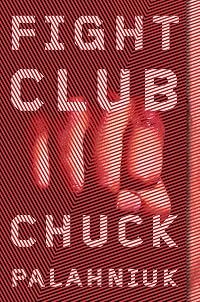
You can definitely tell it's by the guy who wrote [b:Fight Club|5759|Fight Club|Chuck Palahniuk|https://images.gr-assets.com/books/1357128997s/5759.jpg|68729]. It has the same sort of feel to it, and when they say that Palahniuk has a style and a genre all his own, I'd definitely agree. You definitely know when you're reading one of his stories.
Unfortunately, this one fell flat for me. I liked the premise, but it became very repetitive very quickly. I started losing interest. The little side stories aren't really fleshed out much and almost feel like an afterthought added show more for length. The timeline is also a little wonky and poorly worked in. I get that it's supposed to make you disoriented, but it doesn't really happen often enough to play any sort of role like that. Overall, 5 out of 5 for the concept, but 2 out of 5 for the actual execution. show less
You can definitely tell it's by the guy who wrote [b:Fight Club|5759|Fight Club|Chuck Palahniuk|https://images.gr-assets.com/books/1357128997s/5759.jpg|68729]. It has the same sort of feel to it, and when they say that Palahniuk has a style and a genre all his own, I'd definitely agree. You definitely know when you're reading one of his stories.
Unfortunately, this one fell flat for me. I liked the premise, but it became very repetitive very quickly. I started losing interest. The little side stories aren't really fleshed out much and almost feel like an afterthought added show more for length. The timeline is also a little wonky and poorly worked in. I get that it's supposed to make you disoriented, but it doesn't really happen often enough to play any sort of role like that. Overall, 5 out of 5 for the concept, but 2 out of 5 for the actual execution. show less
Unlike Choke, which was just Fight Club rehashed, Lullaby is an original novel, and a novel theme for Chuck. There are definitely parts that needed a editing (and I detest italics) but the book had a unique premise and engaging storyline.
Chuck Palahniuk has a knack for writing novels that could be short stories. When it's good, his prose is tight, muscular and punchy. But when it's bad, you wish the novel had been a story, you think it ought to be 40 pages long at the most, and all the slick one-liners and quirky details that would jazz up a good story become in the novel just overwrought or too-frequent gimmicks. This is one of those books.
The story is fascinating, a bizarre sort of postmodern fantasy, something akin to magical realism but with none of the attendant mysticism and awe--Palahniuk remains all cynicism and grit, as we like him. His plot is deceptively complex and his characters, though at first seemingly shallow and serving only the necessities of the show more story, become so well developed over the course of the novel that I was reluctant to let them go. And while many disparage his endings as weak or undeserved, in this novel I found the wrap-up quite satisfactory. I only wish it hadn't taken so much overt stylizing and cheap repetition to get there. show less
The story is fascinating, a bizarre sort of postmodern fantasy, something akin to magical realism but with none of the attendant mysticism and awe--Palahniuk remains all cynicism and grit, as we like him. His plot is deceptively complex and his characters, though at first seemingly shallow and serving only the necessities of the show more story, become so well developed over the course of the novel that I was reluctant to let them go. And while many disparage his endings as weak or undeserved, in this novel I found the wrap-up quite satisfactory. I only wish it hadn't taken so much overt stylizing and cheap repetition to get there. show less
The Basics
Carl Streator is an investigative journalist, and he has been tasked with finding a pattern among babies who died of crib death. He does find a pattern. The same book of poems in each house, marked on the same page. It turns out this is a culling song, and anyone who hears it dies. Now that Streator has this power, controlling it is turning out to be a challenge.
My Thoughts
Palahniuk wrote this book as a reaction to his father’s death, and it does concern itself heavily with the topic of death. How people do or don’t deal with it. Having the power to take life in your hands. Holding on when you probably shouldn’t anymore. It’s a short book to have said so much. That is Palahniuk’s power, in that he’s concise and yet show more remains poetic and capable of cramming so much message into a few words without wasting a single one.
I do find trouble getting down to why I didn’t find this a five star affair. I thought the narrator, Carl, was relatable even in his faults, and his personal story was a slow, satisfying reveal. The overall story is a success for the most part, though I will say the reveal about the grimoire felt cheap, as if he wanted to hurry up and get to the point and that was the best way to do it. Other than that quirk, I enjoyed the plot.
I think most irritating of all was Oyster. He was intentionally an annoyance, I realize that. I’m having trouble expressing this without spoiling the book, but a character this absolutely insufferable in a book concerned with people who can kill with their minds… It didn’t add up for me or pan out the way I would’ve wanted. I’ll say the book was very successful in making us feel exactly how Carl felt every time Oyster opened his mouth, and we wouldn’t have an entire story without that character with the way Palahniuk structured it. But he did his job too well. Oyster was too much of a douche, and the sheer frustration of that knocked this down a peg.
That’s a personal nitpick over a book that was good and worthy of a read. Other readers may cope with Oyster better than I did.
Final Rating
4/5 show less
Carl Streator is an investigative journalist, and he has been tasked with finding a pattern among babies who died of crib death. He does find a pattern. The same book of poems in each house, marked on the same page. It turns out this is a culling song, and anyone who hears it dies. Now that Streator has this power, controlling it is turning out to be a challenge.
My Thoughts
Palahniuk wrote this book as a reaction to his father’s death, and it does concern itself heavily with the topic of death. How people do or don’t deal with it. Having the power to take life in your hands. Holding on when you probably shouldn’t anymore. It’s a short book to have said so much. That is Palahniuk’s power, in that he’s concise and yet show more remains poetic and capable of cramming so much message into a few words without wasting a single one.
I do find trouble getting down to why I didn’t find this a five star affair. I thought the narrator, Carl, was relatable even in his faults, and his personal story was a slow, satisfying reveal. The overall story is a success for the most part, though I will say the reveal about the grimoire felt cheap, as if he wanted to hurry up and get to the point and that was the best way to do it. Other than that quirk, I enjoyed the plot.
I think most irritating of all was Oyster. He was intentionally an annoyance, I realize that. I’m having trouble expressing this without spoiling the book, but a character this absolutely insufferable in a book concerned with people who can kill with their minds… It didn’t add up for me or pan out the way I would’ve wanted. I’ll say the book was very successful in making us feel exactly how Carl felt every time Oyster opened his mouth, and we wouldn’t have an entire story without that character with the way Palahniuk structured it. But he did his job too well. Oyster was too much of a douche, and the sheer frustration of that knocked this down a peg.
That’s a personal nitpick over a book that was good and worthy of a read. Other readers may cope with Oyster better than I did.
Final Rating
4/5 show less
Another fantastic Palahniuk book, one of my favorites. The theme is all about control, something I always fear of losing. Reading it gave me shivers, thinking of all the times I have been controlled in my life without knowing it and the possibility of it happening on a larger scale is terrifying. People let themselves be controlled all the time and some don't even recognize it. He brought more cynicism about the world to this book and it made his humor shine. I laughed and felt haunted all at the same time. Read it!
Members
- Recently Added By
Lists

Magic Realism
371 works; 51 members

music to my eyes
86 works; 12 members

Books Read in 2006
424 works; 8 members

American Lit for Eng 11 Research Project
368 works; 6 members

KayStJ's to-read list
1,616 works; 11 members

Jones & Newman: Best Horror Books Further Recommended Reading
577 works; 4 members
Author Information

102+ Works 104,216 Members
Chuck Palahniuk was born in Pasco, Washington on February 21, 1962. He received a BA in journalism from the University of Oregon in 1986. Before becoming a full-time author, he worked as a journalist and as a diesel mechanic. He has written numerous novels including Survivor, Invisible Monsters, Lullaby, Diary, Haunted, Rant, Snuff, Pygmy, show more Tell-All, Damned, Doomed, Beautiful You, and Make Something Up: Stories You Can't Unread. Fight Club was made into a film by director David Fincher and Choke was made into a film by director Clark Gregg. He is also the author of Fugitives and Refugees, a nonfiction profile of Portland, Oregon, and the nonfiction collection Stranger Than Fiction. (Bowker Author Biography) show less
Some Editions
Awards and Honors
Awards
Distinctions
Notable Lists
Series
Belongs to Publisher Series
Work Relationships
Is contained in
Common Knowledge
- Canonical title
- Lullaby
- Original title
- Lullaby
- Original publication date
- 2002-09-17; 2002
- People/Characters
- Carl Streator; Helen Hoover Boyle; Mona Sabbat; Oyster
- Epigraph
- Sticks and stones may break your bones, but words will never hurt you.
- Dedication
- I dedicate this book, with special thanks, to ...
Jason Cheung
Kyle McCormick
Dennis Widmyer
Amy Dalton
Kevin Kölsch
... who read my stuff when nobody read my stuff - First words
- At first, the new owner pretends he never looked at the living room floor.
- Last words
- (Click to show. Warning: May contain spoilers.)Now this is my life.
- Original language
- English
Classifications
Statistics
- Members
- 8,814
- Popularity
- 1,236
- Reviews
- 91
- Rating
- (3.60)
- Languages
- 20 — Catalan, Czech, Dutch, English, French, German, Greek, Hungarian, Italian, Japanese, Polish, Romanian, Russian, Croatian, Spanish, Swedish, Turkish, Portuguese (Portugal), Portuguese (Brazil), Chinese, traditional
- Media
- Paper, Audiobook, Ebook
- ISBNs
- 52
- UPCs
- 1
- ASINs
- 16