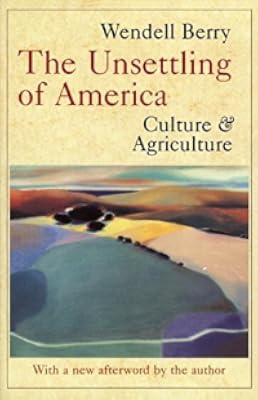
The Unsettling of America: Culture and Agriculture
by Wendell Berry
On This Page
Description
Since its publication in 1977, The Unsettling of America has been recognized as a classic of American letters. In it, Wendell Berry argues that good farming is a cultural and spiritual discipline. Today's agribusiness, however, takes farming out of its cultural context and away from families. As a result, we as a nation are more estranged from the land from the intimate knowledge, love, and care of it. Sadly, his arguments and observations are more relevant than ever. Although this book has show more not had the happy fate of being proved wrong, Berry writes, there are people working to make something comely and enduring of our life on this earth. Wendell Berry is one of those people, writing and working, as ever, with passion, eloquence, and conviction. show lessTags
Recommendations




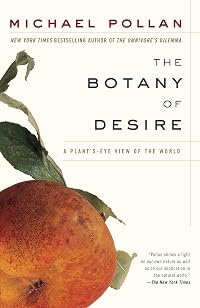


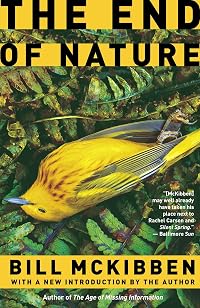

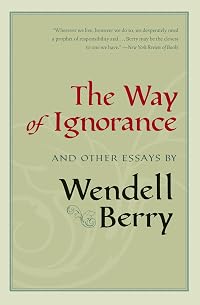
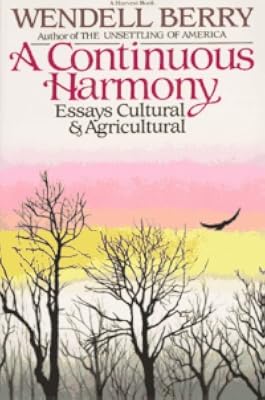









Member Recommendations

Member Reviews
The first casualties of exploitation are character and community. Wendell Berry
This was a prophetic book in 77 and it's still a sobering read today, given that our alienation from the land, our embrace of specialization resulting in food sources that are less resistant to blight, pests, invasive species, drought or any of the challenges faced by farmers. The book bears reading even for an audience not familiar with agriculture because of the broader picture - that a society accepting of exploitation of land and natural resources tends to be accepting of the exploitation of people. Berry's exploration of the margins, of the healing and regeneration needed between growing cycles, and of the necessity of diversity are lessons that address show more many wrongs still being committed not only by agribusiness but any industry that commodifies what once was considered a part of the membership of the community. show less
This was a prophetic book in 77 and it's still a sobering read today, given that our alienation from the land, our embrace of specialization resulting in food sources that are less resistant to blight, pests, invasive species, drought or any of the challenges faced by farmers. The book bears reading even for an audience not familiar with agriculture because of the broader picture - that a society accepting of exploitation of land and natural resources tends to be accepting of the exploitation of people. Berry's exploration of the margins, of the healing and regeneration needed between growing cycles, and of the necessity of diversity are lessons that address show more many wrongs still being committed not only by agribusiness but any industry that commodifies what once was considered a part of the membership of the community. show less
I don't reside in the natural audience of this book. Professionally, I work developing technologies at an academic medical center in a city. Therefore, my orientation is for technology, and I'm generally ignorant about agriculture. I acknowledge those biases. I read this book because I've long been curious about agrarian-type thinkers like GK Chesterton. I respect Wendell Berry's fiction about small-town America, and I seek to understand the world better, including perspectives different than me. That's why I read it.
Berry seemed to dichotomize an industrial approach versus a more spiritual approach to farming, which I found unfortunate. Less ideological debate and more deliberation and exchange of ideas seem to be in order in a book show more like this. He sought to undermine industry's alliance with land-grant universities - an unsuccessful target to start with in my estimation. He should have sought ways to help land-grant universities address the needs of individual farmers in addition to big agriculture.
He holds the Amish up as an example of a healthy farming community and generally disparages productivity needs. Both of those sound nice conceptually, but ignore basic realities about our world. Abundantly feeding people and generating profits from doing so are important social functions of agriculture. The spiritual benefits to professional farmers should indeed play a role, but I'd argue not a determining or predominant factor.
What's sad is that real reforms need to be made here, and those reforms will only come through thoughtful dialogue, not demands to deconstruct an "ideological" alliance with industry. I'd like to see industry made more sustainable and take into account the biological needs of the land. Technology is not a panacea, and real study needs to occur to understand how to position society for the next 20, 50, and 100 years. I suspect big agri-industry, for all its shortcomings, would probably be open to considering those options, too.
Overall, I can't advocate for this book as a way for the future. Of course, that lack of recommendation may well be due to my own ignorance and biases. Nonetheless, the book did open my eyes to the farming industry more in a way that looks at the individual farmer instead of a farming industry. Thus, reading the book did meet my aims. I hope fruitful discussion will continue into the future as this book has seemed to provoke since its original publication. show less
Berry seemed to dichotomize an industrial approach versus a more spiritual approach to farming, which I found unfortunate. Less ideological debate and more deliberation and exchange of ideas seem to be in order in a book show more like this. He sought to undermine industry's alliance with land-grant universities - an unsuccessful target to start with in my estimation. He should have sought ways to help land-grant universities address the needs of individual farmers in addition to big agriculture.
He holds the Amish up as an example of a healthy farming community and generally disparages productivity needs. Both of those sound nice conceptually, but ignore basic realities about our world. Abundantly feeding people and generating profits from doing so are important social functions of agriculture. The spiritual benefits to professional farmers should indeed play a role, but I'd argue not a determining or predominant factor.
What's sad is that real reforms need to be made here, and those reforms will only come through thoughtful dialogue, not demands to deconstruct an "ideological" alliance with industry. I'd like to see industry made more sustainable and take into account the biological needs of the land. Technology is not a panacea, and real study needs to occur to understand how to position society for the next 20, 50, and 100 years. I suspect big agri-industry, for all its shortcomings, would probably be open to considering those options, too.
Overall, I can't advocate for this book as a way for the future. Of course, that lack of recommendation may well be due to my own ignorance and biases. Nonetheless, the book did open my eyes to the farming industry more in a way that looks at the individual farmer instead of a farming industry. Thus, reading the book did meet my aims. I hope fruitful discussion will continue into the future as this book has seemed to provoke since its original publication. show less
A great, although uneven, criticism of the reigning agricultural and cultural mentality in the U.S. It's impressive that Berry wrote this more than 30 years ago since the argument seems just as timely today. The first two and last two chapters were the strongest. In between, he gets into an abstract discussion on the relationship between our connection to the land, ourselves, and other human beings. The vagueness of some of his terminology and expressions in these chapters resulted in my losing interest. The argument itself was subtle, but it wasn't as well elucidated as I would have liked. It seems that Berry was relying on his readers to have a poetic sensibility that I myself lack. I fully admire the lyricism of his writing in these show more chapters; it just didn't quite scratch my particular itch this time around. Some day I'll come back to this when I'm older and wiser and give it the five stars it probably deserves. Either that, or I'll feel the same way I do now and move it down to three. show less
This book is part rant and part musing on culture and society. The rants, while sometimes entertaining, are often tied to then-current events (although not without relevance to modern debates on food and farming).
The musings are much more relevant. While Barry does not reject technology and growth outright, he does caution strongly against letting them run without restraint. Underlying his thoughts are a concern for wholeness and sustainability. We are, he thinks, backing ourselves into a corner where the future is being sacrificed for the present, and where that sacrifice is being presented as inevitable. Thus, he is against large agribusiness farms not because he sees them as inherently evil, but because he seems them using the land show more in a way that will destroy it in 100 years and because he seems them as relying on unsustainable amounts of external inputs, especially from non-renewable resources such as oil. He wants to farm the land now in ways that will preserve its production capacity.
It is this focus on sustainability, in the deepest sense of the word, that resonates so strongly with me. Even though I come to different conclusions than he would on many specific issues, I feel a discussion of those disagreement would be focused on which techniques better meet the same underlying goals, rather than arguments about the goals themselves.
A random selection of the quotes I noted while reading:
pg 41: But as a social or economic goal, bigness is totalitarian; it establishes an inevitable tendency toward the one that will be biggest of all.
pg 58: But the only possible guarantee of the future is responsible behavior in the present. When supposed future needs are used to justify our misbehavior in the present, as is the tendency with us, then we are both perverting the present and diminishing the future.
pg 82: The question at issue, then, is not of distinction but of balance. The ideal seems to be that the living part of our technology should not be devalued or overpowered by the mechanical.
pg 91: Skill, in the best sense, is the enactment or the acknowledgement or the signature of responsibility to other lives; it is the practical understanding of value. Its opposite is not merely unskillfulness, but ignorance of source, dependencies, and relationships.
pg 173-174: Our history forbids us to be surprised that an orthodoxy of though should become narrow, rigid, mercenary, morally corrupt, and vengeful against dissenters. This has happened over and over again. It might be thought the maturity of orthodoxy; it is what finally happens to a mind once it has consented to be orthodox. ... one who presumes to know the truth does not look for it. ... If change is to come, then, it will have to come from the outside. It will have to come from the margins.
pg 206: Without appropriate controls, one has no proof; one does not, in any respectable sense, have an experiment.
pg 218: Any criticism of an established way, if it is to be valid, must have as its standard not only a need, but a better way. It must show that a better way is desirable, and it must give examples to show that it is possible.
pg 219: Second, as a people, we must learn to think again of human energy, our energy, not as something to be saved, but as something to be used and to be enjoyed in use. We must understand that our strength is, first of all, strength of body, and that this strength cannot thrive except in useful, decent, satisfying, comely work. There is no such thing as a reservoir of bodily energy. By saving it -- as our ideals of labor-saving and luxury bid us to do -- we simply waste it, and waste much else along with it. show less
The musings are much more relevant. While Barry does not reject technology and growth outright, he does caution strongly against letting them run without restraint. Underlying his thoughts are a concern for wholeness and sustainability. We are, he thinks, backing ourselves into a corner where the future is being sacrificed for the present, and where that sacrifice is being presented as inevitable. Thus, he is against large agribusiness farms not because he sees them as inherently evil, but because he seems them using the land show more in a way that will destroy it in 100 years and because he seems them as relying on unsustainable amounts of external inputs, especially from non-renewable resources such as oil. He wants to farm the land now in ways that will preserve its production capacity.
It is this focus on sustainability, in the deepest sense of the word, that resonates so strongly with me. Even though I come to different conclusions than he would on many specific issues, I feel a discussion of those disagreement would be focused on which techniques better meet the same underlying goals, rather than arguments about the goals themselves.
A random selection of the quotes I noted while reading:
pg 41: But as a social or economic goal, bigness is totalitarian; it establishes an inevitable tendency toward the one that will be biggest of all.
pg 58: But the only possible guarantee of the future is responsible behavior in the present. When supposed future needs are used to justify our misbehavior in the present, as is the tendency with us, then we are both perverting the present and diminishing the future.
pg 82: The question at issue, then, is not of distinction but of balance. The ideal seems to be that the living part of our technology should not be devalued or overpowered by the mechanical.
pg 91: Skill, in the best sense, is the enactment or the acknowledgement or the signature of responsibility to other lives; it is the practical understanding of value. Its opposite is not merely unskillfulness, but ignorance of source, dependencies, and relationships.
pg 173-174: Our history forbids us to be surprised that an orthodoxy of though should become narrow, rigid, mercenary, morally corrupt, and vengeful against dissenters. This has happened over and over again. It might be thought the maturity of orthodoxy; it is what finally happens to a mind once it has consented to be orthodox. ... one who presumes to know the truth does not look for it. ... If change is to come, then, it will have to come from the outside. It will have to come from the margins.
pg 206: Without appropriate controls, one has no proof; one does not, in any respectable sense, have an experiment.
pg 218: Any criticism of an established way, if it is to be valid, must have as its standard not only a need, but a better way. It must show that a better way is desirable, and it must give examples to show that it is possible.
pg 219: Second, as a people, we must learn to think again of human energy, our energy, not as something to be saved, but as something to be used and to be enjoyed in use. We must understand that our strength is, first of all, strength of body, and that this strength cannot thrive except in useful, decent, satisfying, comely work. There is no such thing as a reservoir of bodily energy. By saving it -- as our ideals of labor-saving and luxury bid us to do -- we simply waste it, and waste much else along with it. show less
I read the first few chapters of this book a couple years ago for an independent study on land stewardship, and though it was highly compelling stuff, it took me until now to pick the book back up and finish it already. One of the most striking things about this Berry classic is how relevant most of his arguments are today when it was published almost four decades ago in response to a very specific agricultural crisis.
Also, I am surprised that this book hasn't been recommended to me more. I feel it should have been required reading for all students in my MFA program in Creative Writing and Environment and should be required, at least in part, for all students at land grant universities. I wish I had known about Chapter 8 when I was show more still teaching undergraduate English at Iowa State (and Chapter 7 when I was taking Ecofeminism—his arguments against birth control would have made for a compelling discussion).
There were a few places where it felt academic, and my eye sped over those passages to get past them and on to the poetry, but overall Berry's writing was enviable—and effective! I dare you to read this book and not want to move out to the country and start farming immediately. show less
Also, I am surprised that this book hasn't been recommended to me more. I feel it should have been required reading for all students in my MFA program in Creative Writing and Environment and should be required, at least in part, for all students at land grant universities. I wish I had known about Chapter 8 when I was show more still teaching undergraduate English at Iowa State (and Chapter 7 when I was taking Ecofeminism—his arguments against birth control would have made for a compelling discussion).
There were a few places where it felt academic, and my eye sped over those passages to get past them and on to the poetry, but overall Berry's writing was enviable—and effective! I dare you to read this book and not want to move out to the country and start farming immediately. show less
Thoroughly enjoyed this book. Have read a few of Berry's other books, but this is, so far, at least, my favorite. He tied together a lot of the issues that are now plaguing us. I had to remind myself that he was writing this in the mid 1970s. We are still struggling today with the problems of soil loss, agribusiness control of our agriculture, resultant poor overall health of people, etc. Berry expresses a deep understanding as to how all of these, while treated as separate, are indeed intimately connected. Ultimately, he stresses that we are all part of this Earth and need to recognize our connection to it and to each other. That insight alone makes reading this book worthwhile, and there is so much more besides that.
Berry's characteristically clear and opinionated style can be seen coming into its own here. Not my favorite, but I can understand why this was his breakthrough piece.
Members
- Recently Added By
Lists

Environmental History
46 works; 8 members
Author Information

160+ Works 24,916 Members
Wendell Berry The prolific poet, novelist, and essayist Wendell Berry is a fifth-generation native of north central Kentucky. Berry taught at Stanford University; traveled to Italy and France on a Guggenheim Fellowship; and taught at New York University and the University of Kentucky, Lexington, before moving to Henry County. Berry owns and show more operates Lanes Landing Farm, a small, hilly piece of property on the Kentucky River. He embraced full-time farming as a career, using horses and organic methods to tend the land. Harmony with nature in general, and the farming tradition in particular, is a central theme of Berry's diverse work. As a poet, Berry gained popularity within the literary community. Collected Poems, 1957-1982, was particularly well-received. Novels and short stories set in Port William, a fictional town paralleling his real-life home town of Port Royal further established his literary reputation. The Memory of Old Jack, Berry's third novel, received Chicago's Friends of American Writers Award for 1975. Berry reached his broadest audience and attained his greatest popular acclaim through his essays. The Unsettling of America: Culture and Agriculture is a springboard for contemporary environmental concerns. In his life as well as his art, Berry has advocated a responsible, contextual relationship with individuals in a local, agrarian economy. (Bowker Author Biography) show less
Awards and Honors
Notable Lists
Common Knowledge
- Canonical title
- The Unsettling of America: Culture and Agriculture
- Original publication date
- 1977
- Epigraph
- Who so hath his minde on taking,
hath it no more on what he hath taken.
MONTAIGNE, III. VI
So many goodly citties ransacked and razed; so many nations destroyed and made desolate; so infinite millions ... (show all)of harmelesse people of all sexes, states and ages, massacred, ravaged and put to the sword; and the richest, the fairest and the best part of the world topsiturvied, ruined and defaced for the traffick of Pearles and Pepper: Oh mechanicalll victories, oh base conquest.
MONTAIGNE
Dreams of the far future destiny of man were dragging up from its shallow and unquiet grave the old dream of Man as God. The very experience of the dissecting room and the pathological laboratory were breeding a conviction... (show all) that the stifling of all deep-set repugnances was the first essential for progress.
C. S. LEWIS, That Hideous Strength - First words
- One of the peculiarities of the white race's presence in America is how little intention has been applied to it.
Classifications
- Genres
- Nonfiction, Science & Nature, General Nonfiction, Philosophy, History
- DDC/MDS
- 338.10973 — Society, government, & culture Economics Production Agricultural products Biography; History By Place North America United States
- LCC
- HD1761 .B47 — Social sciences Industries. Land use. Labor Industries. Land use. Labor Agriculture
- BISAC
Statistics
- Members
- 1,512
- Popularity
- 15,368
- Reviews
- 11
- Rating
- (4.16)
- Languages
- English, Italian
- Media
- Paper, Audiobook, Ebook
- ISBNs
- 11
- ASINs
- 4