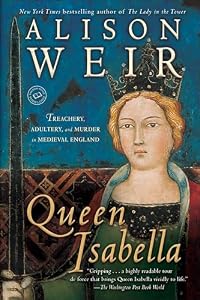
Queen Isabella: Treachery, Adultery, and Murder in Medieval England
by Alison Weir
On This Page
Description
In this vibrant biography, acclaimed author Alison Weir reexamines the life of Isabella of England, one of history's most notorious and charismatic queens. Isabella arrived in London in 1308, the spirited twelve-year-old daughter of King Philip IV of France. Her marriage to the heir to England's throne was designed to heal old political wounds between the two countries, and in the years that followed she became an important figure, a determined and clever woman whose influence would come to show more last centuries. Many myths and legends have been woven around Isabella's story, but in this first full biography in more than 150 years, Alison Weir gives a groundbreaking new perspective. show lessTags
Recommendations









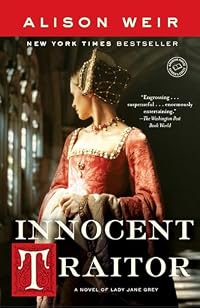
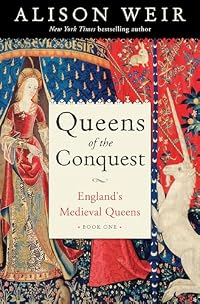
Member Recommendations
Member Reviews
I knew nothing about Queen Isabella of England or this era of English history (early 14th century) so I really feel like I learned something, in addition to being an interesting tale of an English queen (daughter of a French king) who wound up leading an invading force to depose her husband King Edward II and put her son on the throne, only to suffer her own deposition of sorts when her son (Edward III) returned the favor a few years later. Weir's stated aim was to rehabilitate Isabella's reputation as a bloodthirsty "She-Wolf of France", and as far as I could tell she succeeded. As always with books set in this era and earlier, there is too much mundane listing of household goods and purchases, land grants, day-to-day movements that show more are not momentous etc., presumably because these are the only things that are solidly documented in what remains of the written record, but it's still fairly absorbing for all that. I thought Weir provided adequate backup for her claims, which apparently run counter to the conventional historical view of Isabella (generally written by men, of course). show less
In a comment on the accuracy of the movie Braveheart, Isabella of France married Edward II of England in 1308 when she was 12 and he was 26. (William Wallace had been dead for three years and Edward I for one before Isabella even saw England) It was a fairy-tale wedding, in more than one sense; Edward was bisexual and gave some of his new bride’s wedding presents away to his boyfriends, notably Piers Gaveston, an otherwise unaccomplished Gascon knight. She put up with this for years; although the English nobility were less tolerant and Gaveston was eventually trapped away from the king and beheaded; Hugh Despenser then took his place in Edward’s affections and was even ruder to Isabella than Gaveston had been.. However, when show more Isabella received permission to visit her homeland in 1323, she didn’t come back on schedule, instead hooking up with Roger Mortimer, the Earl of March and an escapee from The Tower. Roger and Isabella then invaded England; deposed Edward; had Hugh Despenser tied to a tall ladder in Hereford, castrated, disemboweled, and burned; and reportedly had Edward killed by inserting a red-hot poker where it would really get his attention (this last isn’t attested until much later, and Edward may have been just smothered; however, there are lots of contemporary illustrations of Despenser as the guest of honor in Hereford). Isabella and Mortimer turned out to be just as incompetent and tyrannous as Edward and were promptly overthrown themselves by a coup lead by the 18-year-old Edward III. Mortimer was hanged at Tyburn and Isabella ended up in a nunnery; either Edward III was more merciful or less imaginative than his mother.
The author, Alison Weir, proposes an interesting theory: that Edward II was not killed but escaped from prison, went to Italy, and became a monk. Her evidence is meager. Isabella’s ghost inhabits the former Greyfriars churchyard in London, where she is reported to wander around carrying her husband’s heart. I suppose she could be carrying worse things, under the circumstances. Interestingly, the same churchyard also hosts the spirit of Alice (or Agnes) Hungerford, who was boiled alive in Tudor times for poisoning her husband. The two ghosts are reported to engage in violent turf battles when they encounter each other. (There’s also the ghost of Elizabeth Barton, the “Holy Maid of Kent”; an unidentified ghostly monk; and a spectral dog. Since it’s a relatively small cemetery, it must get pretty crowded if everybody shows up at once). Certainly the church has been unlucky; it burned down in the Great Fire and was rebuilt only to be bombed out during the Blitz.
Weir is successful in her attempt to rehabilitate Isabella, who acquired the nickname “She Wolf of France” somewhere along the line. She was clearly provoked; Edward should have known hell hath no fury as a woman scorned. show less
The author, Alison Weir, proposes an interesting theory: that Edward II was not killed but escaped from prison, went to Italy, and became a monk. Her evidence is meager. Isabella’s ghost inhabits the former Greyfriars churchyard in London, where she is reported to wander around carrying her husband’s heart. I suppose she could be carrying worse things, under the circumstances. Interestingly, the same churchyard also hosts the spirit of Alice (or Agnes) Hungerford, who was boiled alive in Tudor times for poisoning her husband. The two ghosts are reported to engage in violent turf battles when they encounter each other. (There’s also the ghost of Elizabeth Barton, the “Holy Maid of Kent”; an unidentified ghostly monk; and a spectral dog. Since it’s a relatively small cemetery, it must get pretty crowded if everybody shows up at once). Certainly the church has been unlucky; it burned down in the Great Fire and was rebuilt only to be bombed out during the Blitz.
Weir is successful in her attempt to rehabilitate Isabella, who acquired the nickname “She Wolf of France” somewhere along the line. She was clearly provoked; Edward should have known hell hath no fury as a woman scorned. show less
I really tried to like this book. Inasmuch as I am an avid student of history and enjoy the tangled web of early to mid twentieth century English history, this book seemed right up my alley.
I can't say that it is a bad book, but upon reflection, perhaps the most telling fact is that it took me so long to finish it. A book of this size generally takes me about a week to finish, reading for an hour or so each night before bed. Most nights, however, found me nodding off in less than half the time. Weir's style can best be described as a dry recitation of historical facts with frequent asides in which she injects her own analysis. Hardly scintillating entertainment and simply not lively enough to keep me awake.
From the standpoint of show more substance, I can't say that I agree with her efforts to rehabiltate the universally condemned Queen Isabella, the wife of Edward II of England. Isabella conspired against, overthrew, cheated on and likely participated in the murder of her husband and sovereign. According to Weir, she was simply misunderstood and unfairly judged. To my knowledge, she is the only one that believes so.
In order to back up her position, Weir not only spins facts to the benefit of the Queen, but she weaves many out of whole cloth and disregards the numerous facts which clearly implicate her in the crimes for which history has condemned her. In an attempt to absolve the Queen of the crime of murder, she even trots out the old, roundly rejected canard that Edward II escaped from his captors and lived the remainder of his life as a hermit in France. This despite the public, state funeral in which the body and face of the King were clearly displayed and visible to thousands. As if an escape somehow lessens the crime of ordering the murder in the first place.
Even in the cases where she concedes guilt on the part of the Queen, such as her adulterous relationship with Mortimer, she pardons the Queen, holding her to current standards as opposed to those in which she lived. In this regard, she clearly states that were Queen Isabella alive today, she would be viewed as a strong, independent woman, deserving of praise and not scorn (You go, girl). Nice theory, except for the fact that she didn't live in current times. In her day, regicide was perhaps the greatest crime and sin of the day, and adultery by a royal woman was universally punishable by death.
I've read several of Weir's works and to date am not impressed. She seems to be on a personal crusade to rehabiltate the reputations of various women of the Middle Ages that for some reason or another have been judged harshly by history. I've never been a fan of revisionist history and particularly when the revisions are politically or socially motivated. This book is not only not particularly entertaining, but it's not even good history. show less
I can't say that it is a bad book, but upon reflection, perhaps the most telling fact is that it took me so long to finish it. A book of this size generally takes me about a week to finish, reading for an hour or so each night before bed. Most nights, however, found me nodding off in less than half the time. Weir's style can best be described as a dry recitation of historical facts with frequent asides in which she injects her own analysis. Hardly scintillating entertainment and simply not lively enough to keep me awake.
From the standpoint of show more substance, I can't say that I agree with her efforts to rehabiltate the universally condemned Queen Isabella, the wife of Edward II of England. Isabella conspired against, overthrew, cheated on and likely participated in the murder of her husband and sovereign. According to Weir, she was simply misunderstood and unfairly judged. To my knowledge, she is the only one that believes so.
In order to back up her position, Weir not only spins facts to the benefit of the Queen, but she weaves many out of whole cloth and disregards the numerous facts which clearly implicate her in the crimes for which history has condemned her. In an attempt to absolve the Queen of the crime of murder, she even trots out the old, roundly rejected canard that Edward II escaped from his captors and lived the remainder of his life as a hermit in France. This despite the public, state funeral in which the body and face of the King were clearly displayed and visible to thousands. As if an escape somehow lessens the crime of ordering the murder in the first place.
Even in the cases where she concedes guilt on the part of the Queen, such as her adulterous relationship with Mortimer, she pardons the Queen, holding her to current standards as opposed to those in which she lived. In this regard, she clearly states that were Queen Isabella alive today, she would be viewed as a strong, independent woman, deserving of praise and not scorn (You go, girl). Nice theory, except for the fact that she didn't live in current times. In her day, regicide was perhaps the greatest crime and sin of the day, and adultery by a royal woman was universally punishable by death.
I've read several of Weir's works and to date am not impressed. She seems to be on a personal crusade to rehabiltate the reputations of various women of the Middle Ages that for some reason or another have been judged harshly by history. I've never been a fan of revisionist history and particularly when the revisions are politically or socially motivated. This book is not only not particularly entertaining, but it's not even good history. show less
I found this an interesting read rather than a gripping one, although it was educational before listening to this all I knew about Isabella was that she had had her husband murdered by means of a red hot poker up his bum.
She appears to have been a very good diplomat and in reality probably played no part in her husbands death.I find it strange that one of the acts that made her really unpopular with the English was negotiating peace with Scotland. Isabella believed that the war with Scotland could never be won, given that it had been on and off since the time of the norman conquest and so far no englishman had been crowned king of scotland she may have had a point. She also believed that it was expensive in terms of lives and money, show more money that the country didn't have. The fact that she was greedy and abused her position also didn't make her popular.
A time machine would be handy, then I could go back and tell Edward III to give it up you are never going to be king of scotland, you may occupy various parts of the country but the first king to be crowned as both king of england and scotland will actually be a scot and he is 250 years in the future so stop wasting lives and money. show less
She appears to have been a very good diplomat and in reality probably played no part in her husbands death.I find it strange that one of the acts that made her really unpopular with the English was negotiating peace with Scotland. Isabella believed that the war with Scotland could never be won, given that it had been on and off since the time of the norman conquest and so far no englishman had been crowned king of scotland she may have had a point. She also believed that it was expensive in terms of lives and money, show more money that the country didn't have. The fact that she was greedy and abused her position also didn't make her popular.
A time machine would be handy, then I could go back and tell Edward III to give it up you are never going to be king of scotland, you may occupy various parts of the country but the first king to be crowned as both king of england and scotland will actually be a scot and he is 250 years in the future so stop wasting lives and money. show less
This was my beach read, and it took up the entire vacation to get through it. I enjoyed it a lot. The story is fascinating and the writing is good. The downsides are the slow start and the dense historian minutiae, which makes it tedious on occasion.
Isabella's story is worthy of an action and sex-packed HBO series. The daughter of the powerful French king marries Edward II, king of England. He should be so lucky having the best bred, most beautiful, richest, most diplomatically astute bride in Christendom, right? Unfortunately, he prefers men. If this was a discreet hobby, it would not be a problem - but he lets his favorites rule him and the country. The favorites are greedy and cruel, and the king alienates nobles and common people show more alike. The situation gets so bad tha Isabella barely escapes with her life - and ends up leading the only successful invasion of England. She is greeted as a liberator, Edward II is taken prisoner, and Isabella's son, Edward III becomes king.
There is more. We have salacious details of adulterous queens, and terrible, wide-ranging political consequences of their dalliances - including the Hundred Year War between England and France. There are plots to murder and depose, and one political takeover involving a secret passage in a castle. Yep, if this was not history, we would cry cliché. We also have a murder of a king. Or do we? Maybe it is the escape of a king that was hushed up? As Weir unveils the evidence, mind gets blown.
You have to be a bit of a history buff to appreciate this book, but if you are, it is well worth the time. show less
Isabella's story is worthy of an action and sex-packed HBO series. The daughter of the powerful French king marries Edward II, king of England. He should be so lucky having the best bred, most beautiful, richest, most diplomatically astute bride in Christendom, right? Unfortunately, he prefers men. If this was a discreet hobby, it would not be a problem - but he lets his favorites rule him and the country. The favorites are greedy and cruel, and the king alienates nobles and common people show more alike. The situation gets so bad tha Isabella barely escapes with her life - and ends up leading the only successful invasion of England. She is greeted as a liberator, Edward II is taken prisoner, and Isabella's son, Edward III becomes king.
There is more. We have salacious details of adulterous queens, and terrible, wide-ranging political consequences of their dalliances - including the Hundred Year War between England and France. There are plots to murder and depose, and one political takeover involving a secret passage in a castle. Yep, if this was not history, we would cry cliché. We also have a murder of a king. Or do we? Maybe it is the escape of a king that was hushed up? As Weir unveils the evidence, mind gets blown.
You have to be a bit of a history buff to appreciate this book, but if you are, it is well worth the time. show less
I have yet to read an Alison Weir book that I didn't like. She chose a fascinating subject in Queen Isabella, whose life was full of political and romantic intrigue. As a consequence, this book is every bit as gripping and page-turn-y (yes, I'm convinced that's a word) as Game of Thrones (I do wonder whether George R. R. Martin based Cersei in part on Isabella). My only quibble is that Weir sometimes takes Isabella's part a bit too earnestly; after a while you begin to feel that you're reading a zealous defense of the Lannisters.
Like most of Mrs Weir's work, I found Queen Isabella to be a very entertaining and forceful read. Weir has a way of putting us right there with these historical figures in such a way that we start feeling like we know them intimately. Isabella was just a child of 12 or 13 when she came to the court of her, likely gay, new husband. Quickly shunted aside, she soon figured things out for herself and started taking charge.
Forgetting all of that, Weir adds great little details to give us a fuller, more 3D picture instead of just some biased, flat image like many historians will do. For instance, I found the bit about how Isabella became friends with her husband despite everything particularly moving. Another winner for Weir.
Forgetting all of that, Weir adds great little details to give us a fuller, more 3D picture instead of just some biased, flat image like many historians will do. For instance, I found the bit about how Isabella became friends with her husband despite everything particularly moving. Another winner for Weir.
Members
- Recently Added By
Lists

Best Biographies
216 works; 25 members

Love Triangles in Literature
108 works; 15 members
Female Author
1,235 works; 67 members

Books Read in 2016
4,666 works; 197 members

al.vick-parents books
301 works; 1 member

Club Read's Recommended Nonfiction Written by Women
618 works; 30 members
Author Information

75+ Works 37,471 Members
Alison Weir was born in London, England on July 8, 1951. She received training to be a teacher with a concentration in history from the North Western Polytechnic. Before becoming a full-time writer, she worked as a civil servant and ran her own school for children with learning difficulties from 1991 to 1997. Her first book, Britain's Royal show more Families, was published in 1989. Her other books include The Six Wives of Henry VIII; Children of England; Eleanor of Aquitaine; Henry VIII: King and Court; Mary, Queen of Scots; and Isabella. Her first novel, Innocent Traitor, was published in 2006. Her other novels include The Lady Elizabeth, The Lady in the Tower: The Fall of Anne Boleyn, The Captive Queen, A Dangerous Inheritance, and Katherine of Aragon, the True Queen. (Bowker Author Biography) show less
Awards and Honors
Notable Lists
Common Knowledge
- Canonical title
- Queen Isabella: Treachery, Adultery, and Murder in Medieval England
- Original title
- Isabella
- Original publication date
- 2005 (copyright) (copyright); 2006-12-26
- People/Characters
- Isabella of France, Queen Consort of England; Edward II, King of England; Piers Gaveston; Roger Mortimer of Wigmore, 1st Earl of March; Edward III, King of England; Philippa of Hainault, Queen Consort of England (show all 8); Hugh le Despenser; Joan, Queen Consort of Scotland / Joan of the Tower
- Important events
- Reign of Edward II, King of England (1307-07-07 | 1327-01-25)
- First words
- On 20 May 1303, a solemn betrothal took place in Paris.
- Last words
- (Click to show. Warning: May contain spoilers.)Nor could it be claimed with any truth that Isabelle of France deserves to be remembered by the epithet 'She-Wolf'.
Classifications
- Genres
- History, Biography & Memoir, General Nonfiction, Nonfiction
- DDC/MDS
- 920 — History & geography Biographies, Genealogy, Healdry Biographies
- LCC
- DA231 .I83 .W45 — History of Europe, Asia, Africa and Oceania Great Britain History of Great Britain England History By period Early and medieval to 1485 1154-1485. Angevins. Plantagenets.
- BISAC
Statistics
- Members
- 1,326
- Popularity
- 18,019
- Reviews
- 34
- Rating
- (3.75)
- Languages
- English
- Media
- Paper, Audiobook, Ebook
- ISBNs
- 14
- ASINs
- 13