On This Page
Description
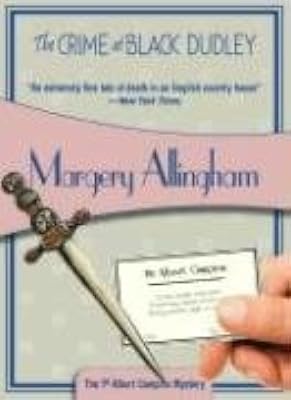
Classic Crime from the Golden Age, the first in the Albert Campion Series. Margery Allingham is J.K. Rowling's favourite Golden Age author.George Abbershaw is set for a social weekend at Black Dudley manor, hosted by Wyatt Petrie and his elderly uncle Colonel Combe, who enjoys the company of Bright Young Things. With Meggie Oliphant in attendance, George looks forward to the chance of getting closer to the girl he's set his heart on. But when murder spoils the party, the group soon find out show more that not only is there a killer in their midst, but the house is under the control of notorious criminals. Trapped and at their mercy, George must find a way to thwart their diabolical plans while getting himself and Meggie out alive.Luckily for Abbershaw, among the guests is Albert Campion - a garrulous and affable party-crasher with a great knack for solving mysteries and interrogating suspects.The Crime at Black Dudley, first published in 1929, is the first novel to introduce Margery Allingham's amiable and much loved sleuth - Albert Campion. show lessTags
Recommendations


















Member Reviews
It's perhaps a bit unfair to chastise a book that's almost a hundred years old for being dated, especially when Margery Allingham was one of the coterie of writers in the Twenties and Thirties who helped to establish many of the conventions of detective/murder mystery fiction that seem familiar and even clichéd to us now. (Although The Crime at Black Dudley is only sort of incidentally an English Country House Murder Mystery, and more Bright Young Things Do Scooby Doo, with the Pesky Kids foiling the melodramatic schemes of an international crime ring run by men who run the gamut of stereotypes from xenophobic to plain old anti-Semitic.)
But Allingham's characters often act and think in ways that make me struggle to imagine how even her show more contemporaries could have thought them psychologically convincing: the emotional equivalent of a kiss in a Thirties Hays Code movie, where the couple mash their lips together without moving for 2.9 seconds in a vague facsimile of passion. The gender politics here are awful.
And even then I might have given this two stars—tosh, but of the readable-on-an-airline variety—if not for the ending, which breaks the cardinal rule of this kind of book. In other words, while it may be possible for the reader to work out whodunit, that's only through using the process of elimination—not because of any actual clues given, while all the information needed to understand whydunit is not given until the last chapter.
That, friends, is a cheat—and that, combined with the fact that the whydunit is what I will tactfully call bonkers bananas, is why I have no plans to pick up another Margery Allingham novel. show less
But Allingham's characters often act and think in ways that make me struggle to imagine how even her show more contemporaries could have thought them psychologically convincing: the emotional equivalent of a kiss in a Thirties Hays Code movie, where the couple mash their lips together without moving for 2.9 seconds in a vague facsimile of passion. The gender politics here are awful.
And even then I might have given this two stars—tosh, but of the readable-on-an-airline variety—if not for the ending, which breaks the cardinal rule of this kind of book. In other words, while it may be possible for the reader to work out whodunit, that's only through using the process of elimination—not because of any actual clues given, while all the information needed to understand whydunit is not given until the last chapter.
That, friends, is a cheat—and that, combined with the fact that the whydunit is what I will tactfully call bonkers bananas, is why I have no plans to pick up another Margery Allingham novel. show less
This is one of those books that, if Goodreads allowed half-stars, would get a higher rating from me. But I know there are better books to come later in the series and I don't want them sharing space with a weaker one like this. So. This is the very first book in the Albert Campion series. I first came to Campion through the TV series starring Peter Davison. I loved it so much that I asked for some of the books as a present, and I believe it was my mother who randomly got me The Case Of The Late Pig and Traitor's Purse, which unfortunately are both examples of deliberately diddling with the formula and are therefore exceptionally interesting specimens. It's not really great to start a series on the absolute best books, because where do show more you go from there? I went back to the start, and sadly I think the start is rather weak. I have read random Campion books since, some of the later ones he is barely even in, and finally I decided to stop and start again. So this is the start of my adventure into reading all of the Campion books in chronological order. It should be an interesting ride, because Allingham wrote these books from the 1920s-1960s, so not only do the characters mature and grow, but the tone and settings shift drastically as well as Allingham's own style naturally evolving.
The Crime At Black Dudley (terrible title by the way) gets off to a lacklustre start. Our hero is Abbershaw, a doctor connected to Scotland Yard. He is short, red-haired and cherubic-faced. I know this, because Allingham tells us on practically every page. She is far too interested in describing what everyone looks like, and also has a weird penchant for using two adjectives in front of every noun. The cattle are immense and grotesque, the house is bare and ugly, the windows are dark-curtained and uninviting, Abbershaw is chubby and solemn, a circle of men are small and exclusive, Abbershaw is both surprised and perplexed to have fallen in love, the house is also bleak and forbidding, the rooms are impressive and pleasing, etc etc etc. All that is from the first three pages, and aren't even the only examples. So for the first few chapters at least, the text feels rather amateurish and clumsy (now I'm doing it!). Abbershaw is not a very interesting lead. He is supposedly methodical, fastidious and pompous, but I only know this because the author tells me so. He is 'in love' with Meggie, who has little personality beyond being female and not hysterical. Abbershaw seems lumbered with the plot for little reason, and we just go along with him because we have to.
The plot itself, while decently thrilling once it gets going, is also a little lame. A bunch of young things are invited to a party in a old and isolated country mansion. An old man is murdered and, for not very clear reasons, the hero stumbles across some secret papers which he destroys, directly resulting in the entire party being held hostage by a criminal overlord. My issues with this plot are that pretty much all the hostage stuff, which is the majority of the book, is the result of our dull hero doing a dumb thing for no reason, and even when he tells the bad guys that he burned their valuable property, they assume no one would be this stupid and he must be lying. It would be more interesting if there was a moral quandary over whether they should give the bad guys things that could lead to them hurting people, rather than this impotent 'well, we don't have the stupid things any more so stop asking' plot thread we get instead. For the most part this whole section is just a series of 'escaping only to be recaptured', which does get both disappointing and silly. You wouldn't believe how many secret passageways this house has. And finally, despite it being made explicitly clear that the head bad guy here is the most dangerous man in the world, he sure doesn't actually act like it or do very much to anyone. There's a lot of idle threat, but very little following through. Plus it doesn't even make sense why this guy is here doing his own dirty work when it is also made clear that he is untouchable. It just doesn't ring true.
Can't say the ending is particularly pleasing either. Oddly enough, despite having read the book before, I couldn't remember the solution to the mystery at all, which suggests it isn't very interesting. Annoyingly, the heroes withhold a lot of information from the police for no particular reason. There are several bits of anticlimax at the end - all deliberate, but not really what I'm looking for in a thriller. Oh, yeah, and any story that has a fox hunt portrayed in a heroic light is going to lose about a thousand points from me.
But then there's Campion. Showing up in a slightly odd role for his debut, since he is actually working for a rival evil gang (one can only assume he is doing some kind of undercover work in bringing down organised crime - I'm pretty sure Simister turns up in the next book) he is instantly on fire. He is the Campion I know and love. Every freaking word out of his mouth is glorious. It does make me wonder how Allingham's other characters are so staid and dull when she is able to conjure this slice of genius. Abbershaw pales into the background so long as Campion is here to be inane and irreverent while idly saving the day. Unfortunately he leaves before the end of the book. I guess that might add to that anticlimax sensation.
So overall, a little clumsy but still readable once you get into it. Not a great story, but featuring one absolutely awesome character. Thank God he's the one who gets a series. Onwards to better things, chaps. show less
The Crime At Black Dudley (terrible title by the way) gets off to a lacklustre start. Our hero is Abbershaw, a doctor connected to Scotland Yard. He is short, red-haired and cherubic-faced. I know this, because Allingham tells us on practically every page. She is far too interested in describing what everyone looks like, and also has a weird penchant for using two adjectives in front of every noun. The cattle are immense and grotesque, the house is bare and ugly, the windows are dark-curtained and uninviting, Abbershaw is chubby and solemn, a circle of men are small and exclusive, Abbershaw is both surprised and perplexed to have fallen in love, the house is also bleak and forbidding, the rooms are impressive and pleasing, etc etc etc. All that is from the first three pages, and aren't even the only examples. So for the first few chapters at least, the text feels rather amateurish and clumsy (now I'm doing it!). Abbershaw is not a very interesting lead. He is supposedly methodical, fastidious and pompous, but I only know this because the author tells me so. He is 'in love' with Meggie, who has little personality beyond being female and not hysterical. Abbershaw seems lumbered with the plot for little reason, and we just go along with him because we have to.
The plot itself, while decently thrilling once it gets going, is also a little lame. A bunch of young things are invited to a party in a old and isolated country mansion. An old man is murdered and, for not very clear reasons, the hero stumbles across some secret papers which he destroys, directly resulting in the entire party being held hostage by a criminal overlord. My issues with this plot are that pretty much all the hostage stuff, which is the majority of the book, is the result of our dull hero doing a dumb thing for no reason, and even when he tells the bad guys that he burned their valuable property, they assume no one would be this stupid and he must be lying. It would be more interesting if there was a moral quandary over whether they should give the bad guys things that could lead to them hurting people, rather than this impotent 'well, we don't have the stupid things any more so stop asking' plot thread we get instead. For the most part this whole section is just a series of 'escaping only to be recaptured', which does get both disappointing and silly. You wouldn't believe how many secret passageways this house has. And finally, despite it being made explicitly clear that the head bad guy here is the most dangerous man in the world, he sure doesn't actually act like it or do very much to anyone. There's a lot of idle threat, but very little following through. Plus it doesn't even make sense why this guy is here doing his own dirty work when it is also made clear that he is untouchable. It just doesn't ring true.
Can't say the ending is particularly pleasing either. Oddly enough, despite having read the book before, I couldn't remember the solution to the mystery at all, which suggests it isn't very interesting. Annoyingly, the heroes withhold a lot of information from the police for no particular reason. There are several bits of anticlimax at the end - all deliberate, but not really what I'm looking for in a thriller. Oh, yeah, and any story that has a fox hunt portrayed in a heroic light is going to lose about a thousand points from me.
But then there's Campion. Showing up in a slightly odd role for his debut, since he is actually working for a rival evil gang (one can only assume he is doing some kind of undercover work in bringing down organised crime - I'm pretty sure Simister turns up in the next book) he is instantly on fire. He is the Campion I know and love. Every freaking word out of his mouth is glorious. It does make me wonder how Allingham's other characters are so staid and dull when she is able to conjure this slice of genius. Abbershaw pales into the background so long as Campion is here to be inane and irreverent while idly saving the day. Unfortunately he leaves before the end of the book. I guess that might add to that anticlimax sensation.
So overall, a little clumsy but still readable once you get into it. Not a great story, but featuring one absolutely awesome character. Thank God he's the one who gets a series. Onwards to better things, chaps. show less
Real Rating: 3.25* of five, rounded down because WOW this didn't age that well
Albert Campion's neurodivergent character is something we're not unfamiliar with in the 21st century. It was baffling in the 19th, whence Allingham derived her world-view. I don't want to give you the wrong idea: she isn't making fun of Campion, she's making sport of him, and the difference is not mere distinction.
Campion appears for the first time in this story as comic relief. He isn't very important in the proceedings at all. This is a case of the publisher getting feedback..."we LOVE that looney, he made us laugh!"...and requiring the author to make more of him in future. A similar thing happened, in my observation, to Louise Penny: The Three Pines series show more was originally about Clara, a very lonely and dissatisfied married Artist living in a rural Quebecois village with an interesting history and a future as a criminal hotbed. Along came Inspector Gamache of the Sûreté and hey presto! The books are now centered on him.
So this, the first outing, isn't A Campion Story. That's the source of my downward rounding. But that doesn't mean that it's not worth reading. I think, despite social attitudes I don't much like, that stories from this period are very fun reads because they set the standards of fair-play puzzle-based series mysteries that we-the-bookish devour with insatiable appetite. I do want to let you know that those sensitive to the portrayal of the neurodivergent should either skip the read or, and this is what I encourage you to do, go into it prepared for the attitudes of the past to prevail over your preferred standard. show less
Albert Campion's neurodivergent character is something we're not unfamiliar with in the 21st century. It was baffling in the 19th, whence Allingham derived her world-view. I don't want to give you the wrong idea: she isn't making fun of Campion, she's making sport of him, and the difference is not mere distinction.
Campion appears for the first time in this story as comic relief. He isn't very important in the proceedings at all. This is a case of the publisher getting feedback..."we LOVE that looney, he made us laugh!"...and requiring the author to make more of him in future. A similar thing happened, in my observation, to Louise Penny: The Three Pines series show more was originally about Clara, a very lonely and dissatisfied married Artist living in a rural Quebecois village with an interesting history and a future as a criminal hotbed. Along came Inspector Gamache of the Sûreté and hey presto! The books are now centered on him.
So this, the first outing, isn't A Campion Story. That's the source of my downward rounding. But that doesn't mean that it's not worth reading. I think, despite social attitudes I don't much like, that stories from this period are very fun reads because they set the standards of fair-play puzzle-based series mysteries that we-the-bookish devour with insatiable appetite. I do want to let you know that those sensitive to the portrayal of the neurodivergent should either skip the read or, and this is what I encourage you to do, go into it prepared for the attitudes of the past to prevail over your preferred standard. show less
Poor Albert Campion gets no respect — nor does his author, Margery Allingham.
Ninety years after Hercule Poirot first exercised his little grey cells in The Mysterious Affair at Styles and Lord Peter Wimsey first pranced through Whose Body?, these redoubtable detectives and their brilliant authors are still household names. But Albert Campion? Like Ngaio Marsh’s Roderick Alleyn, Gladys Mitchell’s Mrs. Bradley, or Patricia Wentworth’s Miss Silver — all of whom were quite popular in their day but have, sadly, fallen into obscurity — Campion has been cheated of the lasting fame that is his due.
But perhaps Bloomsbury Reader’s new edition of Campion’s first case, The Crime at Black Dudley, first published in 1929, can remedy show more the situation.
Like television’s Colombo or Lord Peter Wimsey, the fair-haired, bespectacled Albert Campion at first glance appears to be a bit of fool. Do not be taken in! Wise-cracking and with a high-pitched voice, Campion is crazy like a fox; unlike the moralistic Lord Peter, he doesn’t mind playing both on the side of the law and on the other. Campion’s in attendance at a house party at Black Dudley when the host, Colonel Gordon Coombe, a wheelchair-bound man who wears a plate on his face to cover hideous scars from the war, dies. Although his personal physician claims the death due to heart trouble, two other guests, pathologist Dr. George Abbershaw and newly minted doctor, Michael Prenderby, soon work out that Coombe was murdered. They begin trying to ferret out what secrets lie at Black Dudley, but it is Campion, of course, who truly shines when the crooks emerge.
The Crime at Black Dudley contains a good deal more suspense and more twists that you’d ever expect in a British cozy released in 1929. Although more than 85 years old, the novel remains as much of a five-star read as ever, and I read it in just a few sittings. Priced at a mere $1.99 in the Kindle format, readers owe it to themselves to get a taste of Allingham’s delightfully quirky series with The Crime at Black Dudley.
In the spirit of full disclosure, I received this ebook from NetGalley and Bloomsbury Reader in return for an honest review. show less
Ninety years after Hercule Poirot first exercised his little grey cells in The Mysterious Affair at Styles and Lord Peter Wimsey first pranced through Whose Body?, these redoubtable detectives and their brilliant authors are still household names. But Albert Campion? Like Ngaio Marsh’s Roderick Alleyn, Gladys Mitchell’s Mrs. Bradley, or Patricia Wentworth’s Miss Silver — all of whom were quite popular in their day but have, sadly, fallen into obscurity — Campion has been cheated of the lasting fame that is his due.
But perhaps Bloomsbury Reader’s new edition of Campion’s first case, The Crime at Black Dudley, first published in 1929, can remedy show more the situation.
Like television’s Colombo or Lord Peter Wimsey, the fair-haired, bespectacled Albert Campion at first glance appears to be a bit of fool. Do not be taken in! Wise-cracking and with a high-pitched voice, Campion is crazy like a fox; unlike the moralistic Lord Peter, he doesn’t mind playing both on the side of the law and on the other. Campion’s in attendance at a house party at Black Dudley when the host, Colonel Gordon Coombe, a wheelchair-bound man who wears a plate on his face to cover hideous scars from the war, dies. Although his personal physician claims the death due to heart trouble, two other guests, pathologist Dr. George Abbershaw and newly minted doctor, Michael Prenderby, soon work out that Coombe was murdered. They begin trying to ferret out what secrets lie at Black Dudley, but it is Campion, of course, who truly shines when the crooks emerge.
The Crime at Black Dudley contains a good deal more suspense and more twists that you’d ever expect in a British cozy released in 1929. Although more than 85 years old, the novel remains as much of a five-star read as ever, and I read it in just a few sittings. Priced at a mere $1.99 in the Kindle format, readers owe it to themselves to get a taste of Allingham’s delightfully quirky series with The Crime at Black Dudley.
In the spirit of full disclosure, I received this ebook from NetGalley and Bloomsbury Reader in return for an honest review. show less
The first in the series of Albert Campion "mysteries," although it's easy to dismiss this one and move straight on to "Mystery Mile," the first to focus on Campion as the protagonist. Frankly, it's obvious from the start that these aren't true mysteries in the traditional sense: an Allingham novel rarely gives the audience the ability to put all of the pieces together on their own, and this one is no exception. It is more accurate, really, to call the Campion books adventure-thrillers, and usually well-characterized ones at that.
At this early stage, though, many of the characters feel quite similar: most of them are upper-class young people, and they pretty much all speak in the same affected 1920s vernacular. It is absolutely obvious show more that the stand-out character is Albert Campion himself, who features here as an *extremely* showy secondary character. He takes the lingo to its zenith, fooling around and generally making an ass of himself, all the while managing to quite cleverly manipulate the situation. Small wonder Allingham chose to focus on him in her next thriller and for many more books thereafter.
Perhaps the most surprising aspect of this book is its rapid tonal shifts - from thriller to romance and back again - and the final chapter's venture into social moralization feels just a little bit awkward (not to mention extremely surprising). There are, to be fair, better novels of this type from the era; Agatha Christie's The Secret Adversary leaps to mind as one, although neither her Tommy or Tuppence are nearly as vivid a character as Campion. And that's the difference, really: if Christie is better at plot twists, Allingham quite honestly has the upper hand at characterization. This isn't her most layered or enjoyable work, to be sure. Still, it's a not inauspicious beginning, and it definitely whets the appetite for more adventures with the elusive Mr. Campion. show less
At this early stage, though, many of the characters feel quite similar: most of them are upper-class young people, and they pretty much all speak in the same affected 1920s vernacular. It is absolutely obvious show more that the stand-out character is Albert Campion himself, who features here as an *extremely* showy secondary character. He takes the lingo to its zenith, fooling around and generally making an ass of himself, all the while managing to quite cleverly manipulate the situation. Small wonder Allingham chose to focus on him in her next thriller and for many more books thereafter.
Perhaps the most surprising aspect of this book is its rapid tonal shifts - from thriller to romance and back again - and the final chapter's venture into social moralization feels just a little bit awkward (not to mention extremely surprising). There are, to be fair, better novels of this type from the era; Agatha Christie's The Secret Adversary leaps to mind as one, although neither her Tommy or Tuppence are nearly as vivid a character as Campion. And that's the difference, really: if Christie is better at plot twists, Allingham quite honestly has the upper hand at characterization. This isn't her most layered or enjoyable work, to be sure. Still, it's a not inauspicious beginning, and it definitely whets the appetite for more adventures with the elusive Mr. Campion. show less
This classic mystery introduces Allingham's major character Albert Campion. Although he isn't the main character in the country house mystery, his presence is felt.
A group of people have been invited to a country house named Black Dudley for a weekend. The viewpoint character is George Abbershaw who is a pathologist who has sometimes worked with the police. He is there mainly because a young woman he is pursuing is also invited to the party.
When a parlor game involving the historic Black Dudley Dagger ends with the death of the host of the weekend, Abbershaw finds himself trying to solve the mystery. Things get even more complicated when he and some of the other guests realize that a number of the guests are criminals. They find show more themselves held hostage by the criminals until a missing item is returned to them.
Abbershaw had found the missing papers and burned them for some mysterious reason making the return impossible. The criminals aren't willing to believe that the papers are gone and threaten the guests.
I found this an interesting story but with some problems. First of all, there was such a large cast of characters that I couldn't keep the villains and victims clear in my mind. Second, some things happened that didn't really make sense like Abbershaw burning the papers for no apparent reason.
I did enjoy Campion's appearances and his character which reminded me of the character of the Scarlet Pimpernel though set in modern times. I also had some problems with the racial prejudice running rampant through the story which automatically classified the Germans as villains. I could set that aside considering that the book was published in 1929, but I still found it jarring.
I was intrigued enough by Albert Campion that I'll be looking for more books in the series. show less
A group of people have been invited to a country house named Black Dudley for a weekend. The viewpoint character is George Abbershaw who is a pathologist who has sometimes worked with the police. He is there mainly because a young woman he is pursuing is also invited to the party.
When a parlor game involving the historic Black Dudley Dagger ends with the death of the host of the weekend, Abbershaw finds himself trying to solve the mystery. Things get even more complicated when he and some of the other guests realize that a number of the guests are criminals. They find show more themselves held hostage by the criminals until a missing item is returned to them.
Abbershaw had found the missing papers and burned them for some mysterious reason making the return impossible. The criminals aren't willing to believe that the papers are gone and threaten the guests.
I found this an interesting story but with some problems. First of all, there was such a large cast of characters that I couldn't keep the villains and victims clear in my mind. Second, some things happened that didn't really make sense like Abbershaw burning the papers for no apparent reason.
I did enjoy Campion's appearances and his character which reminded me of the character of the Scarlet Pimpernel though set in modern times. I also had some problems with the racial prejudice running rampant through the story which automatically classified the Germans as villains. I could set that aside considering that the book was published in 1929, but I still found it jarring.
I was intrigued enough by Albert Campion that I'll be looking for more books in the series. show less
This classic mystery introduces Allingham's major character Albert Campion. Although he isn't the main character in the country house mystery, his presence is felt.
A group of people have been invited to a country house named Black Dudley for a weekend. The viewpoint character is George Abbershaw who is a pathologist who has sometimes worked with the police. He is there mainly because a young woman he is pursuing is also invited to the party.
When a parlor game involving the historic Black Dudley Dagger ends with the death of the host of the weekend, Abbershaw finds himself trying to solve the mystery. Things get even more complicated when he and some of the other guests realize that a number of the guests are criminals. They find show more themselves held hostage by the criminals until a missing item is returned to them.
Abbershaw had found the missing papers and burned them for some mysterious reason making the return impossible. The criminals aren't willing to believe that the papers are gone and threaten the guests.
I found this an interesting story but with some problems. First of all, there was such a large cast of characters that I couldn't keep the villains and victims clear in my mind. Second, some things happened that didn't really make sense like Abbershaw burning the papers for no apparent reason.
I did enjoy Campion's appearances and his character which reminded me of the character of the Scarlet Pimpernel though set in modern times. I also had some problems with the racial prejudice running rampant through the story which automatically classified the Germans as villains. I could set that aside considering that the book was published in 1929, but I still found it jarring.
I was intrigued enough by Albert Campion that I'll be looking for more books in the series. show less
A group of people have been invited to a country house named Black Dudley for a weekend. The viewpoint character is George Abbershaw who is a pathologist who has sometimes worked with the police. He is there mainly because a young woman he is pursuing is also invited to the party.
When a parlor game involving the historic Black Dudley Dagger ends with the death of the host of the weekend, Abbershaw finds himself trying to solve the mystery. Things get even more complicated when he and some of the other guests realize that a number of the guests are criminals. They find show more themselves held hostage by the criminals until a missing item is returned to them.
Abbershaw had found the missing papers and burned them for some mysterious reason making the return impossible. The criminals aren't willing to believe that the papers are gone and threaten the guests.
I found this an interesting story but with some problems. First of all, there was such a large cast of characters that I couldn't keep the villains and victims clear in my mind. Second, some things happened that didn't really make sense like Abbershaw burning the papers for no apparent reason.
I did enjoy Campion's appearances and his character which reminded me of the character of the Scarlet Pimpernel though set in modern times. I also had some problems with the racial prejudice running rampant through the story which automatically classified the Germans as villains. I could set that aside considering that the book was published in 1929, but I still found it jarring.
I was intrigued enough by Albert Campion that I'll be looking for more books in the series. show less
Members
- Recently Added By
Lists

Favorite Series
238 works; 94 members

Top Cops (Detectives in Fiction)
86 works; 24 members

Crime and Mysteries to Read
746 works; 31 members

British Mystery
469 works; 14 members

Female Author
1,234 works; 66 members

Favorite Books from the 1920s
33 works; 3 members

Detective Stories
343 works; 5 members

#ReadingBingo2020
25 works; 1 member

A Rainbow of Books: Colors in the Title
570 works; 24 members

Books Read in 2016
4,666 works; 197 members

Books Read in 2017
4,249 works; 130 members
Books Read in 2015
3,299 works; 129 members

Books with Colourful Titles
171 works; 8 members

Books Read in 2020
4,379 works; 124 members

Books We Discovered On LibraryThing
530 works; 130 members

Ambleside Books
459 works; 18 members
Author Information

131+ Works 20,367 Members
Margery Allingham, one of England's leading mystery writers, was born on May 20, 1904, in Ealing, a western suburb of London, but grew up in a remote village in Essex. Both of her parents were writers, and Margery carried on that tradition when she sold her first short story as an eight-year-old. At the Regent Street Polytechnic, she continued show more writing and studied drama and speech. While there, she wrote a verse play, Dido and Aeneas, in which she had a starring role during performances in London. At age 19, Allington published her first novel, Blackkerchief Dick. She wrote another novel, The White Cottage Mystery, before creating her most famous character, Albert Campion, in The Black Dudley Murder (published in England as The Crime at Black Dudley) in 1929. Allington went on to create twenty-eight more Campion mysteries, including several collections. She wrote more than 10 other novels, some under the pseudonym Maxwell March, as well as four novellas and sixty-four short stories. During World War II, Allingham served as First Aid Commandant for her district, organized the billeting and care of evacuees from London, and allowed her house to be turned into a temporary military base for eight officers and two hundred men of the Cameronians. The war greatly deepened Allingham's passion for her country, as evidenced in her later works. Allingham died of cancer on June 30, 1966. (Bowker Author Biography) show less
Some Editions
Awards and Honors
Series

Belongs to Publisher Series
Work Relationships
Common Knowledge
- Canonical title*
- La lunga notte di Black Dudley
- Original title
- The Crime at Black Dudley
- Alternate titles
- The Black Dudley Murder
- Original publication date
- 1929-02
- People/Characters
- Albert Campion; George Abbershaw; Wyatt Petrie; Margaret Oliphant 'Meggie'; Colonel Gordon Coombe; Michael Prenderby (show all 13); Anne Edgeware; Martin Watt; Jeanne Dacre; Chris Kennedy; Jesse Gideon; Dr. Whitby; Benjamin Dawlish
- Important places
- Suffolk, England, UK
- Dedication
- To 'The Gang'
- First words
- The view from the narrow window was dreary and inexpressibly lonely.
- Last words
- (Click to show. Warning: May contain spoilers.)And he drove off, leaving the policeman looking after him, wondering a little wistfully if the charge in his notebook should not perhaps have read, 'Drunk in charge of a car.'
- Original language
- English
- Disambiguation notice
- Originally published in Britain as "The Crime at Black Dudley." US title is "The Black Dudley Murder."
*Some information comes from Common Knowledge in other languages. Click "Edit" for more information.
Classifications
Statistics
- Members
- 1,409
- Popularity
- 16,856
- Reviews
- 50
- Rating
- (3.32)
- Languages
- 7 — Czech, Danish, English, Estonian, French, German, Italian
- Media
- Paper, Audiobook, Ebook
- ISBNs
- 35
- ASINs
- 48